ANALYSIS
OF PROGNOSTIC FACTORS IN PATIENTS WITH TRANSITIONAL CELL CARCINOMA OF
THE BLADDER TREATED WITH RADICAL CYSTECTOMY
(
Download pdf )
ALBERTO A. ANTUNES, LUCIANO J. NESRALLAH, MARCOS F. DALL’OGLIO, YURI A. FERREIRA, CARLO C. PASSEROTTI, KATIA R. LEITE, VALDEMAR ORTIZ, MIGUEL SROUGI
Department of Urology, University of Sao Paulo (USP), Department of Urology, Beneficencia Portuguesa Hospital, Sao Paulo, and Laboratory of Surgical and Molecular Pathology, Syrian Lebanese Hospital, Sao Paulo, Brazil
ABSTRACT
Objective:
To analyze the results of the treatment of transitional cell carcinoma
(TCC) of the bladder with radical cystectomy and determine which prognostic
factors can be utilized as disease-free survival and cancer-specific survival
independent variables.
Materials and Methods: Medical records of
113 patients submitted to radical cystectomy and bilateral iliac lymphadenectomy
between 1993 and 2005 were reviewed. The risk factors analyzed were age,
sex, pathological stage, tumor grade, presence of carcinoma in situ and
the presence of lymph nodes involvement.
Results: After a mean follow-up of 31.7
± 28.5 months, 46 patients (40.7%) presented recurrence and 24
patients (21.2%) died due to cancer. Only pathological stage and the lymph
nodes involvement became independent variables for recurrence and survival.
Patients with T4 stage presented 9.6 times the risk of recurrence of the
disease when compared with stage T0 patients (p = 0.010) and the patients
with lymph node involvement presented 2.5 times the risk of recurrence
(p = 0.047) and 3.1 times the risk of death (p = 0.022) when compared
to patients without lymph nodes involvement.
Conclusions: Pathological stage and the
involvement of lymph nodes represented more important prognostic variables,
and in the presence of advanced stage tumors (T3/T4) and involvement of
lymph nodes, the institution of adjuvant treatment should be considered.
Key
words: bladder neoplasms; transitional cell; cystectomy; prognosis
Int Braz J Urol. 2006; 32: 35-42
INTRODUCTION
Bladder
cancer is responsible for 7% of all types of neoplasia in men and 2% in
women (1). Around 25% of the diagnosed cases are infiltrative tumors,
and presently radical cystectomy is the treatment of choice in such cases
(2). However, clinical evolution of these patients is not uniform and,
despite aggressive surgical treatment, around 50% die after 5 years of
follow-up (3-5).
Such high treatment failure rates can be
explained by the fact that bladder infiltrative tumors present a trend
towards the development of metastasis, which was not identified by diagnostic
methods available at the time of treatment (6,7). For this reason, even
though its benefit is not clearly defined, adjuvant chemotherapy has been
indicated as a strategy to improve treatment efficacy (6).
Two important measures that can contribute
to improve therapeutic results are the development of new chemotherapy
agents, and an adequate selection of the patients who are candidates for
adjuvant treatment (8,9). In this context, the definitions of recurrence
and survival independent prognostic factors that allow the selection of
high-risk patients that can benefit from adjuvant treatment assume a fundamental
importance. Previous studies have demonstrated that pathological stage,
the tumor grade, the presence of carcinoma in situ (CIS) and the involvement
of lymph nodes constitute important prognostic factors in patients with
bladder TCC (3,10).
The objective of the present study is to
analyze the results of bladder TCC treatment with radical cystectomy and
determine which prognostic factors can be used as mortality and recidivation
independent variables due to this aggressive behavior neoplasia.
MATERIALS AND METHODS
Between
March 1993 and January 2005, the medical records of 153 patients diagnosed
with bladder cancer submitted to radical cystectomy and obturatory lymphadenectomy
were revised. After the exclusion of patients that received neoadjuvant
chemotherapy, that presented tumors of other histology types and those
who had incomplete medical records and did not have available follow-up,
the final group was composed of 113 patients.
Preoperative diagnosis was performed by
transurethral resection. All patients were staged with thorax radiography
and computerized tomography of the abdomen and pelvis, and were considered
bearers of a localized disease. The indications of radical cystectomy
included the presence of tumors compromising the muscular layer (T2),
and superficial tumors refractory to multifocal or intravesical therapy.
Fifteen patients with extravesical disease (T3-T4 or positive lymph nodes)
were submitted to adjuvant chemotherapy with metotrexate, vinblastine,
adriamycin and cisplatin (M-VAC).
Risk factors analyzed were age, sex, pathological
stage, tumor grade, presence of CIS and an indication of involvement of
the lymph nodes. The analysis of the pathological stage and tumor grade
was conducted using the TNM system developed in 1997 and WHO respectively
(11,12). For the analysis of the pathological stage we utilized the T0,
T1 (T1 + Tis), T2 (T2a + T2b), T3 (T3a + T3b) and T4 categories. Grade
1 and 2 tumors were considered low grade, while grade 3 and 4 tumors were
considered high grade.
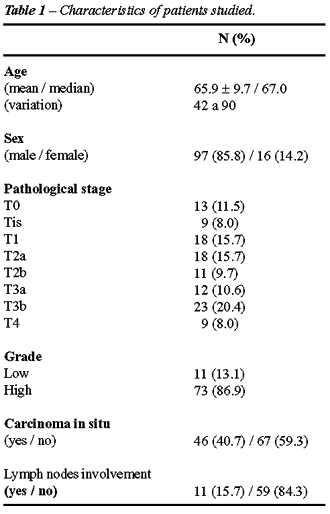
Table-1 describes the characteristics of
the 113 patients studied. The mean age was 65.9 years (42 to 90), and
the majority of patients (85.8%) were male. As for the stage, we observed
that 39% of the patients presented extravesical disease (T3 and T4) and
the large majority (86.9%) presented high-grade tumors (3 and 4). The
presence of CIS was observed in 40.7% of the patients, and the involvement
of lymph nodes in 15.7%. Twenty nine patients did not have information
regarding the tumor grade while 43 lacked information regarding lymph
node involvement. Mean postoperative follow-up was 31.7 ± 28.5
months (median 24, 1 to 138).
During the postoperative period, follow-up
consisted of a visit 2 months after the surgery and every 4 months until
1 year was completed. After this period, patients were seen every 6 months
or less in cases of progression or death. On every visit, patients were
submitted to clinical exams, thorax radiography and computerized tomography
of the abdomen and pelvis. Recurrence was defined as: a) local = presence
of a new tumor lesion in the pelvis and/or retroperitoneum or abdominal
wall; b) systemic = in other parts of the body; and c) urothelial = when
present in the urethra or upper urinary tract.
The main variables studied were disease-free
survival and cancer-specific survival. Patients that died due to other
causes were considered as censures and were followed until the date of
death. The Kaplan-Meier method was utilized to determine survival curves
and statistical significance assessed by Log-Rank and Breslow tests. Multivariate
analysis was performed with the Cox regression model showing a confidence
interval (CI) of 95%. The value of p < 0.05 was considered statistically
significant.
RESULTS
Forty-six
patients (40.7%) presented recurrence; 20 local (17.7%), 25 systemic (22.1%)
and 5 urothelial (4.4%). The most frequent systemic metastasis sites were
bone (24%), lung (22%) and liver (13%). Four patients presented more than
one type of recurrence simultaneously – 3 local and systemic and
1 systemic and urothelial. The mean disease-free survival rate was estimated
at 69 months (Kaplan-Meier, CI 95% [55 to 83]). Twenty four patients (21.2%)
died due to cancer. The mean time of cancer-specific survival was estimated
at 94 months (Kaplan-Meier, CI 95% [79 to 109]).
Through the Kaplan-Meier method, we observed
that both pathological stage and the presence of lymph node involvement
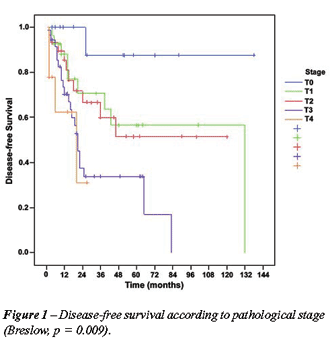
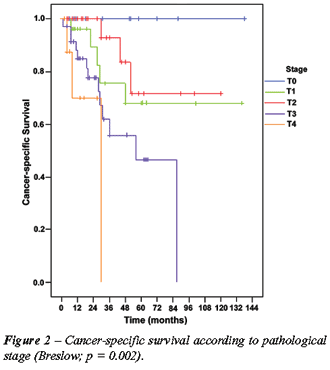
significantly influenced disease-free and cancer-specific survival. Of
patients with stage T0, T1, T2, T3, and T4, recurrences were observed
in 7.3%, 33.3%, 34.5%, 62.9% and 44.4% of patients respectively (Breslow,
p = 0.009), and death in 0%, 18.5%, 9.3%, 37.1% and 33.3% respectively
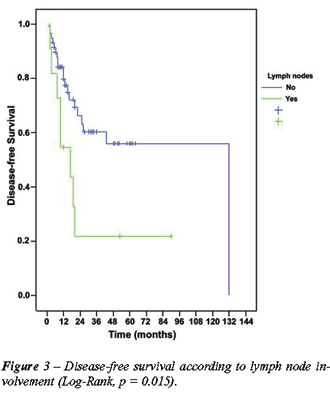
(Breslow, p = 0.002) (Figures-1 and 2). As for the analysis of lymph nodes,
recurrences occurred in 8 of 11 patients with compromised lymph nodes
(72.7%) and in 20 of 59 patients without compromised lymph nodes (33.9%)
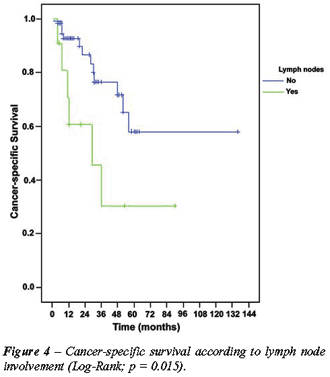
(Log-Rank, p = 0.015), Figure-3. Death occurred in 6 (54.5%) and 12 (20.3%)
patients of the 2 groups respectively (Log-Rank, p = 0.015) (Figure-4).
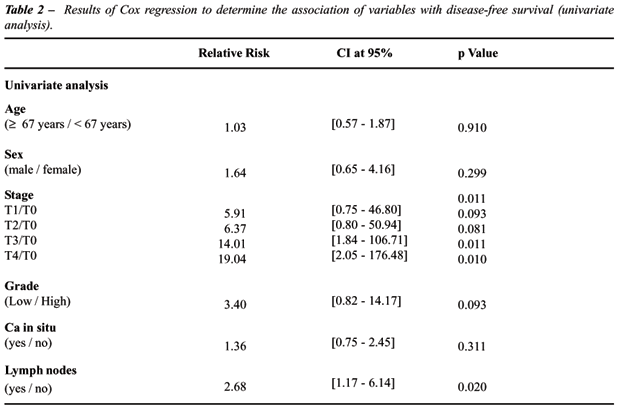
In the Cox regression analysis, only pathological
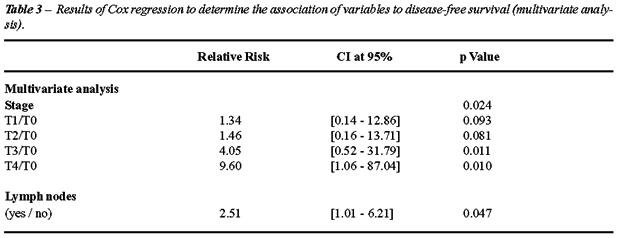
stage and a compromise in the lymph nodes constituted recurrence independent
variables in uni- and multi-variate analysis (Tables-2 and 3). Even though
patients with high grade tumors presented 3.4 times the risk of recurrence
when compared to patients with low grade tumors, this result showed to
be only marginally significant (p = 0.093). According to Table-3, we observed
that patients with stage T4 presented a recurrence risk 9.6 times greater
than patients with stage T0 (p = 0.010), and patients presenting involvement
of the lymph nodes presented a recurrence risk 2.5 times greater than
patients without compromised lymph nodes (p = 0.047). Similar results
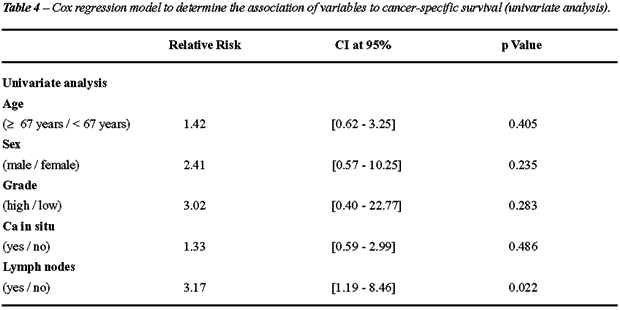
were observed in relation to cancer-specific survival (Table-4). Patients
with lymph node involvement presented a death risk 3.1 times greater when
compared to those without lymph node involvement (p = 0.022). The inclusion
of stage in this model was not possible since no patient with stage T0
died due to the disease.
COMMENTS
In
the present study, we analyzed the results of the treatment of 113 patients
with diagnosis of bladder TCC and determined which variables could be
used as independent prognostic factors of disease-free and cancer-specific
survival. Despite the radical surgical treatment, after a mean follow-up
of 32 months, around 40% of the patients presented a recurrence and 21%
died of cancer. The only prognostic factors independent from disease-free
survival were pathological stage and lymph node involvement. As for the
cancer-specific survival, lymph node involvement was also an independent
variable. Even though the inclusion of pathological stage in the regression
model for mortality was not possible, we observed that while no patient
with stage T0 died, death occurred in 36% of the cases when the stage
was T3/T4.
Many studies analyzed the prognostic factors
in patients with bladder TCC treated with radical cystectomy. The pathological
stage and lymph nodes involvement have been considered by many authors
to be the main prognostic factors in these patients (3,4,13,14). In an
analysis of 130 patients, Soloway et al. (4) observed that 5-year survival
rates were 82% for patients with superficial tumors, 65% for those with
T2 and 28% for patients with T3/T4, while patients with lymph node involvement
presented a 5-year survival rate of 18% against 65% for patients presenting
no lymph node involvement. Similarly, in an analysis of 369 patients treated
with radical cystectomy as monotherapy, Bassi et al. (13) demonstrated
that while in univariate analysis of pathological stage, the involvement
of lymph nodes, the presence of microvascular and perineural invasion
and the presence of obstruction in upper urinary tract were determinant
of global survival, in multivariate analysis only the first two were independent
variables. More recently, an analysis of 114 patients considering the
variables of age, sex, pathological stage, grade, lymph node involvement,
lymphatic invasion, vascular invasion and the presence of CIS found that
only pathological stage and lymph node involvement were independent factors
of recurrence (14).
On the other hand, many authors have highlighted
the prognostic value of other variables. In an analysis of 218 patients,
Cheng et al. (2) found the tumor size, pathological stage and involvement
of lymph nodes were independent variables for metastasis-free, cancer-specific
and global survival rates. The presence of positive margins was independently
associated with recurrence-free and cancer-specific survival, and age,
lymph node involvement and the presence of positive margins was associated
with local recurrence-free survival. Later, in analyzing 64 patients with
stage T2 only, the same authors demonstrated that only tumor size and
involvement of the lymph nodes were significantly associated with disease
free and cancer-specific survival, and they proposed a change in the sub-classification
of T2 stage based on tumor size l (15). On the other hand, in an analysis
of 283 patients, Leissner et al. (16) demonstrated that the presence of
blood vessel invasion together with stage and lymph node involvement were
the sole determinant variables for disease-free survival. The value of
microvascular invasion was also highlighted by Hong et al. (7) in a retrospective
analysis of 125 patients, demonstrating that only this and pathological
stage were independent variables for global survival – the former
being more important than the latter. Patients with lymph nodes involvement,
however, were not included in the analysis.
In the present study, age, sex, tumor grade
and the presence of carcinoma in situ did not constitute important prognostic
factors. While the majority of studies demonstrate that sex does not present
any prognostic value (2,3,5,10,15,16), the results regarding age analysis
are more conflicting. Some point out that age can be determinant of recurrence
(2,15), cancer-specific survival (10) and global survival (15), while
others demonstrate not to have any prognostic value at all (3,5,7,14,16).
Our results correspond to the latter studies and thus suggest that radical
cystectomy can be indicated for older patients as a form of treatment
for bladder TCC. The presence of CIS has also showed conflicting results.
Even though the presence of CIS is traditionally related to a poor prognosis,
many studies do not reproduce these results (5,14), or even show that
patients with CIS present better cancer-specific survival and global survival
rates when treated with radical cystectomy (2,10). As for the grade, the
fact that the majority of bladder infiltrated tumors present a high grade
(87% of cases in the present series) can, in part, explain why tumor grade
presents a low prognostic value in these patients. In fact, many authors
confirm these findings (2,3,5,7). In the present study, even though patients
with high grade tumors have presented around 3 times the risk of recurrence
and mortality when compared to patients with low grade tumors, these results
did not present statistical significance.
Despite aggressive treatment with radical
cystectomy, 46 patients (40.7%) presented recurrence and 24 patients (21.2%)
died due to cancer. One of the main factors responsible for the low rate
of success with the curative surgical treatment of infiltrating bladder
tumors is its predilection for hidden metastasis during treatment (7).
This fact is clear when we observe that even the absence of residual tumors
in the surgical specimen (T0) does not guarantee successful treatment.
Frazier et al. (10) demonstrated that 30% of their 75 patients with stage
T0 died due to bladder tumors after 5 years. In our series, even though
none of the 13 patients with T0 died, 1 of them (7.3%) presented recurrence
after 24 months of follow-up. It is possible that this number could increase
if those patients are followed for a longer period.
A limitation of the present study is the
fact that 15 patients received adjuvant chemotherapy. All those patients
presented either stage T3/T4 or lymph node involvement. The recurrence
and mortality rates of this group were 67% and 40% respectively, while
53% and 31% of the 32 patients T3/T4 that did not receive any adjuvant
treatment presented recurrence and death respectively. These numbers suggest
that chemotherapy did not represent benefits, however this analysis is
restricted since patient selection for adjuvant treatment was not randomized.
Finally, we conclude that bladder infiltrating
TCC represents an aggressive neoplasia with high rates of recurrence and
mortality in spite of the radical surgery treatment. Pathological stage
and lymph node involvement represent the most important variables for
recurrence and survival, and in the presence of tumors with advanced stage
(T3/T4) and involvement of lymph nodes, the institution of adjuvant treatment
should be considered. However, these results should be analyzed carefully
until other variables, such as tumor size, the presence of microvascular
and perineural invasion, epidermoid differentiation and surgical margin
compromise can be included in this study.
ACKNOWLEDGEMENTS
Adriana Sanudo made the statistical analysis.
CONFLICT OF INTEREST
None declared.
REFERENCES
- Jemal A, Murray T, Ward E, Samuels A, Tiwari RC, Ghafoor A, et al.: Cancer statistics, 2005. CA Cancer J Clin. 2005; 55: 10-30. Erratum in: CA Cancer J Clin. 2005; 55: 259.
- Cheng L, Weaver AL, Leibovich BC, Ramnani DM, Neumann RM, Scherer BG, et al.: Predicting the survival of bladder carcinoma patients treated with radical cystectomy. Cancer. 2000; 88: 2326-32.
- Mazzucchelli L, Bacchi M, Studer UE, Markwalder R, Sonntag RW, Kraft R: Invasion depth is the most important prognostic factor for transitional-cell carcinoma in a prospective trial of radical cystectomy and adjuvant chemotherapy. Int J Cancer. 1994; 57: 15-20.
- Soloway MS, Lopez AE, Patel J, Lu Y: Results of radical cystectomy for transitional cell carcinoma of the bladder and the effect of chemotherapy. Cancer. 1994; 73: 1926-31.
- Knap MM, Lundbeck F, Overgaard J: Prognostic factors, pattern of recurrence and survival in a Danish bladder cancer cohort treated with radical cystectomy. Acta Oncol. 2003; 42: 160-8.
- Skinner DG, Daniels JR, Russell CA, Lieskovsky G, Boyd SD, Nichols P, et al.: The role of adjuvant chemotherapy following cystectomy for invasive bladder cancer: a prospective comparative trial. J Urol. 1991; 145: 459-64; discussion 464-7.
- Hong SK, Kwak C, Jeon HG, Lee E, Lee SE: Do vascular, lymphatic, and perineural invasion have prognostic implications for bladder cancer after radical cystectomy? Urology. 2005; 65: 697-702.
- Bamias A, Deliveliotis Ch, Aravantinos G, Kalofonos Ch, Karayiannis A, Dimopoulos MA, et al.: Adjuvant chemotherapy with paclitaxel and carboplatin in patients with advanced bladder cancer: a study by the Hellenic Cooperative Oncology Group. J Urol. 2004; 171: 1467-70.
- Yang MH, Yen CC, Chen PM, Wang WS, Chang YH, Huang WJ, et al.: Prognostic-factors-based risk-stratification model for invasive urothelial carcinoma of the urinary bladder in Taiwan. Urology. 2002; 59: 232-8; discussion 238-9.
- Frazier HA, Robertson JE, Dodge RK, Paulson DF: The value of pathologic factors in predicting cancer-specific survival among patients treated with radical cystectomy for transitional cell carcinoma of the bladder and prostate. Cancer. 1993; 71: 3993-4001.
- Sobin LH, Wittekind CH. International Union Against Cancer (UICC). Urinary Bladder, in TNM Classification of Malignant Tumors. New York, Wiley-Liss. 1997; pp 187-93.
- Epstein JI, Amin MB, Reuter VR, Mostofi FK: The World Health Organization/International Society of Urological Pathology consensus classification of urothelial (transitional cell) neoplasms of the urinary bladder. Bladder Consensus Conference Committee. Am J Surg Pathol. 1998; 22: 1435-48.
- Bassi P, Ferrante GD, Piazza N, Spinadin R, Carando R, Pappagallo G, et al.: Prognostic factors of outcome after radical cystectomy for bladder cancer: a retrospective study of a homogeneous patient cohort. J Urol. 1999; 161: 1494-7.
- Harada K, Sakai I, Hara I, Eto H, Miyake H: Prognostic significance of vascular invasion in patients with bladder cancer who underwent radical cystectomy. Int J Urol. 2005; 12: 250-5.
- Cheng L, Neumann RM, Scherer BG, Weaver AL, Leibovich BC, Nehra A, et al.: Tumor size predicts the survival of patients with pathologic stage T2 bladder carcinoma: a critical evaluation of the depth of muscle invasion. Cancer. 1999; 85: 2638-47.
- Leissner J, Koeppen C, Wolf HK: Prognostic significance of vascular and perineural invasion in urothelial bladder cancer treated with radical cystectomy. J Urol. 2003; 169: 955-60.
____________________
Accepted after revision:
August 31, 2005
_______________________
Correspondence address:
Dr. Alberto A. Antunes
R. Dr. Diogo de Faria, 1201 / 58
São Paulo, SP, 04037-004, Brazil
E-mail: aantunes_uro@yahoo.com