ENERGY
SOURCES FOR LAPAROSCOPIC PARTIAL NEPHRECTOMY - CRITICAL APPRAISAL
(
Download pdf )
MAURICIO RUBINSTEIN, ALIREZA MOINZADEH, JOSE R. COLOMBO JR, LUCIANO A. FAVORITO, FRANCISCO J. SAMPAIO, INDERBIR S. GILL
Urogenital Research Unit, State University of Rio de Janeiro, Rio de Janeiro, Brazil, Section of Laparoscopic and Robotic Surgery, State University of New York, Syracuse, New York, USA, and Section of Laparoscopic and Robotic Surgery, Glickman Urological Institute, The Cleveland Clinic, Cleveland, Ohio, USA
ABSTRACT
Laparoscopic partial nephrectomy (LPN) has emerged as a viable alternative for the conventional open nephron-sparing surgery (NSS). So far, an adequate renal parenchymal cutting and hemostasis, as well as caliceal repair remains technically challenging. Numerous investigators have developed techniques using different energy sources to simplify the technically demanding LPN. Herein we review these energy sources, discussing perceived advantages and disadvantages of each technique.
Key
words: laparoscopy; surgical procedures, minimally invasive;
nephrectomy; energy sources
Int Braz J Urol. 2007; 33: 3-10
INTRODUCTION
The
majority of renal tumors are now incidentally diagnosed and smaller than
4 cm (1). The treatment of choice for most small renal masses is the NSS.
Fergany et al. have demonstrated similar results comparing partial and
radical nephrectomy for 10 year follow-up (2).
Although some different techniques of LPN
have been described (3-7), in the senior author institution (ISG), this
technique include complete kidney exposure, hilar clamping, cold cut with
laparoscopic scissors, precise collecting system closure, reconstruction
of partial nephrectomy bed over surgical bolsters, and the use of biological
haemostatic agent (Floseal®).
Widespread application of LPN has been limited
given the challenges associated with intracorporeal suturing for hemostasis
and collecting system closure. To simplify the procedure, several reports
have been published using various energy modalities to replace the need
for intracorporeal suturing (6-8).
In this review, we describe and evaluate
several energy sources used to achieve cutting and hemostasis during LPN,
as well as ablative tissue energies, outlining the advantages and disadvantages
of each one.
LASERS: CUTTING AND HEMOSTATIC ENERGY
Several
lasers have been developed specifically for surgical applications, being
used to cut or vaporize tissue while leaving a coagulated field. Their
efficacy to coagulate or excise tissue is regulated by specific wavelength,
energy or power setting and mode of operation (continuous or pulsed) (8).
Applications in urology include lithotripsy, ablation of bladder tumors,
transurethral resection of prostate, and partial nephrectomy (9).
Several kinds of laser energy have been
tested for parenchymal transection during LPN (8-11). The use of laser
fibers with the specific application of tissue welding is based on delivering
energy to the target lesion, with heat absorption resulting in thermocoagulation.
This modality avoids needle trauma and suture reaction, may allow shorter
operative time and less bleeding, although it presents thermal damage
in tissue with indirect contact (12-15). The search for the ideal hemostatic
method still continues since no single laser was proven to have ideal
results.
Descriptions of open laser partial nephrectomy
using the CO2, Nd: YAG and holmium lasers have previously been
published (10,16). Since this early experience, several authors have reported
the use of lasers for LPN in animal model, as well as in the clinical
field (Table-1). Lotan et al. (16) studied the use of holmium laser for
partial nephrectomy in the porcine model. The authors performed transperitoneal
lower pole laparoscopic partial nephrectomy in 5 pigs. Fibrin glue was
applied to the nephrectomy bed to seal the collecting system. All cases
were performed with adequate hemostasis and without the need of further
hemostatic devices.
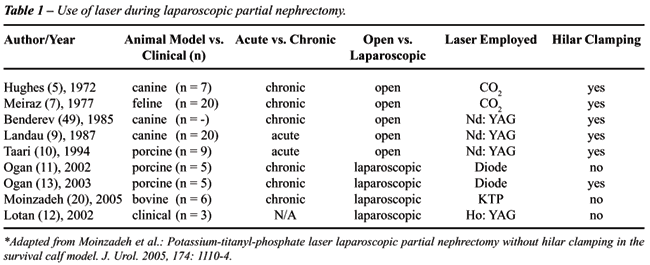
Lotan et al. (17) described the first clinical
report of laser during LPN, using the holmium: YAG laser in three patients.
Indications included complex cyst, nonfunctioning lower pole, and renal
mass. There was minimal blood loss and no need for hilar clamping. Although
the laser alone was hemostatic, the authors used fibrin glue in two cases
and oxidized cellulose in one case to reinforce the tissue against delayed
bleeding. There were no perioperative complications and the average hospitalization
was 3 days. The authors in this study concluded that with high power settings
(0.2J/pulse at 60 pulses/sec and 0.8J/pulse at 40 pulses/sec), the Ho:
YAG laser can be used as an effective hemostatic tool in LPN.
The advantages of this laser are simplicity
of use and relative low cost. The Ho: YAG laser is able to cut and coagulate
tissues, with minimal damage to the adjacent renal parenchyma, preserving
as much normal tissue as possible. The disadvantages include the smoke
created and the splashing of blood on the camera, particularly when transecting
larger vessels.
The use of Diode laser in LPN was reported
by Ogan et al. (18). They performed transperitoneal lower pole laparoscopic
partial nephrectomy in 5 pigs without the need for hilar occlusion using
a 980-nm diode laser. The laser hemostasis was insufficient in 3 cases,
requiring adjunctive measures, as hemostatic clips to stop bleeding. The
mean operative time was 126 minutes, the mean blood loss was 150 mL (50-300
mL), and no urinary extravasation was observed on retrograde pyelogram
at 2 weeks. The authors concluded that the diode laser is feasible on
the porcine model and limited its use in humans to small periferic tumors.
The limitation of this laser was observed in controlling large vessels.
Fibrin glue was applied to all partial nephrectomies, resulting in selling
of the collecting system in all cases. It was unknown if the selling occurred
as result of the glue or the laser. Further studies are necessary to achieve
success with this kind of energy in LPN.
The same group has utilized an 810-nm pulsed
diode laser (20W) plus a 50% liquid albumin-indocyanine green solder in
5 pigs demonstrating the tissue welding qualities of lasers (19). All
surgeries were performed without complications with mean operative time
of 82 minutes. Average blood loss was 43.5 mL and mean warm ischemia time
was 11.7 minutes. There was no evidence of urinoma formation or delayed
hemorrhage in any of the animals. Histologic studies showed good preservation
of renal parenchyma beneath the solder.
The main advantage of this soldering technique
includes the ability to close the collecting system and control of bleeding
during LPN, with short warm ischemia time (< 12 minutes). In this study,
the laser was able to control large vessels, mimicking human LPN, and
the violated collecting system was fixed with the solder without problems.
Further studies are required to confirm this fact.
The KTP laser has been recently tested for
LPN in the calf model (20). Using 6 calves, the authors successfully completed
the operation without hilar clamping in 11/12 procedures. One animal required
temporary occlusion of the hilum for hemorrhage not controlled with the
laser. The histological analysis revealed minimal effect on the adjacent
area to the excision. The unique feature of the KTP laser includes the
532-nm wavelength, with specific uptake by hemoglobin. The authors believed
that this aspect yielded excellent hemostasis in the robust calf model.
In addition, minimal blood splatter was noted given decreased bleeding
and thermomechanical ejection when compared to the Ho:YAG laser.
HIDRO-JET DEVICE: MAINLY CUTTING ENERGY
Hydro-jet
technology has been established for surgery of the liver and other parenchymatous
organs, using the principle of high-pressure water flow to cut tissues
(21,22). The delivery probe allows dissection with both water high pressure
and blunt dissection. Coagulation is applied usually with a bipolar thermo-applicator
if needed. The first report in the urologic field was done by Pentchev
et al. for open renal surgery in the canine model (23).
Shekarriz et al. published the first experimental
laparoscopic study in LPN. The authors performed the procedure with hilar
clamping in the porcine model, using 5 animals (24). In this study, the
mean warm ischemia time was 17 minutes. Moinzadeh et al. evaluated the
feasibility of hydro-jet assisted LPN without renal hilar vascular control
in the larger size and more robust calf model, to better reproduce the
human kidney (25). The authors performed bilateral LPN using the Helix
Hydro-Jet® (ERBE Tubingen, Germany) without hilar control in 10 survival
calves. All procedures were completed successfully without open conversion,
and the hilar clamping was not needed in 18 (90%) cases. The mean operative
time was 173 minutes (60-240), kidney section time was 63 minutes (13-150),
and estimated blood loss was 174 cc (20-750). Histological studies showed
a thin (1 mm) layer of adherent coagulum beneath the resection area with
minimal thermal artifact.
Clinically, Penchev et al. used the hydro-jet
without hilar clamping in open partial nephrectomy for a low pole tumor
(n = 1) and open anatrophic nephrotomy of a staghorn calculi (n = 1) (26).
The hydro-jet dissection time was 25 and 12 minutes, with blood loss of
150 and 100 mL, respectively. The procedures were done without vascular
clamping or local hypothermia (27).
Basting et al. reported the largest clinical
experience with the hydro-jet device for a variety of open kidney procedures
(26). A total of 24 patients underwent open surgery for nephrolithiasis,
renal masses, and complicated cysts. Operative resection time was between
14 and 40 minutes with minimal intraoperative blood loss. They concluded
that the water jet device was useful for renal parenchymal transection.
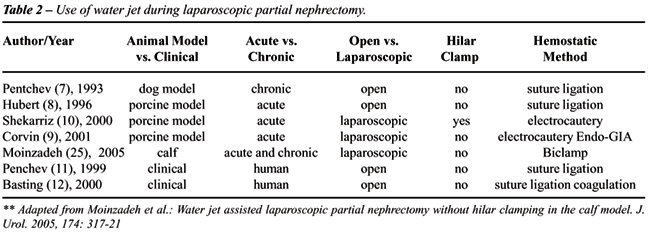
To date, no clinical report of hydro-jet
LPN has been published, but the suitability of the LPN technique to improve
hemostasis and dissection has been proven (Table-2). This use of kinetic
energy has the advantage of dissect selective parenchyma while preserving
vessels and the collecting system during the surgery. With this technology,
the procedure may be easier, faster, avoiding the warm ischemia and the
technically challenging intracorporeal suturing during LPN. Since there
is no cautery tissue damage, the Hydro-jet device preserves the renal
parenchyma. Limitations include the theoretical spread of cancer cells
with the use of the high pressure saline flow. In addition, current rigid
instruments lacking flexibility make the laparoscopic angles of dissection
challenging.
BIPOLAR
ELECTRICAL CURRENT: CUTTING AND HEMOSTATIC ENERGY
The
bipolar needle electrode is composed of two 5 cm long needles, in parallel,
that connects to a bipolar energy source. By electric current, it dissects
and cauterizes the tissue that lies between the needles. This technique
facilitates the procedure, creating a regional ischemia, without hilar
occlusion. It is very efficient to coagulate deep parenchymal vessels
before cutting out the renal tissue. Its linear shape can be a limitation
to different tumors locations.
Barret et al. compared the efficacy and
morbidity between three hemostatic techniques: high-frequency bipolar,
high-frequency unipolar, and ultrasound during LPN in a porcine model
without vascular control. In this study, the authors evaluated perioperative
complications, blood loss, renal function, and histological findings in
the parenchyma. There was a significantly decrease in blood loss when
the ultrasound was employed (p = 0.0026). One pig developed hemorrhage
in day 6. There was no difference in histological results (28).
In another porcine study, Ong et al. demonstrated
the use of the bipolar needle device in LPN with comparable results to
those reported by Barret et al. (28). In this series, the blood loss was
decreased (29).
Janetschek et al. and Guillonneau et al.
reported the use of bipolar hemostatic coagulation in LPN showing the
clinical feasibility of this energy to achieve good hemostasis (30,31).
Some modifications in the future, including
curved shape or articulating head may expand the use of this device for
midpole and hilar renal masses. It seems that the damage to the remaining
tissue is minimal. Nevertheless, more clinical studies are required to
define the proper role in LPN.
FLOATING BALL: CUTTING AND HEMOSTATIC ENERGY
The
TissueLink Floating Ball (Tissuelink Medical, Inc., Dover, NH) comprises
a monopolar current that combines water-cooled with radio frequency for
blunt dissection and coagulation purposes. The technology uses the radio
frequency close to the instrument tip, sealing small blood vessels, achieving
good hemostasis prior to parenchymal resection. The electrical energy
is transmitted by the saline irrigation and converted into thermal energy
on the target tissue. Scar formation is prevented by the saline since
the coagulated area remains cool, maintaining the temperature at or bellow
100o C (32).
Sundaram et al. first reported the feasibility
of LPN with the Floating Ball without vascular control in 3 patients (33).
The mean estimated blood loss was 275 mL and one patient had a urine leak
that resolved spontaneously. Urena et al. retrospectively reviewed 10
LPN where this energy source was used to achieve hemostasis. Mean tumor
size was 3.9 cm and mean blood was 352 mL. All margins were negative (32).
Stern et al. reported the largest series
available (34). The authors performed 14 LPN using the Floating Ball.
The mean operative time in this series was 124 minutes and mean blood
loss was 168 mL. The argon-beam coagulator, Fibrilartm (Ethicon,
Somerville, NJ) and fibrin glue were used for control minor bleeding.
The parenchymal resection is slower when
performed without hilar control. To minimize the bleeding, the renal tissue
can be coagulated prior to resection, and the scar produced does not affect
the pathological analysis of tumor margin status. Vascular structures
up to 3 mm can be sealed by the use of the floating ball device. The depth
of tissue penetration is correlated to the type and duration of contact
between the kidney surface and the device.
HARMONIC SCALPEL: CUTTING AND HEMOSTATIC ENERGY
The
harmonic scalpel (LaparoSonic Coagulating Shears; Ethicon Endo-Surgery,
Cincinati, OH) has the potential to vibrate its jaws at a rate of 55,000
Hz, generating heat in the range of 50º C TO 100º C, coagulating
and cutting the tissue simultaneously. This device forms a protein coagulum
between the jaws of the shear resulting in minimal spread of energy laterally
(2 mm).
Jackman et al. showed the ability of the
harmonic scalpel to perform LPN in a porcine model without control of
the hilar vessels (35). Additional hemostatic measures were necessary
in 25% of the cases when a polar nephrectomy was performed. The authors
concluded that the use of harmonic scalpel in hemiphrectomies is not recommended
because the high risk of substantial hemorrhage.
Harmon et al. reported the use of harmonic
scalpel in 15 patients undergoing LPN (36). All procedures were completed
without complications. The mean tumor size was 2.3 cm and mean blood loss
was 368 mL. The renal bed hemostasis was accomplished by using oxidized
cellulose and argon beam coagulator. All resection margins were negative
at the pathology results.
Although this device may aid in dissection
of small superficial renal tumors, it is not sufficient to perform LPN
particularly for larger and centrally located tumors. Overall, the use
of this technology has not shown good results when used without others
hemostatic device/agents.
ELECTRICAL SNARE: CUTTING AND HEMOSTATIC ENERGY
This
device was designed as a combination of an electrosurgical snare electrode
(Cook Urological Inc., Spencer, IN) with an electrosurgical generator
(ERBE USA, Inc., Marietta, GA), to produce renal transection and parenchymal
hemostasis simultaneously.
Elashry et al. compared the effectiveness
of this snare during LPN, comparing it to ultrasonic dissectors in the
porcine model. The electrical snare was faster and produced less intraoperative
bleeding than the ultrasonic dissectors (37).
In the study from Washington University
reporting the use of the electrosurgical snare in LPN without occlusion
of hilar vessels (38), the hemostasis was successfully achieved in all
but one case, where it was necessary to use the argon-beam coagulator
to stop the bleeding after parenchymal resection.
The limitations of this device include capability
of using only for guillotine resections and it can not be safely used
close the hilum because of risk of renal pelvis injury. Clinical trials
are still being awaited to confirm its applicability in LPN.
RADIO FREQUENCY ABLATION: TISSUE HEMOSTATIC - ABLATIVE ENERGY
The
Radio Frequency Ablation (RFA) creates a good parenchymal zone of coagulative
necrosis usually visible after 24 to 48 hours post procedure. This treated
tissue is finally replaced by inflamation and fibrosis (39). In animal
studies, Gill et al. demonstrated the renal parenchyma trombosis and coagulation
noted after RF ablation (40,41).
The first clinical report on RFA assisted
LPN was published by Gettman et al. (42). The RFA was used in 10 patients
mainly to coagulate the tumor, facilitating the tumor excision with minimal
bleeding. The Texas University group published the initial series of RFA
assisted LPN (43) with 13 patients undergoing surgery. A total of 5 tumors
were completely excised and 7 tumors were left in situ after treatment.
There was one focal positive margin in a patient submitted to RFA assisted
LPN, but this patient remained disease-free after 1 year treatment.
In these studies the authors reserved the
use of this RFA technique for polar, small, exophytic lesions. There are
some advantages related to complete tumor removal instead of only ablation,
providing better oncologic approach for the patient. There is also minimal
blood loss and good visualization during tumor excision. The limitations
are concerned about the need for a learning curve with the RFA probes,
the challenge to perform centrally located tumor excisions with high risk
of collecting system injury. An additional clinical experience with larger
diameter tumors and long-term follow-up is necessary to confirm the real
value of this technique.
ARGOM-BEAM
COAGULATOR: HEMOSTATIC ENERGY
The argon beam coagulator (ABC) provides
hemostasis by delivering radiofrequency electrical energy to tissue across
a jet of argon gas. The device uses a non-contact, monopolar, electrothermal
type of hemostasis (44).
The first report using the ABC was from
Daniell et al. when they reported its use in cholecystectomies in animals
and humans. They concluded that the ABC allowed a safely hemostasis and
effective controlled tissue electrocoagulation (45).
These techniques have been used associated
to others kind of hemostatic agents, and with different approaches by
another authors with relatively success (46-48).
The ABC allows a good visualization without
smoke, safe hemostatic tissue electrocoagulation, with a rapid non-touching
technique. The lack of smoke and the non-touching technique facilitate
laparoscopic application. In the authors’ opinion, this kind of
energy is well used to coagulate cortex vessels after closing the parenchymal
defect but has limited application for larger, infiltrating tumors. The
use of the device must be done with caution because of the risk of gas
embolism caused by intra-abdominal overpressurization during a laparoscopic
procedure; to minimize the associated risks we must leave one instrument
cannula open to drain the gas and have a good patient monitorization (e.g.,
end-tidal CO2, Doppler flow).
CONCLUSIONS
LPN has emerged and gained popularity in selected centers worldwide, and new energy sources have been employed to minimize the level of difficulty of the procedure. The key to achieve an ideal procedure remains in simplify the technique as regards closure of collecting system and minimal blood loss without the need for hilar occlusion. The improved energy sources may further decrease operative time, warm ischemia time, and morbidity. The different devices presented are evolving but until today, no one has been totally superior and only the future will show us which of these instruments will stand the test of time.
CONFLICT OF INTEREST
None declared.
REFERENCES
- Jayson M, Sanders H: Increased incidence of serendipitously discovered renal cell carcinoma. Urology. 1998; 51: 203-5.
- Fergany AF, Hafez KS, Novick AC: Long-term results of nephron sparing surgery for localized renal cell carcinoma: 10-year followup. J Urol. 2000; 163: 442-5.
- Gill IS, Desai MM, Kaouk JH, Meraney AM, Murphy DP, Sung GT, et al.: Laparoscopic partial nephrectomy for renal tumor: duplicating open surgical techniques. J Urol. 2002; 167: 469-7; discussion 475-6.
- Janetschek G, Jeschke K, Peschel R, Strohmeyer D, Henning K, Bartsch G: Laparoscopic surgery for stage T1 renal cell carcinoma: radical nephrectomy and wedge resection. Eur Urol. 2000; 38: 131-8.
- Gill IS, Matin SF, Desai MM, Kaouk JH, Steinberg A, Mascha E, et al.: Comparative analysis of laparoscopic versus open partial nephrectomy for renal tumors in 200 patients. J Urol. 2003; 170: 64-8.
- McDougall EM, Elbahnasy AM, Clayman RV: Laparoscopic wedge resection and partial nephrectomy the Washington University experience and review of the literature. JSLS. 1998; 2: 15-23.
- Rassweiler JJ, Abbou C, Janetschek G, Jeschke K: Laparoscopic partial nephrectomy. The European experience. Urol Clin North Am. 2000; 27: 721-36.
- Landau ST, Wood TW, Smith JA Jr: Evaluation of sapphire tip Nd:YAG laser fibers in partial nephrectomy. Lasers Surg Med. 1987; 7: 426-8.
- Meiraz D, Peled I, Gassner S, Ben-Bassat M, Kaplan I: The use of the CO2 laser for partial nephrectomy: an experimental study. Invest Urol. 1977; 15: 262-4.
- Taari K, Salo JO, Rannikko S, Nordling S: Partial nephrectomy with a combined CO2 and Nd:YAG laser: experimental study in pigs. Lasers Surg Med. 1994; 14: 23-6.
- Dalsing MC, Packer CS, Kueppers P, Griffith SL, Davis TE: Laser and suture anastomosis: passive compliance and active force production. Lasers Surg Med. 1992; 12: 190-8.
- Maragh H, Hawn RS, Gould JD, Terzis JK: Is laser nerve repair comparable to microsuture coaptation? J Reconstr Microsurg. 1988; 4: 189-95.
- Chikamatsu E, Sakurai T, Nishikimi N, Yano T, Nimura Y: Comparison of laser vascular welding, interrupted sutures, and continuous sutures in growing vascular anastomoses. Lasers Surg Med. 1995; 16: 34-40.
- Kopchok GE, White RA, White GH, Fujitani R, Vlasak J, Dykhovsky L, et al.: CO2 and argon laser vascular welding: acute histologic and thermodynamic comparison. Lasers Surg Med. 1988; 8: 584-8.
- Johnson DE, Cromeens DM, Price RE: Use of the holmium:YAG laser in urology. Lasers Surg Med. 1992; 12: 353-63.
- Lotan Y, Gettman MT, Lindberg G, Napper CA, Hoopman J, Pearle MS, et al.: Laparoscopic partial nephrectomy using holmium laser in a porcine model. JSLS. 2004; 8: 51-5.
- Lotan Y, Gettman MT, Ogan K, Baker LA, Cadeddu JA: Clinical use of the holmium: YAG laser in laparoscopic partial nephrectomy. J Endourol. 2002; 16: 289-92.
- Ogan K, Wilhelm D, Lindberg G, Lotan Y, Napper C, Hoopman J, et al.: Laparoscopic partial nephrectomy with a diode laser: porcine results. J Endourol. 2002; 16: 749-53.
- Ogan K, Jacomides L, Saboorian H, Koeneman K, Li Y, Napper C, et al.: Sutureless laparoscopic heminephrectomy using laser tissue soldering. J Endourol. 2003; 17: 295-300.
- Moinzadeh A, Gill IS, Rubenstein M, Ukimura O, Aron M, Spaliviero M, et al.: Potassium-titanyl-phosphate laser laparoscopic partial nephrectomy without hilar clamping in the survival calf model. J Urol. 2005; 174: 1110-4.
- Papachristou DN, Barters R: Resection of the liver with a water jet. Br J Surg. 1982; 69: 93-4.
- Rau HG, Buttler E, Meyer G, Schardey HM, Schildberg FW: Laparoscopic liver resection compared with conventional partial hepatectomy—a prospective analysis. Hepatogastroenterology. 1998; 45: 2333-8.
- Pentchev R, Damyanov C, Kavardjikova V: Experimental application of the jet scalpel in renal surgery in the dog. Ann Urol (Paris). 1993; 27: 84-6.
- Shekarriz H, Shekarriz B, Upadhyay J, Burk C, Wood DP Jr, Bruch HP: Hydro-jet assisted laparoscopic partial nephrectomy: initial experience in a porcine model. J Urol. 2000; 163: 1005-8.
- Moinzadeh A, Hasan W, Spaliviero M, Finelli A, Kilciler M, Magi-Galluzzi C, et al.: Water jet assisted laparoscopic partial nephrectomy without hilar clamping in the calf model. J Urol. 2005; 174: 317-21.
- Basting RF, Djakovic N, Widmann P: Use of water jet resection in organ-sparing kidney surgery. J Endourol. 2000; 14: 501-5.
- Penchev RD, Losanoff JE, Kjossev KT: Reconstructive renal surgery using a water jet. J Urol. 1999; 162: 772-4.
- Barret E, Guillonneau B, Cathelineau X, Validire P, Vallancien G: Laparoscopic partial nephrectomy in the pig: comparison of three hemostasis techniques. J Endourol. 2001; 15: 307-12.
- Ong AM, Bhayani SB, Hsu TH, Pinto PA, Rha KH, Thomas M, et al.: Bipolar needle electrocautery for laparoscopic partial nephrectomy without renal vascular occlusion in a porcine model. Urology. 2003; 62: 1144-8.
- Janetschek G, Daffner P, Peschel R, Bartsch G: Laparoscopic nephron sparing surgery for small renal cell carcinoma. J Urol. 1998; 159: 1152-5.
- Guillonneau B, Bermudez H, Gholami S, El Fettouh H, Gupta R, Adorno Rosa J, et al.: Laparoscopic partial nephrectomy for renal tumor: single center experience comparing clamping and no clamping techniques of the renal vasculature. J Urol. 2003; 169: 483-6.
- Urena R, Mendez F, Woods M, Thomas R, Davis R: Laparoscopic partial nephrectomy of solid renal masses without hilar clamping using a monopolar radio frequency device. J Urol. 2004; 171: 1054-6.
- Sundaram CP, Rehman J, Venkatesh R, Lee D, Rageb MM, Kibel A, et al.: Hemostatic laparoscopic partial nephrectomy assisted by a water-cooled, high-density, monopolar device without renal vascular control. Urology. 2003; 61: 906-9.
- Stern JA, Simon SD, Ferrigni RG, Andrews PE: TissueLink device for laparoscopic nephron-sparing surgery. J Endourol. 2004; 18: 455-6.
- Jackman SV, Cadeddu JA, Chen RN, Micali S, Bishoff JT, Lee BR, et al.: Utility of the harmonic scalpel for laparoscopic partial nephrectomy. J Endourol. 1998; 12: 441-4.
- Harmon WJ, Kavoussi LR, Bishoff JT: Laparoscopic nephron-sparing surgery for solid renal masses using the ultrasonic shears. Urology. 2000; 56: 754-9.
- Elashry OM, Wolf JS Jr, Rayala HJ, McDougall EM, Clayman RV: Recent advances in laparoscopic partial nephrectomy: comparative study of electrosurgical snare electrode and ultrasound dissection. J Endourol. 1997; 11: 15-22.
- Collyer WC, Landman J, Olweny EO, Andreoni C, Kibel A, Andriole GL, et al.: Laparoscopic partial nephrectomy with a novel electrosurgical snare in a porcine model. J Endourol. 2002; 16: 673-9.
- Schulman C, Zlotta A: Transurethral needle ablation of the prostate (TUNA): pathological, radiological and clinical study of a new office procedure for treatment of benign prostatic hyperplasia using low-level radiofrequency energy. Arch Esp Urol. 1994; 47: 895-901.
- Hsu TH, Fidler ME, Gill IS: Radiofrequency ablation of the kidney: acute and chronic histology in porcine model. Urology. 2000; 56: 872-5.
- Gill IS, Hsu TH, Fox RL, Matamoros A, Miller CD, Leveen RF, et al.: Laparoscopic and percutaneous radiofrequency ablation of the kidney: acute and chronic porcine study. Urology. 2000; 56: 197-200.
- Gettman MT, Bishoff JT, Su LM, Chan D, Kavoussi LR, Jarrett TW, et al.: Hemostatic laparoscopic partial nephrectomy: initial experience with the radiofrequency coagulation-assisted technique. Urology. 2001; 58: 8-11.
- Jacomides L, Ogan K, Watumull L, Cadeddu JA: Laparoscopic application of radio frequency energy enables in situ renal tumor ablation and partial nephrectomy. J Urol. 2003; 169: 49-53; discussion 53.
- Go PM, Goodman GR, Bruhn EW, Hunter JG: The argon beam coagulator provides rapid hemostasis of experimental hepatic and splenic hemorrhage in anticoagulated dogs. J Trauma. 1991; 31: 1294-300.
- Daniell J, Fisher B, Alexander W: Laparoscopic evaluation of the argon beam coagulator. Initial report. J Reprod Med. 1993; 38: 121-5.
- Gill IS, Delworth MG, Munch LC: Laparoscopic retroperitoneal partial nephrectomy. J Urol. 1994; 152: 1539-42.
- Winfield HN, Donovan JF, Godet AS, Clayman RV: Laparoscopic partial nephrectomy: initial case report for benign disease. J Endourol. 1993; 7: 521-6.
- Yoshikawa Y, Ono Y, Hattori R, Gotoh M, Yoshino Y, Katsuno S, et al.: Laparoscopic partial nephrectomy for renal tumor: Nagoya experience. Urology. 2004; 64: 259-63.
- Benderev TV, Schaeffer AJ: Efficacy and safety of the Nd:YAG laser in canine partial nephrectomy. J Urol. 1985; 133: 1108-11.
____________________
Accepted after revision:
October 29, 2006
_______________________
Correspondence address:
Dr. Inderbir S. Gill
Section of Laparoscopic and Robotic Surgery
Glickman Urological Institute, A100
9500 Euclid Avenue
Cleveland, OH, 44195, USA
Fax: + 1 216 445 7031
E-mail: gilli@ccf.org