IS
THE ANTERIOR VAGINAL WALL SLING A GOOD ALTERNATIVE FOR INTRINSIC SPHINCTERIC
INSUFFICIENCY?
(
Download pdf )
PAULO C. R. PALMA, CASSIO L. Z. RICCETTO, ADERIVALDO C. DIAS FILHO, MÍRIAM DAMBROS, MARCELO THIEL, NELSON R. NETTO JR.
Division of Urology, School of Medicine, State University of Campinas (UNICAMP), Campinas, SP, Brazil
ABSTRACT
Objectives:
We present our experience with the anterior vaginal wall sling, in the
treatment of patients with stress urinary incontinence (SUI) due to urethral
intrinsic sphincteric deficiency.
Material and Methods: Forty-five women (mean
age 53.4 years) with urodynamically proven intrinsic sphincteric deficiency
(Valsalva Leak Point Pressure below 60cm H2O) were studied, prospectively.
Coexisting bladder neck hypermobility was assessed using transperineal
ultrasound. Patients with severe pelvic prolapse (grade 3 or 4) were excluded.
Multivariable logistic regression was used to identify the variables that
influenced the outcome (statistical significance was established for p<0.05).
Follow-up ranged from 26 to 61 months (mean 40 months).
Results: Complete SUI cure was achieved
in 14 women (31.1%) and 17 other women (37.8%) described SUI improvement
and were satisfied with the outcome. Statistical analysis showed that
factors such as age below 35 years (p=0.0251), and preoperative bladder
neck hypermobility (p=0.0176), were strongly related to postoperative
continence.
Conclusions: We concluded that the vaginal
wall sling has a high rate of failure in the treatment of patients with
intrinsic sphincteric deficiency. This technique should not be proposed
if hypermobility is not associated, especially in the case of elderly
patients.
Key words:
urinary incontinence; stress; surgical technique; vagina; sling
Int Braz J Urol. 2002; 28: 349-55
INTRODUCTION
The
main goal of the sling procedure is to correct stress urinary incontinence
(SUI) resulting from intrinsic sphincteric deficiency. Recently, slings
have also been proposed for patients with associate or exclusive urethral
hypermobility (1). In this procedure, continence is restored because of
improved pressure transmission ratio in the urethra, obtained through
the support provided by the sling (2). A wide variety of materials have
been proposed to be used in slings, e.g. autologous materials (rectus
fascia, fascia lata, and anterior vaginal wall), biological homologous
or heterologous material (cadaveric fascia, unepithhelized dermal grafts,
bovine pericardium, porcine intestinal submucosa), or synthetic material
(expanded polytetraflouroethylene or polypropilpropylene) (1).
Modern concepts of female pelvic anatomy
and physiology have resulted in a new approach for treating SUI (3) that
involves the complete anatomical restoration of the pelvic fascial and
muscular structures of the continence mechanism, especially those related
to suburethral support of the midurethra. Anterior vaginal wall sling
has evolved from vaginal wall sling, which has been previously described
by Raz et al. (3). In the vaginal wall sling first described, a rectangular
graft of vaginal epithelium anchored with polypropylene sutures in both
extremities was suspended to suprapubic area in the same way as in a classical
aponeurotic sling. The main purpose of anterior vaginal sling is to strengthen
urethropelvic ligaments using sutures applied from lateral aspect of midurethra
to ligament insertion in the tendineous arc of obturator fascia. A formal
Raz bladder neck suspension is also performed simultaneously. According
to Raz et al. experience, the anterior vaginal wall sling can play a major
role in anterior pelvic reconstruction and is expected to cure all pathophysiologic
components of SUI with a high rate of success, regardless of the urodynamic
diagnosis (3). Our experience with the anterior vaginal wall sling in
treating female intrinsic sphincteric deficiency was distinct, and is
presented below.
PATIENTS AND METHODS
All
patients with urinary stress incontinence resulting from intrinsic sphincteric
deficiency, defined as having Valsalva leak point pressure (VLPP) below
60cm H2O, attended at our institution from 1993 to 1996, were initially
selected for this study. After careful evaluation, 45 patients were prospectively
studied. Patients who presented severe pelvic prolapse (grades 3 or 4),
VLPP above 60cm H2O, or detrusor instability, were excluded from the study.
Preoperatively, all patients underwent a complete physical and pelvic
examination, including an objective assessment of urinary leakage during
stress maneuvers. Pelvic prolapse was graded according to Baden et al.
(4). Urodynamic evaluation was performed with 2 urethral catheters (one
8F for filling and another 4F for bladder pressure measurement). A rectal
saline filled 8F catheter-balloon was placed above the anal sphincter
to obtain abdominal pressure. The test included medium filled water cystometry,
VLPP assessment, and pressure-flow study. Patients with VLPP below 60cm
H2O were diagnosed as having intrinsic sphincteric deficiency, based on
McGuire’s criterion (5). Urethral mobility was evaluated in all patients
using transperineal ultrasound. Urethral hypermobility was considered
as partly a cause of SUI in cases where urethral descent on transperineal
ultrasound was above 10mm. All examinations were performed by the same
senior radiologist.
All operations were performed by the same
senior surgeon. After spinal or epidural anesthesia, the patient was placed
in dorsal lithotomy position. The vagina, perineum, and lower abdomen
were prepared in usual fashion and draped. A urethral 16F Foley catheter
was inserted and the balloon was filled with 10mL of sterile saline, emptying
thus the bladder and providing a landmark for the bladder neck. The posterior
vaginal wall was retracted with a weighted vaginal speculum. Submucosal
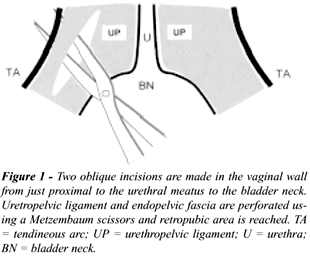
saline injections were used to ease the dissection of vaginal wall. Two
paramedian oblique incisions were made from the bladder neck to the midurethra.
Dissection proceeded just under the vaginal epithelium until exposing
pubocervical fascia. Endopelvic fascia was bilaterally perforated by laterally
inserting Metzembaum scissors in bladder neck, close to the urethropelvic
ligament insertion in the obturator’s tendinous arch. This maneuver
allowed the surgeon to reach the retropubic area (Figure-1). The urethropelvic
ligament was bluntly dissected from the tendinous arch and, when necessary,
urethrolysis was performed during this step, by dissection of all adherences
between the urethra and surrounding tissues, until it became completely
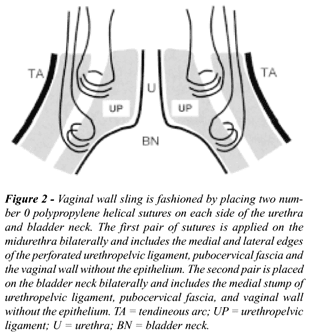
free of scar tissue. The vaginal wall sling was fashioned by placing 2
number 0 polypropylene helical sutures on each side of the urethra and
bladder neck. The first pair of sutures was bilaterally applied to the
midurethra, and included medial and lateral edges of the perforated urethropelvic
ligament, the pubocervical fascia, and the vaginal wall without the epithelium.
The second pair was bilaterally placed at the bladder neck, and included
the medial stump of urethropelvic ligament, the pubocervical fascia, and
the vaginal wall without the epithelium. (Figure-2). A 1cm midline transverse
suprapubic incision was made, and the sutures were transferred towards
this incision with a Stamey suspension needle. Cystoscopy was performed
to rule out bladder or urethral perforation. The sutures were tied with
the cystoscope inside the urethra and parallel to the vaginal axis, without
any tension. Suprapubic cystostomy was not performed in any patient. The
abdominal incision was closed with interrupted 4-0 nylon stitches, and
the vaginal wall was sutured with 2-0 chromic interrupted stitches. An
antibiotic-soaked vaginal pack was placed to be retrieved in 24 hours.
A Foley catheter was left indwelling for 48 hours, when residual urine
volume was measured. If residuals exceeded 100mL, or 30% of total bladder
capacity, the catheter was reinserted and the patient was re-evaluated
after 4 days, and then weekly, until the aforementioned criteria were
met, and catheter withdrawal was possible. If after a month, the patient
still did not have the catheter removed, clean intermittent self-catheterization
was implemented for 3 postoperative months, after which vaginal urethrolysis
was proposed if infravesical obstruction was diagnosed.
Patients were reviewed at 1 week, at 1,
3 and 6 months, and annually thereafter. At each visit, detailed history
concerning voiding symptoms and urine leakage plus a physical and pelvic
exam were undertaken, including direct assessment of urinary leakage during
stress maneuvers (Bonney–Marshall test). All visits were supervised
by the head researchers.
Success was defined by complete continence
without symptoms of bladder dysfunction or residual persistent leakage
with minimal patient discomfort (i.e., important improvement from previous
state). Unsuccessful outcome was defined as unchanged or worsened urinary
incontinence.
Statistical analysis was carried out using
a logistic regression model. If the variable was dichotomic (e.g., presence
or absence of urethral hypermobility), logistic transformation was used.
Proportional odds ratio was used for trichotomic or polytomic variables.
Variables included in multivariate logistic regression analysis were age,
associated urge-incontinence, presence of nocturnal enuresis, previous
abdominal and/or vaginal surgery for urinary incontinence, associated
bladder neck hypermobility, and leakage in resting position. Chi-square
analysis and Fischer’s exact test were respectively used to assess
individual dichotomic or trichotomic variables versus successful or unsuccessful
outcome. Statistical significance was established at p<0.05.
RESULTS
The
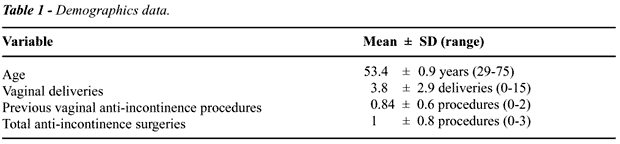
patients’ ages ranged from 29 to 75 years (mean 53.4 years). Demographic
data are summarized in Table-1. Most of the patients presented some degreeof
anterior vaginal relaxation (mild cystocele: 19 patients; moderate cystocele:
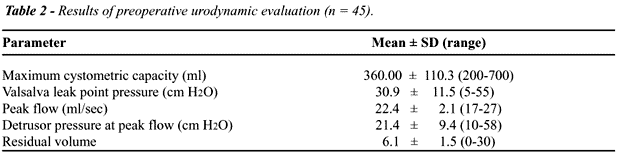
16 patients). Pre-operative urodynamic evaluations are summarized inTable-2.
The procedure lasted from 40 to 135 minutes
(mean=81, standard deviation=12). Three patients bled profusely (>200mL)
during vaginal dissection and endopelvic fascia perforation, but the hemorrhage
was controlled by manual compression and electro-coagulation without needing
blood transfusions. Average hospital stay was 2.3 days (ranged from 2
to 4 days). Sixteen patients (35%) were discharged without bladder catheter.
The remainder stayed with urethral catheter for 4 to 25 days (average
= 4 days). No patient underwent clean intermittent catheterization. For
patients who progressed with urinary retention or significant post-void
residual volume, were performed weekly attempts to remove the Foley catheter
until voiding improvement. Analgesic requirements were minimal.
Follow-up ranged from 26 to 61 months (median=40).
Complete cure of SUI, defined as complete continence without symptoms
of bladder dysfunction or residual persistent leakage, and absence of
objective leakage during Valsalva’s maneuver, was achieved in 14
women (31.1%), and 17 (37.8%) presented improvement from SUI and were
satisfied with the outcome. Therefore, according to the criteria above,
the outcome was successful in 31 women (68.9%). However, SUI symptoms
persisted or urine leakage worsened in the remaining 14 patients (31.1%).
Up to present, surgery had failed in 8 patients who underwent aponeurotic
sling implant using the rectus fascia.
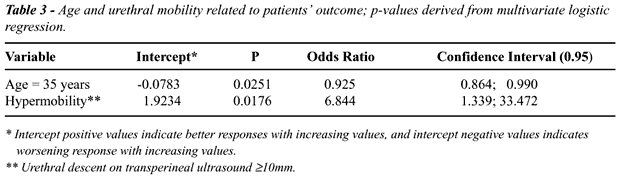
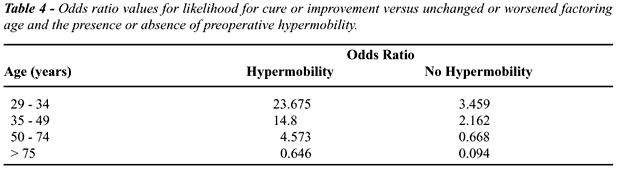
Finally, multivariate logistic regression
revealed that only 2 variables, namely age above 35 years (p=0.0251),
and lack of urethral hypermobility (p=0.0176), negatively influenced the
outcome. The cure probability and the odds ratio involving these variables
are demonstrated in Tables-3 and 4.
DISCUSSION
Stress
urinary incontinence resulting from intrinsic sphincteric insufficiency
occurs more frequently in patients who have previously undergone surgery
to treat incontinence, or who have pelvic irradiation, trauma of ischiopubic
region or urethral dysfunction of neurological origin (3). Treating sphincteric
insufficiency implies increased urethral resistance, which can be achieved
with a sling, submucosal injection of different substances or implantation
of an artificial urinary sphincter (6).
Slings made from autologous material have
been used since the technique was first described by Aldridge in 1942
(7). Recently, other synthetic materials have been proposed in order to
diminish the potential morbidity related to the harvest of aponeurotic
or fascial grafts (1). However, the main problem of synthetic material
is a greater risk of erosion and infection than biological grafts (8).
The urethral fascial support depends on
pubo-urethral and urethropelvic ligaments (9). Pubo-urethral ligaments
support the urethra against the inferior branch of pubic symphysis, which
has a band of prepubic fibers (more tenuous), and another more robust
band of retropubic fibers. They divide the urethra into 3 distinct functional
regions. The proximal region, also called intra-abdominal region, is related
to passive continence secondary to transmission of abdominal pressure
variations that act in conjunction with the bladder neck. The intermediate
region includes the midurethra, which is responsible for the active sphincteric
mechanism. The function of the region that is distal to the pubo-urethral
ligament is related to urinary conduction only, with no involvement of
continence mechanism (10). The thickness of anal levator muscle fascia
is due to the urethropelvic ligaments that extend parallel to urethra
from midurethra to the bladder neck, corresponding to 3 and 9 o’clock
positions, and are laterally inserted into the tendinous arch of pelvic
fascia. It provides an increase in urethral resistance and supports the
urethra and bladder neck. Increased abdominal pressure causes reflexive
contraction of anal levator muscle, which increases the tension of urethropelvic
ligaments, which results in suspension and compression of the urethra
(11). The vaginal wall sling is based on these concepts and aims at restoring
the natural elements of urethral support by plication of urethropelvic
ligaments with the tendinous arch, so that the urethra is stabilized using
available natural tissues (3). The bladder neck support is obtained by
applying helicoidal sutures, according to the technique previously described
by the same author for the endoscopic suspension of the bladder neck.
In a study conducted with 160 patients, of which 95 (59.3%) presented
intrinsic sphincteric insufficiency, patient’s subjective report
demonstrated a success rate of 93% (12). In the same study, 9% of the
patients reported urinary urge associated with urine leakage during postoperative
period. Stratified analysis did not demonstrate significant differences
in relation to the etiology of incontinence, although patients with intrinsic
sphincteric insufficiency have shown relatively long periods of postoperative
urinary retention. Complications described were uncommon, and were related
to vaginal suture infection, suprapubic pain, and in 5% of the cases,
to prolonged urinary retention (more than 30 days). Despite the good preliminary
results obtained, the author did not report on long-term progression of
these patients. A trend towards late recurrence of incontinence among
patients with sphincteric deficiency was also described, similarly in
the present study.
In this study, only 31.1% of the patients
had favorable outcome. Those patients who progressed to incontinence recurrence
underwent an aponeurotic pubovaginal sling implant, during which intense
peri-urethral fibrosis - often verified - required ample urethrolysis
before implanting the new sling. Fibrosis and urethral fixation were considered
to have resulted because of the sutures in the midurethra and the urethral
pressure against the pelvic wall. This very same mechanism may be considered
a possible cause for worsening of incontinence referred by some patients.
We consider that the lack of objective parameters
(other than direct observation of urinary leakage and patient interview)
applied for recent incontinence assessment may not be very important,
regarding the results obtained. Statistical analysis has shown that both
young age and presence of hypermobility are related to success. It can
be argued that better collagen synthesis or better collagen turnover,
theoretically found among younger individuals, could have a positive impact
on the outcome (13). Recently other prospective study in 373 patients
presented comparative results of vaginal wall sling, either in women with
urethral hypermobility or in those with intrinsic sphincteric deficiency
(14). Despite the favorable results presented in both group of patients,
the technique described is based on the use of a rectangular shape graft
of vaginal wall as suburethral support for the bladder neck and proximal
urethra, as the technique first described by Raz et al. in 1989 (3). We
considered this procedure technically comparable with that of the aponeurotic
sling, and thus, similar results would be expected. Otherwise, this technique
has important conceptual differences from the procedure discussed in our
study, and so we are not able to compare the results.
CONCLUSION
We concluded that the vaginal wall sling has a high rate of failure in the treatment of patients with intrinsic sphincter deficiency. This technique should not be used for patients with stress urinary incontinence due to intrinsic sphincteric deficiency without associated hypermobility, especially in the case of elderly patients.
REFERENCES
- Zaragoza MR, Blaivas J: Expanded indications for the pubovaginal sling treatment of type II or III stress incontinence. J Urol. 1996; 156: 1620-31.
- Blaivas JG, Olsson CA: Stress incontinence: classification and surgical approach. J Urol. 1988; 139: 727-31.
- Raz S, Siegel AL, Short JL, Snyder JA: Vaginal wall sling. J Urol. 1989; 141: 43-7.
- Baden WF, Walker TA, Lindsay JH: The vaginal profile. Tex Med J. 1968; 64: 56-8.
- McGuire EJ, Fitzpatrick CC, Wan J, Bloom D, Sanvordenker J, Ritchey M et al.: Clinical assessment of urethral sphincter function. J Urol. 1993, 150: 1452-4.
- Palma PC, Riccetto CL, Herrmann V, Netto NR, Jr.: Repeated lipo-injections for urinary stress incontinence. J Endourol. 1997, 11: 67-70.
- Aldrige AH: Transplantation of fascia for the relief of urinary incontinence. Am J Obstet Gynecol. 1942; 44: 398-411.
- Chin Y, Stanton S: A follow-up of silastic sling for genuine stress incontinence. Br J Obstet Gynaecol. 1995, 102: 143-47.
- Stothers L, Chopra A, Raz S: Vaginal reconstrutive surgery for female incontinence and anterior vaginal-wall prolapse. Urol Clin North Am. 1995; 22: 641-655.
- Versi E, Cardozo LD, Studd JW, Brincat M, O’Dowd TM, Ioopere JD: Internal sphincter in maintenance of female continence. BJM. 1986; 292: 166-67.
- Oelrich TM: The striated urogenital sphincter muscle in the female. Anat Rec. 1983; 205: 223-29.
- Raz S: Vaginal wall sling for anatomical incontinence intrinsic sphincter dysfunction: efficacy and outcome analysis. J Urol. 1996; 156: 166-70.
- McPherson JM, Sawamura S, Armstrong R: An examination of the biologic response to injectable glutaraldehyde cross-linked collagen implants. J Biomed Mater Res. 1986; 20: 93-7.
- Kaplan SA, Te AE, Young GP, Andrade A, Cabelin M, Ikeguchi EF: Prospective analysis of 373 consecutive women with stress urinary incontinence treated with a vaginal wall sling: the Columbia-Cornell University Experience. J Urol. 2000; 164: 1623-27.
______________________
Received: January 7, 2002
Accepted after revision: May 27, 2002
_______________________
Correspondence address:
Dr. Cássio Luís Zanettini Riccetto
Rua Herman Muller, 429
Americana, SP, 13465-630, Brazil
Fax: + 55 19 3406-5900
E-mail: cassio.riccetto@uol.com.br
The
authors present a retrospective review of their experience using an anterior
vaginal wall sling in the treatment of female urinary incontinence secondary
to intrinsic sphincter deficiency (ISD).
Findings included a cure rate of 31.1% and
an improved rate of 37.8%. Variables associated with success included
age of less than 35 years and preoperative diagnosis of urethral hypermobility.
The authors should be applauded for their
candid thoughts and results in the use of the anterior vaginal wall sling.
The importance of this manuscript is in its contribution to the discussion
of the efficacy of various approaches to treatment of female stress urinary
incontinence from ISD as well as the notation of the importance of the
physical examination (e.g. urethral hypermobility) in predicting success
or failure with this approach. Key points for the reader to ponder is
the contrast of results in reports in the literature regarding the anterior
vaginal wall sling (1,2), the tendency of the anterior vaginal wall sling
to fail in the presence of severe ISD (2), and the use of the preoperative
Marshall test before selecting this technique. It is hoped that the authors
will reexamine their study population in 3 to 5 years to establish or
disprove the durability of results in this operation.
References
1. Kaplan SA, Te AE, Young GP, Andrade A, Cabelin M, Ikeguchi EF: Prospective
analysis of 373 consecutive women with stress urinary incontinence treated
with a vaginal wall sling: the Columbia-Cornell University Experience.
J Urol, 164: 1623-1627, 2000.
2. Goldman HB. In situ anterior vaginal wall sling. Tech Urol, 7:101-104,
2001.
Dr. Steven P. Petrou
Professor of Urology
Mayo Medical School
Jacksonville, Florida, USA