ANTIBIOTIC
PROPHYLAXIS IN PROSTATE BIOPSY. A COMPARATIVE RANDOMIZED CLINICAL ASSAY
BETWEEN CIPROFLOXACIN, NORFLOXACIN AND CHLORAMPHENICOL
(
Download pdf )
M. TOBIAS-MACHADO, THIAGO D. CORRÊA, EMÍLIA L. DE BARROS, ERIC R. WROCLAWSKI
Section of Urology, ABC Medical School and Padre Anchieta Teaching Hospital, Santo André, São Paulo, Brazil
ABSTRACT
Objective:
To compare, prospectively, 4 different schemes of antibiotic prophylaxis
previously to transrectal prostate biopsy.
Materials and Methods: 257 patients were
randomized in 4 groups: Group I: single dose of ciprofloxacin 2 hours
before the procedure; Group II: ciprofloxacin 3 days; Group III: chloramphenicol
3 days; and Group IV: norfloxacin 3 days. The complication rate was assessed
in a blind way on the third and on the thirtieth days through a questionnaire.
Groups were compared by the qui-square method and, in small samples, by
the Fisher method, with statistical significance of 95%.
Results: Complications index throughout
the sample differed between the 4 groups of patients under study, being
3.1% for group I, 2.1% for group II, 18.3% for group III and 10.5% for
group IV. Schemes employing ciprofloxacin were statistically superior
to those that used norfloxacin or chloramphenicol (p < 0.05). There
was no difference between a single dose and 3 days of ciprofloxacin (p
> 0.05).
Conclusion: Schemes using ciprofloxacin
presented better results in prophylaxis previously to prostate biopsy.
We recommend using a single dose of ciprofloxacin due to its posologic
ease and low cost, associated with a therapeutic response equivalent to
3-day regimens.
Key
words: prostate; biopsy; needle; ultrasonography; antibiotic
prophylaxis
Int Braz J Urol. 2003; 29: 313-9
INTRODUCTION
Transrectal
prostate biopsy (TPB) is simple and fundamental in the diagnosis of prostate
adenocarcinoma (1). However, it is reported that TPB can be accompanied
by infectious events in 3% to 37% of the cases (2-6). Urinary tract infections,
transitory bacteremia and fever episodes are complications that can occur
following transrectal prostate biopsy (3,4).
The majority of works points to the need
of antibiotic prophylaxis previously to TPB (6-19). However, there is
a lot of controversy and diversity of therapeutic schemes in the literature
concerning the ideal drug to be used and the time employed for infectious
prophylaxis (20).
The objective of this study was to assess
4 different schemes of antimicrobial prophylaxis, previously to TPB, aiming
to identify potential infectious complications following prostate biopsy.
Our results will be discussed and compared to the literature, in order
to enable one to conclude which is the best prophylactic schemes tested
in our patient population.
MATERIALS AND METHODS
From
April 2001 to April 2002, 285 patients underwent TPB, with 257 patients
being randomly selected and sequentially included in this study. Were
excluded from the protocol those patients with indwelling urethral catheter,
positive urine culture, presence of cardiac valve prosthesis, diabetes
mellitus, rectal stenosis and patients using antimicrobials in the 7 days
prior to biopsy.
After explanation and obtaining the informed
consent, patients were divided into 4 groups: 1) Group I: 64 individuals
(24.9%) receive a single oral dose of ciprofloxacin, 500 mg, 2 hours before
the procedure; 2) Group II: 46 individuals (17.9%) received ciprofloxacin
500 mg, orally, during 3 days, being instructed to take a dose of the
medication 12 hours before the examination, other dose 1 hour before biopsy,
maintaining treatment for 2 additional days, each 12 hours; 3) Group III:
71 patients (27.62%) received chloramphenicol 500 mg, orally, with posologic
instructions similar to group II; 4) Group IV, with 76 patients (29.57%),
received norfloxacin 400 mg, orally, with a similar posology to groups
II and III.
Blood cultures for aerobes and anaerobes
were collected in patients from group I 1 hour and 3 hours after the procedure.
All patients had urine cultures before and 3 days after TPB, with a growth
equal or superior to 105 UFC/ml being considered as presence of urinary
infection. Rectal preparation with enema was not used before the biopsy.
Twelve fragments were taken from the prostate in each patient.
Patients had their axillary temperature
measured each 8 hours during the first 2 days and were assessed, by a
questionnaire applied by another clinician that did not participate in
the study, on the third and on the thirtieth days.
We considered as minor infectious complication
the presence of fever alone or the presence of mild urinary symptoms,
that resolved with the use of antipyretic and/or antibiotic therapy, with
no need of hospitalization. We classified as major infectious complication
the presence of fever associated with intense urinary symptoms, sepsis,
bacteremia or need of hospitalization and intravenous antibiotic therapy.
The comparative statistical analysis was
assessed by the qui-square method and, in small samples, by the Fisher
method, with a level of statistical significance of 95%, calculated by
the EPI INFO 6.0 software.
RESULTS
All
patients used the medication and performed the biopsy according to the
protocol. Patients’ mean age was 68.77 (± 8.37) years, mean
PSA was 15.19 (± 14) ng/mL and prostate volume as assessed by transrectal
ultrasound was 35.67 (± 18.2) grams, without statistical difference
in this parameters between the 4 groups studied (p > 0.05). (Table-1).
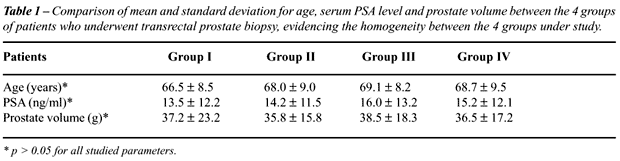
Table-2 shows the frequency of minor and
major complications in patients for each group of antibiotic prophylaxis.
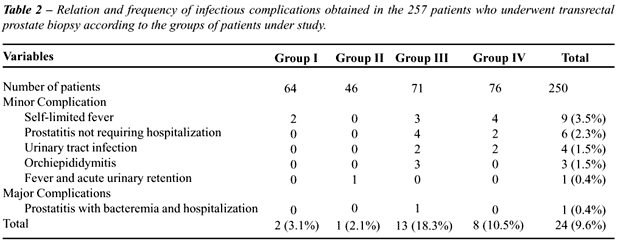
In patients from group I (ciprofloxacin
single dose), 2 minor complications occurred (3.1%), corresponding to
an episode of temperature equal to 38°C in the first day post-biopsy,
with sodic dipyrone being administered in both cases with clinical improvement.
There were no major complications in this group of patients, and there
was no evidence of bacterial growth in the respective urine cultures as
well. In relation to the blood cultures, only 1 of the patients included
in group I presented a positive result for Staphylococcus epidermidis.
We also observed that this patient did not present fever or any voiding
symptom following transrectal prostate biopsy.
The only complication (2.7%) that occurred
among patients from group II (ciprofloxacin during 3 days) corresponded
to an episode of fever and acute urinary retention, requiring antibiotic
therapy for 7 days. Upon treatment, the patient presented no complaints,
no fever and had his voiding reestablished. There was no need for hospital
admission or major complications.
Among patients in group III (chloramphenicol),
13 (18.3%) presented complications following transrectal prostate biopsy
(Table-2). Among them, there was a major infectious complication corresponding
to acute prostatitis with bacteremia due to Escherichia coli, with need
of hospitalization for treatment and intravenous antibiotic therapy.
As for the 76 patients from group IV (norfloxacin),
8 (10.5%) presented minor complications following TPB (Table-2). There
were no major complications in this group of patients.
In the late follow-up visit after 30 days,
none of the patients reported fever or other symptom due to infectious
process. In relation to global comparative results, there was a statistically
significant difference between groups (Tables-3, 4 e 5).
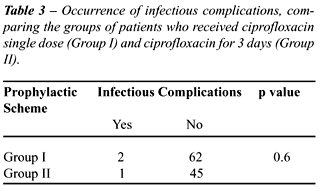

When we compared groups I and II (ciprofloxacin)
we did not observe significant difference (Fisher monocaudal p = 0.6)
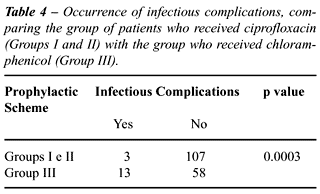
(Table-3). Aiming to compare the schemes using ciprofloxacin (groups I
and II) with the other groups, we performed the sample gathering between
groups I and II.
A statistical difference was observed concerning
the infection index between patients who received ciprofloxacin both when
compared to chloramphenicol (x2 = 13.0 and p = 0.0003) (Table-4) and when
compared to norfloxacin (Fisher monocaudal p = 0.03) (Table-5).
We did not observe statistically significant
differences when we compared the complication general indexes between
chloramphenicol and norfloxacin (p > 0.05).
DISCUSSION
Programs
for early detection of prostate cancer have surprisingly increased the
number of prostate biopsies (7,8). More recent series show that infectious
complications can occur between 0.8% and 17% of the cases, with spontaneously
resolving fever, probably due to transitory bacteremia, being the most
frequent symptom. Urinary tract infection, prostate abscess with urinary
retention, sepsis and death have also been described (9-19).
The main microbial agents responsible for
symptoms are Gram-negative germs, which normally colonize the rectum,
in particular Escherichia coli. Patients with some degree of
immunologic depression can develop infection due to anaerobes.
A comparative analysis with randomized studies
in the literature tends to show a superiority of schemes using antibiotics
in relation to placebo, with the use of quinolones being preferred, presenting
the lowest infection indexes (6,10,12,14-17,20). However, there are few
randomized prospective studies aimed to assess which antibiotic is more
effective, its ideal dose, as well as the administration route, duration
and cost of treatment for prophylaxis in transrectal prostate biopsy (11,20).
In Table-6 we present the results obtained by several authors according
to the antibiotic regimen employed.
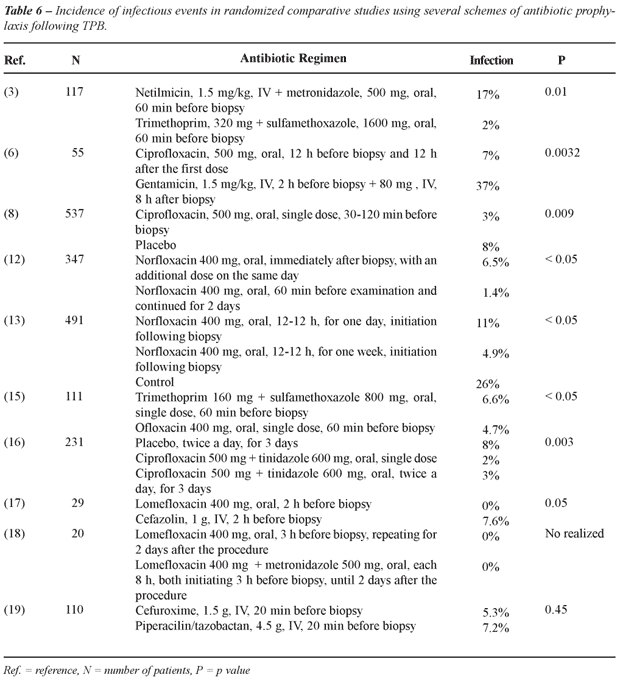
In our patient population we could observe
that the prophylactic effectiveness of schemes using ciprofloxacin was
similar between them and significantly superior to the others. We also
had a concern to document the possibility of bacteremia when the ciprofloxacin
was administered in a single dose, since we did not find this information
available in the literature.
Aron et al. observed that the use
of ciprofloxacin in a single dose was similar to the 3-day scheme (16),
an impression that was confirmed by our results.
Our results, compared to the experience
of other authors (12,13,20), testify that norfloxacin is a feasible option
with a low index of infectious complications.
Results with the use of chloramphenicol
were discouraging. We observed a high index of minor complications, including
orchiepididymitis, which is rarely reported with other schemes, in addition
to significant complication requiring hospitalization. Its wide range
of action, low cost and lack of previous report in literature concerning
antibiotic prophylaxis previously to TPB motivated its utilization in
this study. Thus, we believe that its use is not recommended for such
purpose.
We could also observe that initiating the
antibiotic therapy before the biopsy has an important impact when compared
to schemes initiated after the biopsy (12,13). Such data suggest that
higher probability of infection occurs during the procedure. If this hypothesis
is correct, therapeutic schemes with single dose and longer half-life
should present infection indexes similar to more prolonged schemes.
Coverage for anaerobes, little studied up
to now, however, seems to have little impact on the infection index (9,16,18).
In our selected sample of 257 patients, we did not isolate in culture
any case of anaerobes, reinforcing this hypothesis.
Finally, we found that in our patient population
the prophylactic effectiveness of schemes using ciprofloxacin was significantly
superior to the other groups of antibiotics under study. Our studied showed
as well that the use of ciprofloxacin in a single dose 2 hours before
the biopsy was equivalent to using it for 3 days. Norfloxacin is a feasible
option with a low morbidity and chloramphenicol, in our opinion, should
not be used for this purpose.
CONCLUSION
Based on the results of this study we currently recommend in our service the use of ciprofloxacin, in a single dose, 2 hours before TPB.
REFERENCES
- Moon DG, Yu JW, Lee JG, Kim JJ, Koh SK, Cheon J: The influence of prostate volume on the prostate-specific antigen (PSA) level adjusted for the transition zone volume and free-to-total PSA ratio: a prospective study. BJU Int. 2000; 86: 670-4.
- Machado MT, Pinto MA, Mattos MHE, Borrelli M, Wroclawski ER: Complications of prostatic biopsy with 10 fragments – analysis of 40 cases. Braz J Urol. 2001; 27 (supl 1): Abst. 541, 147. [in Portuguese]
- Fong IW, Struthers N, Honey RJ, Simbul M, Boisseau DA: A randomized comparative study of the prophylactic use of trimethoprim- sulfamethoxazole versus netilmycin- metronidazole in transrectal prostatic biopsy. J Urol. 1991; 146: 794-7.
- Lindgren PG: Percutaneous needle biopsy. A new technique Acta Radiol Diagn. 1982; 23: 653-6.
- Enlund AL, Varenhorst E: Morbidity of ultrasound-guided transrectal core biopsy of the prostate without prophylactic antibiotic therapy. A prospective study in 414 cases. Brit J Urol. 1997; 79: 777-80.
- Roach MB, Figueroa TE, McBride D, George WJ, Neal DE: Ciprofloxacin versus gentamicin in prophylaxis against bacteremia in transrectal prostate needle biopsy. Urology 1991; 38: 84-7.
- Machado MT, Simardi LH, Pinto MA, Eiger A, Freitas JPA, Borrelli M, et al.: First campaign of prostatic health of ABC Medical School. Pathologic results of prostate needle biopsy. Arq Med ABC 2000; 23: 12-7.
- Kapoor DA, Klimberg IW, Malek GH, Wegenke JD, Cox CE, Patterson AL, et al.: Single-dose oral ciprofloxacin versus placebo for prophylaxis during transrectal prostate biopsy. Urology 1998; 52: 552-8.
- Borer A, Gilad J, Sikuler E, Riesenberg K, Schlaeffer F, Buskila D: Fatal Clostridium sordellii ischiorectal abscess with septicaemia complicating ultrasound-guided transrectal prostate biopsy. J Infect. 1999; 38: 128-9.
- Nesi MH, Malloy TR, Carpiniello VL, Wein AJ: A comparison of morbidity following transrectal and transperineal prostatic needle biopsy. Surg Gynecol Obstet. 1983; 156: 464-6.
- Taylor HM, Bingham JB: Antibiotic prophylactic for transrectal prostate biopsy. J Ant Chem. 1997; 39: 115-7.
- Norberg M, Holmberg L, Häggman M, Magnusson A: Determinants of complications after multiple transrectal core biopsies of the prostate. Eur Radiol. 1996; 6: 457-61.
- Aus G, Ahlgren G, Bergdahl S, Hugosson J: Infection after transrectal core biopsy of the prostate- risk factors and antibiotic prophylaxis. Br J Urol. 1996; 77: 851-5.
- Shandera KC, Thibault GP, Deshon GE: Efficacy of one dose fluoroquinolone before prostate biopsy. Urology 1998; 52: 641-3.
- Isen K, Küpeli B, Sinik Z, Sözen S, Bozkirli I: Antibiotic prophylaxis for transrectal biopsy of the prostate: a prospective randomized study of the prophylactic use of single dose oral fluoroquinolone versus trimethoprim-sulfamethoxazole. Int Urol Nephrol. 1999; 31: 491-5.
- Aron M, Rajeev TP, Gupta NP: Antibiotic prophylaxis for transrectal needle biopsy of the prostate: a randomized controlled study. BJU Int. 2000; 85(6): 682-5.
- Ornellas AA, Koifman N, Wisnescky A: Infeccion prophylaxis in patients submitted to transrectal prostatic biopsy. Clinical trial of efficacious of lomerfloxacin versus cefazolin. J Bras Urol. 1998; 24: 237-40. [in Portuguese]
- Vaz F, Muglia R, Tostes H, Torres H: Use of lomerfloxacin in prophylaxis during transrectal prostatic biopsy. RBM Rev Bras Med. 1994; 51: 1709-10. [in Portuguese]
- Brewster SF, MacGowan AP, Gingell JC: Antimicrobial prophylaxis for transrectal prostatic biopsy: a prospective randomized trial of cefuroxime versus piperacillin/ tazobactam. Br J Urol. 1995; 76: 351-4.
- Machado MT, Corrêa TD, Barros EL, Goldenstein PT, Kappaz GT, Fuganti PE, et al.: Critical analysis of prophylactic antibiotics use in transrectal prostatic biopsy: literature review. Diagn Trat. 2003; 8: 88-92. [in Portuguese]
______________________
Received:
October 8, 2002
Accepted after revision: July 28, 2003
_______________________
Correspondence address:
Dr. Marcos Tobias-Machado
Rua Oscar Freire, 1546 / 53
São Paulo, SP, 05409-010, Brazil
Fax: + 55 11 3081-8674
E-mail: tobias-machado@uol.com.br