RISK
FACTORS FOR ACUTE TUBULAR NECROSIS IN 774 CADAVER RENAL TRANSPLANTATIONS
(
Download pdf )
A. MOTA, L. FREITAS, F. MACÁRIO, C. BASTOS, A. FIGUEIREDO
Section of Urology and Transplantation, Section of Nephrology, Coimbra University Hospitals, Coimbra, Portugal
ABSTRACT
Objectives:
The aim of this study was to investigate the causes and effects of acute
tubular necrosis (ATN) in a program of cadaver renal transplantation.
Materials and Methods: We analyzed 774 cadaver
donor renal transplantantions performed between June 1980 and September
1998. We examined the major donor, recipient and graft-related factors,
and their influence in graft outcome. Statistics included univariate and
multivariate analysis. Graft and patient survival rates were calculated
by Kaplan-Meier method (with log-rank test).
Results: The overall incidence of ATN was
16%. ATN was associated with donor-related factors [age > 45 years
(p = 0.044), storage with Collins solution (p = 0.021), cold ischemic
time > 24 hours (p = 0.003)] and with recipient-related factors [obesity
(p = 0.021), pre-transplantantion dialysis treatment > 60 months (p
= 0.000), associated pathology (p = 0.001), surgical time > 3 hours
(p = 0.003), poor HLA compatibility (p = 0.011) and azathioprine + prednisone
immunosuppression regimen (p = 0.025)]. The ATN was related with higher
incidence of acute rejection (37% of acute rejection without ATN versus
47.5% of acute rejection with ATN, p = 0.032) and a poorer 1-year graft
function (p = 0.021). Patients with ATN had longer hospital stay (25.6
vs. 15.9 days; p = 0.000). The 1, 3, 5, 10 and 15-year graft survival
in the patients with ATN were, 91%, 84%, 75%, 68% and 45%, respectively,
and in the patients with immediate function, 95%, 89%, 81%, 62% and 47%,
respectively. These results were not statistically significant (p = 0.378).
Conclusions: Our overall incidence of ATN
(16%) is more favorable than the majority of the literature reviewed (mean
= 25%). ATN was associated with donor and recipient related factors, and
also with higher incidence of acute rejection and with a poorer 1-year
graft function. In our study ATN did not adversely affect kidney graft
survival, but increased significantly the length of patient hospitalization.
Key words:
kidney transplantation; kidney failure; graft survival; acute tubular
necrosis
Braz J Urol, 28: 93-101, 2002
INTRODUCTION
Acute
tubular necrosis (ATN) is relatively frequent in cadaver renal transplantation,
varying from 8% to 50% according to different authors, with an average
incidence of 25% (1-3). When it occurs, it has a major influence on morbidity
(2), on pronounced cost increase (4) and on prognosis (5-7). The ATN depends
on various donor, recipient and graft factors (3).
The objective of this study was to evaluate
the incidence of ATN, investigate its causes and determine its influence
on the behavior and survival of the respective grafts.
MATERIALS AND METHODS
From
June 30th ,1980 to September 30th, 1998, 800 cadaver renal transplantations
were carried out at the Urology and Transplantation Section of the Coimbra
University Hospitals. Twenty-six unsuccessful transplantations due to
vascular complications or acute rejection were excluded. Therefore, our
study was based on 774 cadaver renal transplantations.
ATN diagnosis was based on the absence of
graft function and the need of dialysis in the immediate renal transplantation
postoperative, after excluding all other causes of anuria (8).
The main donor factors were studied: age,
gender, ventilation time, cause of death, perfusion solute, cold ischemia
time, kidney used and plasmatic creatinine, as well as the recipients’s:
age, gender, weigh, etiology, dialysis time, associated pathology, surgical
time, HLA (Human Leucocytes Antigens) compatibilities and immunosupression.
The main graft factors which may have been influenced by the ATN were
equally studied: acute rejection, chronic dysfunction and plasmatic creatinine
at the end of the first year. The average hospital stay was determined,
comparing patients with and without ATN.
Finally, graft and patient survivals were
calculated, and the influence of ATN on the respective results was evaluated.
Statistical analysis was performed using
the SPSS 10.0 program (Spss Inc., Chicago, 2000), Fisher exact test and
T-test for univaried analysis and logistic regression for multivaried
analysis. The statistically significant level considered was p < 0.05
(“two-tailed”). Graft and patient survivals calculation was
done with the Kaplan-Meier method, using the “log-rank” test.
RESULTS
From the 774 transplantations analyzed there were 649 graft without ATN (84%) and 125 with ATN (16%).
Donor
Factors
The risk of ATN was significantly higher
in the cases of cold ischemic time higher than 24 hours (Odds Ratio [OR]
= 2.02), when grafts obtained from donors with more than 45 years of age
(OR = 1.67) and in the cases of graft preservation with Collins solute
(OR = 1.61) (Table-1).

Recipient
Factors
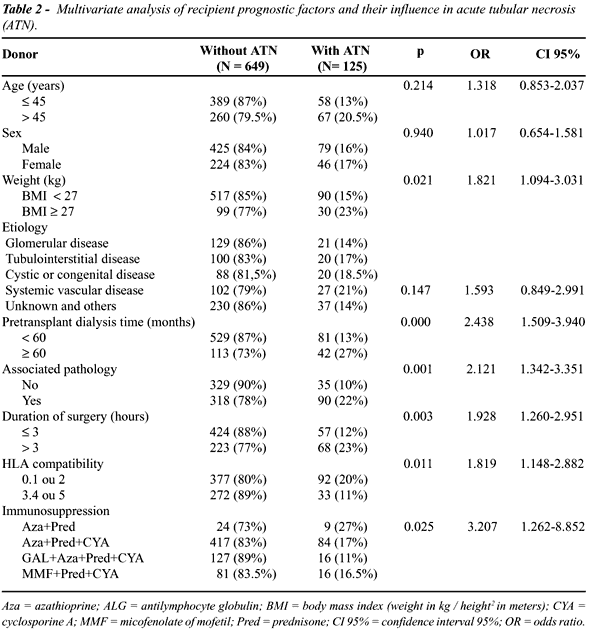
The factor which reveled the highest risk
for ATN was the immunosupression with azathioprine and prednisone (OR
= 3.20). Other relevant factors were: pre-transplantation dialysis time
longer than 60 months (OR = 2.43), associate pathology (OR = 2.12), surgical
time longer than 3 hours (OR = 1.92), obesity (OR = 1.82) and lower number
of HLA compatibilities (OR = 1.81) (Table-2).
Graft
Factors
The relationship between ATN and graft factors
was studied: acute rejection, chronic dysfunction and plasmatic creatinine
by the end of the first year. For that, the ATN influence on graft behavior
(Tables-3 and 4), on its function (Table-5) and patient and graft survivals
(Table-6 and Figures-1 and 2) were evaluated.
ATN was associated with higher incidence
of acute rejection (Table-3), as well as higher number of patients with
plasmatic creatinine higher than 1.2 mg/dl by the end of the first year
(Table-5). ATN increased the risk of acute rejection (OR = 1.53). ATN
increased the probability of plasmatic creatinine be higher than 1.2 mg/dl
by the end of the first year (OR = 1.60). There was no significant relationship
between ATN and chronic dysfunction (Table-4).


Graft
and Patient Survivals
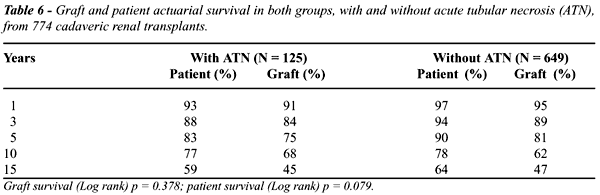
The actuarial survivals of graft (p = 0.378)
and patient (p = 0.079) were not influenced by ATN (Table-6).


Hospital
Stay
The hospital stay was calculated from 542
patients without ATN and 100 patients with ATN. The average hospital stay
was 15.9 + 10.4 for the group without ATN and 25.6 + 16.5 for the group
with ATN (p = 0.000).
DISCUSSION
Despite
the progress on organ captation, mainly on perfusion solutions improvement,
ATN continues to be a relatively frequent complication, being higher than
20% in some statistics (1,3,5,9,10). Its causes are varied; however, there
are factors such as the cold ischemic time that are known for their special
responsibility on its occurrence (9,11-16). Preuschol et al. (14) demonstrated
the differences between kidneys with cold ischemic time of 12 hours (ATN
= 18%) and of 36 hours (ATN = 35%). Fischer et al.(16) presented even
more significant results, with ATN rates of 31% for cold ischemic time
below 24 hours, increasing to 50% with cold ischemic time longer than
36 hours. In our study, we also verified that grafts with cold ischemic
time longer than 24 hours (Table-1) were associated with a statistically
significant higher incidence of ATN when compared with grafts with cold
ischemic time below 24 hours (p = 0.003).
Another responsible factor for the occurrence
of this complication is the donor’s age. Grafts from older donors
were associated with higher ATN incidence (9,11-13). This was confirmed
in our study, once grafts from donors with more than 45 years of age were
significantly related to higher rates of ATN (p = 0.044) (Table-1).
According to Marcén et al. study
(9), the solute used in the kidney perfusion and the dialysis time are
equally important. In our study, we also observed a higher incidence of
ATN when we used Collins solute to preserve the graft (p = 0.021) and
on the recipients with pre-transplantation dialysis time longer than 5
years (p = 0.000) (Table-1 and 2). Bertoni et al. (11) had identical results,
observing an increase on ATN when the dialysis time was over 5 years (33%
vs. 18% for a dialysis time below 5 years). This last factor may be related
to some other pathology which may have been acquired during the long dialysis
time, and which, in terms of influence in the results, is the one which
behaves as the associate pathology in the recipient, also another significant
factor in our study (p = 0.001). These results are in accordance with
Lechevallier et al. study (12) who associate the ATN with the recipient
physical condition when classified as ASA IV (American Society of Anesthesiology).
Other studies (12,13) showed obesity as
one of the recipient factors responsible for ATN, what we also observed
in our series (p = 0.021). The same occurred to the transplantation surgery
duration (longer than 3 hours) which also showed a significant influence
on the occurrence of ATN (p = 0.003) (Table-2). Similarly, Pfaff et al.
(13) attribute significant importance to the vascular anastomosis duration
during the surgery.
In our analysis, another factor which influenced
the occurrence of ATN was the small number of HLA compatibilities (Table-2),
being the contribution of the “very urgent” patients group not
irrelevant in this result (patients unable to perform dialysis according
to the Portuguese Classification) (17), who were transplantated with zero
HLA compatibilities.
ATN may also be caused or aggravated by
cyclosporin treatment, when it is used before the graft initiates its
function (18). In our study (Table-2), we verified a decrease in ATN rate
from 17% to 11% when the sequential quadruple immunosupression protocol
with antilymphocytic globulin + azathioprine + prednisone was used, with
cyclosporin administration conferred after diuresis initiation. Despite
this effect of cyclosporin, it was with the immunosupression protocol
based on the association of azathioprine + prednisone that we obtained
the highest rate of ATN (p = 0.025).
The immediate graft function is considered
a good prognostic factor (1) and when compared to kidneys that do not
function immediately, the latter have a 15% to 20% lower survival (6).
The responsibility of these results is for many (1,7,9,10,19) attributed
to the prolonged cold ischemic time and to the increase in the number
of acute rejection in patients with ATN, aggravated by the difficulties
to diagnose rejection in grafts with anuria, which will then have no treatment
(11). Therefore, it seems that the decrease in graft survival in ATN patients
is due to acute rejections (1,2,9,10), since Troppmann et al. (10) demonstrated
that ATN alone did not influence graft survival. Feldman et al. (7) have
a distinct opinion. They support the idea that ATN decreases graft survival,
independent of being associated with acute rejection or not. Along the
same lines, Lim & Terasaki (6) refer that, in general, graft survival
was 20% higher in patients with immediate function. In our series, the
incidence of acute rejection in ATN patients was higher than in patients
without ATN (47.5% and 37%, respectively), and despite this significant
difference (p = 0.032) (Table-3), ATN did not influence graft survival.
The increase in acute rejection observed
in ATN patients (1,2,5,7,9) will be reflected later in increase in the
incidence of chronic dysfunction. A higher acute rejection rate in ATN
patients is attributed to the fact that ATN increases graft immunogenicity
, due to a reinforcement in the histocompatibility antigen expression
by the ischemic tubular cells (20). It is also possible that a more severe
ATN leads to nephron destruction, predisposing the remaining nephric mass
to a hyperfiltration process, ultimately leading to chronic dysfunction
(21,22). In our study, we verified a higher rate of chronic dysfunction
in ATN patients (30% vs. 23% in patients without ATN); however, this difference
was not significant (p = 0.124) (Table-4). Despite any ATN effect on chronic
dysfunction, the deterioration of the annual renal function, translated
by a higher average serum creatinine (Table-5) in ATN patients (58% vs
46% , p = 0.021), seems to indicate a relatively premature installation
of chronic dysfunction.
Similarly to other authors (9,23), we did
not observe significant differences in graft (p = 0.378) and patient (p
= 0.079) survival, between the 2 groups, with and without ATN (Table-6
and Figures-1 and 2).
The 16% ATN incidence that we observed in
our series was clearly inferior to that referred in the majority of the
literature, whose average incidence is 25% (1,3,5,9,10). This favorable
result is probably due to the hyperhydration during the transplantation
procedure, which is also for Dawidson & Ar’Rajab (24) an effective
measure to prevent ATN.
The most evident negative factors caused
by the ATN, besides graft damage, are related to cost increase (hospital
stay, additional tests and onerous treatments) (4). A study involving
6500 cadaver renal transplantations in the United States in 1992 (25)
estimated that the increase in treatment costs due to ATN was of 54 million
dollars.
Our average hospital stay in ATN patients
was clearly higher than that of patients without ATN, 25.6 vs. 15.9 days,
respectively. This increase in the average hospital stay has a profound
negative economic impact in renal transplantation.
CONCLUSIONS
We emphasize our low ATN incidence (16%), and its correlation to donor factors: age over 45, Collins solute perfusion and cold ischemic time longer than 24 hours, as well as recipient factors: obesity, pre-transplantation dialysis duration over 60 months, associate pathology, surgery duration over 3 hours, lower number of HLA compatibilities and imunosupression with azathioprine and prednisone. ATN was associated to a higher incidence of acute rejection, to a worse graft function by the end of the first year and to a longer hospital stay. There was no ATN influence in patient and graft survivals.
REFERENCES
- Ojo AO, Wolfe RA, Held PJ, Port FK, Schmouder RL: Delayed graft function: risk factors and implications for renal allograft survival. Transplantation, 63: 968-974, 1997.
- Troppman C, Gilligham KJ, Benedetti E, Almond PS, Gruessner REG, Najarian JS, Matas AJ: Delayed graft function, acute rejection, and outcome after cadaver renal transplantation. Transplantation, 59: 962-968, 1995.
- Peters TG, Shaver TR, Ames JE, Santiago-Delpin EA, Jones KW, Blanton JW: Cold ischemia and outcome in 17, 937 cadaveric kidney transplants. Transplantation, 59: 191-196, 1995.
- Almond PS, Troppman C, Escobar F, Frey DJ, Matas AJ: Economic impact of delayed graft function. Transplant Proc, 23: 1304, 1991.
- Shoskes DA, Cecka JM: Deleterious effects of delayed graft function in cadaveric renal transplant recipients independent of acute rejection. Transplantation, 66: 1697-1701, 1998.
- Lim EC, Terasaki PI: Early Graft Function. In: Clinical Transplants 1991. Terasaki PI (ed.). UCLA Tissue Typing Laboratory. Los Angeles, UCLA, pp. 401-407, 1992.
- Feldman HI, Gayner R, Berlin JA, Roth DA, Silibovsky R, Kushner S, Brayman KL, Burns JE, Kobrin SM, Friedman AL, Grossman RA: Delayed function reduces renal allograft survival independent of acute rejection. Nephrol Dial Transplant, 11: 1306-1313, 1996.
- Rawn JD, Tilney NL: The Early Course of a Patient with a Kidney Transplant. In: Morris PJ (ed.). Kidney Transplantation. Principles and Practice. 4ª ed. Philadelphia, WB Saunders, pp.167-178, 1994.
- Marcén R, Orofino L, Pascual J, De La Cal MA, Teruel JL, Villafruela JJ, Rivera ME, Mampaso F, Burgos FJ, Ortuño J: Delayed graft function does not reduce the survival of renal transplant allografts. Transplantation, 66: 461-466, 1998.
- Troppman C, Gillingham KJ, Gruessner RW, Dunn DL, Payne WD, Najarian JS, Matas AJ: Delayed graft function in the absence of rejection has no long-term impact. A study of cadaver kidney recipients with good graft function at 1 year after transplantation. Transplantation, 61: 1331-1337,1996.
- Bertoni E, Zanazi M, Rosati A, Carmelini M, Frosini F, Conti P, Dedola G, Tosi P, Moscarelli L, Mosca F, Salvadori M: Causes and effects of delayed graft function in cadaveric renal transplantation: a multivariate analysis. Transplant Proc, 29: 2799-2800, 1997.
- Lechevalier E, Dussol B, Luccioni A, Thirion X, Vacher-Copomat H, Jaber K, Brunet P, Leonetti F, Lavelle O, Coulange C, Berland Y: Posttransplantation acute tubular necrosis; risk factors and implications for graft survival. Am J Kid Dis, 32: 984-991, 1998.
- Pfaff WW, Howard RJ, Patton PR, Adams VR, Rosen CB, Reed AI: Delayed graft function after renal transplantation. Transplantation, 65: 219-223, 1998.
- Preuschol T, Lobo C, Offermann G: Role of cold ischemia from elderly donors. Transplant Proc, 23: 1300-1301, 1991.
- Zhou YC, Cecka JM: Preservation. In: Clinical Transplants 1992. Terasaki PI, Cecka JM (eds.). UCLA Tissue Typing Laboratory. Los Angeles, UCLA, pp. 383-390, 1993.
- Fischer J, Kirste G, Keller H, Wilms H: Does ATN influence renal transplant function negatively? Transplant Proc, 20: 908-909, 1988.
- Mota A, Furtado L: Kidney Transplantation in Portugal. In: Clinical Transplants 2000, Cecka and Terasaki, (eds.) UCLA Immunogenetics Center. Los Angeles, UCLA, pp. 388-389, 2000.
- Cole EH, Cattran DC, Farewell VT, Aprile M, Bear RA, Pei YP, Fenton SS, Tobes JAL, Cardella CJ: A comparison of rabbit antithymocyte serum and OKT3 as prophylaxis against renal allograft rejection. Transplantation, 57: 60-67, 1994.
- Almond PS, Matas A, Gillingham K, Dunn DL, Payne WD, Gores P, Gruessner R, Najarian JS: Risk factors for chronic rejection in renal allograft recipients. Transplantation 55: 752-756, 1993.
- Shoskes DA, Halloran PF: Ischemic injury induces altered MHC gene expression in kidney by an interferon-gamma-dependent pathway. Transplant Proc, 23: 599-601, 1991.
- Brenner BM, Milford EL: Nephron underdosing: a programmed cause of chronic renal allograft failure. Am J Kidney Dis, 21: 66-72,1993.
- Gjertson DW: Impact of Delayed Graft Function and Acute Rejection on Kidney Graft Survival. In: Clinical Transplants 2000, Cecka and Terasaki, (eds.). UCLA Immunogenetics Center. Los Angeles, UCLA, pp. 467-480, 2000.
- Keller H, Fischer J, Kirste G, Wilms H: ATN influence on renal transplant function. Transplant Proc; 21: 1282, 1989.
- Dawidson IJA, Ar’Rajab A: Perioperative Fluid and Drug Therapy During Cadaver Kidney Transplantation. In: Clinical Transplants 1992. Terasaki PI e Cecka JM, (eds). UCLA Tissue Typing Laboratory. Los Angeles, UCLA, pp. 267-284, 1993.
- United Network for Organ Sharing. 1994 Annual report of the U.S. Scientific Registry for Transplant Recipients and the Transplantation Network- transplant data: 1988-1993. Richmond, VA: United Network for Organ Sharing and the Division of Organ Transplantation, Bureau of Health Resources Development, Health Resources and Services Administration: U. S. Department of Health and Human Services, 1994.
____________________
Received: June 12, 2001
Accepted after revision: December 3, 2001
_______________________
Correspondence address:
Dr. Alfredo Mota
Rua Miguel Bombarda, 120
3030-349, Coimbra, Portugal
Fax: + + (351) (23) 9780589
E-mail: guana@mail.telepac.pt