A
NEW NOMOGRAM TO PREDICT PATHOLOGIC OUTCOME FOLLOWING RADICAL PROSTATECTOMY
(
Download pdf )
ALEXANDRE CRIPPA, MIGUEL SROUGI, MARCOS F. DALL’OGLIO, ALBERTO A. ANTUNES, KATIA R. LEITE, LUCIANO J. NESRALLAH, VALDEMAR ORTIZ
Division of Urology, Federal University of Sao Paulo, UNIFESP, Sao Paulo, SP, Brazil
ABSTRACT
Objective:
To develop a preoperative nomogram to predict pathologic outcome in patients
submitted to radical prostatectomy for clinical localized prostate cancer.
Materials and Methods: Nine hundred and
sixty patients with clinical stage T1 and T2 prostate cancer were evaluated
following radical prostatectomy, and 898 were included in the study. Following
a multivariate analysis, nomograms were developed incorporating serum
PSA, biopsy Gleason score, and percentage of positive biopsy cores in
order to predict the risks of extraprostatic tumor extension, and seminal
vesicle involvement.
Results: In univariate analysis there was
a significant association between percentage of positive biopsy cores
(p < 0.001), serum PSA (p = 0.001) and biopsy Gleason score (p <
0.001) with extraprostatic tumor extension. A similar pathologic outcome
was seen among tumors with Gleason score 7, and Gleason score 8 to 10.
In multivariate analysis, the 3 preoperative variables showed independent
significance to predict tumor extension. This allowed the development
of nomogram-1 (using Gleason scores in 3 categories - 2 to 6, 7 and 8
to 10) and nomogram-2 (using Gleason scores in 2 categories - 2 to 6 and
7 to 10) to predict disease extension based on these 3 parameters. In
the validation analysis, 87% and 91.1% of the time the nomograms-1 and
2, correctly predicted the probability of a pathological stage to within
10% respectively.
Conclusion: Incorporating percent of positive
biopsy cores to a nomogram that includes preoperative serum PSA and biopsy
Gleason score, can accurately predict the presence of extraprostatic disease
extension in patients with clinical localized prostate cancer.
Key
words: prostatic neoplasms; neoplasm staging; nomograms; prostate-specific
antigen; needle biopsy
Int Braz J Urol. 2006; 32: 155-64
INTRODUCTION
Gleason
grade from biopsy, along with serum PSA and tumor extent at digital rectal
examination, are the current most common parameters used to predict the
risk of organ confined disease and choose a definitive treatment in patients
with prostate cancer (1).
However, some studies show that clinical
stage as defined at digital rectal examination is neither the ideal method
to choose a definitive therapy (2) nor to predict biochemical outcome
after treatment (3-6). The percentage of patients staged as T1c increased
from less than 1% in the eighties to 60% in the nineties. Furthermore,
a study of more than 1000 patients that underwent radical retropubic prostatectomy
did not find statistical difference in disease recurrence rates among
patients staged as T2a, T2b or T2c at digital rectal examination after
a 10 years follow up period (7).
New variables to predict the probabilities
of organ confined disease and disease recurrence after treatment have
been widely studied (8-10), and the percentage of positive biopsy cores
(PPBC) for cancer has emerged as an independent prognostic factor (11-13).
Probably, the reason for this importance is based on its straight relation
with tumor volume in radical prostatectomy specimens (14).
As discussed above, several individual parameters
have the power to preoperatively predict the risk of the actual pathologic
stage and biochemical outcome after treatment. For this reason, many authors
have analyzed the use of pre- and postoperative nomograms in order to
find patients in which a high risk of extra-prostatic disease (15) or
high rates of disease progression are expected (16,17).
The first nomogram developed by Partin et
al. (18), to predict the risks of nomogram confined disease and involvement
of seminal vesicles and iliac lymph nodes in patients that underwent radical
retropubic prostatectomy, included the biopsy Gleason score, clinical
stage and serum PSA levels.
Considering that the percent positive biopsy
cores represent an important prognostic factor (19), clinical stage as
defined at digital rectal examination is not as relevant as it was thought
before (4) and some studies incorporated the PPBC into models of prognostic
value (8), in the present study we analyzed the predictive power of a
new nomogram including the preoperative serum PSA and the biopsy Gleason
score along with the PPBC.
MATERIALS AND METHODS
Between
September 1988 and December 2002, 960 patients with clinically localized
prostate cancer who underwent radical retropubic prostatectomy were retrospectively
studied. All the patients underwent clinical and pathological staging
according to the TNM staging system (20).
From the 960 patients, only those men with
complete information regarding the total number of biopsy cores, number
of fragments with cancer, biopsy Gleason score, serum PSA levels and pathologic
analysis of the surgical specimen were studied. Fifty-four patients that
received neoadjuvant androgen deprivation therapy or were diagnosed through
transurethral resection or transvesical prostatectomy were excluded. A
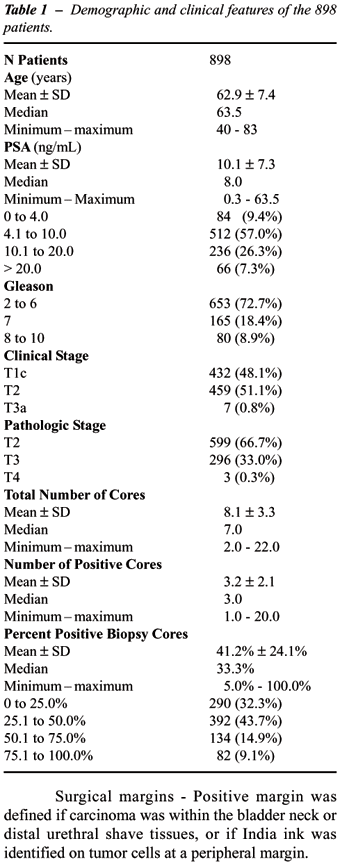
total of 898 remained in study. Table-1 shows the patients characteristics.
The same surgeon (MS) performed all the
surgical procedures according to the Walsh technique (21), modified by
Srougi (22). The same pathologist (KRL) analyzed all the surgical specimens,
including the prostate gland, seminal vesicles and obturatory lymph.
Macroscopic
Analysis
The specimens of radical prostatectomy were
fixed in buffered formalin 10% for a period of 6h. After weighting and
measuring the gland, thin transversal sections were performed in the surgical
margins related to the bladder neck and the prostate apex. The seminal
vesicles were sectioned in the base and longitudinal sections were submitted
to histological examination. The entire gland was included for study after
having their margins painted with India ink. The right and left lobes
were separated, with sequential transversal sections being performed every
3 mm, designed from the proximal region towards the distal one. Between
10 and 12 sections from each lobe were included for histological study.
The lymph nodes from the fat related to the resection of the iliac chain
were dissected and sections representative of each nodular structure were
included for study.
Microscopic
Analysis
The specimens underwent the usual processing
with inclusion in paraffin. Sections of 4 to 6 mm were stained by hematoxylin-eosin.
The analyzed parameters were:
Histological pattern and Gleason score -
The Gleason histological grade was used for evaluating the histological
differentiation, considering only the acinar pattern (23).
Surgical margins - Positive margin was defined
if carcinoma was within the bladder neck or distal urethral shave tissues,
or if India ink was identified on tumor cells at a peripheral margin.
Extra-prostatic involvement - The invasion
of adipose tissue and the periprostatic neurovascular plexus was considered
as involvement of extra-prostatic tissue and, therefore, non organ-confined
disease.
Seminal vesicle involvement - The involvement
of seminal vesicle parenchyma and not only the adventitial tissue was
considered seminal vesicle involvement.
Lymph node metastasis - The obturatory lymph
nodes involved with cancer were designated as metastatic lymph nodes,
and no difference regarding micro or macro-metastasis was considered.
To final analysis, the TNM 2002 (20) staging
system was used.
The finding of an organ-confined disease
was compared to the PPBC, serum PSA levels and Gleason score through a
logistic regression model.
A multinomial logistic regression analysis
(24) with 3 answers was performed: organ-confined disease, extraprostatic
extension and seminal vesicle involvement. The predictive variables were
the serum PSA levels, divided in categories of 0 to 4 ng/mL; 4.1 to 10.0
ng/mL; 10.1 to 20 ng/mL and greater than 20 ng/mL, the biopsy Gleason
score, divided in categories of 2 to 6; 7 and 8 to 10, and then analyzed
in groups of 2 to 6 and 7 to 10, and the PPBC, divided in categories of
0 to 25%; 25.1 to 50%; 50.1 to 75%; 75.1 to 100%. PPBC was defined using
the formula, number of positive cores / total biopsy cores X 100.
Considering the association of the 3 parameters
with disease extension on univariate and multivariate analysis, nomograms
were developed based on the probabilities predicted by the adjusted model.
A 95% confidence interval for the final model was obtained by repeating
the analysis on 1000 bootstrap samples from the original cohort (25).
The percentage of the bootstrap observed probabilities that were within
10% of the nomogram value was shown. Sensitivity, specificity, positive
predictive value and negative predictive value were also determined. A
significance level of 5% was adopted, and therefore, statistical significance
was set as a p £ 0.05. Statistical analysis was performed in the
R for Windows software.
RESULTS
Table-2
shows that number of cores retrieved from biopsy and patient age was not
related to the pathologic findings of the surgical specimen. Conversely,
the PPBC, biopsy Gleason score and initial PSA levels showed relation
with disease extension. According to multivariate analysis, these three
studied variables were independent prognostic factors for predicting prostate
cancer extension (Table-2).
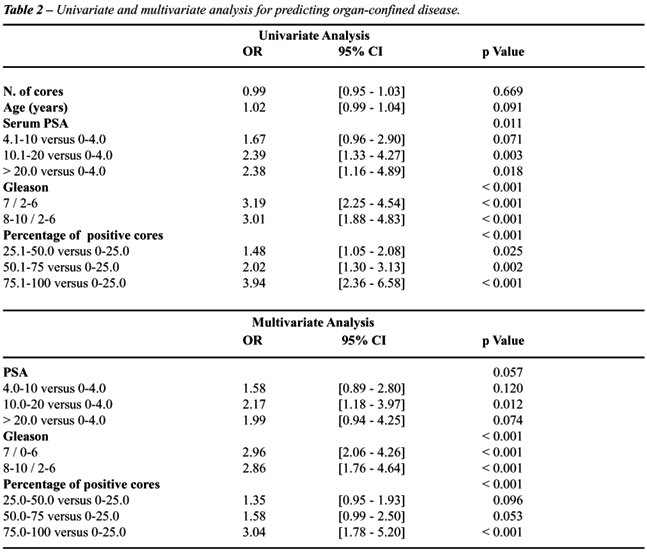
Table-3 shows a nomogram-1 that allows prediction
of organ-confined disease according to preoperative PSA levels, biopsy
Gleason score and PPBC. However, nomogram-1 also shows that if we keep
unchanged the PSA and PPBC values, the confidence intervals of patients
with Gleason score 7 are the same of those with Gleason score 8 to 10
regarding the finding of organ-confined disease. This fact led us to develop
a nomogram-2 (Table-4), using Gleason categories of 2 to 6 and 7 to 10,
without losing predictive power and making it more practical for clinical
use.


A validation analysis compared the predicted
probabilities from the nomogram-1 with the observed probabilities from
additional 1000 bootstrap samples from the study group. In the validation
study, 87.0% of the time the nomograms correctly predicted the probability
of a pathological stage to within 10%. The same was applied to validation
of nomogram-2, which used Gleason score categories of 2 to 6 and 7 to
10. In this case, the validation study showed that in 91.1% the time the
nomogram correctly predicted the probability of a pathological stage to
within 10%. Tables-5 and 6 shows the sensitivity, specificity, positive
predictive value, and negative predictive value achieved for various predicted
probability cutoff values for organ-confined cancer when assessed in the
1000 validation bootstrap samples.


COMMENTS
After
Partin’s pioneer idea of creating nomograms to predict prostate
cancer extension in 1993 (18), several other models using different variables
were developed to predict disease extension and/or recurrence. However,
some of them are not practical for clinical use due to the complexity
of its interpretation and most present a lack of significant accuracy
due to the relative imprecision of the prognostic variables utilized.
Our study presents a nomogram to predict
disease extension in patients with clinical localized prostate cancer
on the basis of preoperative serum PSA, biopsy Gleason score and PPBC
as a new parameter to be included, with more accurate results than the
isolated analysis of each variable separately.
The finding of an organ-confined disease
after radical retropubic prostatectomy varies from 13 to 82% of cases
(18,26). In the present study, we found a 66.7% rate. This variation depends
on the biopsy Gleason score, serum PSA levels and PPBC, however even with
all these variables being favorable, there is still a chance of 20% of
extra-prostatic extension (19).
The development of the present nomogram
was not based on the clinical stage as proposed by Partin et al. (15),
because we believe this variable is losing clinical significance as more
than 60% of patients with prostate cancer are staged as T1c (27). This
distribution differs from what was observed during the eighties, where
less than 1% of cases were detected due to serum PSA level elevation (28).
Furthermore, in prostate screening programs, only 10% of patients underwent
transrectal needle biopsy due to abnormalities on digital rectal examination
(29).
Since tumoral volume has emerged as an important
prognostic factor of pathologic findings and disease recurrence, the PPBC
has been used to predict pathologic (12) and biochemical outcome after
treatment (19,30). This idea gained support after the demonstration of
a linear relationship between PPBC and tumoral volume at radical prostatectomy
specimen (31).
There is also a relation between the presence
of Gleason patterns 4 or 5 on biopsy and on surgical specimens, showing
that this finding at biopsy samples has prognostic value for the patient
(31). In fact, 13% of the patients with biopsy Gleason score less than
7 show disease recurrence while almost 60% with a Gleason score was 7
to 10 did (32). In our series, only 48.8% of patients with a Gleason score
between 8 to 10 had an organ-confined disease, while this finding occurred
in 74.1% of patients with scores under 7. Thus, if we apply the nomogram
in a patient with all favorable variables (PSA less than 4 ng/mL, less
than 25% positive biopsy cores and Gleason score less than 7), this number
reaches 86% of chances of an organ-confined disease.
When comparing patients with Gleason score
7 to patients with Gleason score 8 to 10, we noted that when keeping serum
PSA values between 4 and 10 ng/mL and positive biopsy cores under 25%,
the probability of finding an organ-confined disease was 60% and 61% respectively.
For this reason, we decided to construct an easier nomogram considering
only categories of 2 to 6 and 7 to 10. This finding demonstrates that
tumors with Gleason score 7 can present a similar behavior when compared
to scores 8 to 10, probably due to the fact that patients with Gleason
score 7 also own different percentages of patterns 4 or even 5.
Despite all these evidences, there are still
some controversies regarding cases with Gleason score 7 presenting a different
behavior when compared to patients with Gleason scores 8 to 10 (33). As
we know, the Gleason score 7 is composed by the sum of the two most prevalent
glandular patterns that most frequently can be 3+4 or 4+3. Some studies
have shown that the percentage of Gleason pattern 4 is related to extension
and severity of the disease (31), motivating comparisons of these two
scores. Chan et al. (34) found an organ-confined disease rate of 34.7%
among patients with surgical Gleason score 7 that underwent radical prostatectomy.
However, the risk of disease progression after surgery was 20% greater
for patients with Gleason 4+3 when compared to patients with Gleason score
3+4 after 10 years follow up. It is important to point out that these
results were based on analysis of the surgical specimens and not on biopsy
samples as we discussed before (33). Conversely, Groeber et al. (35) did
not find any difference between the groups with Gleason score 3+4 or 4+3
regarding extra-prostatic extension or seminal vesicle involvement.
In the present study we ratify the greater
accuracy of the nomograms when compared to the analysis of a single prognostic
variable. In patients with serum PSA between 0 to 4 ng/mL, the chance
of an organ-confined disease was 78.6%, however, when considering biopsy
Gleason score and PPBC, we found that the finding of an organ-confined
disease can be observed in 70 to 86% of cases. Gancarczyk et al. (8),
developed a nomogram based on the same variables and showed a 72% rate
of an organ-confined disease when serum PSA was 4 ng/mL or lower. However,
as shown in our series, when considering the biopsy Gleason score and
PPBC, this rate varied from 54 to 80%. The same reasoning can be applied
when considering biopsy Gleason score as a single variable that defines
a 74.1% chance of an organ-confined disease in a patient with score 2
to 6. However, when all these three variables are considered together,
we found that the same patient present a 51 to 86% chance of an organ
confined disease. We also noted that patients with more than 75% positive
biopsy cores have a 43.9% chance of presenting an organ-confined disease,
the same number found by Gancarczyk et al. (8) considering a cut point
of 60% for positive biopsy cores. However, this probability rises to 71%
with favorable PSA levels and Gleason scores and reduces to 26% when both
variables were unfavorable.
Finally, in the present study, we confirmed
the superiority of the nomograms when compared to the analysis of a single
prognostic factor. We emphasize that the PPBC is a very important parameter
that should be incorporated in preoperative models, and that patients
with biopsy Gleason score 7 can show the same disease extension when compared
to patients with Gleason score 8 to 10.
ACKNOWLEDGEMENTS
Adriana Sañudo made the statistical analysis.
CONFLICT OF INTEREST
None declared.
REFERENCES
- Han M, Partin AW, Zahurak M, Piantadosi S, Epstein JI, Walsh PC: Biochemical (prostate specific antigen) recurrence probability following radical prostatectomy for clinically localized prostate cancer. J Urol. 2003; 169: 517-23.
- Peller PA, Young DC, Marmaduke DP, Marsh WL, Badalament RA: Sextant prostate biopsies. A histopathologic correlation with radical prostatectomy specimens. Cancer. 1995; 75: 530-8.
- Freedland SJ, Terris MK, Csathy GS, Kane CJ, Amling CL, Presti JC Jr, et al.: Preoperative model for predicting prostate specific antigen recurrence after radical prostatectomy using percent of biopsy tissue with cancer, biopsy Gleason grade and serum prostate specific antigen. J Urol. 2004; 171: 2215-20.
- Freedland SJ, Aronson WJ, Csathy GS, Kane CJ, Amling CL, Presti JC Jr, et al.: Comparison of percentage of total prostate needle biopsy tissue with cancer to percentage of cores with cancer for predicting PSA recurrence after radical prostatectomy: results from the SEARCH database. Urology. 2003; 61: 742-7.
- San Francisco IF, Regan MM, Olumi AF, DeWolf WC: Percent of cores positive for cancer is a better preoperative predictor of cancer recurrence after radical prostatectomy than prostate specific antigen. J Urol. 2004; 171: 1492-9.
- Graefen M, Ohori M, Karakiewicz PI, Cagiannos I, Hammerer PG, Haese A, et al.: Assessment of the enhancement in predictive accuracy provided by systematic biopsy in predicting outcome for clinically localized prostate cancer. J Urol. 2004; 171: 200-3.
- Hull GW, Rabbani F, Abbas F, Wheeler TM, Kattan MW, Scardino PT: Cancer control with radical prostatectomy alone in 1,000 consecutive patients. J Urol. 2002; 167: 528-34.
- Gancarczyk KJ, Wu H, McLeod DG, Kane C, Kusuda L, Lance R, et al.: Using the percentage of biopsy cores positive for cancer, pretreatment PSA, and highest biopsy Gleason sum to predict pathologic stage after radical prostatectomy: the Center for Prostate Disease Research nomograms. Urology. 2003; 61: 589-95.
- Sebo TJ, Cheville JC, Riehle DL, Lohse CM, Pankratz VS, Myers RP, et al.: Predicting prostate carcinoma volume and stage at radical prostatectomy by assessing needle biopsy specimens for percent surface area and cores positive for carcinoma, perineural invasion, Gleason score, DNA ploidy and proliferation, and preoperative serum prostate specific antigen: a report of 454 cases. Cancer. 2001; 91: 2196-204.
- Tombal B, Tajeddine N, Cosyns JP, Feyaerts A, Opsomer R, Wese FX, et al.: Does site-specific labelling and individual processing of sextant biopsies improve the accuracy of prostate biopsy in predicting pathological stage in patients with T1c prostate cancer? BJU Int. 2002; 89: 543-8.
- Grossfeld GD, Latini DM, Lubeck DP, Broering JM, Li YP, Mehta SS, et al.: Predicting disease recurrence in intermediate and high-risk patients undergoing radical prostatectomy using percent positive biopsies: results from CaPSURE. Urology. 2002; 59: 560-5.
- Quinn DI, Henshall SM, Brenner PC, Kooner R, Golovsky D, O’Neill GF, et al.: Prognostic significance of preoperative factors in localized prostate carcinoma treated with radical prostatectomy: importance of percentage of biopsies that contain tumor and the presence of biopsy perineural invasion. Cancer. 2003; 97: 1884-93.
- Sebo TJ, Bock BJ, Cheville JC, Lohse C, Wollan P, Zincke H: The percent of cores positive for cancer in prostate needle biopsy specimens is strongly predictive of tumor stage and volume at radical prostatectomy. J Urol. 2000; 163: 174-8.
- Cagiannos I, Karakiewicz P, Eastham JA, Ohori M, Rabbani F, Gerigk C, et al.: A preoperative nomogram identifying decreased risk of positive pelvic lymph nodes in patients with prostate cancer. J Urol. 2003; 170: 1798-803.
- Partin AW, Mangold LA, Lamm DM, Walsh PC, Epstein JI, Pearson JD: Contemporary update of prostate cancer staging nomograms (Partin Tables) for the new millennium. Urology. 2001; 58: 843-8.
- Egawa S, Suyama K, Arai Y, Matsumoto K, Tsukayama C, Kuwao S, et al.: A study of pretreatment nomograms to predict pathological stage and biochemical recurrence after radical prostatectomy for clinically resectable prostate cancer in Japanese men. Jpn J Clin Oncol. 2001; 31: 74-81.
- Kattan MW, Zelefsky MJ, Kupelian PA, Cho D, Scardino PT, Fuks Z, et al.: Pretreatment nomogram that predicts 5-year probability of metastasis following three-dimensional conformal radiation therapy for localized prostate cancer. J Clin Oncol. 2003; 21: 4568-71.
- Partin AW, Yoo J, Carter HB, Pearson JD, Chan DW, Epstein JI, et al.: The use of prostate specific antigen, clinical stage and Gleason score to predict pathological stage in men with localized prostate cancer. J Urol. 1993; 150: 110-4.
- D’Amico AV, Whittington R, Malkowicz SB, Schultz D, Fondurulia J, Chen MH, et al.: Clinical utility of the percentage of positive prostate biopsies in defining biochemical outcome after radical prostatectomy for patients with clinically localized prostate cancer. J Clin Oncol. 2000; 18: 1164-72.
- Schroder FH, Hermanek P, Denis L, Fair WR, Gospodarowicz MK, Pavone-Macaluso M: The TNM classification of prostate cancer. Prostate Suppl. 1992; 4: 129-38.
- Walsh PC, Donker PJ: Impotence following radical prostatectomy: insight into etiology and prevention. 1982. J Urol. 2002; 167: 1005-10.
- Srougi M: Radical Prostatectomy with Potency Preservation. In: Srougi M, Simon SD (ed.), Urological Cancer. Sao Paulo, Platina. 1996; pp. 357-65. [in Portuguese]
- Gleason DF: Classification of prostatic carcinomas. Cancer Chemother Rep. 1966; 50: 125-8.
- Hosmer DW, Lemeshow S: Applied logistic regression. New York, John Wiley. 1989; pp. 369.
- Efron B, Tibshirabi RJ: Na introduction to be bootstrap. New York; Chapman & Hall. 1993; pp. 430.
- Freedland SJ, Csathy GS, Dorey F, Aronson WJ: Percent prostate needle biopsy tissue with cancer is more predictive of biochemical failure or adverse pathology after radical prostatectomy than prostate specific antigen or Gleason score. J Urol. 2002: 167: 516-20.
- Rioux-Leclercq NC, Chan DY, Epstein JI: Prediction of outcome after radical prostatectomy in men with organ-confined Gleason score 8 to 10 adenocarcinoma. Urology. 2002; 60: 666-9.
- Han M, Partin AW, Piantadosi S, Epstein JI, Walsh PC: Era specific biochemical recurrence-free survival following radical prostatectomy for clinically localized prostate cancer. J Urol. 2001; 166: 416-9.
- Yan Y, Carvalhal GF, Catalona WJ, Young JD: Primary treatment choices for men with clinically localized prostate carcinoma detected by screening. Cancer. 2000; 88: 1122-30.
- Ravery V, Chastang C, Toublanc M, Boccon-Gibod L, Delmas V, Boccon-Gibod L: Percentage of cancer on biopsy cores accurately predicts extracapsular extension and biochemical relapse after radical prostatectomy for T1-T2 prostate cancer. Eur Urol. 2000; 37: 449-55.
- Rubin MA, Mucci NR, Manley S, Sanda M, Cushenberry E, Strawderman M, et al.: Predictors of Gleason pattern 4/5 prostate cancer on prostatectomy specimens: can high grade tumor be predicted preoperatively? J Urol. 2001; 165: 114-8.
- Sakr WA, Tefilli MV, Grignon DJ, Banerjee M, Dey J, Gheiler EL, et al.: Gleason score 7 prostate cancer: a heterogeneous entity? Correlation with pathologic parameters and disease-free survival. Urology. 2000; 56: 730-4.
- Herman CM, Kattan MW, Ohori M, Scardino PT, Wheeler TM: Primary Gleason pattern as a predictor of disease progression in gleason score 7 prostate cancer: a multivariate analysis of 823 men treated with radical prostatectomy. Am J Surg Pathol. 2001; 25: 657-60.
- Chan TY, Partin AW, Walsh PC, Epstein JI: Prognostic significance of Gleason score 3+4 versus Gleason score 4+3 tumor at radical prostatectomy. Urology. 2000; 56: 823-7.
- Grober ED, Tsihlias J, Jewett MA, Sweet JM, Evans AJ, Trachtenberg J, et al.: Correlation of the primary Gleason pattern on prostate needle biopsy with clinico-pathological factors in Gleason 7 tumors. Can J Urol. 2004; 11: 2157-62.
____________________
Accepted
after revision:
January 3, 2006
_______________________
Correspondence address:
Dr. Alexandre Crippa
Rua Barata Ribeiro, 414 – 7o. andar
São Paulo, SP, 01308-000, Brazil
Fax: + 55 11 3257-9006
E-mail: drcrippa@uol.com.br