PHOTOSELECTIVE
VAPORIZATION OF THE PROSTATE IN MEN WITH A HISTORY OF CHRONIC ORAL ANTI-COAGULATION
(
Download pdf )
doi: 10.1590/S1677-55382010000200009
OMER F. KARATAS, ERDAL ALKAN, KAYA HORASANLI, HUSEYIN LULECI, KEMAL SARICA
Department of Urology, Memorial Hospital (OFK, EA, HL, KS), and Department of Urology (KH), Sisli Etfal Medical Research and Training Hospital, Istanbul, Turkey
ABSTRACT
Purpose:
A considerable percentage of patients with benign prostatic hyperplasia
(BPH) also have additional cardiac pathologies, which often require anticoagulant
therapy. The aim of this study was to evaluate the efficacy and safety
of photoselective vaporization of the prostate (PVP) for BPH in cardiac
patients receiving anticoagulant therapy.
Materials and Methods: A total of 67 patients
suffering from BPH and high risk cardiac pathologies were operated on
using laser prostatectomy. All patients had cardiac pathologies with bleeding
disorders requiring anticoagulant use, and underwent standard urologic
evaluation for BPH. Patients were treated with laser prostatectomy for
relief of the obstruction using the KTP/532 laser energy at 80 W.
Results: The mean patient age was 71.4 years
(range 55-80). Mean prostate volume on transrectal ultrasonography was
73.2 mL (range 44-120). Operation time ranged from 40 to 90 min, with
an average value of 55 min. The average hospital stay was 48 hours (range
12-72) and the Foley catheters were removed within 48 hours, with a mean
catheterization time of 34.2 ± 5.9 hours (0-48). No patient required
an additional procedure due to severe bleeding necessitating intervention
during the early postoperative phase. Mean International symptoms scoring
system (IPSS) values and post voiding residual volume decreased and peak
urinary flow rate increased (p < 0.001). Our results showed that the
mean prostate volume had decreased by 53% at 6 months.
Conclusions: High-power photo selective
laser vaporization prostatectomy is a feasible, safe, and effective alternative
for the minimal invasive management of BPH, particularly in cardiac patients
receiving anticoagulant therapy.
Key
words: prostate; prostatic hyperplasia; bladder outlet obstruction;
laser surgery; anticoagulants
Int Braz J Urol. 2010; 36: 190-7
INTRODUCTION
Both
medical and surgical options for the treatment of benign prostatic hyperplasia
(BPH) have expanded in recent years (1). Concerning the surgical treatment
of this pathology, despite its effective and successful results, transurethral
resection of the prostate (TURP) has been found to be associated with
significant risks for the patient. While intraoperative mortality rates
have been reported to be from 0% to 0.8%, morbidity (especially bleeding
and perforation) rates were 6.9% to 14% (range 2-5). Morbidity in the
month after surgery varied from 9.5% to 18% (range 2-5) and consisted
mainly of bleeding with or without clot retention, which can necessitate
re-operation or transfusion. Moreover, an increase in the risk of deep
venous thrombosis of 6.8% to 10% in normal patients undergoing TURP has
previously been reported (6). Regarding the management alternatives in
patients receiving oral anticoagulant, studies have clearly demonstrated
that instead of temporarily ceasing anticoagulant drugs (which may increase
the risk of thromboembolic processes) physicians tended to stop anticoagulant
agents for a certain period preoperatively and to use heparin intravenously
during this phase (7).
Oral anticoagulant therapy is commonly used
in atrial fibrillation, recurrent thromboembolic disorders, and prosthetic
heart valves. TURP adds an additional risk in these patients with an additional
BPH pathology (6). Therefore, an alternative surgical technique to TURP
is needed.
Concerning the various potential therapeutic
strategies for minimally invasive treatment of BPH that could be associated
with less morbidity than TURP, various types of laser prostatectomy have
been used in the last 10-15 years (8,9). Although several alternatives
have been used to reduce the known perioperative morbidity, perioperative
hemorrhage remains the major complication of this specific intervention
(10). Previous studies have shown that visual ablation of the prostate
with the neodymium :yttrium–aluminium–garnet (Nd: YAG) and
holmium laser could be performed in patients under anticoagulant treatment
with satisfactory hemostatic results (11-13). In particular, holmium laser
enucleation of the prostate is a safe and effective therapeutic modality
in patients on anticoagulation with symptomatic BPH refractory to medical
therapy.
As regards this procedure, the 80 W KTP
(potassium titanyl phosphate) laser vaporization of the prostate combines
the tissue-debulking properties of transurethral resection of the prostate
with the known good hemostatic properties of other laser techniques. It
is a safe procedure for the patient and provides a virtually bloodless
operation and immediate improvement of voiding (14-18).
In the present prospective clinical study
we aimed to evaluate the efficacy of high-power photoselective laser vaporization
prostatectomy for the minimal invasive management of BPH in cardiac patients
receiving anticoagulant therapy.
MATERIALS AND METHODS
Between
May 2004 and September 2005, a total of 67 patients (referred with complaints
of infravesical obstruction and high risk cardiac pathologies) were retrospectively
included in the study program. While the majority of the patients had
had bypass surgery (58/67, 86.5%) due to ischemic heart disease, the remaining
had valvular pathology and had undergone replacement surgery. Conservative
management along with the use of alpha blockers had failed to alleviate
the symptoms in these patients.
All patients underwent standard urologic
evaluation for BPH with the International symptom scoring system (IPSS)
symptom score, peak urinary flow rate (Qmax), ultrasound prostate volume
estimation, prostate-specific antigen, and digital rectal examination.
In addition, blood loss and serum sodium levels were determined preoperatively
and on day 1 postoperatively in patients during intervention and observed
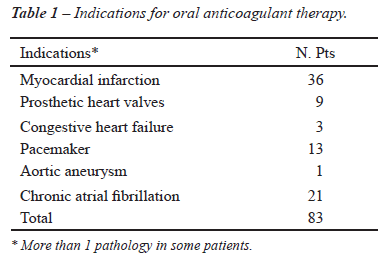
in all patients. Patients included in the study program were on anticoagulant
therapy for various indications (Table-1). Forty-six patients were on
acetyl salicylic acid, 12 patients were on clopidrogel bisulfate, and
9 patients were on warfarin sodium medication.
Anticoagulant medication was stopped 2 days
before the surgery in all patients. Subcutaneous Low molecular weight
heparin (LMWH) was started 24 hours after the discontinuation of oral
anticoagulant (warfarin sodium) in 9 patients due to the coagulation risk
and stopped 12 hours before surgery when the International Normalized
Ratio (INR) decreased to less than 1.4. LMWH was restarted 12 hours after
surgery and oral warfarin sodium was resumed after the patients were able
to receive medication (24 hours after the last LMWH application). After
INR increases to greater than 2, LMWH can be discontinued. No significant
complication occurred in any patient due to the cessation of the medication;
in 9 patients, however, anticoagulant therapy was maintained using enoxaparin.
Furthermore, the 58 patients on acetyl salicylic acid or clopidrogel bisulfate
medication did not receive any anticoagulant therapy during the surgery
and these agents were restarted 3 days after photoselective vaporization
of the prostate surgery. All patients presented with an American Society
of Anesthesiologists score of 2 or lower and, thus, were considered to
be at low surgical risk.
All patients were treated with laser prostatectomy for relief of the obstruction.
Indications for surgery were the same as previously described in detail
(18). During the laser procedure, KTP/532 laser energy at 80 W was delivered
by a 6F side-firing fiber through a 24F continuous-flow cystoscope (KTP/532
laser; Nigara PV trade mark laser system; Laserscope, San Jose, CA). PVP
using saline irrigation was performed under spinal or general anesthesia.
The prostatic lobes were readily vaporized to within capsular fibers.
The mean duration ranged from 40 to 90 minutes with an average time of
55 minutes, during which a mean of 122.7 ± 24 kJ (range 30-280)
of energy was delivered. A urethral catheter was inserted postoperatively.
On rare occasions, if hematuria persisted despite intermittent irrigation,
continuous irrigation was begun using a 3-way catheter and bladder washouts
required were recorded. The catheter was routinely removed within 48 hours
of the operation. Details of adverse events were noted, including any
pyrexia greater than 38 degrees C, hypotension episodes (systolic blood
pressure less than 100 mmHg), and blood transfusion or clot retention
episodes. When patients were able to void adequately, they were discharged
from the hospital. Postoperative efficacy parameters were mean and percentage
changes from baseline in hemoglobin, sodium level (12 hours after the
operation), IPSS, peak urinary flow rate (Qmax), post-void residual urine
volume, and transrectal ultrasound prostate volume measurement.
The patients were reassessed at 3 and 6
months postoperatively with respect to any changes in these parameters.
The Mann-Whitney U and Friedman test was used to assess statistical significance.
RESULTS
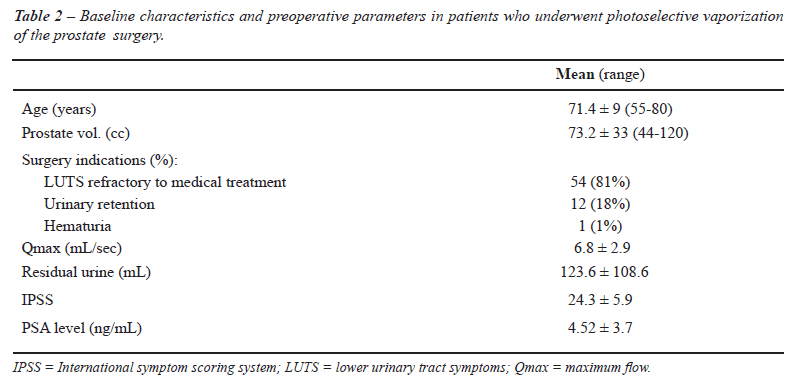
A total of 67 patients on anticoagulation were included in this study, of whom 54 (81%) presented with symptomatic BPH refractory to medical treatment. Table-2 lists the main characteristics of all patients. Before surgery, mean preoperative INR was 1.32 (0.9-2.5) in those receiving warfarin treatment. These values for the patients on warfarin anticoagulation and LMWH substitution were 2 ± 0.22 and 1.20 ± 0.15, respectively. Applied energy (kJ) was 226 ± 56 and we used only one fiber for each patient.
No patient required an additional procedure
due to severe bleeding necessitating intervention during the early postoperative
phase and no blood transfusion was required before, during, or after the
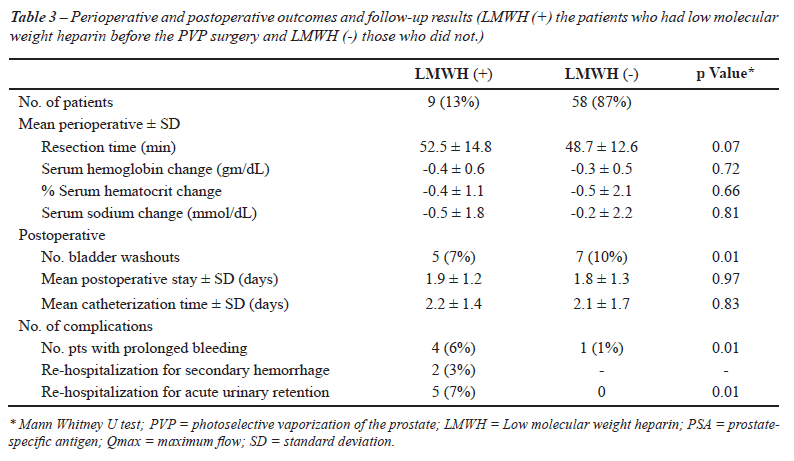
procedure. In 5 patients (7.4%) receiving LMWH treatment, however, prolonged
bleeding (mean 2.4 days) was observed and continuous bladder irrigation
and washout were necessary in these patients. Two other patients receiving
LMWH (2.9%) were referred with bleeding 7-10 days after the procedure,
which was treated conservatively. Thus, a total of 7 patients (10.4%)
experienced bleeding after laser surgery and were subsequently treated
appropriately with no major consequences. On the other hand, in 5 (55.5%,
5/9) patients receiving LMWH, prolonged bleeding was observed. Similarly,
of the 2 patients with delayed bleeding this represented 2/9 (22.2%) of
those on LMWH. Therefore, 7/9 patients (77.7%) on LMWH experienced bleeding,
which represented 10.4% of patients in the entire series. Immediately
after the procedure, 8 patients (11.9%) experienced 1 to 7 days of mild
irritative symptoms requiring no specific treatment, and 5 patients (7.4%)
had urgency for 10-14 days but none had incontinence, newly developed
impotence, or required re-operation. Five patients (7.4%) required re-catheterization
for about 3 days due to transient urinary retention following the removal
of the urethral catheter. Mean preoperative and postoperative hemoglobin
was 12.6 g/dL (range 8.9 to 14.8) and 11.7 g/dL (range 8.0 to 13.2), respectively
(p < 0.62). Mean preoperative and postoperative serum sodium was 138.7
(range 131 to 145) and 138.0 (range 128 to 142), respectively (p <
0.82). Evaluation of the pre- and postoperative hemoglobin and plasma
sodium levels did not show any significant difference. Despite the significant
change with respect to hemoglobin values after the procedure, this change
was not clinically significant. Saline solution (0.9%) was used for irrigation
intraoperatively and fluid absorption was not observed in any of the patients.
The perioperative and postoperative data
of those who underwent LMWH and those that did not are presented (Table-3).
Of the sexually active patients 62% had retrograde ejaculation at 3 and
6 months. No other significant complications were observed. Again no patient
required admission to the intensive care unit for severe cardiac problems
(such as myocardial infarction) during the study.
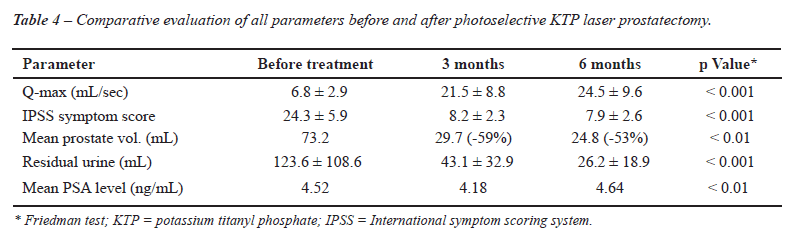
The voiding parameters showed improvement
during the early phase of follow-up. The mean prostate volume had decreased
by 53% after 6 months (Table-4).
At the end of the 6 months, no postoperative
complications developed in any patients, i.e. urinary tract infection,
stress incontinence, cloth retention, bladder neck contracture, or urethral
stricture.
COMMENTS
BPH
is the most common cause of bladder outlet obstruction in the elderly
and it is the most frequent pathology requiring surgical treatment in
men. Concerning the treatment of this condition, medical and surgical
options for the treatment infravesical obstruction have expanded in recent
years (1). Among the surgical techniques, the gold standard treatment,
TURP, has been applied with significant success rates for years and it
significantly improves urinary symptoms and urinary flow. However, it
is well known that, despite its common acceptance and widespread application,
complications can be seen in up to 20% of cases following a successful
intervention (10,19-21). Currently, there are a number of minimally invasive
procedures that may be safe and effective alternatives to TURP. Among
these, one promising surgical technique is laser prostatectomy (8,9,22).
Over the past 10-15 years a variety of endoscopic laser techniques have
evolved for the treatment of BPH that have been associated with less morbidity
than TURP with a shorter hospital stay. The initial type of laser in this
field, the Nd: YAG laser, has allowed the performance of prostatectomy
in an almost bloodless field and without absorption of irrigant, but long-term
follow-up data have demonstrated that sloughing of the remaining necrotic
tissue may cause bladder outlet obstruction and related symptoms for a
definite period of time after treatment. Moreover, patients undergoing
these types of laser treatment required a longer period for maximum improvement,
which probably reflects the lack of tissue debunking at the time of surgery.
Another type of laser used for obstruction
relief in BPH patients is the holmium laser application and this type
of laser has been reported to be an effective alternative to the “gold
standard” for large prostates, entailing significantly less blood
loss and a much shorter catheter time and hospital stay (1,2,15).
Several studies of high risk cases with
different laser types have been performed in the past. In contrast to
laser types previously used, the potassium titanyl phosphate (KTP) laser
has been shown to vaporize prostatic tissue with minimal coagulation of
the underlying structures. With use of the KTP laser, heat has been found
to be concentrated into a small volume, which causes the ablation of the
tissue by rapid vaporization of cellular water by leaving a 2-mm rim of
coagulated tissue. After favorable results were obtained in studies of
animal models and human cadavers, the clinical use of 60-80 W KTP laser
prostatectomy began in selected patients (4,6,7,9,10). Again ex vivo studies
have demonstrated that larger coagulation zones during 80 W KTP laser
vaporization make this technique a relatively bloodless ablative procedure,
giving rise to hemostasis, that is highly superior to conventional TURP-like
tissue resection (17). Decreased morbidity (bleeding or other cardiac
high risk disorders) and shorter hospital stay have been reported as the
factors resulting in the rapid acceptance of photoselective vaporization
of the prostatic tissue.
Yuan et al. have reported 12 months’
results from a prospective clinical trial in 128 high-risk men with benign
prostatic hyperplasia who underwent photoselective vaporization of the
prostate (23). According to their results, the mean operation time was
51.6 (22.8) min, the mean catheterization time was 2.8 (1.6) days, IPSS
decreased from 19.2 (6.1) before surgery to 6.1 (4.6), Q(max) increased
from 7.0 (2.8) mL/s to 24.8 (8.0) mL/s, and residual urine decreased from
168 (89) mL to 23 (34) mL, 12 months later. All these results were similar
to our clinical outcomes.
On the other hand, Ruszat et al. and Woo
et al. reported that there was no perioperative discontinuation in drug
administration since withdrawal would have posed a considerable risk for
thromboembolic events (24,25). We stopped anticoagulant medication 2 days
before surgery in all patients but started LMWH, 24 hours after the discontinuation
of oral anticoagulant because of the coagulation risk. We did not observe
any complications linked to the discontinuation of anticoagulant treatment
after the surgery.
New-generation, high-power potassium titanyl
phosphate lasers can be used in the day-care setting, with minimal risk
of complications and without the need for postoperative catheter drainage
(10,11,17). Furthermore, the ability to use this technology in the management
of relatively large prostates, in a safe and effective manner, represents
another advantage of this technique that makes it preferable to the other
surgical alternatives including open prostatectomy or TURP.
Based on our relatively short follow-up
data, we suggest that high-power KTP lasers represent a very significant
challenge to the ‘gold standard’ status of TURP. KTP laser
prostatectomy has been found to be sufficiently effective in our patients
receiving anticoagulant therapy due to certain cardiac problems. Successful
results similar to those produced by TURP including significant improvements
both in IPSS symptom scores as well as maximum flow rates were observed
in the majority of patients. Again residual urine volume decreased significantly
after laser vaporization. Limited complications were observed and apart
from the mild dysuria and urgency no major complication that really affects
the quality of life in the treated patients was observed in our series.
The urethral catheter was removed within 48 h in all patients and most
of the patients were discharged the following day. More importantly, although
mild hematuria lasting a couple of days after the procedure was observed
in some patients, severe hemorrhage requiring intervention was not observed
in any patient.
Thus, our data confirmed the hemostatic
efficacy of KTP laser vaporization during its TURP-like resection with
highly effective tissue removal especially in high-risk patients by giving
rise to hemostasis. On the other hand, 7/9 patients on LMWH experienced
minor bleeding complications in our study and so this subgroup had a particular
risk although none required intervention or transfusion. Despite all these
successful results, we must emphasize that the relatively small number
of patients and short follow-up period, the absence of a control group
(TURP group), and the small number of patients who used LMWH during the
procedure could be considered the drawbacks of our study.
CONCLUSION
Our results demonstrate that high-power photoselective laser vaporization prostatectomy is feasible and appears to be safe and effective for quickly relieving bladder outlet obstruction due to BPH in a day-care setting with minimal risk of complications and minimal need for postoperative catheterization. Although several factors limit the interpretation of the results of this study, the procedure could be considered as a promising alternative in the treatment of BPH in all but especially in high-risk patients receiving anticoagulant therapy. However, we suggest that larger randomized clinical trials to compare this technique with standard TURP and long-term follow-up data are needed to determine its efficacy, safety, and durability.
CONFLICT OF INTEREST
None declared.
REFERENCES
- Lam JS, Cooper KL, Kaplan SA: Changing aspects in the evaluation and treatment of patients with benign prostatic hyperplasia. Med Clin North Am. 2004; 88: 281-308.
- Horninger W, Unterlechner H, Strasser H, Bartsch G: Transurethral prostatectomy: mortality and morbidity. Prostate. 1996; 28: 195-200.
- Mebust WK, Holtgrewe HL, Cockett AT, Peters PC: Transurethral prostatectomy: immediate and postoperative complications. A cooperative study of 13 participating institutions evaluating 3,885 patients. J Urol. 1989; 141: 243-7.
- Uchida T, Ohori M, Soh S, Sato T, Iwamura M, Ao T, et al.: Factors influencing morbidity in patients undergoing transurethral resection of the prostate. Urology. 1999; 53: 98-105.
- Doll HA, Black NA, McPherson K, Flood AB, Williams GB, Smith JC: Mortality, morbidity and complications following transurethral resection of the prostate for benign prostatic hypertrophy. J Urol. 1992; 147: 1566-73.
- Hedlund PO: Postoperative venous thrombosis in benign prostatic disease. A study of 316 patients, using the 125I-fibrinogen uptake test. Scand J Urol Nephrol. 1975; (27 suppl): 1-100.
- Tscholl R, Straub W, Zingg E: Electroresection of the prostate in patients treated with heparin. J Urol. 1980; 124: 221-2.
- Te AE: The development of laser prostatectomy. BJU Int. 2004; 93: 262-5.
- Aho TF, Gilling PJ: Laser therapy for benign prostatic hyperplasia: a review of recent developments. Curr Opin Urol. 2003; 13: 39-44.
- Fitzpatrick JM, Mebust KW: Minimally Invasive and Endoscopic Management of Benign Prostatic Hyperplasia. In: Walsh CW, Retik AB, Vaughan ED, Wein AJ (eds.), Campbell’s Urology, 8 th edition. Philadelphia: WB Saunders. 2004; pp. 1402.
- van Melick HH, van Venrooij GE, Boon TA: Laser prostatectomy in patients on anticoagulant therapy or with bleeding disorders. J Urol. 2003; 170: 1851-5.
- Kabalin JN, Gill HS: Urolase laser prostatectomy in patients on warfarin anticoagulation: a safe treatment alternative for bladder outlet obstruction. Urology. 1993; 42: 738-40.
- Le Duc A, Gilling PJ: Holmium laser resection of the prostate. Eur Urol. 1999; 35: 155-60.
- Te AE, Malloy TR, Stein BS, Ulchaker JC, Nseyo UO, Hai MA, et al.: Photoselective vaporization of the prostate for the treatment of benign prostatic hyperplasia: 12-month results from the first United States multicenter prospective trial. J Urol. 2004; 172: 1404-8.
- Barber NJ, Muir GH: High-power KTP laser prostatectomy: the new challenge to transurethral resection of the prostate. Curr Opin Urol. 2004; 14: 21-5.
- Malek RS, Kuntzman RS, Barrett DM: High power potassium-titanyl-phosphate laser vaporization prostatectomy. J Urol. 2000; 163: 1730-3.
- Sandhu JS, Ng CK, Gonzalez RR, Kaplan SA, Te AE: Photoselective laser vaporization prostatectomy in men receiving anticoagulants. J Endourol. 2005; 19: 1196-8.
- Bachmann A, Ruszat R, Wyler S, Reich O, Seifert HH, Müller A, et al.: Photoselective vaporization of the prostate: the basel experience after 108 procedures. Eur Urol. 2005; 47: 798-804.
- Westenberg A, Gilling P, Kennett K, Frampton C, Fraundorfer M: Holmium laser resection of the prostate versus transurethral resection of the prostate: results of a randomized trial with 4-year minimum long-term followup. J Urol. 2004; 172: 616-9.
- Gürdal M, Tekin A, Yücebas E, Sengör F: Nd:YAG laser ablation plus transurethral resection for large prostates in high-risk patients. Urology. 2003; 62: 914-7.
- Shingleton WB, Farabaugh P, May W: Three-year follow-up of laser prostatectomy versus transurethral resection of the prostate in men with benign prostatic hyperplasia. Urology. 2002; 60: 305-8.
- Carter A, Sells H, Speakman M, Ewings P, MacDonagh R, O’Boyle P: A prospective randomized controlled trial of hybrid laser treatment or transurethral resection of the prostate, with a 1-year follow-up. BJU Int. 1999; 83: 254-9.
- Yuan J, Wang H, Wu G, Liu H, Zhang Y, Yang L: High-power (80 W) potassium titanyl phosphate laser prostatectomy in 128 high-risk patients. Postgrad Med J. 2008; 84: 46-9.
- Ruszat R, Seitz M, Wyler SF, Abe C, Rieken M, Reich O, et al.: GreenLight laser vaporization of the prostate: single-center experience and long-term results after 500 procedures. Eur Urol. 2008; 54: 893-901.
- Woo H, Reich O, Bachmann A, Choi B, Collins E, de la Rosete J, et al.: Outcome of greenlight HPS 120-W laser therapy in specifi c patient populations: those in retention, on anticoagulants and with large prostates (> 80mL). Eur Urol Suppl 2008; 7: 378-83.
___________________
Accepted
after revision:
October 18, 2009
_______________________
Correspondence
address:
Dr. Omer Faruk Karatas
Department of Urology, Memorial Hospital
Piyale Pasa Bulvari, Okmeydani
34385, Istanbul, Turkey
Fax: + 90 212 314-6621
E-mail: dr.omerfaruk@gmail.com