URODYNAMICS
IN A COMMUNITY-DWELLING POPULATION OF FEMALES 80 YEARS OR OLDER. WHICH
MOTIVE? WHICH DIAGNOSIS?
(
Download pdf )
FRANÇOISE A. VALENTINI, GILBERTE ROBAIN, BRIGITTE G. MARTI, PIERRE P. NELSON
ER6 (FAV, GR, PPN), Université Pierre et Marie Curie (Paris VI), Paris, France, and Department of Physical Medicine and Rehabilitation (FAV, GR, BGM), Hôpital Charles Foix, Ivry-sur-Seine, France
ABSTRACT
Purpose:
To determine why community-dwelling women aged 80 years or over were referred
for urodynamic evaluation despite their advanced age and which urodynamic
diagnosis was made.
Materials and Methods: One hundred consecutive females (80-93 years) were
referred to our urodynamics outpatient clinic for evaluation of lower
urinary tract symptoms (LUTS) between 2005 and 2008. Clinical evaluation
comprised of a previous history of LUTS, previous medical history of neurological
disease or dementia, pelvic floor dysfunction or prior pelvic surgery.
Exclusion criteria were complete retention and severe dementia involving
failure to understand simple instructions. Assessed items were results
of uroflows (free flow and intubated flow), cystometry and urethral pressure
profilometry, and final urodynamic diagnosis.
Results: The main complaint evoked by the patients was incontinence (65.0%)
of which 61.5% was “complicated” and urgency was reported
by 70.0%.
Interpretable free flow at arrival was very low (44.0%). Prevalence of
detrusor overactivity was high, found in 45 patients of whom 16 had detrusor
hyperactivity with impaired detrusor contractility. Detrusor overactivity
and urgency were strongly associated (p = 0.004). Twenty-five patients
had intrinsic sphincteric deficiency alone and 15 detrusor underactivity.
Conclusion: In this particular community-dwelling with an elderly female
population, urodynamics is easily feasible. Incontinence, mainly “complicated”
is the more frequent complaint and urgency the more frequent symptom.
Urodynamic diagnosis underlines the high incidence of detrusor overactivity
as well as impaired detrusor function.
Key
words: ageing; women; bladder outlet obstruction; urodynamics
Int Braz J Urol. 2010; 36: 218-24
INTRODUCTION
Demographic
trends indicate that the most rapidly growing adult population older than
65 years is the sub-group older than 85. Some troublesome problems are
reported in the elderly primarily due to a change in lower urinary tract
(LUT) function. The evaluation of LUT dysfunction is based on urodynamic
investigation which is considered the gold standard. In fact, the use
of urodynamics remains debatable, as it is invasive, expensive, time consuming,
and frequently it is unhelpful to achieve a final diagnosis. The place
of urodynamics in the elderly has been mainly discussed concerning incontinent
patients and in the frail and elderly living in a long term care residence
(1,2) but less studied in the community-dwelling elderly (3). Guidelines
suggest to carry out urodynamics in the elderly after failure of conservative
treatment or surgery, and do not recommend urodynamics for frail elders.
Often, this procedure is not easy to put into practice as in the case
of our urodynamics outpatients clinic where evaluations are performed
only when requested by a general practitioner, gynecologist or urologist.
In recent years, more and more elderly females have been referred for
evaluation of LUT dysfunction. The major part of this population consists
of community-dwelling women who live at home, perform daily tasks, take
an active part in society and play sports well into old age. Therefore,
the remaining question is the diagnosis of frailty in order to take into
account the guidelines. Distinction between ageing, disability and frailty
is not clear and the objective measurement of frailty remains to be discussed
(4,5). When considering research findings, the prevalence of frailty ranges
from 33% to 88% according to the criteria employed (6). Multiple systems
must be involved in the frailty definition: sarcopenia, osteopenia, nutritional
changes, factors of illness. It has been suggested that older persons
who retain the capacity to improve (even a small increase in their gait
speed) are therefore not frail (5).
Prevalence of lower urinary tract symptoms (LUTS) and LUT dysfunction
increases significantly with ageing. Most urinary problems are multifactorial
in origin and are not only the result of the LUT changes with aging (7).
Age related changes in the female LUT involve both bladder, impaired contractility
or overactivity, and urethra, decreased urethral closure pressure and
urogenital atrophy. Some studies have been conducted in order to evaluate
the effect of age on the LUT function (8-12). In fact, these studies seldom
concerned the oldest subgroup and were mainly devoted to the role and
effects of detrusor overactivity (8,11,12). Taking into account these
limitations, our objective was to assess a sizeable population of community-dwelling
women, aged 80 years or more, referred for urodynamics in our outpatients’
clinic in order to answer to the following questions: why is urodynamics
prescribed, what are the patient complaints, what are the urodynamic findings
and the urodynamic diagnosis and finally, is urodynamics able to help
the physician to achieve a better management of LUTS?
MATERIALS AND METHODS
This was
a retrospective study. Among 848 women of all ages referred to our urodynamics
outpatient clinic between January 2005 and March 2008, 100 (11.8%) aged
80 years or more (mean age 83.2 years; range 80-93 years) were community-dwelling
and able to perform everyday tasks.
This study was conducted in accordance with the declaration of Helsinki.
According to the local practice of our Ethics Committee, there is no formal
Institutional Review Board approval required for retrospective studies.
Assessment by a physician included detailed medical history and usual
medication, physical examination (including neurological and cognitive
testing). All patients completed a 2- or 3-day bladder diary and had a
urine dipstick test.
Specific evaluation comprised of a history of LUTS being the major complaint
in cases of concomitant LUTS, previous medical history of neurological
disease (stroke, multiple sclerosis, lumbar injury etc.) or dementia,
pelvic floor dysfunction and previous pelvic surgery. Exclusion criteria
were complete retention, severe dementia involving failure to understand
simple orders or a Mini-Mental State score < 20. One patient with spinal
cord injury was excluded from the study.
Quality of life was assessed using the International Consultation on Incontinence
Questionnaire-Short Form (ICIQ-SF) for incontinent patients and the visual
analog scale (VAS) for continent patients.
Urodynamics was performed according to good Urodynamic Practices (13)
with a Laborie’s Dorado® unit. Detailed urodynamic testing included:
1) an initial free uroflow (FF1), 2) a cystometry in the seated position
at the medium filling rate of 50 mL/min with normal saline at room temperature
(triple-lumen urethral catheter 10F for 67 patients and 7F for 33 patients)
and intubated flow (IF), 3) urethral pressure profilometry (UPP) in supine
position, empty bladder (before the cystometry) and 200-250 mL filling
if incontinent, and 4) a second free uroflow (FF2) if bladder was filled
for UPP.
No routine provocative maneuver for detrusor overactivity (DO) was performed
during cystometry but coughs were used as quality control of pressure
recordings (13).
Studied items were results from uroflows (FF1, FF2 and IF), filling cystometry
and UPP, and final urodynamic diagnosis. To be interpretable, a uroflow
had to have a urinated volume > 100 mL.
Data are presented as mean ± SD and range. The Wilcoxon signed-rank
test was used for comparison of related samples and the Chi 2 test to
compare unrelated samples with p < 0.05 considered significant. Statistical
analyses were performed using SAS, version 5.0 (SAS Institute, Inc., Cary,
NC).
RESULTS
Motive for Urodynamics
Patients’ main complaints are summarized in Table-1. Incontinence was the main complaint: 22 urge, 32 mixed and 11 stress. Forty patients had previously received treatment (chemical or surgical) for incontinence in middle age or later as well as for recurrent incontinence or developed urgency. Among these patients, 12 had anticholinergic treatment failure for DO. Other complaints were 16 frequency (= 8 voids per 24 hours), 12 dysuria (low stream or hesitancy or straining) or incomplete retention and 1 cystitis (recurrent urinary tract infection and pain during voiding); 6 patients with pelvic organ prolapse had a pre-operative evaluation.
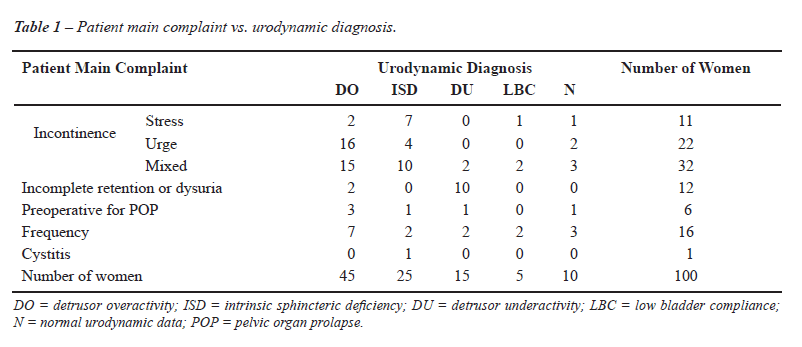
Incidence of incontinence (stress, urge
and mixed) was 65.0% close to that of the symptom urgency (urge or mixed
incontinence, and frequency) which was evoked by 70.0% of this elderly
population.
ICIQ-SF score was 12 ± 4 (maximum
21) and VAS score 4.2 ± 2.5 (maximum 10).
Previous Medical History
Previous medical history of disease and/or pelvic surgery was obtained by detailed questioning which is summarized in Table-2.

Feasibility of FF and
IF
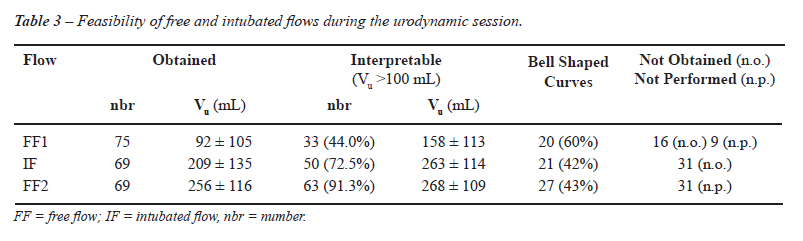
A significant result was the low percentage (44.0%) of interpretable free flow (FF) on arrival (FF1) compared to the percentages of interpretable If and FF2 (Table-3).
Maximum Cystometric Capacity (MCC)
Patients able to perform an IF (voided volume = 209 ± 135 mL) had a MCC of 337 ± 150 mL (p < 0.001).
Cystometry
Detrusor
overactivity (involuntary detrusor contractions during the filling phase:
DO) was found in 45 patients (45%) of whom 15 (33.3 %) had a previous
history of neurological disease.
In this population 16/45 (35%) had detrusor hyperactivity with impaired
contractility (detrusor hyperactivity with incomplete bladder emptying
leading to major post void residual (PVR) (detrusor hyperactivity with
impaired contractility (DHIC).
Rhythmic rectal contractions (RRCs) were observed in 29 patients of whom
9 (31.0%) had a history of neurological disease. Among these 29 women,
18 (62%) had DO (7 with a history of neurological disease).
Intubated Flow
Among the 69 IF obtained, only 50 (72.5%) were interpretable. Voiding parameters were: maximum flow rate Qmax = 11 ± 5 mL/s [2-30 mL/s], detrusor pressure at opening pdet.op = 15 ± 10 cm H2O [0-47 cm H2O] and detrusor pressure at Qmax pdet.Qmax = 19 ± 11 cm H2O [5-48 cm H2O] (p < 0.0001), and voiding time tvoid = 52 ± 46 s [7-300 s].
Urethral Pressure Profilometry
Maximum urethral closure pressure (MUCP) was 44 ± 22 cm H2O bladder empty and 35 ± 17 cm H2O bladder filled (p = 0.01). The “theoretical” value for the studied age range was 30-40 cm H2O (14). It is important to note that between 47 patients who had at least one MUCP value (bladder empty or filled) = 30 cm H2O, only 25 had intrinsic sphincteric deficiency (ISD) (isolated low MUCP and urodynamic stress incontinence) as a final urodynamic diagnosis.
Final Urodynamic Diagnosis
DO was the
main diagnosis, found in 45 patients of whom 16 had DHIC; ISD concerned
only 25 patients, detrusor underactivity (defined as absence of detrusor
contraction during voiding and large PVR) was found in 15, low bladder
compliance (?V/?pves less than 20 mL/cm H2O) in 5 and normal urodynamic
data in 10. In the population for which ISD was not predominant, 15 patients
had DO, 5 detrusor underactivity and 2 low bladder compliance.
The Table-1 shows the distribution between main patient complaint and
urodynamic diagnosis.
Complaint of urgency (symptom) was found to have a sensitivity of 54.3%,
a specificity of 76.7% and a predictive positive value of 84.4% for the
detection of DO; complaint of stress or mixed incontinence was found to
have a sensitivity of 39.5%, a specificity of 85.9% and a predictive positive
value of 68.0% for the detection of ISD.
COMMENTS
A major
part (40%) of the studied population had failure of conservative treatment
or recurrence of incontinence after surgical cure. These women desired
further attempts to correct or manage their incontinence. This condition
implies urodynamics for a detailed and objective diagnosis. The other
60% agree to urodynamics as their LUT dysfunction has developed for many
years (up to 20 years etc.) and has become a cause of decreased quality
of life, or is an acute problem (e.g. incomplete retention after knee
or hip surgery).
It is well known that the prevalence of urinary incontinence increases
with ageing. In the age range higher than 80 years, the reported rate
of incontinence is 35% for community-dwelling women in a questionnaire
survey (15) and 82% for institutionalized women (2). We found an intermediate
rate of 65% probably due to our recruitment, i.e. women with LUTS whose
physicians requested urodynamics. It has been reported that urgency and
urge incontinence increase with aging, while if stress incontinence is
the main complaint among the women between 25 and 49 years of age it remains
a constant complaint in women over 80 (15). In our population, urge and
mixed incontinence were the main causes of leakage (54%) and pure stress
urinary incontinence was moderately observed (11%). In contrast, urgency
appears as the main symptom as it associates frequency and accounts for
70% (as opposed to 42.0% in the group of 748 female patients under age
80 explored during the same period in our laboratory). Urgency is a symptom
related to bladder overactivity while DO is only a urodynamic diagnosis.
Acute complaint was only incomplete retention after hip or knee surgery
and mainly secondary to hip arthroplasty.
Feasibility of urodynamics in the elderly has been previously demonstrated
(2). An unexpected result is the lower percentage of interpretable initial
free uroflow (44%) compared with the 60.8% for the group of 748 women
under the age of 80; the percentages were similar in the 2 groups for
both IF and FF2. Therefore, to be reliable, FF has to be repeated, making
certain that the bladder is full enough and taking into account the difficulty
for some patients to void in an “unfriendly” environment.
Analysis of filling cystometry shows an increased frequency of DO in this
elderly population which is consistent with previous studies (45% as opposed
to 23.0% in the population less than 80 years old) but does not explain
the complaint of urgency (70%). Hashim and Abrams (16) have found that
44% of women with urgency had DO; in our study 54% of the women who complained
of urgency had DO, which is slightly higher. This finding could be related
to the decline in central nervous system cholinergic activity occurring
with normal aging (17). In addition, we observed a high prevalence of
DHIC (low detrusor pressure and high residual volume - 35%). This specific
association, first described by Resnick and Yalla (18), is characteristic
of older patients and is a cause of urinary incontinence in the elderly.
However, as this study was retrospective and as urodynamic studies are
standardized in our laboratory, no provocative maneuver for DO was performed
except for cough for quality control of pressure recordings.
Occurrence of RRCs confirmed the high prevalence of rhythmic rectal contractions
in elderly patients (31.8% as compared to 16.5% in the population less
than 80 years old). We observed a strong association between RRCs, DO
and neurological disease. Despite the small group studied Ozawa et al.
have reported a similar result and concluded that RRCs may be regarded
as one of the causes responsible for urinary difficulty in the elderly
(19).
Maximum cystometric capacity was lower than the value reported by Pfisterer
et al. (8); this difference could be the consequence of the high incidence
of terminal DO in our population.
The mean MUCP value is the value expected for the age; bladder filled,
the decrease of the MUCP value implies a lack of adaptation of the sphincter
to bladder filling. However, approximately 50 % of the population had
at least one measurement (bladder empty or filled) = 30 cm H2O.
The main urodynamic diagnosis was DO found in 45 women of whom 38 had
suggested LUTS (urge or mixed incontinence, frequency). The second diagnosis,
in frequency, was suggested ISD found in 25 women of whom 17 had LUTS
(stress or mixed incontinence). That finding is probably the consequence
of the association of ISD with a major urodynamic finding such as detrusor
overactivity.
Sensitivity, specificity and predictive positive value of urgency for
the detection of DO, and stress or mixed incontinence for the detection
of ISD are good but not sufficient enough to eliminate urodynamics, mainly
to avoid inappropriate new treatment in patients with failure of previous
treatment (chemical or surgical). In other patients, who have a number
of complaints and who experience great discomfort in daily life, urodynamics
should enable the physician to choose the less invasive and quickly effective
treatment.
A limitation of our study was that the physician performing the urodynamic
investigation was not the physician who originally requested urodynamics.
Therefore, our findings can only be considered as advice. A prospective
study would be required for a better evaluation of the role played by
urodynamics in the management of LUT dysfunction in this specific elderly
population.
CONCLUSION
In this
population of community-dwelling of elderly females referred by their
physician in our urodynamics outpatient clinic, urodynamics primarily
allows to find the causes of treatment failure. However, the majority
of the population complained of a decrease in their quality of life often
due to LUTS which had developed over many years and asked for greater
improvement.
The major complaint was incontinence, often associated with urgency which
was the main symptom. The low success of FF at arrival suggests that anxiety
and an “uncomfortable” environment might play a role in addition
to the changes in rate of urine production with ageing. Prevalence of
DO and DHIC, and occurrence of RRCs during cystometry increased compared
to younger patients. DO and RRCs are frequently a concomitant finding
of cystometry. A surprising result was the small group of patients for
whom the proposed diagnosis was ISD alone.
CONFLICT OF INTEREST
None declared.
REFERENCES
- Milsom I, Altman D, Lapitan MC, Nelson R, Sillén U, Thom D. Epidemiology of urinary (UI) and faecal (FI) Incontinence and Pelvic organ Prolapse (POP). In Incontinence, 4th International Consultation on Incontinence. Abrams P, Cardozo L, Khoury S. (ed.), Health Publication Ltd. 2009; pp. 37-111.
- Resnick NM, Yalla SV, Laurino E: The pathophysiology of urinary incontinence among institutionalized elderly persons. N Engl J Med. 1989; 320: 1-7.
- Damián J, Martín-Moreno JM, Lobo F, Bonache J, Cerviño J, Redondo-Márquez L, Martínez-Agulló E: Prevalence of urinary incontinence among Spanish older people living at home. Eur Urol. 1998; 34: 333-8.
- Topinkova E: Aging, disability and frailty. Ann Nutr Metabol 2008; 52(suppl 1): 6-11.
- Bergman H, Ferrucci L, Guralnik J, Hogan DB, Hummel S, Karunananthan S, et al.: Frailty: an emerging research and clinical paradigm--issues and controversies. J Gerontol A Biol Sci Med Sci. 2007; 62: 731-7.
- van Iersel MB, Rikkert MG: Frailty criteria give heterogeneous results when applied in clinical practice. J Am Geriatr Soc. 2006; 54: 728-9.
- Dubeau CE: The aging lower urinary tract. J Urol. 2006; 175: S11-5.
- Pfisterer MH, Griffiths DJ, Schaefer W, Resnick NM: The effect of age on lower urinary tract function: a study in women. J Am Geriatr Soc. 2006; 54: 405-12.
- Gomes CM, Arap S, Trigo-Rocha FE: Voiding dysfunction and urodynamic abnormalities in elderly patients. Rev Hosp Clin Fac Med Sao Paulo. 2004; 59: 206-15.
- McGrother CW, Donaldson MM, Hayward T, Matthews R, Dallosso HM, Hyde C, et al.: Urinary storage symptoms and comorbidities: a prospective population cohort study in middle-aged and older women. Age Ageing. 2006; 35: 16-24.
- Lin HH, Torng PL, Sheu BC, Shau WY, Huang SC: Urodynamically age-specific prevalence of urinary incontinence in women with urinary symptoms. Neurourol Urodyn. 2003; 22: 29-32.
- Pfisterer MH, Griffiths DJ, Rosenberg L, Schaefer W, Resnick NM: The impact of detrusor overactivity on bladder function in younger and older women. J Urol. 2006; 175: 1777-83; discussion 1783.
- Schäfer W, Abrams P, Liao L, Mattiasson A, Pesce F, Spangberg A, et al.: Good urodynamic practices: uroflowmetry, filling cystometry, and pressure-flow studies. Neurourol Urodyn. 2002; 21: 261-74.
- Constantinou CE: Urethrometry: considerations of static, dynamic, and stability characteristics of the female urethra. Neurourol Urodyn 1988; 7: 521-39.
- Hannestad YS, Rortveit G, Sandvik H, Hunskaar S, Norwegian EPINCONT study: Epidemiology of Incontinence in the County of Nord-Trøndelag: A community-based epidemiological survey of female urinary incontinence: the Norwegian EPINCONT study. Epidemiology of Incontinence in the County of Nord-Trøndelag. J Clin Epidemiol. 2000; 53: 1150-7.
- Hashim H, Abrams P: Is the bladder a reliable witness for predicting detrusor overactivity? J Urol. 2006; 175: 191-4; discussion 194-5.
- Abrams P, Andersson KE: Muscarinic receptor antagonists for overactive bladder. BJU Int. 2007; 100: 987-1006.
- Resnick NM, Yalla SV: Detrusor hyperactivity with impaired contractile function. An unrecognized but common cause of incontinence in elderly patients. JAMA. 1987; 257: 3076-81.
- Ozawa H, Nagai A, Akiyama H, Ichikawa T, Akiyama M, Ono N, Oeda T, Kumon H, Ohmori H: Significance of rectal contractions during multichannel urodynamic study. Nippon Hinyokika Gakkai Zasshi. 1997; 88: 874-9.
____________________
Accepted after revision:
October 15, 2009
_______________________
Correspondence address:
Dr. Françoise A. Valentini
Université Pierre et Marie Curie (Paris 6)
4 Place Jussieu, 75005 Paris, France
Fax: + 33 1 4959-4697
E-mail: favalentini@gmail.com