EPIDEMIOLOGIC
CHARACTERISTICS OF RENAL CELL CARCINOMA IN BRAZIL
(
Download pdf )
doi: 10.1590/S1677-55382010000200004
AGUINALDO C. NARDI, STENIO DE C. ZEQUI, OTAVIO A. C. CLARK, JOSE C. ALMEIDA, SIDNEY GLINA
Brazilian Society of Urology
ABSTRACT
Purpose:
In Brazil, National data regarding the epidemiology of renal cell carcinoma
(RCC) are scarce. The aim of this study was to describe the demographic,
clinical, and pathologic characteristics of RCC diagnosed and treated
by members of the SBU - Brazilian Society of Urology.
Materials and Methods: For this cross-sectional study, data were collected
through an on line questionnaire available to the members of the Brazilian
Society of Urology (SBU). Between May 2007 and May 2008, voluntary participant
urologists collected data on demographic, clinical and pathological characteristics
from patients diagnosed with RCC in their practice.
Results: Fifty SBU affiliated institutions contributed with patient information
to the study. Of the 508 patients, 58.9% were male, 78.9% were white,
and the mean age was 59.8 years. Smoking history, high blood pressure
and a body mass index above 30 kg/m2 were present in 14.8%, 46.1% and
17.9% of the patients, respectively. Abdominal ultrasound and computed
tomography were the main diagnostic methods. The majority of the cases
were localized tumors and metastasis were presented in 9.5% of the patients;
98.4% underwent nephrectomy. Clear cell carcinoma was the most common
histological type. In comparison with private institutions, stage IV disease
was less frequent among patients treated at public health services (P
= 0.033).
Conclusions: RCC in Brazil is more common in white men in their sixth
decade of life. Ultrasound is the main diagnostic tool for the diagnosis
of clear cell carcinoma and we found that localized disease was predominant.
A national registry of RCC is feasible and may provide valuable information.
Key
words: carcinoma; renal cell carcinoma; cross sectional studies;
epidemiology; kidney neoplasms
Int Braz J Urol. 2010; 36: 151-8
INTRODUCTION
The incidence
of renal cell carcinoma (RCC) is increasing globally (1,2). Currently,
the disease represents approximately 2.0% of all new cases of cancer and
over 100.000 deaths worldwide (3). Improvements in imaging diagnosis may
have contributed to the rising incidence of RCC over the past three decades,
since this rise in incidence is mainly a result of the increasing detection
of small tumors (4). However, at least in the United States, both incidence
of late-stage RCC and mortality rates due to the disease have also been
rising, implying that improvements in the ability to diagnose RCC are
being outweighed by the increasing prevalence of some of the risk factors
for this tumor (5).
In Brazil, data regarding the epidemiology of RCC on a national scale
are currently scarce, since the disease is not among the 10 most frequent
tumor types annually reported by the National Cancer Institute (6). Data
from regional surveys suggest that RCC represents approximately 1.2% of
all cases of cancer in the country (7). Recognizing the need for better
information about the burden of RCC in Brazil, the Brazilian Urological
Society (SBU) led the effort to produce this first-ever survey on a national
scale describing the epidemiology of RCC in Brazil.
The aim of this study was to describe the demographic, clinical, and pathologic
characteristics of RCC diagnosed and treated by urologists associated
to SBU in Brazil.
MATERIALS AND METHODS
Data Collection
To perform
a cross-sectional study, a web-based survey containing 75 questions was
made available to approximately 3,700 physicians affiliated to SBU, who
were invited to participate in the study through mailed announcements
and frequent advertising of the study on the SBU website. The questionnaire
was available on the website for the duration of the study, and could
also be sent by regular mail or fax upon request (www.sbu.org.br). Participant
physicians were instructed to collect data from patients seeking medical
attention between May 2007 and May 2008. All completed questionnaires
were registered in a central database that was under the supervision of
SBU. The study was approved by the institutional review boards affiliated
with the centers where participants were enrolled. An informed consent
was offered for all patients and signed by them. The study was sponsored
by Pfizer Brazil.
Data collected from each patient included age, gender, race, state of
origin, weight, height, tumor-node-metastases (TNM) stage, histological
subtype, the presence of known risk factor for RCC (history of smoking,
hypertension, obesity, diabetes, hypercholesterolemia, end-stage renal
disease, and Von Hippel-Lindau disease), signs and symptoms present at
diagnosis (hematuria, palpable mass, flank pain, weight loss, fever, and
night sweats), the exam leading to diagnosis (clinical findings, laboratory
tests, or imaging studies), and type of medical assistance (public heath
care, private care, or third-party payment by insurance companies; the
latter two were combined for analysis under the category “private
institutions”).
Body-mass index (BMI), the weight in kilograms divided by the square of
the height in meters, was calculated for each patient. TNM stage was determined
according to the 2002 classification of renal tumors (8). Tumor histology
was classified according to the Heidelberg classification (9). Five subtypes
of RCC were reported in the study: clear-cell, papillary, chromophobe,
collecting-duct, and unclassified carcinomas.
Statistical Analysis
In addition to descriptive statistics of the demographic, clinical, and pathologic variables, exploratory analyses were conducted for comparisons between groups of patients. The chi-square or Fisher’s exact tests were used to compare the frequency of categorical variables between groups, and Student’s-t-test or analysis of variance were used to compare continuous variables. All P values are two sided, and P < 0.05 was considered significant. All data analysis was conducted using the MedCalc software, version 9.6.0.0 (MedCalc, Mariakerke, Belgium).
RESULTS
Patient and Disease Profile
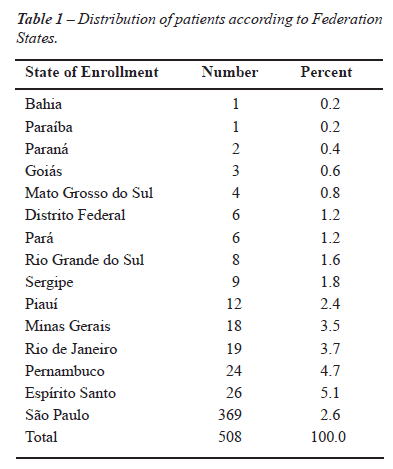
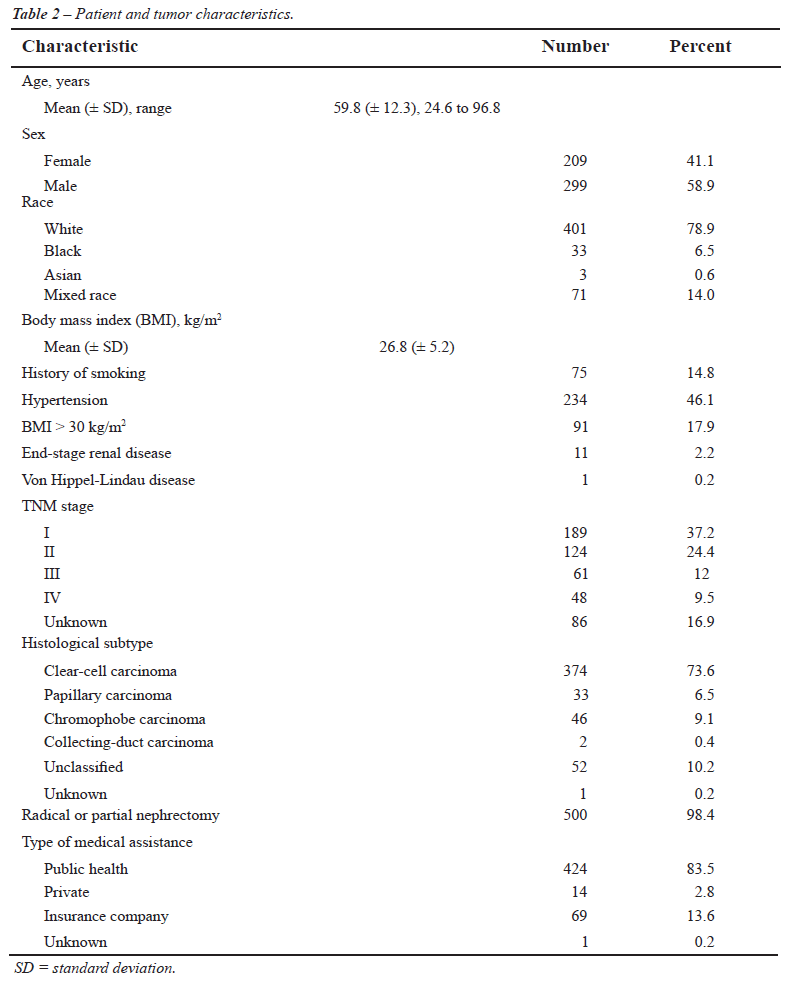
Fifty SBU affiliated institutions from 14 Brazilian States contributed with patient data for this study. Each institution was represented by at least one physician and a total of 508 patients were enrolled. Approximately three-quarters of patients were seen at institutions from the State of São Paulo. Table-1 shows the distribution of patients according to State. Patient demographics and tumor characteristics are given in Table-2. Slightly more patients were male, nearly 80% were white and 83.5% were assisted by public health services. The mean age was close to 60 years, and the most prevalent risk factor for RCC was hypertension. With regard to symptoms and signs upon presentation, hematuria (42.9%) and flank pain (41.3%) were the most frequent, whereas the classic triad of hematuria, flank pain and palpable flank mass was present in only 4.5% of the cases (Figure-1). The most common procedure leading to the diagnosis of RCC was an abdominal ultrasound (73.4%), followed by computed tomography (CT) scan of the abdomen (19.1%) and physical exam (3%). Diagnosis through intravenous urography was anecdotal (0.6%). Three-quarters of patients had localized disease (i.e., TNM stage I and II) and the most common histological type was clear cell carcinoma; virtually all patients underwent nephrectomy (radical or partial) for management of their RCC. Other patient and disease characteristics are shown in Table-2.
Exploratory Analyses
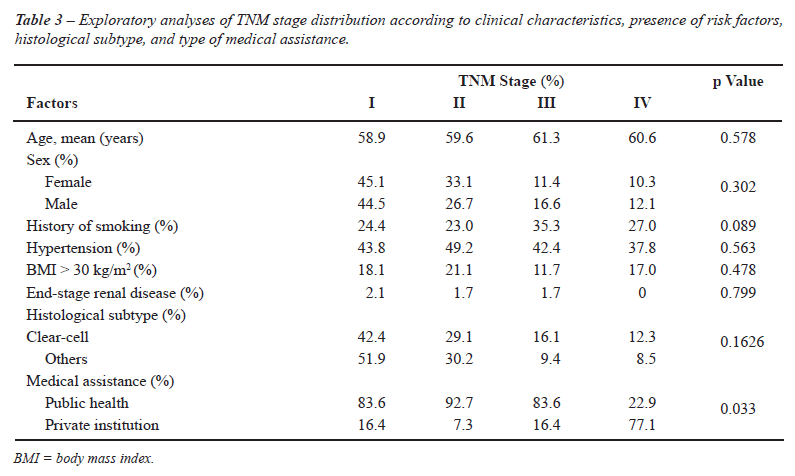
The presence of most risk factors for RCC varied little according to age. However, there were significantly higher proportion of patients with a history of hypertension (P < 0.0001) or diabetes (P = 0.0011) among subjects aged 60 years or older, in comparison with younger patients. The proportion of cases diagnosed by ultrasound or by CT scan did not differ among patients seen at public health services or in private institutions (P = 0.631). Metastatic disease was less frequent among patients seen at public health services (P = 0.033), in comparison with those seen in private institutions. On the other hand, TNM stage was not associated with any of the other patient demographic characteristics, tumor histological subtype or risk factors (Table-3).
COMMENTS
This study
provides a cross-sectional view of RCC in Brazil, a country where no national
incidence rates for the disease are currently available (6,7). In an attempt
to overcome the paucity of data in our country, SBU carried out a nationwide
study on the epidemiologic and clinical features of RCC in Brazil. As
a result, a total of 508 patients were enrolled by physicians from 50
different institutions. Most demographic characteristics of the study
cohort were quite similar to those in the existing literature (5), since
male patients predominated, the majority was white, and the mean age was
close to 60 years. Also, similar to what occurs in developed countries,
most of the patients presented with localized disease (37% with stage
I RCC). The predominance of early-stage disease is corroborated by the
fact that abdominal ultrasound (73.4%) or abdominal CT scans (19.1%) were
main diagnostic methods in contrast to physical examination (3.0%) and
intravenous urography (0.6%).
Tumor stage is considered one of the most important prognostic factors
in RCC (10,11). In our study, the proportion of patients with metastatic
disease (9.5%) was similar to that reported in other clinical series (12,13).
On the other hand, this proportion is lower than expected from population-based
studies, in which patients with metastatic disease comprise between 25%
and 30% of cases upon presentation (14). We did not find an association
between TNM stage and patient or tumor-related characteristics. It is
generally acknowledged that men present with more advanced disease at
diagnosis. Aron et al., analyzing 35,336 cases of RCC from the Surveillance,
Epidemiology, and End Results (SEER) registries database from 1973 to
2004, reported that male gender was associated with higher stage at presentation
and poorer overall survival, compared with women (15). However, we did
not find the same association in our sample. Similarly, there was no association
between stage and the presence of risk factors for RCC in the present
study. Smoking, hypertension and obesity are the most frequently recognized
risk factors for RCC (16-18). Yet, the presence of risk factors did not
seem to correlate with stage at presentation in the present series.
Several studies have evaluated the prognostic value of histological subtype
in RCC. Although some studies have suggested that clear-cell histology
is associated with a poorer survival (19), Patard et al. reported that
in a multivariate analysis including TNM stage, Fuhrman nuclear grade
and Eastern Cooperative Oncology Group performance status (PS), histological
subtypes of RCC did not have an independent prognostic significance (12).
Although we did not collect data on Fuhrman nuclear grade and PS, we did
not find an association between the presence of clear-cell histology and
more advanced disease. An obvious limitation of our study design is the
lack of central pathologic review; therefore, we cannot exclude the possibility
of histological subtype misclassification in some cases.
We found an association between TNM stage and type of medical assistance.
Surprisingly, there was a higher proportion of early stage disease, especially
stage II, among patients seen in public health care facilities, whereas
patients seen at private institutions were more likely to present with
metastatic disease (P = 0.033). Such findings are in contrast to those
obtained in another epidemiologic study conducted by SBU. In that cross-sectional
survey of prostate cancer in the State of São Paulo, 30% of the
patients seen in public institutions were diagnosed with locally advanced
or metastatic disease, compared with 21% of patients treated in the private
sector (20). The reasons for these findings are not clear, and we may
only speculate as to possible explanations. One reason for the higher
frequency of metastatic disease in the private sector could be referral
bias, leading to more patients with advanced disease in the public institutions
being referred to medical oncologists or palliative care. Another explanation
could be the migration of patients diagnosed with metastatic disease to
the private sector seeking for faster assistance. Alternatively, patients
in the private sector could have undergone more extensive imaging assessment,
leading to stage migration in this health care sector. The latter hypothesis,
however, does not seem to be supported by our own finding of no significant
difference in the proportion of cases diagnosed by ultrasound or by CT
scan in the two sectors. Finally, the discrepancies in the proportions
of patients with metastatic disease may have resulted from the play of
chance or from the lack of data for complete classification of nearly
17% of patients.
The major drawback of the study was that participation of the urologists
was on a volunteer basis and it did not include all the cases seen during
the period. All SBU members were invited by mail to participate in this
epidemiological survey. From the 76 institutions affiliated with the SBU,
50 (65.8%) took part in this study. Although we had the participation
of institutions from 14 Brazilian States, 72.6% of patients that were
enrolled in the study were from one single State, São Paulo. Probably
due the fact that São Paulo has the majority (31.6%) of total SBU
affiliated Institutions (24 of 76 institutions).
Although it could be filled out in a relative short period of time, the
questionnaire used in this survey was rather long and required the review
of medical charts, laboratory findings, imaging studies and pathology
reports. Perhaps the use of shorter questionnaires aiming at more specific
questions will be better accepted. Other strategies to increase participation
of Brazilian urologists of the whole country in epidemiological surveys
should be discussed.
Medical associations may provide many opportunities for productive research,
especially for physicians not currently affiliated to academic institutions.
Despite the limitations of the method, this study represents the largest
collection of RCC cases in Brazil to date and shows that a registry is
feasible and may provide valuable information regarding RCC in Brazil.
We hope the present work will stimulate further participation of Brazilian
urologists in future projects.
CONFLICT OF INTEREST
None declared.
REFERENCES
- Hollingsworth JM, Miller DC, Daignault S, Hollenbeck BK: Rising incidence of small renal masses: a need to reassess treatment effect. J Natl Cancer Inst. 2006; 98: 1331-4.
- Mathew A, Devesa SS, Fraumeni JF Jr, Chow WH: Global increases in kidney cancer incidence, 1973-1992. Eur J Cancer Prev. 2002; 11: 171-8.
- Parkin DM, Bray F, Ferlay J, Pisani P: Global cancer statistics, 2002. CA Cancer J Clin. 2005; 55: 74-108.
- Hollingsworth JM, Miller DC, Daignault S, Hollenbeck BK: Five-year survival after surgical treatment for kidney cancer: a population-based competing risk analysis. Cancer. 2007; 109: 1763-8.
- McLaughlin JK, Lipworth L, Tarone RE: Epidemiologic aspects of renal cell carcinoma. Semin Oncol. 2006; 33: 527-33.
- Brasil. Ministério da Saúde. Instituto Nacional do Câncer. Estimativa 2008: Incidência de Câncer no Brasil. Available at http://www.inca.gov.br/estimativa/2008 (Acessed 21/10/2008).
- Mirra AP, Latorre MRDO, Veneziano DB. (ed.); Incidência de Câncer no Município de São Paulo, Brasil 1997-1998: mortalidade de Câncer no Município de São Paulo, Brasil: tendência no Período de 1969-1998. Brasília, DF: Ministério da Saúde, 2001.
- Sobin LH, Wittekind C: TNM Classification of Malignant Tumours. 6th ed. Hoboken, New Jersey: John Wiley & Sons. 2002.
- Kovacs G, Akhtar M, Beckwith BJ, Bugert P, Cooper CS, Delahunt B, et al.: The Heidelberg classification of renal cell tumours. J Pathol. 1997; 183: 131-3.
- Kattan MW, Reuter V, Motzer RJ, Katz J, Russo P: A postoperative prognostic nomogram for renal cell carcinoma. J Urol. 2001; 166: 63-7.
- Zisman A, Pantuck AJ, Dorey F, Chao DH, Gitlitz BJ, Moldawer N, et al.: Mathematical model to predict individual survival for patients with renal cell carcinoma. J Clin Oncol. 2002; 20: 1368-74.
- Patard JJ, Leray E, Rioux-Leclercq N, Cindolo L, Ficarra V, Zisman A, et al.: Prognostic value of histologic subtypes in renal cell carcinoma: a multicenter experience. J Clin Oncol. 2005; 23: 2763-71.
- Scoll BJ, Wong YN, Egleston BL, Kunkle DA, Saad IR, Uzzo RG: Age, tumor size and relative survival of patients with localized renal cell carcinoma: a surveillance, epidemiology and end results analysis. J Urol. 2009; 181: 506-11.
- Jemal A, Siegel R, Ward E, Hao Y, Xu J, Murray T, et al.: Cancer statistics, 2008. CA Cancer J Clin. 2008; 58: 71-96.
- Aron M, Nguyen MM, Stein RJ, Gill IS: Impact of gender in renal cell carcinoma: an analysis of the SEER database. Eur Urol. 2008; 54: 133-40.
- Bergström A, Hsieh CC, Lindblad P, Lu CM, Cook NR, Wolk A: Obesity and renal cell cancer--a quantitative review. Br J Cancer. 2001; 85: 984-90.
- Hunt JD, van der Hel OL, McMillan GP, Boffetta P, Brennan P: Renal cell carcinoma in relation to cigarette smoking: meta-analysis of 24 studies. Int J Cancer. 2005; 114: 101-8.
- van Dijk BA, Schouten LJ, Kiemeney LA, Goldbohm RA, van den Brandt PA: Relation of height, body mass, energy intake, and physical activity to risk of renal cell carcinoma: results from the Netherlands Cohort Study. Am J Epidemiol. 2004; 160: 1159-67.
- Amin MB, Amin MB, Tamboli P, Javidan J, Stricker H, de-Peralta Venturina M, et al.: Prognostic impact of histologic subtyping of adult renal epithelial neoplasms: an experience of 405 cases. Am J Surg Pathol. 2002; 26: 281-91.
- Nardi AC, Moreira Filho DC, Nardozza, A ; Rios, LAS, Zequi, SC. Perfil do Câncer de Próstata no Estado de São Paulo- Detectado pela Sociedade Brasileira de Urologia-Secção São Paulo. 1st. ed. São Paulo: Lado a Lado Comunicação ed, 2005. v. 1. pp. 117.
____________________
Accepted after revision:
October 18, 2009
_______________________
Correspondence address:
Dr. Stênio de Cássio Zequi
Sociedade Brasileira de Urologia
Rua Bambina, 153
Rio de Janeiro, RJ, 22251-050, Brazil
Fax: + 55 21 2246-4194
E-mail: steniozequi@uol.com.br
EDITORIAL COMMENT
Our approach to kidney cancer has changed considerably in recent years. More and more tumors are now diagnosed at earlier stages. For example, smaller masses are often benign justifying the use of needle biopsy to confirm the diagnosis. This procedure was unthinkable in previous eras when most tumors were considered malignant until proved otherwise after the analysis of abdominal ultrasound or CT scans. Similarly, this increased the indications for partial nephrectomy, as well as less aggressive methods, such as cryoablation. The authors presented an epidemiologic study on renal cell carcinoma in Brazil. It is very important that we can consult these data to plan a strategy to treat our patients. Three-quarters of patients had localized disease (i.e., TNM stage I and II) and the most common histological type was clear cell carcinoma; virtually all patients underwent nephrectomy (radical or partial) for management of their RCC. The predominance of early-stage disease is corroborated by the fact that abdominal ultrasound (73.4%) or abdominal CT scans (19.1%) were main diagnostic methods in contrast to physical examination (3.0%) and intravenous urography (0.6%). Unfortunately, 85% of the patients in the study were from the southeast region of the country. Another obvious limitation of the study design is also the lack of a central pathologic review. A possible reason for the higher frequency of metastatic disease in private sector could be a referral bias, leading patients with more advanced disease to look for other specialists in private health care sector.
Dr.
Antonio A. Ornellas
National Cancer Institute
Rio de Janeiro, RJ
E-mail: ornellasa@hotmail.com
REPLY BY THE AUTHORS
Although
the vast majority of the cases were from the southwest region, it reflects
the participation rates of our urological community. The opportunities
for study participation were rigorously the same for all members of the
Brazilian Society of Urology (SBU). We must remember that more than half
of SBU members are in the Brazil southeast states. Based on this inedited
data, the SBU must develop new approaches to attract more Brazilian urologists
for National trials and surveys.
Although the lack of central pathologic review be a limitation of the
study design, as already discussed in the paper, it may represents a new
opportunity to SBU to promote an approach with other National medical
societies, specially the Brazilian Society of Pathology.
The Authors