PROSPECTIVE
COMPARATIVE STUDY BETWEEN RETROPERITONEOSCOPIC AND HAND-ASSISTED LAPAROSCOPIC
APPROACH FOR RADICAL NEPHRECTOMY
(
Download pdf )
MARCOS TOBIAS-MACHADO, PEDRO I. RAVIZZINI, LEONARDO O. PERTUSIER, EDUARDO PEDROSO, ERIC R. WROCLAWSKI
Division of Urologic Oncology and Laparoscopy (MTM, PIR, LOP, EP, ERW), ABC Medical School, Santo Andre, Sao Paulo, Research and Educational Institute of Albert Einstein Jewish Hospital (MTM, ERW) Sao Paulo, and Brazilian Institute for Cancer Control (MTM, ERW), Sao Paulo, SP, Brazil
ABSTRACT
Objective:
No consensus has yet been established regarding the best minimally invasive
access for radical ablation of renal tumors. Our objective was to prospectively
compare the surgical results and oncologic management of two currently
used endoscopic techniques.
Materials and Methods: Over a four-year
period, 50 patients with renal tumors and clinical stage T1b-T2, smaller
than 12 cm, underwent a radical nephrectomy at two reference institutions,
25 underwent retroperitoneoscopic radical nephrectomy (RRN) and 25 a hand-assisted
laparoscopic radical nephrectomy (HALRN). Mean follow-up of both cohorts
was 50 months. Operative parameters and oncological management were compared.
Results: The mean operative time was 180
min in RRN and 108 min in HALRN (p < 0.001). The time required to access
the renal pedicle in RRN was 30 min. and in HALRN 40 min., Learning curve
was shorter in HALRN than RRN. Mean blood loss was 100 mL in RRN and 242
mL in HALRN. Mean incision size for specimen retrieval in RRN was 6.5
cm and in HALRN 7.5 cm. One patient with intra operative occurrence of
ascites and subsequent pathological stage pT2N0M0 grade 3 operated via
HALRN, had neoplasic implants in the Hand-port incision 3 months after
surgery followed by death 4 months after recurrence. One patient, with
pathological stage pT3N0M0 grade 3 in RRN had metastasis after 36 months.
Conclusion: Both, RRN and HALRN techniques
are accepted minimally invasive options for endoscopic radical nephrectomy
with equivalent long term oncological outcome in the treatment of renal
tumors.
Key
words: kidney neoplasms; surgery; nephrectomy; laparoscopy
Int Braz J Urol. 2009; 35: 284-92
INTRODUCTION
Laparoscopic
radical nephrectomy has been accepted as a treatment of choice for renal
tumors with stage T1-T2 smaller than 8 cm when radical surgery is indicated
(1-4).
There are three different minimally invasive
approaches described for endoscopic ablation of the kidney: laparoscopic,
retroperitoneoscopic and hand - assisted laparoscopic techniques. Each
technique offers advantages and disadvantages, which can be adopted depending
on the individual preferences of each surgeon. There are only a few reported
prospective studies using different techniques that rigorously compare
the benefits of one approach over the other.
The retroperitoneoscopic technique has won
increasing world acceptance. Through this access, there is no intra-peritoneal
manipulation, therefore reducing the chance of iatrogenic abdominal lesions
(3).
The hand-assisted laparoscopic radical nephrectomy
(HALRN), initially described in 1994 had not gained popularity until the
introduction of hand-port devices for maintenance of the pneumoperitoneum.
The potential advantages of this technique are the adjunct of tactile
sensation of the laparoscopic procedure, increased orientation, manual
dissection access and retraction of anatomic structures. It is particularly
useful when an incision is necessary to remove an intact surgical specimen
or when a large size tumor has to be resected (5,6).
The aim of this study was to prospectively
compare operative and oncologic outcomes of both techniques as different
options for radical surgical treatment of renal cell carcinomas (RCC).
MATERIAL AND METHODS
In
a period from February 1999 to February 2003, 25 retroperitoneoscopic
radical nephrectomies (RRN) and 25 HALRN were performed in the two institutions.
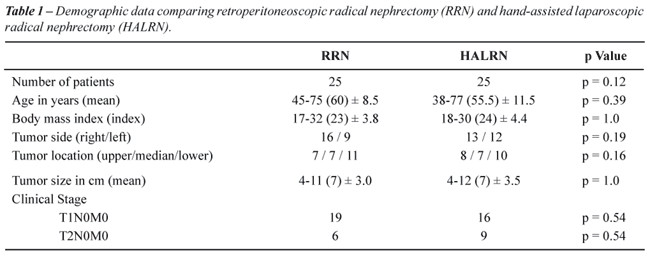
Both groups were comparable regarding demographic data (Table-1). The
patients presented good performance status (ASA score I or II) and no
formal contraindications to the laparoscopic approach. Fifty patients
with the diagnosis of a solid renal mass, larger than 4 cm and smaller
or equal to 12 cm, with clinical stage T1b-T2N0M0 RCC determined by abdominal
CT scan and chest X-ray, were prospectively included. Surgical procedures
including cases of learning curve were performed at 2 regional referral
teaching hospitals, by a single surgeon in each institution with experience
in laparoscopic procedures. The two techniques were performed in accordance
with the techniques previously described in literature (1,3). In the RRN
group, there were 10 male and 15 female patients, with a mean age of 60
years (range 45 to 75), and a mean body mass index (BMI) of 24 (range
17 to 32). The mean size of the tumors in the pre-operative tomographic
study was 7 cm (range 4 to 11) (Table-1). Nineteen (76%) of the patients
had a clinical stage T1N0M0, and 6 (24%), T2N0M0. In the HALRN group,
there were 11 male and 14 female patients, with a mean age of 55.5 years
(range 38 to 77) and mean BMI of 23 (range 18 to 30). Mean tumor size
in tomographic study was of 7 cm (range 4 to 12) (Table-1). Sixteen (64%)
of the patients presented clinical stage T1N0M0, and 9 (36%) T2N0M0. The
two groups were compared according to operative time, learning curve (analyzing
the first 15 cases, and remaining 10 separately), time of access to renal
pedicle, estimated blood loss, need for painkillers post-operatively,
size of incision for specimen retrieval, complications, need for blood
transfusion, specimen histopathologic analysis and oncologic management
during a mean follow-up time of 30 months.
Statistical analysis used was Student-t-test
and Chi-square test. The difference was considered significant at p <
0.05.
RESULTS
Intra-operative Data
Mean
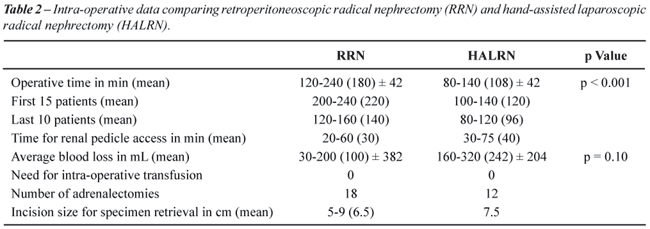
operative time was 180 min. (range 120 to 240) in the RRN group, and 108
min (range 80 to 140) in the HALRN (p < 0.001).
In the RRN group, the mean operative time
for the first 15 procedures was 220 min. (range 100 to 140), and for the
remaining 15, 96 min. (range 80 to 120). The time of access to the renal
pedicle after installing the portals was on average 30 min. (20 to 60)
for the RRN, and 40 min. (30 to 75) for the HALRN group.
Adrenalectomy was executed in 18 patients
(72%) of the 8 RRN group, and 12 (48%) of the HALRN group. Mean estimated
blood loss was of 100 mL (range 30 to 200) in the RRN group, and 242 mL
(range 160 to 320) in the HALRN group. Blood intra-operative transfusions
were not required in any of the procedures in either group. Mean incision
size for specimen retrieval of the RRN group was 6.5 cm (5 to 9), and
for the HALRN group 7.5 cm (Table-2).
Intra-operative
Complications
Complications
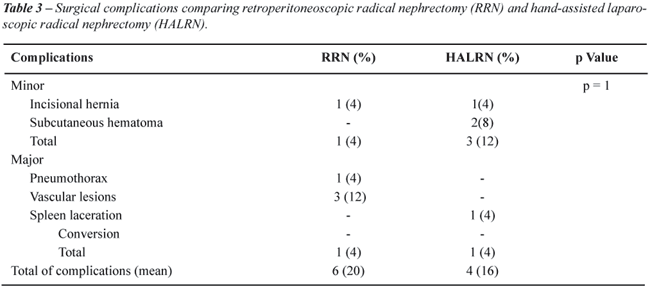
occurred in 5 patients in the RRN group (20%). One patient (4%) developed
a hernia at the site of the incision for specimen retrieval. Four patients
(16%) had a major complication: one pneumothorax (treated by thoracic
tube drainage), three vascular intra-operative lesions that were all controlled
endoscopically.
In the HALRN group we observed complications
in 4 (16%) patients. Three (12%) presented minor complications: two (8%)
anterior abdominal wall hematomas (one patient, needed a second post-operative
day blood transfusion) and one (4%) incisional hernia at one of the 10
mm port sites. One (4%) of the patients presented an intra-operative splenic
laceration and underwent a hand-assisted laparoscopic splenectomy. There
were no conversions to open surgery in any of the groups (Table-3).
Postoperative Data
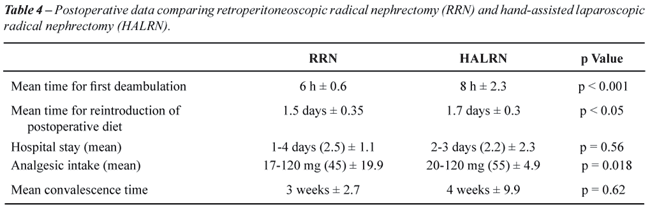
Mean
time for first deambulation was 6 hours in RRN and 8 hours in HALRN group.
Mean postoperative diet reintroduction time was 1.5 and 1.7 days in the
RRN and HALRN group respectively. Mean hospital stay was 2.5 (1 to 4)
days in the RRN group, and 2.2 (2 to 3) days in the HALRN group. The mean
morphine equivalent intake requirement in the RRN group was 45 mg (range
17 to 120) and 55 mg (range 20 to 120) in the HALRN group. None of the
patients needed I.V. analgesics after the second day hospital stay. Fourteen
patients (56%) in the RRN group and 20 (75%) in the HALRN group continued
taking paracetamol tablets for more than 2 days. Mean time for convalescence
was 3 weeks in the Retroperitoneoscopic group and 4 weeks in the Hand-assisted
group (Table-4).
Histopathologic Data
In
all patients a complete and intact removal of the surgical specimen was
achieved. The diagnosis of renal cell carcinoma was confirmed in all patients
in the RRN group. In the HALRN group, 23 specimens corresponded to renal
cell carcinomas, one presented as an oncocytoma, and the other as a renal
adenoma. Pathologic stages in the Retroperitoneoscopic group was a T1N0M0
in 18 (72%), T2N0M0 in 4 (16%), T3N0M0 in 2 (8%) and T3N1M0 in 1 (4%)
of the patients. In the Hand-assisted group, pathologic stages were T1N0M0
in 15 (60%), T2N0M0 in 6 (24%) and T3N1M0 in 2 (8%). The mean surgical
specimen weight was 310g (95 to 410g) in the Retroperitoneoscopic group
and 482g (130 to 800g) in the Hand-assisted group (Table-5).
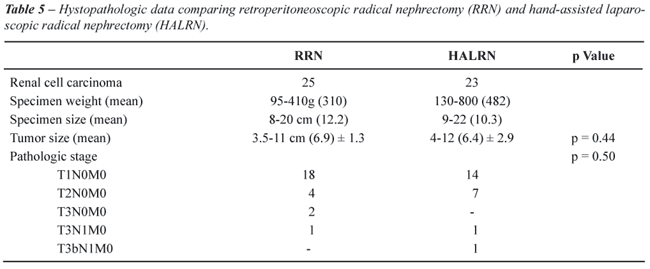
Negative surgical margins were obtained
in all surgical specimens. The RRN group specimens had a larger mean diameter
size, 12.2 cm (8 to 20), and mean tumor size, 6.9 cm (3.5 to 11 cm) compared
to the specimens of the HALRN group, which had an average size of 10.3
cm (9 to 22 cm) and mean tumors size of 6.4 cm (4 to 12 cm).
Oncologic Follow-up
Mean
follow-up time for the RRN and HALRN groups were respectively 48 months
(36 to 58 mo) and 52 months (30 to 66 mo) respectively.
In the RRN group, one patient presenting
with pT3N1M0 grade 3 stage developed local recurrence, adrenal and retroperitoneal
metastasis, 36 months after surgical resection. At the moment the patient
is undergoing interferon therapy, and is still alive 40 months after surgery.
There were no deaths in this group.
In the HALRN group, there was one death
not-related to the neoplasia. Also, one patient with pT3N1M0 grade 3 stage,
presented 4 months after surgery with subcutaneous tumors at one of the
10 mm laparoscopic ports and Hand-port incision sites. The patient also
was found to have another implant site on the anterior abdominal wall,
with no relation to surgical incisions. The patient died 4 months after
surgery. This patient was diagnosed intra-operatively with ascites and
signs of the peritoneal carcinomatosis at the time of HALRN. There were
no other cases of disease recurrence in this group.
COMMENTS
Radical
nephrectomy is considered the established treatment for renal cell carcinoma.
Several published data suggests that laparoscopic radical nephrectomy
for stage T1-2 tumors, smaller than 8 cm, present relative advantages,
reducing morbidity compared to the open technique, with better post-operative
recovery and shorter return to normal activities (4,7).
The ideal minimally invasive method is not
yet widely defined. Radical laparoscopic pure nephrectomy can be performed
via a trans-peritoneal and a retro-peritoneal approach. Retroperitoneoscopic
radical nephrectomy is currently gaining increasing world acceptance for
the treatment of renal tumors (3,8,9).
Hand-assisted laparoscopic radical nephrectomy
has been presented as another technical option and, according to some
authors, is considered best indicated in selected cases (10,11). Some
reports suggest that the choice between endoscopic techniques for renal
ablation depends on the experience and preference of the surgeon, as well
as the advantages, and disadvantages offered by each technique.
Regarding the indications, the retroperitoneoscopic
access has been recommended for patients with previous abdominal surgery.
Some authors avoid RRN when the tumor has a large volume, due to its smaller
working space. On the other hand, Gill et al. (3) performed retroperitoneoscopic
renal surgery in tumors with sizes of up to 12 cm. In our series, we also
performed this technique, independently from the size of the tumor, as
long as the renal pedicle was apparently free of tumor on the CT scan
images. For some authors, HALRN constitutes a selective indication for
larger tumors. HALRN could also be a more appropriate option for patients
with co-morbidities where a shorter operative time would be advised.
Each of the techniques has some limitations
and demands some kind of adaptation by surgeon. In the retroperitoneal
access, as there is a less significant working space, small CO2 losses
may make it difficult to perform surgery (12,13). Moreover, to avoid this
problem, the surgeon should develop an adequate expansion of the retroperitoneal
space, use rigorously sealed ports, perform optimized laparoscopic aspiration
and increase CO2 replacement speed.
In HALRN the biggest limitation may be a
smaller working space for hand insertion in the small abdominal cavities
(12).
The main advantages of the retroperitoneoscopic
technique are the absence of intra abdominal manipulation, therefore reducing
the chance of iatrogenic lesions of the intra-peritoneal organs (3,4,8,9),
and the direct access to the renal pedicle allowing early control of the
renal artery and vein (3,9). In our series we obtained faster access to
the renal pedicle with RRN than with HALRN.
The main advantages for HALRN are a shorter
operative time and facilitating the approach to masses of greater volume,
especially in large sized kidney tumors. It also facilities, to some extent,
vascular control in the case of a major vascular lesion and specimen retrieval
at the end of the procedure.
Considering the learning curves for both
techniques, HALRN has significantly shorter operative time for the initial
cases than any pure laparoscopic technique, but there is less reduction
in operating time when the technique is mastered (12). With RRN we observed
a definite impact on the learning curve, with significant reduction of
operating time, when more experience is acquired. These results explain
the larger acceptance of the Hand-assisted technique by surgeons with
less experience in laparoscopic surgery. Our first 15 cases, include as
learning curve in a sample of 25 patients in each group however, this
may be a limitation in our study.
Blood loss in the RRN group was smaller.
Reported data are conflicting as we evaluated blood loss on different
endoscopic accesses for radical nephrectomy. A possible explanation for
our results is that in the HALRN group, blunt dissection was employed
throughout the procedure as a means of reducing operating time. In fact,
in our data, the HALRN technique showed a significantly shorter operating
time, which does not agree with the other author’s results. Again,
blunt dissection may have had played an important role in reducing operating
time but the difference obtained could be partially explained by the largest
percentage of adrenalectomies performed in the RRN group.
When the requirement for analgesia and hospital
stay was considered, there was no significant difference between both
groups. Although it seems logical that the retroperitoneoscopic technique
would require a smaller dosage of analgesics than Hand-assisted techniques,
some comparative studies failed to demonstrate this advantage (10,11,13,14).
Complications rates in our study were similar
for both techniques. The RRN group presented a higher index of vascular
lesions than the HALRN group. However, all lesions were controlled laparoscopically
and no blood transfusions were necessary in any of the cases. These data
are not in agreement with the series reported by other authors where major
complications were more frequent for the Hand-assisted method (10,14-16).
Minor complications represented by incisional hernia and parietal hematoma,
were more frequent in the HALRN group. Parietal hematoma was caused by
a partial epigastric arterial lesion at the 10 mm port site, detected
post-operatively. An extensive abdominal wall hematoma was formed and
blood transfusion was required in the second post-operative day.
The transverse incision for specimen extraction
in the retroperitoneoscopic technique is smaller, and may be applied to
the flank, therefore in order to achieve a more aesthetic result. The
incision for the Hand-port placement is generally longitudinal or oblique,
larger in comparison, and is applied to the anterior abdominal wall, therefore
producing a less aesthetic result.
It has only recently been shown that long
term oncologic management of patients who have undergone laparoscopic
radical nephrectomy is similar to conventional surgery (17,18). In both
groups analyzed in this study, surgeons opted for an intact specimen removal.
Laparoscopic port site tumoral seeding was not observed in any cases from
the RRN group over a period of 30 months. In our series, we had a patient,
in each group, who presented metastases related to a high histologic grade
with lymph node involvement. However, a longer follow-up period would
be necessary to evaluate the oncological results related to each technique.
Our results suggest that in general, both
techniques are equivalent and feasible in the treatment of renal malignant
tumors. The knowledge of both surgical techniques is important for an
adequate selection of the optimal minimally invasive access to be used
in each case. The hand assisted technique in none of the referral centers
was considered useful to introduce the practice of minimally invasive
procedures.
CONCLUSION
Hand-assisted
technique showed a relative reduction in operating time, which may be
especially useful in more debilitated patients, and a good option for
the treatment of large size renal tumors.
Retroperitoneoscopic technique provides
early access to vascular control, permitting minimal blood loss. In addition,
the removal of the specimen was possible by using a more aesthetic incision.
The comparison of long term oncological
data seems to be similar using either one of these two techniques.
CONFLICT OF INTEREST
None declared.
REFERENCES
- Gill IS: Laparoscopic radical nephrectomy for cancer. Urol Clin North Am. 2000; 27: 707-19.
- Ono Y, Kinukawa T, Hattori R, Yamada S, Nishiyama N, Mizutani K, et al.: Laparoscopic radical nephrectomy for renal cell carcinoma: a five-year experience. Urology. 1999; 53: 280-6.
- Gill IS, Schweizer D, Hobart MG, Sung GT, Klein EA, Novick AC: Retroperitoneal laparoscopic radical nephrectomy: the Cleveland clinic experience. J Urol. 2000; 163: 1665-70.
- Allan JD, Tolley DA, Kaouk JH, Novick AC, Gill IS: Laparoscopic radical nephrectomy. Eur Urol. 2001; 40: 17-23.
- Tierney JP, Oliver SR, Kuminsky RE, Tiley EH, Lucente FC, Boland JP: Laparoscopic radical nephrectomy with intra-abdominal manipulation. Minimal Invas. Ther. 1994; 3: 303-5.
- Kusminsky RE, Tiley EH, Lucente FC, Boland JP: Laparoscopic staging laparotomy with intra-abdominal manipulation. Surg Laparosc Endosc. 1994; 4: 103-5.
- Gill IS: Retroperitoneal laparoscopic nephrectomy. Urol Clin North Am. 1998; 25: 343-60.
- Dunn MD, Portis AJ, Shalhav AL, Elbahnasy AM, Heidorn C, McDougall EM, et al.: Laparoscopic versus open radical nephrectomy: a 9-year experience. J Urol. 2000; 164: 1153-9.
- Abbou CC, Cicco A, Gasman D, Hoznek A, Antiphon P, Chopin DK, et al.: Retroperitoneal laparoscopic versus open radical nephrectomy. J Urol. 1999; 161: 1776-80.
- Nelson CP, Wolf JS Jr: Comparison of hand assisted versus standard laparoscopic radical nephrectomy for suspected renal cell carcinoma. J Urol. 2002; 167: 1989-94.
- Busby E, Das S, Rao Tunuguntla HS, Evans CP: Hand-assisted laparoscopic vs the open (flank incision) approach to radical nephrectomy. BJU Int. 2003; 91: 341-4.
- Wolf JS Jr: Hand-assisted laparoscopy: pro. Urology. 2001; 58: 310-2.
- Pareek G, Hedican SP, Gee JR, Bruskewitz RC, Nakada SY: Meta-analysis of the complications of laparoscopic renal surgery: comparison of procedures and techniques. J Urol. 2006; 175: 1208-13.
- Matin SF, Dhanani N, Acosta M, Wood CG: Conventional and hand-assisted laparoscopic radical nephrectomy: Comparative analysis of 271 cases. J Endourol. 2006; 20: 891-4.
- Venkatesh R, Belani JS, Chen C, Sundaram CP, Bhayani SB, Figenshau RS, et al.: Prospective randomized comparison of laparoscopic and hand-assisted laparoscopic radical nephrectomy. Urology. 2007; 70: 873-7.
- Brown JA, Shah S, Siddiqi K, Boyd B: Incorporation of hand-assisted laparoscopic nephrectomy into an academic training program: an assessment of the utility of a 3-month minifellowship. J Laparoendosc Adv Surg Tech A. 2007; 17: 435-9.
- Bandi G, Christian MW, Hedican SP, Moon TD, Nakada SY: Oncological outcomes of hand-assisted laparoscopic radical nephrectomy for clinically localized renal cell carcinoma: a single-institution study with >or=3 years of follow-up. BJU Int. 2008; 101: 459-62.
- Chung SD, Huang KH, Lai MK, Huang CY, Pu YS, Yu HJ, Chueh SC: Long-term follow-up of hand-assisted laparoscopic radical nephrectomy for organ-confined renal cell carcinoma. Urology. 2007; 69: 652-5.
____________________
Accepted after revision:
February 16, 2009
________________________
Correspondence address:
Dr. Marcos Tobias-Machado
Rua Grauna, 104 / 131
São Paulo, SP, 04514-000, Brazil
Fax: + 55 11 4437-3118
E-mail: tobias-machado@uol.com.br
EDITORIAL COMMENT
This
is an interesting prospective study comparing two laparoscopic approaches
for radical nephrectomy: a retroperitoneoscopic (RRN) and hand-assisted
(HALRN) approach, which attempts to define the best minimal access to
this surgery. A shorter operative time and learning curve were in favor
of HALRN versus a minor blood loss and smaller incision for organ retrieval
in favor of RRN. No differences in the complication rate were observed.
After a mean follow-up of 50 months, no difference in oncological control
was found.
Although the study was conducted prospectively,
a randomized trial would have been a better way, even if more difficult
to perform, to compare different surgical techniques.
An important issue that should be investigated
in any comparative surgical technique study is the health-related quality
of life (HRQoL). In the literature, there is little reported data regarding
long-term HRQoL after RRN and HALRN performed for renal cancer. Patel
et al. (1) using the SF-36 questionnaire, showed no difference in terms
of HRQoL between the two techniques with a mean follow-up of 6 months,
but studies with a larger patient population and a longer follow-up are
required.
We agree with the authors’ statement
that in general, both techniques are feasible for treatment of renal malignant
tumors and the knowledge of both techniques should be theoretically familiar
to the experienced surgeon.
However, our impression is that both techniques,
as stated, are not equivalent. A difference of one hour in surgical time
is the most striking difference described in this study and it should
be considered an extremely important factor today in view of budget cuts
for hospital costs, also considering that additional costs of laparoscopic
hand-assisted devices could be avoided (2). In addition, longer anesthesia
is associated with an increase in the incidence of perioperative complications
and mortality (3).
Moreover, a shorter learning curve is another
important factor to consider when we take in account the acceptance of
a new technique and its use in the urological community outside teaching
and referral hospitals.
In search of the “Holy Grail”
(i.e. the ideal minimally invasive method), this paper adds more information
to the body of literature on laparoscopic radical nephrectomy. However,
still today, the most important factor that guides the choice of a laparoscopic
technique depends on the surgeon’s experience and personal preference.
REFERENCES
- Patel A, Wilson L, Blick C, Gurajala R, Rané A: Health-related quality of life after retroperitoneoscopic and hand-assisted laparoscopic nephrectomy. J Endourol. 2005; 19: 849-52.
- Ditonno P, Lucarelli G, Bettocchi C, Palazzo S, Palella GV, Battaglia M, et al.: “Deviceless” hand-assisted laparoscopic donor nephrectomy. Transplant Proc. 2008; 40: 1829-30.
- Routh JC, Bacon DR, Leibovich BC, Zincke H, Blute ML, Frank I: How long is too long? The effect of the duration of anaesthesia on the incidence of non-urological complications after surgery. BJU Int. 2008; 102: 301-4.
Dr.
Pasquale Ditonno &
Dr. Lucarelli Giuseppe
Department of Emergency and Organ Transplantation
Urology, Andrology and Kidney Transplantation Unit
University of Bari
Bari, Italy
E-mail: ditonno@urologia.uniba.it