FEASIBILITY
OF REFREEZING HUMAN SPERMATOZOA THROUGH THE TECHNIQUE OF LIQUID NITROGEN
VAPOR
(
Download pdf )
SIDNEY VERZA JR, SANDRO C. ESTEVES
Center for Male Infertility, ANDROFERT, Campinas, São Paulo, Brazil
ABSTRACT
Objective:
To assess the feasibility of refreezing human semen using the technique
of liquid nitrogen vapor with static phases.
Materials and Methods: Twenty samples from
16 subjects who required disposal of their cryopreserved semen were thawed,
corresponding to 6 cancer patients and 10 participants in the assisted
reproduction (AR) program. Samples were refrozen using the technique of
liquid nitrogen vapor with static phases, identical to the one used for
the initial freezing, and thawed again after 72 hours. We assessed the
concentration of motile spermatozoa, total and progressive percent motility
and spermatic vitality, according to criteria of the World Health Organization
(WHO), as well as spermatic morphology according to the strict Kruger
criterion, after the first and after the second thawing.
Results: We observed a significant decrease
in all the parameters evaluated between the first and the second thawing.
Median values for the concentration of motile spermatozoa decreased from
2.0x10⁶/mL to 0.1x10⁶/mL (p < 0.01); total percent motility from 42%
to 22.5% (p < 0.01); progressive percent motility from 34% to 9.5%
(p < 0.01); vitality from 45% to 20% (p < 0.01); and morphology
from 5% to 5% (p = 0.03). There was no significant difference in the spermatic
parameters between the cancer and assisted reproduction groups, both after
the first and after the second thawing. We observed that in 100% of cases
there was retrieval of motile spermatozoa after the second thawing.
Conclusion: Refreezing of human semen by
the technique of liquid nitrogen vapor allows the retrieval of viable
spermatozoa after thawing.
Key
words: fertility; in vitro fertilization; sperm; freezing; nitrogen
Int Braz J Urol. 2004; 30: 487-93
INTRODUCTION
The
cryopreservation technique for human spermatozoa and the use of semen
bank have been employed for more than 40 years (1). Since then, efforts
have been made in order to improve the technique and obtain better results
after thawing, concerning both quantity and quality of spermatozoa, since
generally between 25 and 75% of spermatozoa are lethally or sub-lethally
damaged during the freezing-thawing process (2).
It is well known that the process of freezing
and thawing human spermatozoa affects their fertile potential under several
aspects, such as the decrease of spermatic motility (2), decreased penetration
into the cervical mucus (3), changes in the plasmatic membrane (4), making
it less fluid, as well as in the acrosomal integrity (5), in addition
to changing the activity of protease acrosin (6). For these reasons, lowest
fertilization and pregnancy rates are achieved when thawed spermatozoa
are used for intra-uterine insemination (7) and conventional in-vitro
fertilization (8). However, after the development of intracytoplasmic
sperm injection (ICSI), it has been shown that similar fertilization and
pregnancy rates are achieved with this technique using both frozen-thawed
and fresh motile spermatozoa (9).
The cryopreservation of spermatozoa is indicated
in situation where there is risk of fertility loss and/or decrease in
the future fertility. Moreover, the cryopreservation of human semen is
used in assisted reproduction programs, both for preserving exceeding
spermatozoa obtained from the testis or epididymis or in cases of azoospermia,
and for cases where it is impossible to conciliate semen collection and
aspiration of oocytes. Among indications for semen cryopreservation, the
group of male cancer patients deserves special attention, and several
works have alerted to the importance of semen cryopreservation in these
individuals (10). Some types of cancer, such as testicular cancer, affect
mainly men in reproductive age. Due to advancements in its management,
currently cure and survival rates are quite high, sometimes reaching more
than 90% (11).
The objective of the present study was to
assess the feasibility of refreezing-thawing of human spermatozoa using
the technique of liquid nitrogen vapor with static phases.
MATERIALS AND METHODS
Twenty
semen samples were obtained from 16 individuals who required the disposal
of cryopreserved semen that was stored in the therapeutic semen bank of
a tertiary care institution.
Among those, 6 men with mean age 26.5 ±
7.2 years had their semen cryopreserved due to cancer, and other 10 men
with mean age 39.6 ± 4.7 years had their semen cryopreserved for
use in an assisted reproduction program involving in vitro fertilization.
All individuals or their legally responsible person signed a document
authorizing the disposal and the utilization of samples for performing
this study, which was approved by the Institutional Research Ethics Committee.
The reasons for disposal in the cancer group were death in 3 cases and
successful treatment with subsequent recovery of spermatogenesis in the
remaining three. In the assisted reproduction group, 6 individuals required
disposal due to successful treatment (pregnancy), 1 due to financial difficulty
for maintaining the cryopreserved samples, and 3 did not state the reason
for disposal.
Cryopreservation
Protocol
On the day of cryopreservation, samples
were collected by masturbation in sterile vials, remaining on a heating
plate (Labline, USA) for 30 minutes until complete liquefaction. An aliquot
was reserved for performing complete seminal analysis, according to the
WHO criteria (12). Next, freezing was performed under aseptic conditions
in a biological safety cabinet (Veco, Brazil). In short, the procedure
consisted in conditioning the liquefied semen inside a 15-mL conical tube
(Falcon, USA), adding aliquots of cryoprotector medium, corresponding
to 25% of the semen volume to be frozen, each 5 minutes. This procedure
was repeated until equal volumes of diluent medium and ejaculate were
obtained (proportion 1:1, v/v). The cryoprotector agent employed was a
ready-to-use preparation, containing 20% yolk egg (v/v), 12% glycerol
(v/v), 85 mM of Tris ([hydroximetyl] amino methane), 189 mM of TES (n-Tris
[hydroximetyl] metyl-2-amino-etano-sulphonic acid), 11 mM of glucose,
0.25 mg/mL of streptomycin sulfate, 0.15 mg/mL of penicillin and pH =
7.5 (Test yolk-buffer, Irvine Scientific, Santa Ana, USA). The final mix
was distributed in sterile plastic, cylindrical tubes with conical base,
with capacity for conditioning 1.0 mL of mixture each (Nunc, Denmark).
Cryopreservation was performed by the technique of liquid nitrogen vapor
with static phases (5). Freezing itself consisted of 3 consecutive steps:
1) cooling phase – the metallic racks containing the cylindrical
tubes with the sample were put inside a freezer, with temperature set
to minus 20ºC, on horizontal position, and were then maintained in
this environment for 8 minutes, in order to reach a temperature of +4ºC;
2) freezing phase – the metallic racks containing the cylindrical
tubes were transferred to the tankard of the liquid nitrogen barrel (N2L),
with each rack vertically positioned, and the 2 cylindrical tubes located
in upper positions. The tankard was then transferred to the barrel containing
liquid nitrogen only at the base, so that the lower cylindrical tube was
located at 15 cm from the N2L level and the upper tube at 18 cm. Temperature
at the place occupied by the cylindrical tubes was around minus 79ºC,
as measured by an appropriate thermometer, and those were maintained in
this closed environment of N2L vapor for a period 2 hours. Freezing rate
during this phase is estimated in 10ºC / minute; 3) storage phase
- after 2 hours in N2L vapor, the metallic racks containing the cylindrical
tubes were transferred to the storage barrel, and were then immersed in
N2L at -196ºC.
Thawing,
Assessment and Refreezing of Samples
Samples were thawed by removing the cylindrical
tubes from the storage barrel with liquid nitrogen, which were maintained
at room temperature for 5 minutes (5). Next, the tubes were taken to water-bath
(Fanem, Brazil) at 37°C, where they remained for 20 minutes. Samples
were then homogenized, and an aliquot was removed for assessing the following
parameters: concentration of motile spermatozoa, percentage of motile
spermatozoa, percentage of spermatozoa with progressive motility (grades
A and B), vitality and spermatic morphology. The parameters were assessed
in accordance to the instructions in the WHO procedure manual (12), with
exception of spermatic morphology, which was assessed according to Kruger’s
strict criteria (13). For the eosin-nigrosin test, a 1% eosin solution
was used as spermatic stain and a 10% nigrosin solution was used as background
stain, in order to make reading easier. For morphologic assessment, thin
5-mL smears of thawed semen were prepared on dry slides that were previously
cleaned with 70% alcohol. The smears were dried on fresh air, and subsequently
fixed and stained using an appropriate kit (Laborclin, PR, Brazil) as
follows: the dry slide was immersed in fixation solution for 5 times during
1 second at each time, with a 1-second interval between each immersion.
Once the slide was completely dry, it was immersed in the solution I,
for 5 times during 1 second at each time, with a 1-second interval between
immersions. Excessive stain was removed, and the slide was finally immersed
in the solution II, for 2 times, during 1 second at each time, with a
1-second interval between immersions. The slide was rinsed with deionized
water, in order to remove excessive staining, and was left to dry naturally.
At least 200 spermatozoa were evaluated per smear in order to measure
the percentage of live and morphologically normal spermatozoa, using bright
field light microscopy under immersion with a magnification of 1000 times
(Nikon Alphaphot, Japan).
The remaining sample of thawed semen was
kept in the cylindrical tubes on the heating plate at 37°C during
the assessment of concentration and motility parameters, that is, approximately
1 hour, and underwent cryopreservation again, according to the method
described above, however without adding the cryoprotector diluent, since
it was not removed during thawing. After 72 hours, samples were thawed
again and the same spermatic parameters were assessed according to the
method described above.
Statistical
Analysis
Kolmogorov-Smirnov test was used to verify
the type of data distribution. Wilcoxon and Mann-Whitney non-parametric
tests were used to compare the spermatic parameters after the first and
the second thawing and to compare both subgroups of patients (cancer and
assisted reproduction), respectively. Data were expressed in median and
25% and 75% percentile. P values < 0.05 were considered statistically
significant. The statistical analysis was performed using the StatSoft
software, Tulsa, United Kingdom.
RESULTS
The
results for spermatic parameters after the first and the second thawing
are expressed in Table-1. We observed a significant decrease between the
first and the second thawing in the number of motile spermatozoa (from
2.0x10⁶/mL to 0.1x10⁶/mL, p < 0.01), in total motility (from 42% to
22.5%, p < 0.01) and progressive motility (from 34% to 9.5%, p <
0.01), in the percentage of live spermatozoa (from 45% to 20%, p <
0.01) and spermatozoa with normal morphology (median values of 5% for
the first and the second thawing, but with p = 0.03). Nevertheless, despite
the decrease in the quality of all the analyzed parameters, live and motile
spermatozoa were found after the second thawing in all cases.
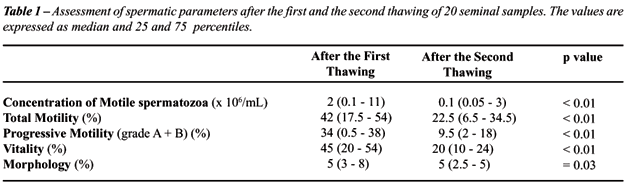
We also compared the 2 subgroups of individuals,
that is, those who had semen cryopreservation due to cancer and those
who cryopreserved their semen for subsequent use in the assisted reproduction
program, aiming to assess if there was any difference in the retrieval
and survival rates relative to the reason for freezing. Deleterious effects
of cryopreservation on spermatic parameters were observed in both groups
between the first and the second thawing (Table-2), with no difference
between them in the magnitude of changes (Table-3).


COMMENTS
Semen
cryopreservation has allowed many men to guarantee their future fertility
and generate their own children. Among them, cancer patients and those
who will undergo chemotherapy and/or radiotherapy deserve special attention,
since many are in their reproductive years and do not have children yet.
Thanks to the advances in oncologic treatments, increasingly higher survival
rates have been reached (11). However, treatment can lead to germinative
aplasia, and it is impossible to predict which individuals will recover
normal spermatogenesis. Consequently, a concern with future fertility
arises, and many studies have alerted about the importance of semen cryopreservation
before starting chemotherapy and/or radiotherapy (10,14). Probably due
to the stress generated by the disease, in addition to the increase in
the circulating levels of cytokines and tumoral markers, as well as orchiectomy
in cases of testicular cancer, we observe that approximately 50% of individuals
present a significant decrease in the quality of semen at the moment of
freezing (14). This reduction in the initial quality, associated with
the small number of collected samples due to the urgency in initiating
treatment, can limit success at the moment when theses samples are used,
especially when low-complexity techniques for assisted reproduction, such
as intra-uterine insemination, are used for obtaining pregnancy. However,
with the advent of ICSI, just one single spermatozoon per oocyte is required
to possibly obtain pregnancy. ICSI can be performed even with non-motile
spermatozoa, provided they are alive, with good results (15), though the
use of specific tests, such as the hypo-osmotic test for selecting live
spermatozoa, even if non-motile, can optimize the process efficacy (16).
Thus, even in very unfavorable conditions concerning number and quality
of spermatozoa, it is possible to offer satisfactory chances of paternity,
lying around 20-40% per treatment cycle (15). However, due to the limited
success per trial that is inherent to the technique, multiple trials can
be required in order to obtain pregnancy.
Cryopreserved spermatozoa are used in association
with different techniques for assisted reproduction, depending on their
number and quality after thawing. When techniques requiring few spermatozoa
are employed, such as conventional in vitro fertilization or ICSI, commonly
there are exceeding spermatozoa that are not used and thus are discarded.
Refreezing of theses exceeding spermatozoa would enable new trials of
assisted reproduction, increasing the chances of pregnancy, particularly
for individuals who have only one or few cryopreserved samples. Studies
focusing on this aspect have been developed, and results are as encouraging
as those found in the present study are. Polcz et al. (17) demonstrated
that human spermatozoa can resist to 5 repeated freezing-thawing cycles,
though significant reductions in the spermatic parameters have been observed
(decrease in motility from 70.1% before freezing to 24.4; 8.0; 3.5; 1.5
and 1.8% after each thawing, respectively), confirming our findings. Rofeim
et al. (18) also demonstrated that human spermatozoa resist to refreezing,
and suggest that they can be used for ICSI.
In this study, we assessed the feasibility
of refreezing human spermatozoa as well, but using a simple and low-cost
technique, instead of computerized protocols, which are more complex and
expensive. Other studies indicate that there is no significant difference
in spermatic survival when freezing by liquid nitrogen vapor with static
phases is compared with automated techniques (19,20). Bandularatne &
Bongso (20) assessed the fertilization rates obtained with refrozen and
thawed spermatozoa through the ICSI test in hamster oocytes, which is
a functional test designed to assess the fertile potential of human spermatozoon,
and obtained similar rates when refrozen and fresh spermatozoa were compared
(22.2 versus 27.3% respectively, non significant). These authors also
assessed the survival of refrozen spermatozoa in relation to the type
of samples from which they were derived, normozoospermic and oligozoospermic,
and observed that there was no significant difference in survival rates
and in the decrease of spermatic parameters between the 2 groups (20).
Such fact motivated us to compare in the present study 2 subgroups of
individuals that had their semen frozen for different reasons, aiming
to assess if the subgroup of men who froze their semen due to cancer would
have lower performance following refreezing and thawing, however no significant
difference was observed. Such findings enable us to suggest that theses
individuals could benefit from refreezing as well.
Though the results from this and other mentioned
studies are promising, other studies are required in order to assess the
fertile potential of refrozen human semen in cycles of assisted reproduction,
with emphasis not only on rates of term pregnancy, but also on rates of
miscarriage, complications and malformations.
CONCLUSION
There was a significant reduction in all the spermatic parameters under evaluation between the first and the second freezing-thawing cycle. However, refreezing of human semen through the technique of liquid nitrogen vapor with static phases enables the recovery of viable spermatozoa. We observed that in 100% of cases there was retrieval of motile spermatozoa after the second thawing.
_______________________________________________
Work presented at the Meeting of the American Society
for
Reproductive Medicine, San Antonio, USA,
September 2003.
REFERENCES
- Sherman JK: Low temperature research on spermatozoa and eggs. Cryobiology. 1964; 1: 103-29.
- Centola GM, Raubertas RF, Mattox JH: Cryopreservation of human semen. Comparation of cryopreservatives, sources of variability, and prediction of post-thaw survival. J Androl. 1992; 13: 283-8.
- Fjallbrant B, Ackerman DR: Cervical mucus penetration in vitro by fresh and frozen-preserved human semen specimens. J Reprod Fertil. 1969; 20: 515-7.
- Esteves SC, Sharma RK, Thomas AJ Jr, Agarwal A: Suitability of the hypo-osmotic swelling test for assessing the viability of cryopreserved sperm. Fertil Steril. 1996; 66: 798-804.
- Cross NL, Hanks SE: Effects of cryopreservation on human sperm acrosomes. Hum Reprod. 1991; 6: 1279-83.
- Mack SR, Zaneveld LJ: Acrosomal enzymes and ultrastructure of unfrozen and cryotreated human spermatozoa. Gamete Res. 1987; 18: 375-83.
- Peterson EP, Alexander NJ, Moghissi KS: A.I.D. and AIDS – too close for comfort. Fertil Steril. 1988; 49: 209-10.
- Szczygiel MA, Kusakabe H, Yanagimachi R, Whittingham DG: Intracytoplasmic sperm injection is more efficient than in vitro fertilization for generating mouse embryos from cryopreserved spermatozoa. Biol Reprod. 2002; 67: 1278-84.
- Kuczynski W, Dhont M, Grygoruk C, Grochowski D, Wolczynski S, Szamatowicz M: The outcome of intracytoplasmic injection of fresh and cryopreserved ejaculated spermatozoa – a prospective randomized study. Hum Reprod. 2001; 16: 2109-13.
- Hallak J, Kolettis PN, Sekhon VS, Thomas AJ Jr, Agarwal A: Cryopreservation of sperm from patients with leukemia: is it worth the effort? Cancer. 1999; 85: 1973-8.
- Srougi M, Simon SD: Urological Cancer. São Paulo, Platina. 1990; vol 1, p. 377. [in Portuguese].
- World Health Organization (WHO): Laboratory Manual for the examination of human semen and sperm-cervical mucus interaction. 4th ed., Cambridge, Cambridge University Press, 1999.
- Kruger TF, Menkveld R, Stander FS, Lombard CJ, Van der Merwe JP, Van Zyl JA, et al.: Sperm morphologic features as a prognostic factor in-vitro fertilization. Fertil Steril. 1986; 46: 1118-23.
- Padron OF, Sharma RK, Thomas AJ Jr, Agarwal A: Effects of cancer on spermatozoa quality after cryopreservation: a 12-year experience. Fertil Steril. 1997; 67: 326-31.
- Shulman A, Feldman B, Madgar I, Levron J, Mashiach S, Dor J: In-vitro fertilization treatment for severe male factor: the fertilization potential of immotile spermatozoa obtained by testicular extraction. Hum Reprod. 1999; 14: 749-52.
- Liu J, Tsai YL, Katz E, Compton G, Garcia JE, Baramki TA: High fertilization rate obtained after intracytoplasmic sperm injection with 100% nonmotile spermatozoa selected by using a simple modified hypo-osmotic swelling test. Fertil Steril. 1997; 68: 373-5.
- Polcz TE, Stronk J, Xiong C, Jones EE, Olive DL, Huszar G: Optimal utilization of cryopreserved human semen for assisted reproduction: recovery and maintenance of sperm motility and viability. J Assist Reprod Genet. 1998; 15: 504-12.
- Rofeim O, Brown TA, Gilbert BR: Effects of serial thaw-refreeze cycles on human sperm motility and viability. Fertil Steril. 2001; 75:1242-3.
- Esteves SC, Spaine DM, Cedenho AP, Srougi M: Effects of the technique of cryopreservation and dilution/centrifugation after thawing on the motility and vitality of spermatozoa of oligoasthenozoospermic men. Int Braz J Urol. 2003; 29: 133-40.
- Bandularatne E & Bongso A: Evaluation of the human sperm function after repeated freezing and thawing. J Androl. 2002; 23: 242-9.
__________________________
Received:
September 13, 2004
Accepted after revision: November 23, 2004
________________________
Correspondence address:
Dr. Sandro C. Esteves
Av. Dr. Heitor Penteado, 1464
Campinas, SP, 13075-460
Fax: + 55 19 3294-6992
E-mail: s.esteves@androfert.com.br