CARCINOMA
OF THE RENAL PELVIS AND URETER
(
Download pdf )
FERNANDO KORKES, THIAGO S. SILVEIRA, MARILIA G. CASTRO, GUSTAVO CUCK, RONI C. FERNANDES, MARJO D. PEREZ
Division of Urology and Department of Pathology, School of Medical Sciences, Santa Casa, Sao Paulo, SP, Brazil
ABSTRACT
Objective:
To assess the occurrence of upper urinary tract urothelial tumors (UUTT)
in Brazil.
Materials and Methods: We performed a clinical
and histopathologic study of 33 patients who were diagnosed with a malignant
neoplasm in the renal pelvis or ureter in the period of 1994 to 2004,
in a single institution.
Results: Among the patients with upper urinary
tract carcinoma, 70% were males and 30% females, with mean age of 65 ±
16 years (ranging from 31 to 91 years). Nineteen patients presented renal
pelvis tumor (58%), 9 ureteral tumor (27%) and 5 synchronic pelvic and
ureteral tumors (15%). Renal pelvis tumors represented 2.8% of all the
urothelial neoplasms, and 11.4% of all renal neoplasms treated in the
same period. Ureteral tumors represented 1.6% of all the urothelial malignancies
surgically managed in these 11 years. Tobacco smoking was the most common
risk factor, and analgesic abuse was not reported by those patients. Most
carcinomas were high-grade and muscle-invasive. Mean time to diagnosis
was 7 months, being hematuria the most common symptom.
Conclusions: A high association was also
found between UUTT and bladder urothelial carcinoma. UUTT were mostly
seen in men in their seventies and related to a high overall and cancer-related
mortality rate.
The overall disease-specific survival was 40%, much lower than found in
most of the reported series.
Key
words: kidney; ureter; neoplasms; transitional cell; epidemiology;
Brazil
Int Braz J Urol. 2006; 32: 648-55
INTRODUCTION
Upper
urinary tract tumors involving the renal pelvis and ureter are relatively
uncommon. The great majority of these are epithelial, 80% are malignant
and 90% are urothelial carcinomas. Renal pelvis tumors account for approximately
7 to 10% of all renal tumors and about 5% of all urothelial tumors (1-9).
Ureteral tumors are even more uncommon, occurring in one fourth of the
incidence of renal pelvis tumors (1,10).
Many factors contribute to the development
of upper urinary tract urothelial tumors (UUTT), some of them similar
to bladder cancer associated factors, and the most common of these are
tobacco smoking and analgesics abuse, particularly phenacetin (2,3,5,11-13).
Other risk factors include papillary necrosis, chronic urinary infections,
renal calculi, occupational exposure, Balkan nephropathy, thorium containing
radiologic contrast medium and family associated cancer syndromes (2,3,5,12-14).
The behavior of the UUTT is also similar to the bladder urothelial carcinoma,
presenting high recurrence rates and usually is multicentric (2,3,9).
In the bladder, however most urothelial
carcinomas are superficial at diagnosis (3,5). In these cases, organ-sparring
procedures are the treatment option. For UUTT, nephroureterectomy with
bladder cuff removal has been the conventional treatment. More recently,
with the introduction of endourological techniques, approaches that are
more conservative have been advocated in selecting patients in an effort
to salvage kidneys. However, different from bladder carcinoma, radical
surgery is more often used in UUTT cases, as the diagnosis is commonly
made at advanced stages and management by conservative measures is problematic
(3).
Among the North-American population, there
has been an increase in women affected, and it tends to occur at an older
age (3,5,15). Large demographic studies have been undertaken in several
countries (2,4,6-9,15-19) but to our knowledge, there is no study analyzing
data about UUTT in the Brazilian population.
The aim of the present study is to assess
the occurrence of UUTT in 33 patients who underwent surgery from 1994
to 2004 in a single institution.
MATERIALS AND METHODS
Surgical
pathology files of all patients who underwent surgery for primary UUTT
at the Division of Urology of the authors’ institution from 1994
to 2004 have been retrospectively reviewed (33 subjects).
Macroscopic data were obtained from the
pathological reports. The hematoxylin and eosin stained slides were reviewed
by one pathologist with special expertise in the field of uropathology
(MGC). Slides on each case were collected and reclassified using the criteria
of the 2004 WHO grading system (5). All tumors were restaged based on
TNM (tumor node metastasis) staging system, 2002 (20). All urothelial
and renal tumors surgically treated during the same period in the referred
institution were also revised in order to calculate disease-related prevalence.
Further data were obtained from the hospital
database and patients notes, including patients’ demographics, anatomical
location of the tumor, surgery outcomes, disease recurrence, specific
survival and overall survival. Contact was established with the patient
and/or family whenever possible, and the district death registry was consulted
for the remaining cases.
Disease-specific survival was assessed by
the Kaplan-Meier method and compared by the Log-Rang test.
The institutional medical ethics committee
approved the present study.
RESULTS
Among
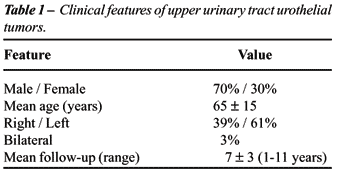
patients with UUTT, 70% were males and 30% females, with a mean age of
65 ± 16 years (ranging from 31 to 91 years). Ninety-one per cent
of the patients were white and 9% black. The left side was affected in
61% of the cases and the right side in 39% (Table-1).
Nineteen patients had only renal pelvis
tumor (58%), 9 had ureteral tumor (27%) and 5 had both pelvic and ureteral
tumors (15%). Renal pelvis urothelial carcinomas represented 2.8% of all
the urothelial neoplasms surgically treated in our institution during
this period, and 11.4% of all renal tumors. Ureteral tumors represented
1.6% of all the urothelial malignancies surgically managed. In 50% of
the patients the distal ureter was affected, middle and proximal ureter
were respectively affected in 29% and 21% of the patients.
Association with bladder cancer was present
in 30% of the patients. In 17% of them, there had been a previously treated
bladder cancer (mean of 4 years previously) and in 23%, there had been
a synchronous bladder neoplasm. In 15% of the cases, there had been synchronous
ureteral and pelvic neoplasm and in 3% of the patients, bilateral disease
had been found.
Hematuria was the most common symptom, seen
in 45% of the patients. Other presenting manifestations included anemia
(43%), flank pain (30%), weight loss (27%), fever (17%) pyelonephritis
(17%) and palpable mass (10%). Diagnosis due to incidental finding during
follow-up of previous urothelial carcinoma occurred in 10% of the patients.
In the cases that weight loss, the mean loss observed was 5 Kg.
Mean duration of symptoms prior to diagnosis
was 6.9 ± 4.3 months. Initial diagnosis was UUTT in 85% of the
cases. In 6% of the cases, renal cancer was suspected and in 9% of the
cases, the surgery was undertaken with the diagnosis of pyonephrosis,
and the presence of cancer was confirmed during pathologic exam.
Regarding risk factors, tobacco smoking
was referred by 66% of the patients and 33% had recurrent urinary tract
infections or calculi. In one patient there was an hereditary nonpolyposis
colorectal cancer syndrome associated (3%). Analgesic abuse was not referred
to as risk factor in any patient.
Surgical treatment consisted of radical
nephroureterectomy and bladder cuff removal in 65% of the patients; in
6% radical cistectomy was also performed; in 16% only distal ureterectomy
and re-implant was performed, and in 13% only nephrectomy. Radiation therapy
and chemotherapy were respectively combined in 6% and 12% of the cases.
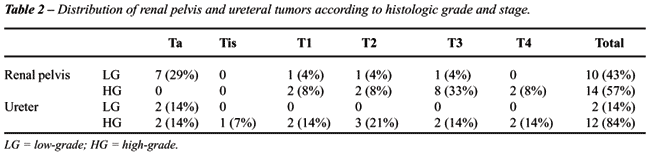
Pathological exam demonstrated high-grade
malignancies in 58% of the renal pelvis neoplasms and in 86% of the ureteral
neoplasms. Regarding renal pelvis neoplasms, pT3 was the most common stage,
observed in 37% of the patients; pTa was observed in 29%, pT1 in 12%,
pT2 in 12% and pT4 in 8% (Table-2). In ureteral neoplasms, pTa was the
most common stage, observed in 28% of the cases. Stages pTis, pT1, pT2,
pT3 and pT4 occurred respectively in 7%, 14%, 21%, 14% and 14% of the
cases (Table-2). In 93.9% of the patients there was an urothelial tumor,
and in 6.1% a squamous cell carcinoma. Squamous cell differentiation was
observed in 9.7% of the urothelial carcinomas (3 cases). In all the cases
with squamous cell differentiation, pathological stage was pT3, and for
pure squamous cell carcinomas, one had a pT3 stage and the other a pT4.
All the patients with squamous cell differentiation or squamous cell carcinoma
had renal calculi and/or infection associated. In terms of lymph node
status, 85% of the tumors were at NX, 6% at N0 and 9% at N1-3.
During follow-up (mean 7 ± 3 years,
ranging from 1-11 years), 10% were alive, 30% died due to other causes,
5% died due to surgical complications and 55% died due to the malignancy.
Three patients presented bladder cancer (treated endoscopically) and one
patient that had a previous renal pelvis neoplasm underwent a contra-lateral
distal ureterectomy 2 years later due to UUTT. Adequate follow-up was
possible in 61% of the patients.
Disease-specific survival was not related
to tumor grade (p = 0.31) neither to pathologic stage (p = 0.51) in the
present series.
COMMENTS
In
the present series, UUTT prevalence related to renal and bladder cancer
was similar to that previously reported in other studies (1,2,21). The
anatomical location of UUTT in the present study conforms to that previously
described, with almost twice as many pelvicalyceal as ureteric tumors
(22). Ureteric tumors were also more common in the distal third, followed
by the middle and proximal portions of the ureter, as reported in other
series (22). The incidence of bilateral synchronous tumors was similar
to other series (1,2).
UUTT has also been found to be primarily
a disease of white individuals (91% of the cases), and mostly affecting
elderly men (15). The demographic characteristics of our patients showed
a peak incidence in the seventh decade of life and male-to-female ratio
of 2.3:1. This is different from the lower tract disease in which the
male-to-female ratio is 3 to 4:1 (3).
In the American population, Munoz et al.
observed that patients with UUTT are being diagnosed at an older age,
and a higher proportion of female and nonwhite individuals have been diagnosed.
In our patients, such variation has not been noticed. Even though the
number of patients is limited, age, ethnics and gender characteristics
of the patients with UUTT remained the same during the last decade (15).
According to the WHO 2004 grading system,
tumors are grading as papillary urothelial neoplasm of low malignant potential
(PUNLMP), low-grade and high-grade carcinomas. There were few studies
that used this system (2-4,18,19). We did not identify any PUNLMP, similarly
to Olgac et al. It seems that differently from what occurs in the bladder,
PUNLMP occur less frequently in upper urinary tract (19). In the present
study, 86% of ureteral carcinoma and 58% of renal pelvis carcinoma were
high-grade. These findings are similar to others investigators’
data (3,6,7,9,17-19,23), confirming that most of the patients treated
for UUTT present a high-grade disease.
Squamous cell carcinoma has accounted for
6.1% of the UUTT, close to previously reported in other series (4,24,25).
Also, as reported by Blacher et al. in our patients all the squamous cell
carcinomas and the urothelial carcinoma with squamous cell differentiation
occurred within the renal pelvis, and all of them were high grade and
high stage diseases with extensive invasion of the renal parenchyma. All
were in pathological stage pT3 or pT4 and had an unfavorable prognosis
(25). As previously reported, all the cases were associated to calculi,
chronic infection and squamous metaplasia of the neighboring epithelium
(4).
In 64% of the cases, muscle-invasive disease
was found, confirming the fact that unlike urothelial carcinomas of the
bladder, UUTT should therefore be regarded as an aggressive, high-grade
cancer, unless proven otherwise (3,26). In the reported cases however,
muscle-invasive disease was more frequent than observed in other large
series, with pT2 stage or higher occurring in 42-49% of the UUTT (3,8,18,19).
In our study, 13 patients (39%) had multifocal
disease at presentation. Of these, one had bilateral ureteral tumor, 5
had both pelvic and ureteral tumor, 3 had pelvic and bladder tumor, 3
had ureteral and bladder tumor and 1 had carcinoma in the pelvis, ureter
and bladder. The multicentric characteristic of urothelial carcinomas
may be explained by several theories, but the better accepted is the so-called
field effect, suggesting that the entire urothelial surface has undergone
a neoplastic change (2).
Mean time from the beginning of symptoms
to diagnosis was 7 months, being hematuria the most common symptom. Even
though good screening programs are not available for such tumors, adequate
widespread information could lower the stage at diagnosis. In the present
study, a close association was found between UUTT and bladder urothelial
cell carcinoma. Diagnosis and follow up of these bladder tumors allowed
an earlier diagnosis of 10% of upper tract carcinomas.
Long-term phenacetin abuse is a commonly
reported risk factor for UUTT (12). However, in the present study it was
not found to be a significant risk factor. Maybe the greater popularity
of dipirone instead of phenacetin among Brazilians may explain this finding
(27). Concerning risk factors, tobacco smoking, renal calculi and chronic
infection were mostly observed.
Currently UUTT have been managed conservatively
under certain circumstances, provided they are superficial tumors, with
low grade of differentiation and completely removed endoscopically (28).
The patient must also be strictly and regularly followed (28). However,
in patients studied, such criteria have not been fulfilled in any of the
cases. In most of them, there were bulky high stage and high-grade lesions.
Overall 5-year disease-specific survival
was 40%, much lower than most of the reported series, which varies from
67% to 75% (15,29,30). As stated previously, a high prevalence of muscle-invasive
disease and a high stage at diagnosis was observed in these patients.
As pathological stage is one of the most important prognosis predictor,
a poorer survival would in fact be expected for the studied population
(9,18).
When analyzing disease-specific survival,
neither tumor grade nor stage was significant risk factors in the present
series. However, the poor follow-up of these patients, associated to the
limited number of patients could explain this observation.
In conclusion, the studied population showed
prevalence of UUTT related to other urothelial and renal neoplasms similar
to the ones observed in other studies. UUTT was mostly diagnosed in men
in the seventh decade of life, and tobacco consumption has been the major
risk factor for UUTT in the present population. UUTT was associated to
a high overall and cancer-related mortality rate.
CONFLICT OF INTEREST
None declared.
REFERENCES
- Messing EM: Urothelial tumors of the urinary tract. In: Walsh PC, Retik AB, Vaughan (ed.), Campbell’s Urology. Philadelphia, Saunders. 2002; pp. 2732-73.
- Holmang S, Johansson SL: Synchronous bilateral ureteral and renal pelvic carcinomas: incidence, etiology, treatment and outcome. Cancer. 2004; 101: 741-7.
- Olgac S, Mazumdar M, Dalbagni G, Reuter VE: Urothelial carcinoma of the renal pelvis: a clinicopathologic study of 130 cases. Am J Surg Pathol. 2004; 28: 1545-52.
- Perez-Montiel D, Wakely PE, Hes O, Michal M, Suster S: High-grade urothelial carcinoma of the renal pelvis: clinicopathologic study of 108 cases with emphasis on unusual morphologic variants. Mod Pathol. 2006; 19: 494-503.
- Eble JN, Sauter G, Epstein JE, Sesterhenn IA: World Health Organization Classification of Tumours. Pathology and Genetics of Tumours of the Urinary System and Male Genital Organs. Lyon. 2004.
- Park S, Hong B, Kim CS, Ahn H: The impact of tumor location on prognosis of transitional cell carcinoma of the upper urinary tract. J Urol. 2004; 171: 621-5.
- Chen WJ, Kuo JY, Chen KK, Lin AT, Chang YH, Chang LS: Primary urothelial carcinoma of the ureter: 11-year experience in Taipei Veterans General Hospital. J Chin Med Assoc. 2005; 68: 522-30.
- Guinan P, Vogelzang NJ, Randazzo R, Sener S, Chmiel J, Fremgen A, et al.: Renal pelvic cancer: a review of 611 patients treated in Illinois 1975-1985. Cancer Incidence and End Results Committee. Urology. 1992; 40: 393-9.
- Hall MC, Womack S, Sagalowsky AI, Carmody T, Erickstad MD, Roehrborn CG: Prognostic factors, recurrence, and survival in transitional cell carcinoma of the upper urinary tract: a 30-year experience in 252 patients Urology. Urology. 1998; 52: 594-601.
- Huben RP, Mounzer AM, Murphy GP: Tumor grade and stage as prognostic variables in upper tract urothelial tumors. Cancer. 1988; 62: 2016-20.
- Kirkali Z, Tuzel E: Transitional cell carcinoma of the ureter and renal pelvis. Crit Rev Oncol Hematol. 2003; 47: 155-69.
- Linet MS, Chow WH, McLaughlin JK, Wacholder S, Yu MC, Schoenberg JB, et al.: Analgesics and cancers of the renal pelvis and ureter. Int J Cancer. 1995; 62: 15-8.
- Stewart JH, Hobbs JB, McCredie MR: Morphologic evidence that analgesic-induced kidney pathology contributes to the progression of tumors of the renal pelvis. Cancer. 1999; 86: 1576-82.
- Blaszyk H, Wang L, Dietmaier W, Hofstadter F, Burgart LJ, Cheville JC, et al.: Upper tract urothelial carcinoma: a clinicopathologic study including microsatellite instability analysis. Mod Pathol. 2002; 15: 790-7.
- Munoz JJ, Ellison LM: Upper tract urothelial neoplasms: incidence and survival during the last 2 decades. J Urol. 2000; 164: 1523-5.
- Yang MH, Chen KK, Yen CC, Wang WS, Chang YH, Huang WJ, et al.: Unusually high incidence of upper urinary tract urothelial carcinoma in Taiwan. Urology. 2002; 59: 681-7.
- Ozsahin M, Zouhair A, Villa S, Storme G, Chauvet B, Taussky D, et al.: Prognostic factors in urothelial renal pelvis and ureter tumours: a multicentre Rare Cancer Network study. Eur J Cancer. 1999; 35: 738-43.
- Langner C, Hutterer G, Chromecki T, Winkelmayer I, Rehak P, Zigeuner R: pT classification, grade, and vascular invasion as prognostic indicators in urothelial carcinoma of the upper urinary tract. Mod Pathol. 2006; 19: 272-9.
- Holmang S, Johansson SL: Urothelial carcinoma of the upper urinary tract: comparison between the WHO/ISUP 1998 consensus classification and WHO 1999 classification system. Urology. 2005; 66: 274-8.
- Sobin LH, Wittekind CH: TNM Classification of Malignant Tumours. New York, Wiley. 2002.
- Fraley EE: Cancer of the renal pelvis. In Skinner DG, deKernion JB (ed.), Genitourinary Cancer. WB Saunders, Philadelphia,. 1978; pp. 134.
- Mazeman E: Tumors of the upper excretory urinary tract. Rev Prat. 1984; 34: 2223-30.
- Gomez J, Tamboli P, Stalon J: Urothelial Carcinomas (UC) of the upper urinary tract: a clinico pathologic study of 70 cases from 1985 to 2000. Mod Pathol. 2001; 14: 109A (Abstract).
- Babaian RJ, Johnson DE: Primary carcinoma of the ureter. J Urol. 1980; 123: 357-9.
- Blacher EJ, Johnson DE, Abdul-Karim FW, Ayala AG: Squamous cell carcinoma of renal pelvis. Urology. 1985; 25: 124-6.
- Stewart GD, Tolley DA: What are the oncological risks of minimal access surgery for the treatment of urinary tract cancer? Eur Urol. 2004; 46: 415-20.
- Hamerschlak N, Cavalcanti AB: Neutropenia, agranulocytosis and dipyrone. Sao Paulo Med J. 2005; 123: 247-9.
- Gettman MT, Segura JW: Endourological management of upper tract transitional cell carcinoma. BJU Int. 2003; 92: 881-5.
- Charbit L, Gendreau MC, Mee S, Cukier J: Tumors of the upper urinary tract: 10 years of experience. J Urol. 1991; 146: 1243-6.
- Resseguie LJ, Nobrega FT, Farrow GM, Timmons JW, Worobec TG: Epidemiology of renal and ureteral cancer in Rochester, Minnesota, 1950-1974, with special reference to clinical and pathologic features. Mayo Clin Proc. 1978; 53: 503-10.
____________________
Accepted
after revision:
July 17, 2006
_______________________
Correspondence address:
Dr. Fernando Korkes
Rua Pirapora, 167
São Paulo, SP, 04008-060, Brazil
E-mail: fkorkes@terra.com.br
EDITORIAL COMMENT
The
authors report a study of the initial presentation of upper urinary tract
urothelial tumors. The findings of the present study are coincident with
the ones found in literature where those tumors are infrequent, representing
less than 5% of urothelial tumors. It is highlighted that the main risk
factors were tobacco smoking (66%) and recurrent infections (33%). The
other risk factors described in literature (phenacetin, nephropathy by
Chinese herbs, occupational factors, nephropathy of the Balkans) were
not observed here due to population differences.
It
is also mentioned that the presence of a squamous component confers more
aggressiveness and worsens the patient’s prognostic.
It
is important to highlight the high incidence of bladder neoplasia associated
to upper tract tumors, requiring close watch to it during the patient’s
follow-up period.
Dr. Luciano
J Nesrallah
Division of Urology
Federal University of São Paulo
E-mail: nesrallahuro@uol.com.br
EDITORIAL
COMMENT
The
authors report basic data and outcome for 33 patients with upper urinary
tract tumors treated in a hospital in Brazil. Most patients had high-grade
tumors and 21 out of 33 had invasive tumors. The disease-specific survival
rate was 40%. The data are consistent with other reports from Europe and
North America. Patients with organ-confined tumors (stages Ta/T1/T2) have
a good prognosis, patients with non-organ-confined disease (stage T3/T4)
have a very poor prognosis, and this has not changed much during the last
30 years.
So
what is new in the treatment of upper tract tumors? Laparoscopic nephroureterectomy
is a technically difficult procedure and may result in a faster recovery
but will not influence the long-term prognosis. Endoscopic surgery (ureteroscopy
or percutaneous surgery) may of course be excellent for patients who have
small-sized low-grade tumors. Such tumors are, however, rare and have
a disease-specific survival close to 100% when treated with open surgery.
The
low number of patients with renal pelvic and ureteral carcinoma treated
at each center is one obstacle to improvement of the prognosis but with
cooperation, prospective randomized studies are still possible. It would
be of interest to evaluate whether preoperative chemotherapy can improve
the poor prognosis among patients with stage pT3 renal pelvic carcinoma.
Dr. Sten
Holmang
Associate Professor, Department of Urology
Sahlgrenska University Hospital
Goteborg, S-413 45, Sweden
E-mail: sten.holmang@telia.com
EDITORIAL COMMENT
Korkes
and associates describe their retrospective, single institution study
on upper tract urothelial tumors (UUTT) in 33 contemporary patients. The
authors report that in long-term follow-up the disease-specific was only
40%, which highlights the aggressive nature of UUTT. Not unsurprisingly,
66% of the patients in the study were tobacco users.
Most
importantly, the authors note that the average duration of symptoms prior
to diagnosis was 7 months. It is during this extended period of time that
curable disease may be advancing. Other studies have also demonstrated
a delay in diagnosing bladder cancer (1,2). While this study was conducted
in Brazil, other studies have demonstrated that Americans’ overall
cancer awareness is low (3). We have also recently demonstrated that basic
knowledge and public education regarding bladder cancer is low (4).
So
how are we to make an impact in the overall survival of patients with
UUTT and bladder cancer? The authors appropriately stress that “widespread
information could lower the stage at diagnosis.” The risk factors
for UUTT and bladder cancer need to be publicized; patients and primary
care physicians need to be educated regarding the timely evaluation of
hematuria; and ultimately, screening programs for those at high-risk need
to be implemented.
REFERENCES
- Mansson A, Anderson H, Colleen S: Time lag to diagnosis of bladder cancer—influence of psychosocial parameters and level of health-care provision. Scand J Urol Nephrol. 1993; 27: 363-9.
- Mommsen S, Aagaard J, Sell A: Presenting symptoms, treatment delay and survival in bladder cancer. Scand J Urol Nephrol 1983; 17: 163-7.
- Breslow RA, Sorkin JD, Frey CM, Kessler LG: Americans’ knowledge of cancer risk and survival. Prev Med. 1997; 26: 170-7.
- Nieder AM, John S, Messina CR, Granek IA, Adler HL: Are patients aware of the association between smoking and bladder cancer? J Urol. 2006; 176: 2405-8.
Dr. Alan M. Nieder
Department of Urology
Miller School of Medicine, University of Miami
Miami, Florida 33140, USA
E-mail: anieder1@med.miami.edu