POSITIVE
SURGICAL MARGINS AT RADICAL PROSTATECTOMY: IMPORTANCE OF INTRA-OPERATIVE
BLADDER NECK FROZEN SECTIONS
(
Download pdf )
KOGENTA NAKAMURA, ALI KASRAEIAN, SATOSHI ANAI, JOHN PENDLETON, CHARLES J. ROSSER
Department of Urology, Gainesville, and Division of Urology, Jacksonville, University of Florida, Florida, USA
ABSTRACT
Objective:
To determine if intraoperative frozen sections of the bladder neck during
radical prostatectomy (RP) could decrease the incidence of final positive
surgical margins at the bladder neck.
Materials and Methods: This prospective
cohort study included 51 consecutive men who underwent anatomic RP at
University of Florida & Shands Jacksonville. All patients had intraoperative
frozen section of bladder neck sent for analysis. Preoperative, operative,
and postoperative data were collected and analyzed.
Main Outcome Measures: Outcome measures
were intraoperative bladder neck margin status, final pathologic bladder
neck margin status, and postoperative urinary complications. Median follow-up
for the 51 patients was 22 months.
Results: The final positive surgical margin
rate was 20% (10 patients). An additional three patients had positive
surgical margins at the bladder neck intraoperatively. These patients
then had a wider resection of the affected bladder neck until the frozen
sections were negative for cancer or prostatic tissue. Final pathologic
evaluation of bladder neck margin was negative for tumor or persistent
prostatic tissue in all 51 men.
Conclusion: With intra-operative frozen
sections, we were able to obtain a negligible positive bladder neck margin
rate. Surgeons who are still on the learning curve for RP should consider
intra-operative frozen section of the bladder neck.
Key
words: prostate cancer; prostatectomy; bladder neck; frozen sections;
surgical margins
Int Braz J Urol. 2007; 33: 746-51
INTRODUCTION
Radical prostatectomy (RP) is a well-established treatment option for localized prostate cancer. Technical refinements introduced by Walsh & Dokker not only decrease morbidity associated with the procedure, but also are associated with overall better oncologic outcomes (1). One of the oncologic outcomes routinely assessed is surgical margins. The most frequent site of a positive margin is the apex, followed by the posterolateral, anterior, and bladder neck (2). Incompletely resected cancers (i.e., positive surgical margin or positive lymph nodes) are at increased risk of treatment failure (3). Current surgical technique leaves minimal to negligible amount of tissue that can be further resected at the apex, anterior, or posterolateral sites. However, this is not the case at the bladder neck. Following bladder neck sparing RP, an adequate amount of tissue remains that can be analyzed by intra-operative frozen sections to ensure negative surgical margins at the bladder neck. The objective of this study was to determine if intra-operative frozen sections of the bladder neck taken during anatomic RP could decrease the incidence of final positive surgical margins at the bladder neck. We herein report the bladder neck margin status of 51 consecutive RP patients treated at our institute.
MATERIALS AND METHODS
Study
Population
Fifty-one consecutive patients with localized
prostate cancer undergoing bladder neck sparing anatomic RP at University
of Florida & Shands Jacksonville from October 2003 to December 2005
were included in the study. No patients treated during this time period
were excluded. All data needed for this study was collected and recorded
as part of standard-of-care for these patients. In 2006, Institutional
IRB approval was obtained to examine the medical records and gather pertinent
information.
Pretreatment evaluations included medical
history, physical examination with digital rectal examination, initial
prostate specific antigen (PSA) level, and measurement and determination
of Gleason score by prostate needle biopsy. Different laboratories may
have been used to measure PSA of different patients. Further evaluations
with bone scan or computed tomography scan were obtained according to
the preference of the treating urologist. Expanded Prostate Cancer Index
Composite (EPIC) questionnaires were completed preoperatively, and 6 weeks,
6 months, and 12 months postoperatively.
Tumor
Grade and Stage
The 2002 Tumor-Node-Metastasis (TNM) staging
system was used for clinical staging (4). Radical prostatectomy specimens
were inked and processed as previously reported (5). Surgical margins
≤ 3 mm were considered focal and surgical margins > 3 mm were
considered extensive. The pelvic lymph node dissection was omitted in
patients with a low likelihood of lymph node involvement. After a meticulous
bladder neck dissection and transection, intra-operative sections from
the left, anterior, right and posterior bladder neck were sent to pathology.
Briefly, 3-mm. thick transmural circumferential biopsy of the bladder
neck margin was obtained along with any other suspicious tissue on the
base of the bladder. Margins were inked with a marking pen. A portion
of the intra-operative specimen was analyzed as a frozen section and another
portion analyzed after formalin fixation. If tumor or even benign glands
were evident at the intra-operative bladder neck margin, more of the bladder
neck was resected until a negative margin on frozen section was obtained.
In those patients with a large bladder neck defect, bladder neck reconstruction
was performed as previously stated (6). Lymph nodes removed during bilateral
pelvic lymph node dissection were examined either immediately by frozen
section and subsequently by permanent sections, or by permanent sections
only. Radical prostatectomy specimens were graded histologically according
to the Gleason grading system and categorized by pathology (7).
Outcome
Assessment
Hospital records were reviewed for several
key outcomes. First, the intra-operative frozen section and final pathologic
margin status were recorded. Next, complications and the urinary bother
as assessed by EPIC questionnaire were recorded pre-operatively, 6 weeks,
6 months and 12 months post-operatively in 32 of the 51 men.
Follow-up
The patients were followed 6-8 weeks after
surgery and 4-6 months thereafter using PSA monitoring and digital rectal
examinations. Biochemical failure was defined as detectable serum PSA
level (> 0.4 ng/mL) (8). No patient developed a clinical recurrence
without a biochemical recurrence. Follow-up information was collected
as the patients returned for clinic visits. At the end of the study, after
IRB approval, the information needed was gathered from each patient’s
hospital record. In a few cases, patients had moved or lived at a great
distance and follow-up information was obtained by contacting the patients’
physicians elsewhere or from other hospitals. Median follow-up of the
study was 22 months.
RESULTS
A
total of 51 men with a mean age of 64 years (range, 45-74 years) comprised
the study cohort. A description of the study population, including race,
serum PSA, Gleason score of prostate biopsy, and clinical stage, is shown
in Table-1. The majority of patients presented with serum PSA between
4.1-10 ng/mL (57%), Gleason score ≤ 6 (65%), and T1c disease (75%).
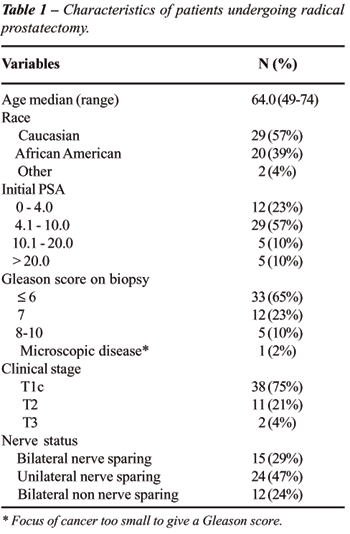
Of the 51 men, 15 (29%) underwent a bilateral
nerve sparing RP; 24 (47%) men underwent a unilateral nerve sparing RP;
and 12 (24%) men underwent non-nerve sparing procedure. A majority of
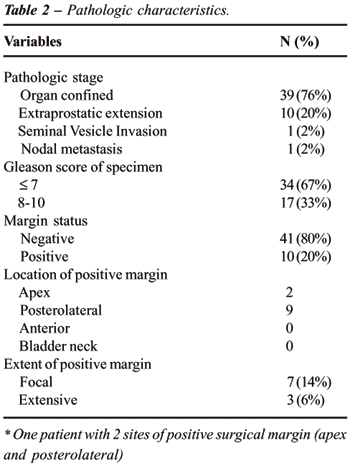
the subjects (86%) underwent a pelvic lymph node dissection. Pathologic
outcomes are depicted in Table-2. Organ confined disease (pT2) was diagnosed
in 76% of the patients, whereas 33% of patients had poorly differentiated
tumors. Positive lymph nodes (non-microscopic disease) were found in only
2% of patients. The overall positive surgical margin rate was 20% (10
patients). Seventy percent of the patients with positive surgical margins
were found to have extraprostatic disease. Table-2 depicts the location
of the positive surgical margins in our series. Three patients had positive
surgical margins at the bladder neck and 2 patients had persistent benign
prostatic tissue at the bladder neck. These patients had wider resections
of the affected bladder necks until the frozen sections were negative
for cancerous or benign prostatic tissue. Then the bladder neck was reconstructed.
Final pathologic evaluation of bladder neck margin was negative for tumor
or persistent prostatic tissue in all 51 men.
Analyses of 6 month EPIC questionnaire responses
reveal only one patient was severely incontinent and a total of 9 (18%)
of patients reported any form of incontinence. The one severely incontinent
patient had a recent history of proximal urethral stricture previously
managed by direct visual incision of urethral stricture. In addition 9,
(18%) of patients reported their urinary function to be ‘a big problem’.
Of these 9 patients, only 2 patients reported urinary incontinence. The
other seven patients were found to have a bladder neck contracture causing
their urinary bother prior to their 6 month follow-up and were treated
with transurethral incision of bladder neck contracture. The seven patients
with bladder neck contracture reported resolution of their urinary bother
after transurethral incision of bladder neck contracture. Only two of
the patients who developed a bladder neck contracture had bladder neck
resection and reconstruction (p < 0.05, Chi-square).
COMMENTS
Increased
surgical volume has been associated with improved pathologic outcomes
(i.e. decreases in rate of positive surgical margin) in patients undergoing
RP (9,10). In addition, our group has reported previously that recently
graduated urologic oncologic trained surgeons can produce these same outcomes
as more senior surgeons (11). Knowing patients with negative surgical
margins have a more favorable biochemical disease-free survival (5), we
routinely obtain intra-operative frozen sections of the bladder neck in
an effort to decrease our incidence of positive surgical margins at the
bladder neck. We resect as much of the bladder neck as is needed to obtain
a negative surgical margin and then reconstruct the bladder neck. The
resulting overall rate of positive surgical margin in our series was 20%,
and specifically 0% at the bladder neck margin. Though our follow-up is
too short to comment on PSA-failure free survival we can extrapolate based
on previous literature (5) that improve surgical margins translate into
improve PSA-failure free survival.
Our initial incidence of positive bladder
neck margin as assessed on intra-operative frozen section was approximately
6%. We believe that others can obtain this low rate of positive surgical
margins at the bladder neck through meticulous bladder neck dissection.
This rate can be further decreased by obtaining intra-operative frozen
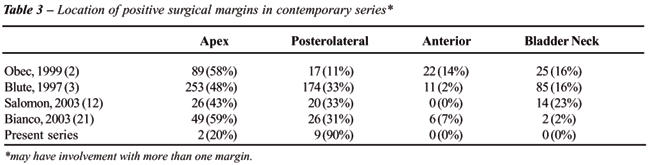
sections and resecting any residual tissue. Our final positive margin
status of 0% at the bladder neck is improved from other reports Table-3
(2,3,12). There was no significant relationship between positive bladder
neck margin and any preoperative factors, thus we found it difficult to
predict preoperatively who would have a positive bladder neck margin.
Furthermore, there was no relationship between the location and the number
of positive biopsies and positive margin at the bladder neck (data not
shown). At the time of surgery, all gross disease was resected en bloc
with the prostate and seminal vesicles; subsequently, frozen sections
were sent to pathology of the remaining bladder neck. Though previous
researchers have commented on obtaining frozen sections from the apex
(13,14) and posterolateral (15,16) regions, we have found that quite difficult
in the presence of a true anatomic RP, since only minuscule tissue may
be available at these sites for sampling. However, there is adequate tissue
to sample at the bladder neck to ensure a negative margin at this location.
Currently, we utilize various criteria in
an effort to predict the chance of extraprostatic extension and possible
positive surgical margins (17). Patients with a positive surgical margin
were more likely to have a serum PSA > 15 ng/mL, palpable disease,
and Gleason score ≥ 7 (p < 0.05, Chi-square). However, these
criteria were not effective in predicting positive bladder neck margin
in our cohort. There are several possible explanations for this. First,
these factors may be related to positive margin by the neurovascular bundle
and, thus, may not be indicative of criteria needed to assess the bladder
neck. Next, our study group is quite diverse and thus criteria obtained
by studying predominantly Caucasian patients may not be effective in predicting
margin status in a cohort with greater percentage of African American
or other races. Lastly, previous groups have documented higher rate of
positive margin at the apex. Our study group may have been too small to
produce a representative sample so the overall distribution of positive
surgical margins may have been less than would be seen in a larger sample.
Thus, only 5 out of 51 patients in our study
had a positive intraoperative bladder neck margin for either carcinoma
or persistent benign prostatic tissue. The incidence of bladder neck contracture
in our population was 14%. The presence of bladder neck contracture did
not correlate to bladder neck resection and reconstruction. All bladder
neck contractures were detected prior to the patients’ 6-month postoperative
follow-up and treated with transurethral incision of bladder neck contracture.
At the 6-month follow-up, our overall continence rate was greater than
90%, based on response to EPIC questionnaire, and 18% of patients reported
urinary bother.
The concept of obtaining intra-operative
bladder neck margins is not new. One of the first publications on this
subject was reported by Lepor and coworkers in 1998 (18). In that report,
the authors reported an 11% yield from intra-operative frozen section
of the bladder neck that demonstrated persistent prostatic tissue that
was resected. They concluded that intra-operative frozen sections of the
bladder neck may be beneficial. More recently, Lepor & Kaci reported
their most current experience with intra-operative bladder neck biopsies
(19). In this report the authors state that due to the low yield of a
positive bladder neck margin (< 1%) performing bladder neck frozen
section analysis was not clinically helpful (19). However, it should be
noted that this is the report of a single surgeon’s experience with
a very high-volume surgical practice and thus such favorable results may
be due to meticulous, anatomic dissections by experienced surgeons.
The implications of obtaining frozen margins
of the bladder neck can be incorporated into laparoscopic and robotic
radical prostatectomy. One of the difficult steps in laparoscopic or robotic
radical prostatectomy is division of the bladder neck. If our technique
can be replicated during these procedures, then it may decrease the rate
of positive margins for these procedures as well. Furthermore, this technique
could also be utilized during the learning curve for RP (open, laparoscopic,
and robotic) in hopes of reducing positive surgical margins at the bladder
neck.
We clearly realize the limitations of this
study. First, though it is a prospective study, the number of men assessed
is small. These men assessed were the first 51 patients a recent urologic
oncologist fellowship graduate completed in his practice. In addition,
it would be quite informative to collect similar data from multiple surgeons
performing intra-operative frozen sections of the bladder neck at the
time of RP. Next, a control arm where bladder neck biopsies were not obtained
may be useful. Lastly, longer follow-up that truly assesses PSA-failure
free survival would be extremely beneficial in assessing the true oncologic
potential of this procedure.
Bladder neck invasion is associated with
an overall poor prognosis (20). Obtaining frozen sections can help identify
these patients early for subsequent adjuvant trials. However, we believe
there is a subset of patients that after a RP may have persistent disease
at the bladder neck that is not invasive. It is in these patients that
intra-operative sampling may be beneficial. Further prospective application
of this treatment is required to determine its true overall impact on
the care of prostate cancer patients.
CONFLICT OF INTEREST
None declared.
REFERENCES
- Walsh PC, Donker PJ: Impotence following radical prostatectomy: insight into etiology and prevention. J Urol. 1982; 128: 492-7.
- Obek C, Sadek S, Lai S, Civantos F, Rubinowicz D, Soloway MS: Positive surgical margins with radical retropubic prostatectomy: anatomic site-specific pathologic analysis and impact on prognosis. Urology. 1999; 54: 682-8.
- Blute ML, Bostwick DG, Bergstralh EJ, Slezak JM, Martin SK, Amling CL, et al.: Anatomic site-specific positive margins in organ-confined prostate cancer and its impact on outcome after radical prostatectomy. Urology. 1997; 50: 733-9.
- Greene FL, Page DL, Fleming ID, Fritz AG, Balch CM: AJCC Cancer Staging Manual, 6th ed. New York, Springer-Verlag. 2002.
- Babaian RJ, Troncoso P, Bhadkamkar VA, Johnston DA: Analysis of clinicopathologic factors predicting outcome after radical prostatectomy. Cancer. 2001; 91: 1414-22.
- Poon M, Ruckle H, Bamshad BR, Tsai C, Webster R, Lui P: Radical retropubic prostatectomy: bladder neck preservation versus reconstruction. J Urol. 2000; 163: 194-8.
- Gleason DF: Histologic grading of prostate cancer: a perspective. Hum Pathol. 1992; 23: 273-9.
- Amling CL, Bergstralh EJ, Blute ML, Slezak JM, Zincke H: Defining prostate specific antigen progression after radical prostatectomy: what is the most appropriate cut point? J Urol. 2001; 165: 1146-51.
- Bianco FJ Jr, Riedel ER, Begg CB, Kattan MW, Scardino PT: Variations among high volume surgeons in the rate of complications after radical prostatectomy: further evidence that technique matters. J Urol. 2005; 173: 2099-103.
- Catalona WJ, Smith DS: Cancer recurrence and survival rates after anatomic radical retropubic prostatectomy for prostate cancer: intermediate-term results. J Urol. 1998; 160: 2428-34.
- Rosser CJ, Kamat AM, Pendleton J, Robinson TL, Pisters LL, Swanson DA, et al.: Impact of fellowship training on pathologic outcomes and complication rates of radical prostatectomy. Cancer. 2006; 107: 54-9.
- Salomon L, Anastasiadis AG, Antiphon P, Levrel O, Saint F, De La Taille A, et al.: Prognostic consequences of the location of positive surgical margins in organ-confined prostate cancer. Urol Int. 2003; 70: 291-6.
- Shah O, Melamed J, Lepor H: Analysis of apical soft tissue margins during radical retropubic prostatectomy. J Urol. 2001; 165: 1943-8; discussion 1948-9.
- Tsuboi T, Ohori M, Kuroiwa K, Reuter VE, Kattan MW, Eastham JA, et al.: Is intraoperative frozen section analysis an efficient way to reduce positive surgical margins? Urology. 2005; 66: 1287-91.
- Cangiano TG, Litwin MS, Naitoh J, Dorey F, deKernion JB: Intraoperative frozen section monitoring of nerve sparing radical retropubic prostatectomy. J Urol. 1999; 162: 655-8.
- Goharderakhshan RZ, Sudilovsky D, Carroll LA, Grossfeld GD, Marn R, Carroll PR: Utility of intraoperative frozen section analysis of surgical margins in region of neurovascular bundles at radical prostatectomy. Urology. 2002; 59: 709-14.
- Kamat AM, Jacobsohn KM, Troncoso P, Shen Y, Wen S, Babaian RJ: Validation of criteria used to predict extraprostatic cancer extension: a tool for use in selecting patients for nerve sparing radical prostatectomy. J Urol. 2005; 174: 1262-5.
- Lepor H, Chan S, Melamed J: The role of bladder neck biopsy in men undergoing radical retropubic prostatectomy with preservation of the bladder neck.J Urol. 1998; 160: 2435-9.
- Lepor H, Kaci L: Role of intraoperative biopsies during radical retropubic prostatectomy. Urology. 2004; 63: 499-502.
- Poulos CK, Koch MO, Eble JN, Daggy JK, Cheng L: Bladder neck invasion is an independent predictor of prostate-specific antigen recurrence. Cancer. 2004; 101: 1563-8.
- Bianco FJ, Grignon DJ, Sakr WA, Shekarriz B, Upadhyay J, Dornelles E, et al.: Radical prostatectomy with bladder neck preservation: impact of a positive margin. Eur Urol. 2003; 43: 461-6.
____________________
Accepted after revision:
September 7, 2007
_______________________
Correspondence address:
Dr. Charles J. Rosser
Department of Urology, College of Medicine
The University of Florida
Suite N2-3, PO Box 100247
Gainesville, FL, 32610-0247, USA
Fax: + 1 352 392-8846
E-mail: charles.rosser@urology.ufl.edu