CHANGES
IN PARENTS’ AND SELF-REPORTS OF BEHAVIORAL PROBLEMS IN BRAZILIAN
ADOLESCENTS AFTER BEHAVIORAL TREATMENT WITH URINE ALARM FOR NOCTURNAL
ENURESIS
(
Download pdf )
MARINA M. ROCHA, NOEL J. COSTA, EDWIGES F. M. SILVARES
Psychology Institute, University of Sao Paulo, USP, Sao Paulo, SP, Brazil
ABSTRACT
Purpose:
Compare parents’ reports of youth problems (PRYP) with adolescent
problems self-reports (APSR) pre/post behavioral treatment of nocturnal
enuresis (NE) based on the use of a urine alarm.
Materials and Methods: Adolescents (N =
19) with mono-symptomatic (primary or secondary) nocturnal enuresis group
treatment for 40 weeks. Discharge criterion was established as 8 weeks
with consecutive dry nights. PRYP and APSR were scored by the Child Behavior
Checklist (CBCL) and Youth Self-Report (YSR).
Results: Pre-treatment data: 1) Higher number
of clinical cases based on parent report than on self-report for Internalizing
Problems (IP) (13/19 vs. 4/19), Externalizing Problems (EP) (7/19 vs.
5/19) and Total Problem (TP) (11/19 vs. 5/19); 2) Mean PRYP scores for
IP (60.8) and TP (61) were within the deviant range (T score ≥ 60);
while mean PRYP scores for EP (57.4) and mean APSR scores (IP = 52.4,
EP = 49.5, TP = 52.4) were within the normal range. Difference between
PRYP’ and APSR’ scores was significant. Post treatment data:
1) Discharge for majority of the participants (16/19); 2) Reduction in
the number of clinical cases on parental evaluation: 9/19 adolescents
remained within clinical range for IP, 2/19 for EP, and 7/19 for TP. 3)
All post-treatment mean scores were within the normal range; the difference
between pre and post evaluation scores was significant for PRYP.
Conclusions: The behavioral treatment based
on the use of urine alarm is effective for adolescents with mono-symptomatic
(primary and secondary) nocturnal enuresis. The study favors the hypothesis
that enuresis is a cause, not a consequence, of other behavioral problems.
Key
words: nocturnal enuresis; adolescent; evaluation studies; treatment
outcome
Int Braz J Urol. 2008; 34: 749-57
INTRODUCTION
Nocturnal
enuresis (NE) is a common problem in childhood. Epidemiological studies
show that 15-22% of boys and 7-15% of girls at seven years of age are
bedwetters (1). These percentages lower to 1-2% among adolescents and
young adults (1,2). Facing this problem the family must make a decision:
wait for spontaneous remission - approximately 15% of the enuretics stop
wetting the bed each year (2-4) - or seek aid to solve the problem. The
negative impact of NE on both the adolescent and the family (5-8) suggests
that the second option should be chosen.
Although some children do not demonstrate
negative psychological consequences of NE, the majority usually disclose
distressing repercussions of being a bedwetter (1,8). The wet bed changes
the daily routine, which bothers mainly younger children; for older children,
enuresis becomes a humiliation. Adolescents with NE feel guilty and ashamed,
they avoid social activities, and they feel different from the others
(9). This indicates that older enuretics suffer more negative psychological
consequences of NE.
Several researchers have studied the relationship
between enuresis and psychological problems. A 15 year longitudinal study
with New Zealand children investigated the relationship between nocturnal
enuresis and measures of behavioral adjustment in adolescence (10). Patterns
of nocturnal bladder control were evaluated once a year (from 2 to 15
years old), and psychological measures were collected at ages 11, 13 and
15. Results have shown that children who continued to wet the bed after
the age of 10 as a result of either primary or secondary enuresis had
more behavioral problems and attention deficit up to the age of 13, and
more internalizing problems up to the age of 15 (10).
A review of the literature (11) suggests
that bedwetting causes other behavioral problems, rather than the other
way around. The relationship between NE and behavioral problems seems
to be stronger in older enuretics, although cause and effect still have
not been established (11). A study developed in China, using the Child
Behavior Checklist (CBCL) as the psychological measure, showed that the
later the children achieved the urine control, the higher the probabilities
of parents reporting behavioral, emotional and academic problems (12).
Although the literature concerning enuresis
and behavior problems is vast, the results must be accepted with caution.
The criteria used to consider a child as being enuretic are usually different
from one study to another, and the methodological design of studies does
not always allow firm conclusions to be drawn (13,14). In addition, most
studies focus on externalizing problems evaluated from only one point
of view (parental evaluation of their children’s behavior), thereby
ignoring the internalizing problems and adolescents’ self-reports.
In one of the first studies that specifically
investigated internalizing problems in children with enuresis, no differences
were found between self-reports of bedwetters and a control group of children
without enuresis (15). However, the parents’ reports of the children’s
behavior were different across the two groups. Parents of enuretics tended
to indicate their children as having more internalizing problems (“withdrawn”
and “anxious/depressive”) than compared controls (15).
The importance of having multiple informants
when evaluating children’s behavioral problems has been emphasized
by the previous researchers (15). These authors observed that overall
agreement between children and parent reports was low to moderate, whereas
parent-child agreement in a sample of enuretic children was moderate to
good (15). Despite the fact that the information source seems to influence
the severity of reported problems, clinical work and scientific studies
have emphasized the necessity of including multiple informants in the
diagnostic evaluation of children and adolescents (16). Apparently when
parents evaluate their children, more externalizing problems are reported,
while children, on self-report, point out more internalizing problems.
Even though there is consensus that is important to have multiple informants
during child/adolescents’ assessment, the literature still has not
reached a consensus on how to interpret the differences found in both
reports (16).
The effects that treating enuresis has on
other behavioral problems have been investigated in only a few studies.
The first randomized, controlled study examining if there were changes
in behavioral problems after six months of enuresis treatment with a urine
alarm, desmopressin acetate or placebo found significant changes on CBCL
scores for Internalizing Problems, Externalizing Problems, Social Problems,
Thought Problems and Attention Problems (17). These changes occurred independently
of the treatments’ result and the kind of treatment offered, including
placebo condition. These authors suggested that the attention, support,
and reassurance inherent in participation in the study were beneficial
for all children (17).
Some researchers from the Netherlands also
attempted to investigate the effects of enuresis treatment on other behavioral
problems (18). A reduction in mean scores on the CBCL occurred six months
after treatment in the group of children who achieved success on controlling
bedwetting. The most significant differences were found in mean scores
on internalizing problem scales, specifically in the scale of anxiety/depression.
The observed reduction on other behavior problems after a successful enuresis
treatment suggests that the other behavioral problems were a consequence
of the bedwetting, not the cause of this bio behavioral problem. This
hypothesis has been supported by several studies (11,15,18).
Apparently, enuresis treatment has the effect
of reducing the frequency, and/or the intensity, of other behavioral problems,
although there is no consensus whether it is necessary to achieve success
in the enuresis treatment to obtain the reductions. Considering the fact
that there are few studies that analyze general behavioral changes after
treatment for nocturnal enuresis, and that it is important to have multiple
informants in the assessment of child and adolescents problems, the present
study was designed to compare parents’ reports on youth problems
(PRYP) with adolescent problems self-reports (APSR) before and after a
behavioral treatment based on the use of urine alarm for nocturnal enuresis.
We hypothesized that, since enuresis seems to be a cause of other behavioral
problems, adolescents’ self-report and parents’ reports would
indicate a reduction on behavioral and emotional problems following treatment
for NE.
MATERIALS AND METHODS
A
total of 19 youths - 13 boys and 6 girls - (age ranging from 11 to 16,
average 12.32 years, SD = 1.83 years) participated in this study. The
psychologist used a screening interview to evaluate the type of bedwetting
presented by participants. All participants met the criteria for mono-symptomatic
nocturnal enuresis established by the International Children’s Continence
Society (19): involuntary voiding of urine during sleep in children without
other lower urinary tract symptoms and without history of bladder dysfunction.
Most adolescents (16/19) had primary nocturnal enuresis; although three
(two boys and one girl) were diagnosed with secondary enuresis, since
they had been dry for a period of six months or more, and then started
bed wetting again. The majority (15/19) had previously undergone pharmacological
treatment , but had not ceased wetting the bed. The number of wet nights
before treatment ranged from 2 to 7 wet nights per week (average 5.42
wet nights per week, SD = 1.84).
To evaluate behavioral problems in young
adolescents, the rating from the Achenbach System of Empirically Based
Assessment (ASEBA) was chosen. This system is used worldwide in different
contexts, including medical clinics, psychological clinics, and in research
(20). Moreover, the ASEBA is the most widely used and researched system
of its kind, with some 6,000 publications reporting findings in 67 different
cultures (20). Since several researchers in the enuresis field have used
the ASEBA to evaluate behavioral problems, it was chosen to assess the
parent’s reports on youth’s problems (PRYP) and the adolescent’s
problems self-reports (APSR) in the current study.
The parents completed the “Child Behavior
Checklist for ages 4 to 18” (CBCL/4-18) (21), which yield three
broadband scales of Internalizing (IP), Externalizing (EP) and Total Problems
(TP). T-scores of 60 or higher were considered to be deviant consistent
with the questionnaires of authors who suggest combining the clinical
range and the borderline range to establish deviance.
In addition, the participants completed
the “Youth Self-Report” (YSR) (22). This self-report questionnaire
has problem items generally parallel to those of the CBCL. The scores
derived and the deviance cut points are similar to those for the CBCL.
After this first evaluation process (pre
attendance assessment), the treatment was started. Parents and participants
had to agree that while they were involved in this treatment, they could
not receive any other treatment. The behavioral treatment based on the
use of urine alarm was chosen either due to the high success rate and
low relapse rate reported for this device in the literature, or to the
low costs involved (2). The adolescent, the family, and the psychologist
worked together to achieve dry nights, since behavioral treatment for
bedwetting requires concerted and cooperative effort from the entire family
(2). The treatment, based on the program proposed by Arthur C. Houts (2),
involved attending weekly sessions of behavioral treatment, which focused
on several procedures well described by Blackwell (23), such as: explaining
the nature of enuresis, following treatment instructions for use of the
urine alarm, cleanliness training, retention control training, solving
daily problems, recording dry/wet nights and control of drinking diuretic
beverage before bedtime (23). After achieving 14 consecutive dry nights
we added the over learning procedure (2).
Eight weeks without wet nights were considered
for discharge.
The treatment was planned to last 40 weeks.
After that period, regardless of the achieved NE result, parents and adolescents
were asked to complete the questionnaires (CBCL and YSR, respectively)
a second time (post treatment assessment).
Approval by University Ethics Committee
was obtained, and a formal written consent was signed by the participants.
All questionnaires were scored using the software ADM (Assessment Data
Manager) (24), developed by Achenbach et al. for this purpose. Statistic
analyses were done using the software SPSS 13.0 for Windows.
RESULTS
Enuresis
Control
All participants achieved at least 2 weeks
with consecutive dry nights, and the majority (16/19) remained dry for
8 consecutive weeks and were discharged.
Behavioral
Problems
Figure-1 shows the proportion of cases in
the deviant range before and after treatment as scored by parents and
youths.

Although more adolescents achieved the deviant
range on parent’s report (13/19 on IP, 7/19 on EP, and 11/19 on
TP) than on youths’ self-report (4/19 on IP, 5/19 on EP, and 5/19
on TP), no statistical difference was found between observers in the number
of clinical cases for IP (χ2(1, N = 19) = 0.101, p = 0.750),
EP (χ2(1, N = 19) = 0.827, p = 0.363), and TP (χ2(1,
N = 19) = 1.360, p = 0.243) before treatment. The number of participants
scoring within the deviant range on CBCL and the YSR decreased on post-treatment
rates, but were still higher according to parent’s reports on IP
(9/19), EP (2/19), and TP (7/19) than adolescents’ reports on IP
(4/19), EP (1/19), and TP (3/19). Chi-square tests were used to determine
if the difference in number of clinical cases was significant after treatment.
No statistical difference between observer was found for IP (χ2(1,
N = 19) = 0.281, p = 0.596), EP (χ2(1, N = 19) = 0.124,
p = 0.725), and TP (χ2(1, N = 19) = 2.078, p = 0.149).
Average
T Score Evaluation
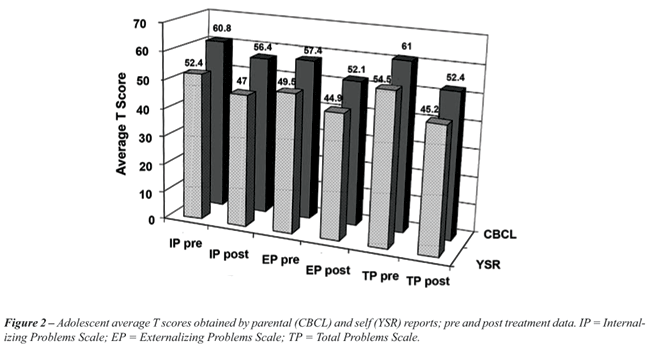
Figure-2 shows the average T score obtained
by participants (pre/post treatment data).
ANOVA with repeated measures was used to
compare the mean T scores obtained with the CBCL and the YSR. Before treatment,
the mean score obtained from parents report (CBCL) was significantly higher
than the mean score obtained for youths’ self-report (YSR) for IP
(Wilks’ λ = 0.658, F(1,18) = 9.340, p = 0.007), EP (Wilks’
λ = 0.730, F(1,18) = 6.662, p = 0.019), and TP (Wilks’ λ
= 0.549, F(1,18) = 14.774, p = 0.001). Mean CBCL IP and TP scores were
in the deviant range (T score ≥ 60), whereas mean CBCL EP score,
and mean YSR scores were within the normal range (T score < 60).
After treatment, CBCL scores were still
significantly higher that YSR scores for IP (Wilks’ λ = 0.632,
F(1,18) = 10.472, p = 0.005), EP (Wilks’ λ = 0.742, F(1,18)
= 6.257, p = 0.022), and TP (Wilks’ λ = 0.619, F(1,18) = 11.1,
p = 0.004), although both CBCL and YSR scores were below the deviant range
(T score < 60).
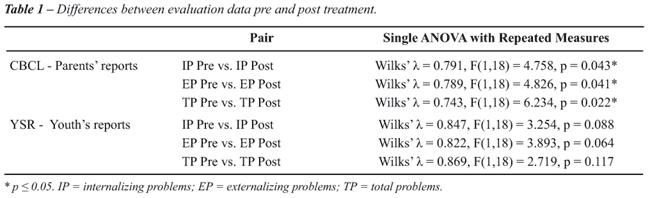
Single ANOVA with repeated measures was
used to investigate the differences between parents’ reports (PRYP)
on youth’s problems before and after treatment, and adolescents’
problems self-report (APSR) before and after treatment. Results are shown
on Table-1.
Table-1 shows that mean CBCL IP, EP and
TP scores after treatment were significantly lower than pre-treatment
scores, which indicates that parents reported fewer problems after their
children had gone through behavioral treatment based on the use of urine
alarm. No significant differences were found on the youths’ report
when pre-treatment and post-treatment scores were compared.
COMMENTS
Treatment
with a urine alarm is the most frequently adopted behavioral intervention
for bedwetting (2,5,25) and has shown high efficacy. The success rate
reached in our study (84.21%) is superior to the success rate found in
the enuresis literature, which is 60% to 70% of the cases (25). However,
the comparison between studies is very difficult, since the literature
has reported different inclusion criteria and success criteria (13,14).
If we considered 14 consecutive dry nights, the most widely used success
criterion found in the literature (14), we would have achieved 100% success.
It is likely that the treatment offered (behavioral treatment based on
the use of urine alarm) is a factor that helped to achieve our high rate
of success. Most treatments with urine alarm do not have a weekly session
to monitor the alarm use. The psychologist motivated and helped the parents
and the adolescents to accurately follow the procedure - which is very
important to achieve success using the urine alarm -, and used social
positive reinforcement as a consequence for all appropriate behaviors.
In addition, the other procedures that were followed during the use of
the urine alarm may have also interfered in the final result, although
more data is needed to sustain this statement. The over learning procedure
and the criteria for discharge of 8 consecutive weeks with dry nights
might have reduced the relapse rate, but only follow up studies can confirm
this hypothesis.
Among the vast literature regarding behavior
problems and nocturnal enuresis, there are few reported studies focusing
on internalizing problem changes after enuresis treatment, and fewer studies
using both adolescents’ and parents’ reports. The present
study addresses this gap in the literature. The results indicate that
enuretic adolescents, even before treatment, did not report scores in
the deviant range on YSR Internalizing Problems, Externalizing Problems
and Total Problems scales. Parents’ reports were significantly different
from youth’s self-reports: parents judged their enuretic children
to be within the deviant range for Internalizing and Total Problems before
treatment. These data are similar to those reported in a Belgian study
(15): the children who participated in the Belgian study did not report
more internalizing problems than control children did. However, parents’
reports on the CBCL indicated that enuretic children have higher anxious/depressed
and withdrawn scores than control children. Both Brazilian and Belgian
results indicate that parents are more likely to evaluate their children
as having other behavioral problems (besides enuresis) than bedwetting.
One explanation for the differences found
between parents’ reports and adolescents’ self-reports might
be that adolescents do not want to disclose everything, or that they try
to deny the problems they are facing (16). Another explanation could be
that parents evaluated their children as worst than they really were,
imagining that this was the way to obtain treatment. It is also possible
that, as the enuresis problem seems to make parents pay more attention
on their children, they could also perceive their children’s behavioral
problems greater or more frequent than other parents who are not so focused
on their children. We cannot forget that adolescence is a “gap period”
when conflicts between parents and their children increase, and differences
in their perceptions on several topics are very common. It is also important
to note that parent-adolescent agreement on the CBCL-YSR in the U.S. normative
sample was only 0.29 (26). This low agreement level has repeatedly been
documented in studies that compare parents’ reports and adolescent
self-reports (16).
Even though the literature reports that
on parental evaluation, adolescents achieve higher scores on externalizing
problems, and on self-report, they indicate more internalizing problems
(16), we did not find results indicating that type of difference. In fact,
parents reported more internalizing problems than externalizing problems
when they evaluated their youths.
Although there was a visible decrease in
the mean score of the YSR IP, EP and TP following treatment, the difference
was not significant. At both time points, mean YSR scores were in the
normal range, indicating that enuretic adolescent did not evaluate themselves
as having other behavioral problems, besides enuresis.
Similar to the results found in Canada (17),
we found declines in CBCL IP, EP and TP scores post behavioral treatment
based on the use of urine alarm for nocturnal enuresis. Results in the
same direction were also found in the Netherlands (18). In the Dutch study,
children who overcame enuresis seemed to have less internal distress,
fewer problems with other people, and were less anxious and/or depressed
after treatment based on parents’ reports using the CBCL.
It is likely that the information and support
offered during treatment were beneficial to the participants. All adolescents
showed significant declines in bedwetting, even though the decline in
YSR scores was not significant. This was probably because YSR scores were
relatively low before treatment began. It is also possible that parents’
satisfaction with the achieved control of NE as a result of treatment
led them to view their adolescents more favorably on the CBCL. In future
research, it will be important to determine if the treatment gains in
NE and CBCL scores persisted after one year. Our data provide additional
support for the hypothesis that behavioral/emotional problems are often
a consequence of bedwetting rather than cause of enuresis (e.g. 11,15,18).
One limitation of the present study is the
small number of participants, which resulted in low power to detect effects.
Our study certainly would have been enhanced if we had had a larger number
of participants. In addition, the use of rating scales rather than diagnostic
assessments was a further limitation. A no-treatment control group would
also have contributed to our study. This would have allowed comparison
between behavioral changes in enuretic adolescents who had had treatment
access versus those who did not receive treatment. Based on our data,
we cannot answer the question about whether it is necessary to achieve
success in enuresis treatment to have changes on other behavioral problems,
since virtually all our participants achieved control over bedwetting
(at least 14 dry nights). This study as not able to replicate the study
performed in the Netherlands (18) that compared behavioral changes that
occurred in the group that achieved success and the group that did not
achieved success with the enuresis treatment because in our study all
participants achieved at least two consecutive weeks with dry nights,
the most widely used success criterion (14).
CONCLUSION
The behavioral treatment based on the use of urine alarm for enuresis was effective for ceasing bedwetting in adolescents with mono-symptomatic (primary and secondary) nocturnal enuresis. Since this treatment also seems to produce a positive effect on other behavioral problems, or on the parental report of these behavioral problems, it is important to advise parents to seek treatment for NE for their adolescents. The hypothesis that enuresis is a cause, not a consequence of other behavioral problems, was supported by our data.
ACKNOWLEDGMENT
The study was supported by grants from FAPESP, CNPq and USP. Dr. Leslie A. Rescorla provided critical discussion on the manuscript.
CONFLICT OF INTEREST
None declared.
REFERENCES
- Butler RJ: Impact of nocturnal enuresis on children and young people. Scand J Urol Nephrol. 2001; 35: 169-76.
- Houts AC: Behavioral treatment for enuresis. In: Kazdin AE.; Weisz JR (ed.), Evidence-based psychotherapies for children and adolescents. Nova York, The Guilford Press. 2003; pp. 389-406.
- Forsythe WI, Redmond A: Enuresis and spontaneous cure rate. Study of 1129 enuretis. Arch Dis Child. 1974; 49: 259-63.
- Monda JM, Husmann DA: Primary nocturnal enuresis: a comparison among observation, imipramine, desmopressin acetate and bed-wetting alarm systems. J Urol. 1995; 154: 745-8.
- Houts AC, Berman JS, Abramson H: Effectiveness of psychological and pharmacological treatments for nocturnal enuresis. J Consult Clin Psychol. 1994; 62: 737-45.
- Friman PC, Handwerk ML, Swearer SM, McGinnis JC, Warzak WJ: Do children with primary nocturnal enuresis have clinically significant behavior problems? Arch Pediatr Adolesc Med. 1998; 152: 537-9.
- Collier J, Butler RJ, Redsell SA, Evans JH: An investigation of the impact of nocturnal enuresis on children’s self-concept. Scand J Urol Nephrol. 2002; 36: 204-8.
- Butler RJ: Childhood nocturnal enuresis: developing a conceptual framework. Clin Psychol Rev. 2004; 24: 909-31.
- Butler RJ, Redfern EJ, Forsythe WI: The child’s construing of nocturnal enuresis: a method of inquiry and prediction of outcome. J Child Psychol Psychiatry. 1990; 31: 447-54.
- Fergusson DM, Horwood LJ: Nocturnal enuresis and behavioral problems in adolescence: a 15-year longitudinal study. Pediatrics. 1994; 94: 662-8. Erratum in: Pediatrics 1995; 95: 243.
- Redsell SA, Collier J: Bedwetting, behaviour and self-esteem: a review of the literature. Child Care Health Dev. 2001; 27: 149-62.
- Liu X, Sun Z, Uchiyama M, Li Y, Okawa M: Attaining nocturnal urinary control, nocturnal enuresis, and behavioral problems in Chinese children aged 6 through 16 years. J Am Acad Child Adolesc Psychiatry. 2000; 39: 1557-64.
- Joinson C, Heron J, Emond A, Butler R: Psychological problems in children with bedwetting and combined (day and night) wetting: A UK population-based study. J Pediatr Psychol. 2007; 32: 605-16.
- Butler RJ, Robinson JC, Holland P, Doherty-Williams D: An exploration of outcome criteria in nocturnal enuresis treatment. Scand J Urol Nephrol. 2004; 38: 196-206.
- Van Hoecke E, Hoebeke P, Braet C, Walle JV: An assessment of internalizing problems in children with enuresis. J Urol. 2004; 171: 2580-3.
- Berg-Nielsen TS, Vika A, Dahl AA: When adolescents disagree with their mothers: CBCL-YSR discrepancies related to maternal depression and adolescent self-esteem. Child Care Health Dev. 2003; 29: 207-13.
- Longstaffe S, Moffatt ME, Whalen JC: Behavioral and self-concept changes after six months of enuresis treatment: a randomized, controlled trial. Pediatrics. 2000; 105: 935-40.
- HiraSing RA, van Leerdam FJ, Bolk-Bennink LF, Koot HM: Effect of dry bed training on behavioural problems in enuretic children. Acta Paediatr. 2002; 91: 960-4.
- Nevéus T, von Gontard A, Hoebeke P, Hjälmås K, Bauer S, Bower W, et al.: The standardization of terminology of lower urinary tract function in children and adolescents: report from the Standardization Committee of the International Children’s Continence Society. J Urol. 2006; 176: 314-24.
- Achenbach TM, Rescorla LA: Multicultural Understanding of Child and Adolescent Psychopathology. New York, Guilford Press. 2007; Chapter 2, pp. 13-46.
- Achenbach TM: Manual for the Child Behavior Checklist/4-18 and 1991 Profiles. Burlington, University of Vermont. 1991; Chapter 1, pp. 1-16.
- Achenbach TM: Manual for the Youth Self-Report and 1991 Profiles. Burlington, University of Vermont. 1991; Chapter 1, pp. 1-13.
- Blackwell C: A guide to Enuresis – A guide to a Treatment of Enuresis for Professionals. Bristol, Enuresis Resource and Information Center. 1989; pp. 23-41.
- Achenbach System of Empirically Based Assessment: Manual for the Assessment Data Manager Program (ADM). Burlington, VT. 2006; Chapter 2 pp. 5-13.
- Butler RJ, Gasson SL: Enuresis alarm treatment. Scand J Urol Nephrol. 2005; 39: 349-57.
- Achenbach TM, Rescorla LA: Manual for the ASEBA school-age forms and profiles. Burlington: University of Vermont, Research Center for Children, Youth, and Families. 2001; pp. 238.
____________________
Accepted after revision:
July 2, 2008
_______________________
Correspondence address:
Dr. Edwiges F. de Mattos Silvares
Av. Prof. Mello Moraes, 1721
Bloco F, Sala 30
São Paulo, SP, 05508-900, Brazil
E-mail: efdmsilv@usp.br
EDITORIAL COMMENT
Many
studies focus on the relationship between enuresis and psychological problems/psychopathology.
However, most of these studies have a cross-sectional design, which makes
deductions about causality very difficult. The current study makes an
important contribution to this field of research since it consists of
two time measurements: before and after treatment. This study design enables
the authors and readers to deduct some well-founded hypotheses on causality.
Nevertheless, I believe the manuscript could benefit considerably from
the following comments.
An important limitation for this study is
also the small sample size (from a statistical point of view). Also, whether
alarm treatment is effective depends heavily on the etiology of enuresis.
The current statement is not a general conclusion from this study.
Dr.
Dieter Baeyens
Department of Psychology
Developmental Disorders
Ghent University
Ghent, Belgium
E-mail: dieter.baeyens@ugent.be
EDITORIAL COMMENT
This
is an uncontrolled clinical study examining the effect of successful enuresis
alarm treatment on psychological functioning (through parental and self-perception)
with a small sample (n=22) of adolescents with nocturnal enuresis.
The paper specifically seeks to explore
both the difference in opinion between parent and youngster with respect
to behavior; and an analysis of change in psychological functioning before
and after treatment with the enuresis alarm.
The paper is very clear and highlights the
importance of understanding behavior from both the parent and protagonist’s
perspective. I also like how the authors have defined mono-symptomatic
nocturnal enuresis. In all I think the paper would be a welcome addition
to the literature.
Dr.
Richard Butler
Department of Clinical Psychology
Child & Adolescent Mental Health Services
East Leeds Primary Care Trust
Leeds, United Kingdom
E-mail: richard.butler@leedsmh.nhs.uk