LONG-TERM
CLINICAL OUTCOME IN PATIENTS WITH STAGE-I NONSEMINOMATOUS GERM CELL CANCER.
A CRITICAL REVIEW OF OWN TREATMENT MODALITIES IN A RETROSPECTIVE STUDY
(
Download pdf )
SANDRA SESEKE, SILKE BIERWIRTH, ARNE STRAUSS, ROLF-HERMANN RINGERT, FLORIAN SESEKE
Department of Urology (SS, SB, AS, RHR), Georg-August-University, Gottingen, Germany, and Department of Urology (FS), Martha-Maria Hospital, Halle, Germany
ABSTRACT
Purpose:
The optimal management of patients with clinical stage I non-seminomatous
germ cell testicular cancer (NSGCT I) was considered controversial until
the European Germ Cell Cancer Consensus Group determined unambiguous treatment
strategies. In order to assess the long-term outcome we evaluated the
data of patients with NSGCT I.
Materials and Methods: In a retrospective
evaluation, we included 52 patients with a mean age of 26 years (range
15-58) who were treated with different modalities at our department between
1989 and 2003. Mean follow-up was 5.9 years (range 2-14 years). After
orchiectomy, 39 patients were treated with chemotherapy, 7 patients underwent
retroperitoneal lymph node dissection and 6 men were managed using a surveillance
strategy. Survival, recurrence rate and time of recurrence were evaluated.
The histological staging and treatment modality was related to the relapse.
Results: Tumor specific overall mortality
was 3.8%. The mortality and relapse rate of the surveillance strategy,
retroperitoneal lymph node dissection and chemotherapy was 16.7% / 50%,
14.3% / 14.3% and 0% / 2.5% respectively. All relapsed patients in the
surveillance group as well as in the RPLND group had at least one risk
factor for developing metastatic disease.
Conclusions: Following the European consensus
on diagnosis and treatment of germ cell cancer in patients with NSGCT
Stage I any treatment decision must be individually related to the patient
according to prognostic factors and care capacity of the treating centre.
In case of doubt, adjuvant chemotherapy should be the treatment of choice,
as it provides the lowest risk of relapse or tumor related death.
Key
words: testis; testicular neoplasms; chemotherapy; surveillance;
retroperitoneal lymph node dissection; outcomes assessment
Int Braz J Urol. 2008; 34: 715-24
INTRODUCTION
The
incidence of testicular cancer has increased over the last 50 years and
is the most common malignancy in men in the 15-35 year age group. Nonseminomatous
germ cell cancer occurs in slightly younger patients than in those with
seminomas. Stage 1 disease is treated initially by orchiectomy, which
assures accurate histological diagnosis. The importance of this pathological
staging is reflected in the decision for the adjuvant treatment modalities.
Although standardized recommendations for follow-up are not defined, patients
without increased relapse risk such as vascular or lymphatic invasion,
predominant component of embryonal carcinoma and undifferentiated elements
(1), are recommended for active surveillance. The relapse rate in this
treatment strategy is approximately 30 %. Metastases will occur in the
retroperitoneum in 54-78% and in the lung in 13-31% of the relapsed patients
(2) and can be salvaged with cisplatin-based chemotherapy protocols (3).
Following the recommendations of the European Germ Cell Cancer Consensus
Group, in patients with reservations against the surveillance strategy,
needing a high rate of compliance, adjuvant chemotherapy is the treatment
of choice (relapse rate 3%). In case of reservations against the two afore
mentioned options, nerve sparing retroperitoneal lymph node dissection
(NS-RPLND) is suggested (3).
Vascular invasion is the most important
prognostic indicator for developing metastatic disease in up to 48%. Patients
with risk factors should be given two cycles of BEP (standard dose of
cisplatin, etoposide, bleomycin) (3). However, cure rates of about 99%
can be reached in patients with clinical stage I non-seminomatous germ
cell testicular cancer (NSGCT I) with or without risk factors, independently
of the treatment strategy.
Any decision for the optimal adjuvant treatment
modality for non-seminomatous Stage 1 needs close co-operation between
physician and patient to make sure, that the patient’s compliance
is in line with the chosen therapy. If a patient cannot deal with the
psychological distress of a recurrence rate of approximately 30% (low
risk) to 58% (high risk) (4) or if the compliance for regular follow-
up intervals must be questioned, an adjuvant treatment should be preferred
instead of the surveillance strategy.
In this study we retrospectively reviewed
the patients with NSGCT I treated at our urological department from 1989
to 2003 to evaluate the long-term outcome. The results were compared with
those obtained from other studies in the literature. Preferentially, we
offered adjuvant chemotherapy with excellent cure rates, accepting an
overtreatment in selected patients. The aim of this study was to critically
review the applied treatment strategies with special emphasize on the
relapsed patients.
MATERIALS AND METHODS
Patients
- Between 1989 and 2003, 55 patients with NSGCT I were treated. Mean age
was 26 years (range 15-58). Mean follow-up was 7.4 years (range 2-16 years).
Data acquisition - The records were reviewed
for histological classification, clinical and pathological staging, serum
tumor markers, adjuvant therapy and last follow-up.
Inclusion criteria - All patients had a
histologically proven non-seminomatous germ cell cancer. Forty-three of
the evaluated patients had a pT1 tumor, in 8 patients the histological
work-up showed a pT2 stage and 1 patient had a pT3 tumor. Staging evaluations
(chest X-ray, pre- and postoperative serum tumor markers, abdominal CT
scan) excluded metastatic disease.
Therapy and follow-up - All patients had
undergone radical orchiectomy. Following orchiectomy 39 patients were
treated with chemotherapy of two (n = 29) or three (n = 5) courses of
bleomycine, etoposide and cisplatin (BEP), or, in case of prior lung problems
ifosfamide instead of bleomycin (n = 5). Seven patients underwent retroperitoneal
lymph node dissection and 6 men were managed in a surveillance strategy.
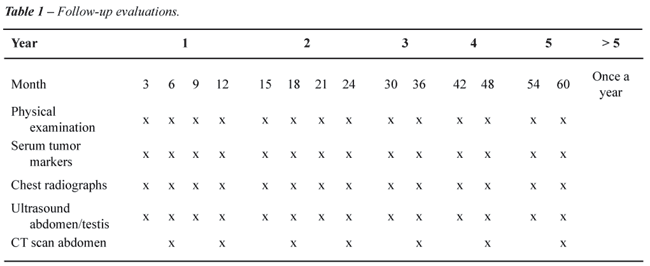
Follow-up evaluations included physical examination, chest radiographs,
serum tumor markers, abdominal and testicular ultrasound and abdominal
CT scan periodically as seen in Table-1. Patients were encouraged to be
followed for at least 10 years.
Data evaluation - All patients with a documented
follow-up of at least two years were included. Three men were lost to
follow-up. The data of 52 patients could be evaluated based on a follow-up
until June 2008. Evaluation included survival, recurrence-rate and time
of recurrence. The previous histological staging and treatment modality
was related to the relapse.
RESULTS
Up
to the evaluation date three patients had died. One of these developed
gastric cancer and died 9 years after treatment for non-seminomatous germ
cell cancer. The initial histological workup showed a pT1 tumor and the
patient was treated by retroperitoneal lymph node dissection (RPLND) after
radical orchiectomy.
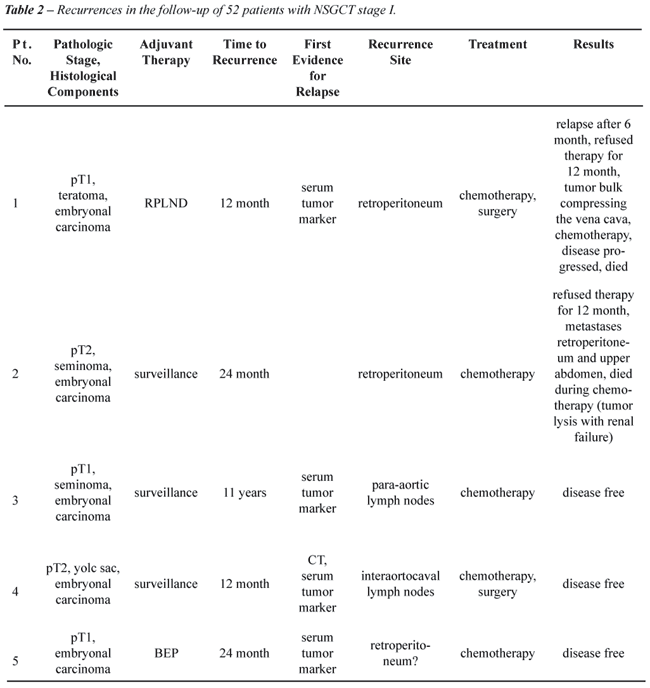
Two of the 52 patients (3.8%) died related
to their underlying malignancy (Table-2).
As regards RPLND - Six patients from the
RPLND group (n = 7) were disease free and well at the time of evaluation.
Five of them had a pT1 and the other a pT2 tumor. The relapsed patient
who had a pT1 tumor with teratoma and embryonal carcinoma was initially
treated by orchiectomy. Subsequently an adjuvant modified RPLND was performed.
Histological work-up did not show any pathologic lymph nodes. Twelve months
after the diagnosis a recurrence occurred revealed by serum tumor markers.
Initially, the patient refused further imaging and therapy. One year later,
he had a CT scan showing a compression of the vena cava with a large retroperitoneal
mass. Chemotherapeutic treatment (cisplatin, etoposide, ifosfamid) was
started and a secondary RPLND was performed after completing this therapy.
The histological workup revealed mature teratoma. Six months later elevated
serum tumor markers again indicated tumor recurrence again. Because the
CT scan did not show any pathology, biopsies of the remaining testis were
performed that histologically showed only atrophic parenchyma without
malignancy. However, another 2 months later the abdominal CT scan showed
multiple liver metastases. A high dose chemotherapy (POMP-ACE: prednisone,
vincristine, methotrexate, mercaptopurine, adriamycin, cyclophosphamide,
etoposide) followed but tumor mass could not be downsized. The patient
refused any further therapy and died of his disease a few months later.
Surveillance - Six of our patients entered
a surveillance protocol. Three of them relapsed. Histological evaluation
after orchiectomy had shown a pT 2 tumor with seminomatous and embryonal
cell components in one of the relapsed patients. Despite regular follow-up,
two years after primary diagnosis, retroperitoneal recurrence of the tumor
was detected when the patient complained of flank pain and weight loss.
Tumor markers were increased. At first, the patient refused any further
imaging and therapy. After one year, the CT scan showed multiple metastases
in the retroperitoneum and upper abdomen. Due to renal insuffiency a carboplatin
(instead of cisplatin) based chemotherapy was initiated. Nevertheless,
a few days later the patient died of complications caused by the chemotherapy
with renal failure and tumor lysis syndrome.
Relapse of the tumor was recorded in another
two patients (Table-2). The first patient had been managed in a surveillance
strategy after orchiectomy for a pT1 tumor with components of embryonal
carcinoma (predominant) and seminoma that relapsed at 11 years after initial
treatment. Serum tumor markers were prominent in the follow-up. CT scan
showed enlarged para-aortic lymph nodes. After chemotherapy treatment
with cisplatin, etoposide and bleomycin he is disease-free up to now at
a follow-up of 6 years since diagnosis.
The second patient presented with a large
bulk of interaortocaval lymph node metastases and elevated serum tumor
markers (AFP and ß-HCG) one year after primary diagnosis of a nonseminomatous
germ cell tumor with components of yolk sac tumor and predominant embryonal
carcinoma. The relapse was treated with three courses of bleomycin, etoposide,
and cisplatin (BEP) and residual masses were removed by secondary RPLND.
Histological examination revealed mature teratoma tissue. Seven years
postoperatively the patient remained disease free.
Chemotherapy – Thirty-nine patients
underwent adjuvant chemotherapy after primary orchiectomy. One of them
relapsed.
The contralateral biopsy of the patient
performed at the time of orchiectomy of a pT1 tumor showed intratubular
germ cell neoplasia (TIN). Radiation treatment of the remaining testis
with a total dose of 20 Gy followed. One year later another biopsy of
the testis did not show any malignancy. Another year later, serum tumor
marker increased. The CT scan did not detect any pathologically enlarged
lymph nodes. A further biopsy of the testis followed. The histological
workup again showed a TIN. Assuming that it would be a generalized problem
rather than a local tumor growth, the patient was treated with two courses
of chemotherapy (BEP) and we included him in the recurrence group. He
remained disease free at a follow-up of 5 years (Table-2, Pt. 5). Taken
together, the incidence of TIN of the contralateral testis in our group
of patients was 3% (1 of 33 biopsies, others refused biopsy or orchiectomy
was performed in an external hospital without obtaining a biopsy). Our
patient’s cohort included 20 patients with one or more risk factors
(embryonal carcinoma and/or vascular invasion) and 19 without.
COMMENTS
The
incidence of testicular cancer has been increasing in recent years (5).
The optimal management of these patients was considered controversial
until the European Germ Cell Cancer Consensus Group primarily established
clearly defined diagnostic and therapeutic strategies in 2004 and then
updated in 2008 (3). Recommendations for active surveillance in patients
with low recurrence risk (without evidence of vascular invasion, a predominant
component of embryonal cell carcinoma or undifferentiated element) are
uniformly accepted as long as the patients compliance is in line with
the repeated diagnostic testing to detect relapses at an early stage (3,6).
However, for patients who cannot manage the psychological distress of
recurrence rates between 14% and 22 % (1) or those not candidates for
surveillance for other reasons the adjuvant management remains controversial.
Chemotherapy or retroperitoneal lymph node dissection (RPLND) are possible
options. There is no consensus about, which strategy should be preferred.
Krege et al. suggest chemotherapy with two cycles of BEP (3), whereas
Stephenson and Sheinfeld prefer RPLND in these patients (6). In cases
with a high risk of recurrence the same recommendation dilemma exists.
Because of relapse rates up to 50%, most authors suggest an adjuvant treatment
(7). However, some authors propose active surveillance even in this patients
group (8).
The major advantage of the surveillance
strategy is that up to 86% of the patients do not need any further treatment.
Furthermore, relapses can be cured in nearly 100% of cases. However, the
problem might be the patient’s compliance and the psychological
distress of the recurrence rates with a more intensive chemotherapy in
case of relapse. A strict follow-up scheme and a compliant patient are
mandatory otherwise an adjuvant treatment has to be recommended.
Advantages of RPLND over chemotherapy are
the surgical removal of chemoresistant teratoma, as its biological potential
is unpredictable, and, furthermore, the lower long-term toxicity (6).
Relapses can be cured with chemotherapy in nearly all cases. Otherwise,
patients will be exposed to surgery-associated side effects. The retrograde
ejaculation with consecutive potential infertility based on surgical damage
of the postganglionic sympathetic fibers (Th 12-L 3) forming the hypogastric
plexus near the aortic bifurcation is an essential problem for young patients.
However, even selective RPLND has significantly reduced but not eliminated
ejaculatory problems (1).
The major disadvantage of adjuvant chemotherapy
is potential overtreatment in up to 70% of unselected Stage I patients.
Short-term side effects (Nausea, vomiting) can be managed with potent
clinical agents and leucocytopeny and thrombozytopeny are usually mild.
Long-term side effects are a possibly decreased fertility and the development
of secondary malignancies, as seen in high dose chemotherapy with etoposide
(9). Concerning fertility, it has to be considered that in patients with
malignant germ cell tumors, semen quality of the unaffected contralateral
testes is significantly worse than in the healthy male (10) even before
any chemotherapeutic treatment was applied. Furthermore, whether spermatogenesis
is affected irreversibly by chemotherapy is determined by the cumulative
dose of cisplatin. Pont and co-workers point out that the dose of even
four courses of BEP is unlikely to cause any irreversible damage as the
cisplatin dose generally remains below the critical dose of 400 mg/m2
(11). Secondary malignancies are potentially caused by etoposide. The
risk should be low because the critical dose is 1500-2000 mg/m2
and the applied dose in adjuvant BEP will generally remain below (12).
Furthermore, platin based therapy increases the risk of cardiovascular
events (13). The above-mentioned studies only included patients with three
or more courses and late effects seem to be dose dependant.
Considering these various factors, independently
of the therapeutic regimen cure rates up to 99% (3) can be reached in
patients with NSGCC. The decision about optimal adjuvant treatment after
orchiectomy has to include risk factors as well as the patient’s
wishes and psychological situation and includes surveillance, adjuvant
chemotherapy and RPLND.
To evaluate the outcome depending on the
treatment strategies and risk factors of our own patients with NSGCT Stage
I we retrospectively evaluated patients treated in our department between
1989 and 2003. Our preferred adjuvant modality was a chemotherapeutical
treatment with two courses of BEP or ifosfamide instead of bleomycin in
case of prior lung problems, accepting a potentially overtreatment in
up to 50% of the cases but with very low recurrence rates (3). The minimal
follow-up of the patients was defined as at least 2 years because the
majority of relapses will occur within this period (14,15).
With respect to the low patient’s
number and the inhomogeneous group the cancer related mortality of the
included 52 patients was 4% and comparable with the data obtained from
the literature (16). All the patients relapsed in the retroperitoneum,
independently from the chosen adjuvant modality.
Surveillance
Group
Three out of six patients managed with a
surveillance strategy after orchiectomy relapsed. Data published in the
literature ranged from 30 - 75% (3,14,17) depending on risk factors. Whether
adjuvant therapy was not recommended, or the patients primarily decided
to active surveillance, or the concerned patients refused any further
therapy, remains unclear from the retrospective evaluation of the records.
However, all of our relapsed patients had one or two risk factors for
developing metastatic disease, questioning the chosen strategy in these
patients retrospectively. In two cases embryonal carcinoma was the dominating
histological feature in the ablated testes in addition to vascular invasion
of the tumor, including the patients retrospectively in the “high
risk” group. The other patient did not have any vascular invasion
but primarily rather embryonal carcinoma in the resected tumor. Time to
recurrence was 1, 2 and 11 years, respectively. There was one tumor related
death in these 6 patients on surveillance. At the point of recurrence,
the respective patient foremost refused any further diagnosing and therapy
(Table-2, Pt. 2), presuming that he did not show appropriate compliance
to the primarily chosen surveillance strategy. In previous studies the
rate was between 1, 2 and 2.8% (8,17). The high value in our group might
be explained by the low number of patients included in this evaluation.
After initiating an intensified chemotherapy one year after the metastatic
spread the patient died because of chemotherapeutic induced side effects.
From the patients under surveillance which
did not relapse one was “high risk” (embryonal carcinoma)
and the other two were “low risk” cases (seminoma and embryonal
carcinoma and seminoma, yolk sac tumor and embryonal carcinoma respectively,
both with seminoma being the predominant component).
RPLND
Even though it is uncommon, one of our patients
treated with RPLND after primary orchiectomy relapsed. Unfortunately,
the patient refused any further imaging and therapy after suspicion of
recurrence and the large retroperitoneal bulk made it difficult to evaluate
the site of relapse. Therefore, it was impossible to assess whether it
was an infield recurrence with lymphatic tissue left behind during the
primary RPLND or an outside the border of the primary RPLND recurrence,
as has also been described by other groups (18). The relapse rate after
RPLND reported in the literature was between 5.8 - 21% (18,19). As seen
from Table-2 (Pt. 1) the affected patient, although showing a stage pT1,
belonged to the high-risk group as the tumor showed embryonal carcinoma
as predominating histological component. Although intensified chemotherapeutic
treatment was initiated, the patient died of tumor progression.
Chemotherapy
One of the 39 patients (2.5%) treated with
adjuvant chemotherapy relapsed. He suffered from a pT1 teratocarcinoma.
Therefore, he initially did not have any risk factors for developing metastatic
disease. Additionally, the histological workup showed a TIN of the contralateral
testis. He was treated with two courses BEP and a radiation therapy was
applied to the remaining testis. Two years later tumor marker increased
but imaging did not show enlarged lymph nodes. Another therapy with two
courses BEP was given. The patient has remained disease free to date.
Comparably, formerly published studies showed a mortality of patients
with NSGCT I treated with CTX between 0 and 4% (9,20,21). Relapse rates
between 0 and 7% were reported (9,20,21). All these studies administered
chemotherapeutic treatment only in high risk patients. Our patient cohort
included 20 patients with one or more risk factors (embryonal carcinoma
and/or vascular invasion) and 19 without. Retrospectively, most of the
patients of the low-risk group were overtreated.
Limitations of the study - The indication
for the particularly chosen treatment strategy could not be determined
from the retrospectively assessed data. The reason for the inhomogeneous
groups remains unclear and results in small numbers of patients especially
in the surveillance and RPLND group. Small numbers can affect the reliability
and confidentiality of results.
Rate is likely to be imprecise and the comparability
of percentages is limited. Nevertheless, we attempted to include the data
in this context and tied to discuss the results with respect to the low
patient’s number.
CONCLUSION AND CRITICAL REVIEW
The
results of the evaluation of 52 own patients with NSGCT I treated with
different adjuvant modalities were comparable with those obtained in the
literature. All relapsed patients from the surveillance group had at least
one risk factor for developing metastatic disease, presuming them to better
candidates for adjuvant chemotherapy. One of these patients seemed to
be fairly incompliant and was not a candidate for this follow up scheme
retrospectively. Nevertheless, although the treatment strategies for our
patients with NSGCT Stage I were highly inconsistent during the chosen
observation period of 24 years, neither relapse rates nor mortality were
mainly affected.
Considering all the factors involved, the
decision for the correct adjuvant approach in patients with stage I nonseminomatous
germ cell tumors should include risk factors for developing metastatic
disease as well as patient related factors. Furthermore, individual clinical
expertise should be considered in the decision. Summarizing the results
in line with recent data from the literature, patients with NSGCT I should
be treated following the recommendations of the European Germ Cell Cancer
Consensus Group (3) avoiding an inhomogeneous therapeutic regimen and
providing the optimal treatment for every single patient.
CONFLICT OF INTEREST
None declared.
REFERENCES
- Albers P, Siener R, Kliesch S, Weissbach L, Krege S, Sparwasser C, et al.: Risk factors for relapse in clinical stage I nonseminomatous testicular germ cell tumors: results of the German Testicular Cancer Study Group Trial. J Clin Oncol. 2003; 21: 1505-12.
- Spermon JR, Roeleveld TA, van der Poel HG, Hulsbergen-van de Kaa CA, Ten Bokkel Huinink WW, van de Vijver M, et al.: Comparison of surveillance and retroperitoneal lymph node dissection in Stage I nonseminomatous germ cell tumors. Urology. 2002;59: 923-9.
- Krege S, Beyer J, Souchon R, Albers P, Albrecht W, Algaba F, et al.: European consensus conference on diagnosis and treatment of germ cell cancer: a report of the second meeting of the European Germ Cell Cancer Consensus group (EGCCCG): part I. Eur Urol. 2008; 53: 478-96.
- Fosså SD, Moynihan C, Serbouti S: Patients’ and doctors’ perception of long-term morbidity in patients with testicular cancer clinical stage I. A descriptive pilot study.Support Care Cancer. 1996; 4: 118-28.
- Bray F, Richiardi L, Ekbom A, Forman D, Pukkala E, Cuninkova M, et al.: Do testicular seminoma and nonseminoma share the same etiology? Evidence from an age-period-cohort analysis of incidence trends in eight European countries. Cancer Epidemiol Biomarkers Prev. 2006; 15: 652-8.
- Stephenson AJ, Sheinfeld J: Management of patients with low-stage nonseminomatous germ cell testicular cancer. Curr Treat Options Oncol. 2005; 6: 367-77.
- Böhlen D, Borner M, Sonntag RW, Fey MF, Studer UE: Long-term results following adjuvant chemotherapy in patients with clinical stage I testicular nonseminomatous malignant germ cell tumors with high risk factors. J Urol. 1999; 161: 1148-52.
- Colls BM, Harvey VJ, Skelton L, Frampton CM, Thompson PI, Bennett M, et al.: Late results of surveillance of clinical stage I nonseminoma germ cell testicular tumours: 17 years’ experience in a national study in New Zealand. BJU Int. 1999; 83: 76-82.
- Chevreau C, Mazerolles C, Soulié M, Gaspard MH, Mourey L, Bujan L, et al.: Long-term efficacy of two cycles of BEP regimen in high-risk stage I nonseminomatous testicular germ cell tumors with embryonal carcinoma and/or vascular invasion. Eur Urol. 2004; 46: 209-14; discussion 214-5.
- Dieckmann KP, Linke J, Pichlmeier U, Kulejewski M, Loy V; German Testicular Cancer Study Group. Spermatogenesis in the contralateral testis of patients with testicular germ cell cancer: histological evaluation of testicular biopsies and a comparison with healthy males. BJU Int. 2007; 99: 1079-85.
- Pont J, Albrecht W: Fertility after chemotherapy for testicular germ cell cancer. Fertil Steril. 1997; 68: 1-5.
- Bokemeyer C, Schmoll HJ: Treatment of testicular cancer and the development of secondary malignancies. J Clin Oncol. 1995; 13: 283-92.
- van den Belt-Dusebout AW, Nuver J, de Wit R, Gietema JA, ten Bokkel Huinink WW, Rodrigus PT, et al.: Long-term risk of cardiovascular disease in 5-year survivors of testicular cancer. J Clin Oncol. 2006; 24: 467-75.
- Divrik RT, Akdogan B, Ozen H, Zorlu F: Outcomes of surveillance protocol of clinical stage I nonseminomatous germ cell tumors-is shift to risk adapted policy justified? J Urol. 2006; 176: 1424-29; discussion 1429-30.
- Klepp O, Dahl O, Flodgren P, Stierner U, Olsson AM, Oldbring J, et al.: Risk-adapted treatment of clinical stage 1 non-seminoma testis cancer. Eur J Cancer. 1997; 33: 1038-44.
- van der Poel HG, Sedelaar JP, Debruyne FM, Witjes JA: Recurrence of germ cell tumor after orchiectomy. Urology. 2000; 56: 467-73.
- Hendry WF, Norman A, Nicholls J, Dearnaley DP, Peckham MJ, Horwich A: Abdominal relapse in stage 1 nonseminomatous germ cell tumours of the testis managed by surveillance or with adjuvant chemotherapy. BJU Int. 2000; 86: 89-93.
- Heidenreich A, Albers P, Hartmann M, Kliesch S, Kohrmann KU, Krege S, et al.: Complications of primary nerve sparing retroperitoneal lymph node dissection for clinical stage I nonseminomatous germ cell tumors of the testis: experience of the German Testicular Cancer Study Group. J Urol. 2003; 169: 1710-4.
- Stephenson AJ, Bosl GJ, Bajorin DF, Stasi J, Motzer RJ, Sheinfeld J: Retroperitoneal lymph node dissection in patients with low stage testicular cancer with embryonal carcinoma predominance and/or lymphovascular invasion. J Urol. 2005; 174: 557-60; discussion 560.
- Oliver RT, Ong J, Shamash J, Ravi R, Nagund V, Harper P, et al.: Long-term follow-up of Anglian Germ Cell Cancer Group surveillance versus patients with Stage 1 nonseminoma treated with adjuvant chemotherapy. Urology. 2004; 63: 556-61.
- Pont J, Albrecht W, Postner G, Sellner F, Angel K, Höltl W: Adjuvant chemotherapy for high-risk clinical stage I nonseminomatous testicular germ cell cancer: long-term results of a prospective trial. J Clin Oncol. 1996; 14: 441-8.
____________________
Accepted after revision:
August 14, 2008
________________________
Correspondence address:
Dr. Sandra Seseke
Department of Urology
Georg-August-University
Robert-Koch-Strasse 40
37075 Göttingen, Germany
Fax: + 0049 551-396165
E-mail: srebman@gwdg.de
EDITORIAL COMMENT
Overall, the paper lacks strength due to the small number of patients in the RPLND and surveillance arms. In the introduction it is stated that “in patients with reservations to surveillance, adjuvant chemotherapy is the treatment of choice”. In my opinion this is not true. Furthermore, in the discussion it states that “chemotherapy or RPLND are possible options”. Overall there is not survival difference between any of the 3 modalities and RPLND is curable in high risk patients.
Dr.
S. D. Beck
Department of Urology and Oncology
Indiana University Medical Center
Indianapolis, Indiana, USA
E-mail: sdwbeck@iupui.edu
EDITORIAL COMMENT
The
introduction of cisplatin-based combination chemotherapy has revolutionized
the treatment of metastatic testicular cancer. Owing to the high success
rate in the salvage of disseminated cancer, it has become reasonable to
argue for managing clinical Stage I nonseminomatous germ cell testicular
tumors (CS I NSGCTT) patients with orchiectomy alone followed by surveillance.
Patients, who relapse are treated with systemic chemotherapy, whereas
those, who do not relapse, are spared unnecessary treatment.
The surveillance after orchiectomy alone
has gained a lot of popularity in the management of CS I NSGCTT. Preliminary
results were enthusiastic, but critical voices have been raised against
general use of this option as a routine management. With longer observation,
the relapse rate has been found to increase to 25 % or more after orchiectomy.
Recent investigations have focused on determining the factors that identify
a group of patients at high risk of the relapse, who might therefore benefit
from a program other than surveillance.
The optimal management of CS I NSGCTT patients
after an orchiectomy has been controversial for several decades, because
of the difficulty of distinguishing true Stage I patients from those with
occult retroperitoneal and distant metastases. Over the last 20 years,
a surveillance strategy has been in practice at various centers to save
patients in Stage I from unnecessary treatment-related morbidity. A number
of primary tumor prognostic factors have been discovered that may be useful
in stratifying CS I patients as to their likelihood of harboring occult
disease. Up to 30 % of CS I NSGCTT patients have subclinical metastases
and will relapse if surveillance alone is applied after orchiectomy.
The utility of vascular invasion (venous
and lymphatic invasion) as a prognostic marker in CS I NSGCTT was first
recognized in the 1980`s and during the years it became the main predictor
of relapse in CS I NSGCTT managed by surveillance. Importance of embryonal
carcinoma as a prognostic factor in low stage NSGCTT was discovered when
surveillance studies were analyzed for relapse factors. Therefore, embryonal
carcinoma is extremely important as a prognostic marker for occult disease
in CS I NSGCTT. The presence of teratoma elements in testicular germ cell
tumors has been known to have a favorable impact on prognosis. In contemporary
era of prognostic factors in CS I NSGCTT, the presence of teratoma lessens
the likelihood of occult disease. Teratomatous elements in the orchiectomy
specimen predict for retroperitoneal teratoma, therefore primary RPLND
in CS I NSGCTT patients was recommended for cases with the finding of
teratoma in the primary tumor. Patients can be stratified according to
risk factors into different prognostic groups with different recurrence
rates. According to EAU guidelines on testicular cancer and to reports
of the European Germ Cell Cancer Consensus Group risk-adapted treatment
is recommended as treatment of first choice in CS I NSGCTT patients, however,
there is no worldwide consensus on the management of high-risk CS I NSGCTT.
High risk patients, with vascular invasion are recommended to undergo
adjuvant chemotherapy with two cycles of BEP regimen, intermediate risk
patients are recommended to undergo primary RPLND and low risk patients,
without vascular invasion are recommended to undergo surveillance.
It is generally accepted that surveillance
is appropriate for patients with a low risk of relapse (without vascular
invasion), however, there is no universally accepted standard protocol
for surveillance of patients with CS I NSGCTT. The main advantage
of surveillance being that 70-86 % of patients do not need any further
treatment after orchiectomy. The disadvantages are the psychological and
practical difficulties of intense follow-up for some patients.
The interesting article by Seseke et al.
describes long-term experiences with CS I NSGCTT. Their information that
vascular invasion is the most important prognostic indicator for a risk
of developing metastatic disease is correct, but percentage up to 48%
is too high. Also the results of the authors that patients managed with
a surveillance strategy after orchiectomy showed a relapse rate 50 % is
too high. Therefore, the results of authors are not comparable with those
obtained in literature because of small number error causes (inhomogeneous
number of patients treated by particular therapeutic modalities).
REFERENCES
- Albers P, Albrecht W, Algaba F, Bokemeyer C, Cohn-Cedermark G, Horwich A, et al.: EAU Guidelines on Testicular Cancer. EAU, Arnhem 2008. access in: http://www.uroweb.org/fileadmin/tx_eauguidelines/09%20Testicular%20Cancer.pdf
- Krege S, Beyer J, Souchon R, Albers P, Albrecht W, Algaba F, et al.: European consensus conference on diagnosis and treatment of germ cell cancer: a report of the second meeting of the European Germ Cell Cancer Consensus group (EGCCCG): part I.Eur Urol. 2008; 53: 478-96.
- Ondrus D, Ondrusova M, Hornak M, Matoska J: Nonseminomatous germ cell testicular tumors clinical stage I: differentiated therapeutic approach in comparison with therapeutic approach using surveillance strategy only. Neoplasma. 2007; 54: 437-42.
Dr.
Dalibor Ondrus
Department of Oncology
Comenius University Medical School
St. Elisabeth Cancer Institute
Bratislava, Slovak Republic
E-mail dondrus@ousa.sk