BOTULINUM
TOXIN A IN THE TREATMENT OF SPINAL CORD INJURY PATIENTS WITH REFRACTORY
NEUROGENIC DETRUSOR OVERACTIVITY
(
Download pdf )
RONALDO A. ALVARES, JOSE A. F. SILVA, ANDRE L. BARBOZA, RAPHAEL T. M. MONTEIRO
SARAH Network of Rehabilitation Hospitals, Belo Horizonte Unit, Belo Horizonte, MG, Brazil
Neurourology
Vol. 36 (6): 732-737, November - December, 2010
doi: 10.1590/S1677-55382010000600012
ABSTRACT
Purpose:
To evaluate the efficacy of botulinum toxin type A injections in the detrusor
muscle in patients with spinal cord injury and urinary incontinence due
to detrusor overactivity and refractory to anticholinergic agents.
Materials and Methods: We prospectively
evaluated 22 patients with spinal cord injuries, whose bladders were emptied
by intermittent catheterization. All patients had detrusor overactivity
and urinary incontinence that proved difficult to treat, despite using
high doses of two different anticholinergics. The pre-treatment assessment
included a complete urodynamic study and ultrasonography of the kidneys
and urinary tract. A one-month follow-up was completed with urodynamic
evaluation and the clinical response was evaluated through outpatient
consultations and telephone contact.
Results: After the procedure, the maximum
cystometric capacity and the bladder reflex volume increased, whereas
the maximum detrusor pressure and compliance decreased. The mean duration
of continence was 7 ± 7 months. In 18 patients (81.8%), it was
necessary to administer anticholinergics to achieve continence. Five patients
(22.7%) had indication of reinjection, and augmentation cystoplasty was
indicated in 9 patients (40.9%).
Conclusion: The use of botulinum toxin in
the treatment of neurogenic detrusor overactivity refractory to anticholinergics
is an option before more invasive treatments, such as augmentation cystoplasty,
are attempted. In our study as well as in the literature, there was improvement
in most urodynamic parameters. Overall, 40.9% of patients underwent augmentation
cystoplasty and 81.8% of patients needed anticholinergic agents to reach
urinary continence. Further studies are necessary to improve the procedure
and to achieve better clinical results.
Key
words: neurogenic bladder; spinal cord injury; botulinum toxin
A, anticholinergic refractory
Int Braz J Urol. 2010; 36: 732-7
INTRODUCTION
Suprasacral
spinal cord lesions induce neurogenic detrusor overactivity and concurrent
detrusor sphincter dyssynergia that impairs the storage and emptying functions
of the urinary bladder. The subsequent high intravesical pressure leads
to reduced bladder capacity and incontinence and induces potential structural
damage to the bladder wall and upper urinary tract. Current treatment
options rely first on emptying the bladder by clean intermittent catheterization
and on oral anticholinergic medication to reduce the bladder pressure
and increase bladder capacity (1). In the case of a lack of efficacy or
severe side effects from the oral anticholinergic agents, surgical procedures
such as augmentation cystoplasty appear to be effective long term solutions
for many patients (2). However, due to its invasive nature, surgery is
only considered when conservative treatment has failed or is not tolerated.
Botulinum toxin was described by Van Ermengem (3) in 1897, and it has
evolved from a potent biologic poison to a versatile clinical tool with
an expanding list of uses. Botulinum toxin exists as seven serotypes,
designated A, B, C, D, E, F, and G (4). At present, serotypes A and B
are available for clinical use. Injected into muscle, botulinum toxin
causes flaccid paralysis by inhibiting the release of acetylcholine at
the presynaptic cholinergic junction. The clinical effect of botulinum
toxin is transient and dose related. In smooth muscles, Smith et al. (5)
have demonstrated the effect of botulinum toxin type A on acetylcholine
and norepinephrine release from the bladder and urethra, respectively.
The botulinum toxin type A injection into
the detrusor muscle for treatment of neurogenic detrusor overactivity
was introduced in 2000. This therapy is a minimally invasive treatment
option positioned between oral anticholinergic treatment that was ineffective
or not tolerated and invasive surgery (6). Its safety and efficacy have
been confirmed in a randomized placebo-controlled study (7). Several studies
have evaluated the use of botulinum toxin type A injections into the detrusor
muscle of spinal cord injury patients in an attempt to reduce neurogenic
detrusor overactivity, increase bladder capacity, and reduce urge incontinence
(6,8). In our practice, we have observed differing clinical responses
following the use of this drug, despite the improvements in most urodynamic
parameters.
We evaluated the effect of botulinum-A toxin injection in the detrusor
overactivity in spinal cord injury patients, clinical response correlation
and implications for other treatments.
MATERIALS AND METHODS
A
total of 22 patients with spinal cord injuries (16 traumatic patients
and 6 non-traumatic patients), whose bladders were emptied by intermittent
catheterization, had detrusor overactivity and urinary incontinence that
proved difficult to treat, despite using high doses of two different anticholinergics.
These patients were included in our prospective study between January
2006 and January 2009.
All methods and definitions were based on the standardization of terminology
of lower urinary tract function (9). The study was done in accordance
with the Ethics Committee of our institution. Written informed consent
was obtained from all patients.
Patient evaluations included a complete
medical history, physical examination, ultrasonography of the kidneys
and urinary tract and an urodynamics assessment (Multichannel urodynamics
studies - Medtronic Duet systems, version 8.20, Minneapolis, MN, USA)
before botulinum-A toxin injection. Maximum cystometric bladder capacity
corresponded to the volume at which involuntary voiding occurred, urinary
loss started or filling was stopped. The urodynamic parameters measured
included reflex volume, maximum detrusor pressure during voiding, bladder
compliance, and maximum cystometric bladder capacity. Reflex volume is
the infused volume that induces the first detrusor contraction. Bladder
compliance is calculated by the change in volume divided by the change
in detrusor pressure.
All procedures were done on an outpatient
basis using general anesthesia. Perioperative antibiotics were administered
orally for seven days, according to urine culture, and the botulinum toxin
A injection performed on the fifth day of drug administration. All patients
exhibited bacteriuria. Botulinum-A toxin (Alergan) was diluted in sterile
normal saline to a final concentration of 10 units/mL. Using a Storz cystoscope
19 F and 23 gauge needle, a total of 300 IU (30 mL) was injected at 30
detrusor muscle sites sparing the trigone as described by Schurch et al.
(6). Patients were instructed to progressively taper and then discontinue
their anticholinergic medications within the first 3 weeks following the
procedures. The response was considered effective when a patient sustained
4 months without urinary losses even while using anticholinergic agents.
A clinical and urodynamic follow-up was
obtained at 4 weeks after treatment. Subsequently, the patients returned
to our practice if urinary losses reoccurred. Patients who did not return
until January 2009 were contacted by telephone to assess their responses
to the botulinum toxin. Further injection of toxin was indicated for patients
who remained continent for 4 months or more. Augmentation cystoplasty
was indicated for non-responsive cases or those in which the effects lasted
less than 4 months.
RESULTS
A
total of 22 patients, 19 males and 3 females aged to 13 to 61 years (33.6
± 13.6) with refractory neurogenic incontinence participated in
our study. All patients had urinary incontinence that was refractory to
anticholinergic treatment (high doses of two anticholinergic drugs). According
to impairment 16 were paraplegic, six tetraplegic.
All procedures were performed with general
anesthesia and were well tolerated. There were no acute complications
related to the injections, such as gross hematuria, injury to adjacent
structures, autonomic dysreflexia, or urinary tract infection. No complications
possibly related to toxin, such as dysphagia, diplopia, or general paralysis
of remote musculature occurred.
The ultrasonography of the urinary tract showed 15 patients with normal
results (68.2%), 5 who had hydronephrosis (22.7%), 1 with nephropathy
(4.5%) and 1 with a parapielic cyst (4.5%). Of the 15 patients with normal
exams, 9 obtained good responses, and the 5 subjects with hydronephrosis
presented only 1 patient with a good response. The patient with nephropathy
did not respond and the patient with a parapielic cyst showed a good response.
Thirteen patients (59%) were completely continent, including two patients
whose clinical responses lasted only two months and were considered not
effective. At the four-week follow-up, four patients with good responses
had discontinued anticholinergic medications. Among the continent patients,
seven needed anticholinergic agents to maintain continence. However, the
amount of anticholinergic medication that they needed to become continent
was less than their pre-botulinum treatment dosages. Eleven patients were
incontinent despite baseline anticholinergic agent therapy and were considered
failures. Nine patients (40.9%) underwent augmentation cystoplasty.
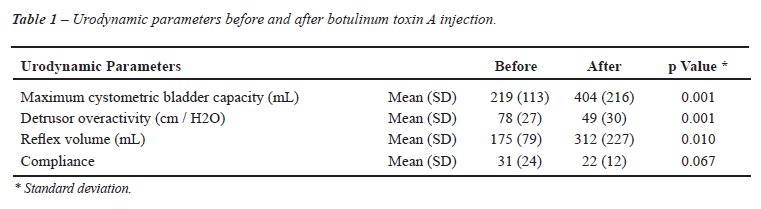
At the 4-week follow-up, urodynamic evaluation revealed increases in mean
reflex volumes from 175 ± 79 mL to 312 ± 227 mL (P = 0.010)
and mean maximum cystometric bladder capacity from 219 ± 113 mL
to 404 ± 216 mL (p = 0.001). The compliance decreased from 30.6
± 23.8 mL/cm H2O to 22.2 ± 11.9 mL/cm H2O (p = 0.067). Detrusor
overactivity decreased from 78 ± 27 cm H2O to 49 ± 30 cm
H2O (Table-1). Nine patients remained incontinent at one month following
treatment, despite the fact that urinary losses had decreased, and these
patients experienced improvements in all urodynamic parameters. Nine patients
remained continent for more than six months. Therefore, we believe that
the treatment was not effective in 11 patients (nine with incontinence
and two with only short-lived responses).
COMMENTS
Botox
injections into the detrusor provide clinically significant improvement
in patients with neurogenic detrusor overactivity refractory to antimuscarinics
and are very well tolerated (7). In our study, we observed continence
during a period of more than 4 months in 50% of patients undergoing treatment,
while 81.8% of patients continued anticholinergic therapies to achieve
continence. In other studies with similar populations of patients, the
percentage of continents after toxin injection ranged from 42-87% and
28-58% discontinued use of anticholinergics (10).
In our study, we observed decreased of bladder
compliance in urodynamic parameters after botulinum toxin injection, in
contrast to other reports in the literature (10). In our opinion, this
could occur because some cases have low rates of compliance associated
with overactivity not previously identified. This may bias results, as
treating the neurogenic detrusor overactivity can not only lead to gains
in bladder capacity function but also to a loss of compliance that may
be more evident in the urodynamic study.
There are some reported limitations with
respect to botulinum A toxin injections into the detrusor. Most studies,
as well as our own, were small-scale studies enrolling fewer than 50 patients.
The doses of anticholinergics considered high in patients who are refractory
to medical treatment are not well defined. We believe that some cases
could also benefit from higher doses of these drugs. In our study, we
included only cases that used at least two anticholinergic agents in high
doses with no satisfactory outcomes. Those cases may have a more difficult
clinical solution.
Although there is no consensus regarding
the optimal dose of botulinum toxin or a standard injection procedure
in the detrusor muscle, most studies have used the technique described
by Schurch et al. at a dose of 300 IU (6,11). Some studies such as Kuo
et al. have showed similar responses at doses of 200 IU. However, this
study was conducted in patients with neurogenic detrusor overactivity
and idiopathic detrusor overactivity (12). Recently Gomes et al. suggested
that different pharmaceutical formulations of botulinum toxin A might
influence the final results. Although further evaluation will be required
to assess these formulations (13). Regarding the injection technique,
it is important to consider that the neurogenic bladder wall has varying
levels of thickness. This may lead to inadvertent injection of the medication
outside the bladder wall, even in procedures performed by the same surgeon
using standard endoscopy materials. Additionally, the injection can often
occur in a subendothelial region. The Kuo study showed that there was
no difference in response in this instance, but the patient cohort was
of limited size (14). In our study, as well as others, we recommended
botulinum toxin injection in accordance with the clinical response to
treatment (incontinence despite anticholinergic in high doses) and urodynamic
results. Our results were not as satisfactory as other studies, probably
because of the fact that many of these patients presented bladders with
major structured deformities such as a large number of diverticula, low
capacity and significant changes in their shape. These bladder morphology
variations have been observed during the procedure as well as in cystography.
Currently, we are studying the role of bladder morphology in the light
of the results of botulinum toxin A injection into detrusor.
Despite the small number of patients in
our study, those with hydronephrosis experienced less satisfactory responses,
a finding that may help in identification of patients to be treated. We
have also compared the urodynamic parameters before and after botulinum
toxin A injection separately in patients who had good response and those
in which the response was not satisfactory (Table-2). We observed that
urodynamic parameters were similar before the procedure, although the
response was different in the two groups. This allows us to conclude that
urodynamic evaluation does not predict how will be the response to the
procedure.
We observed that 50% of patients had no
satisfactory responses to treatment as defined by sustained continence
for more than 4 months. Although we observed an improvement in most urodynamic
parameters of these patients, these improvements were not sufficient to
obtain an adequate bladder capacity to remain continent, or did not have
a satisfactory duration. This explains why nine patients underwent augmentation
cystoplasty. We need to define a more precise parameter for identifying
patients with neurogenic bladder dysfunction who would benefit from the
use of botulinum toxin, thereby avoiding treatment in some patients who
would be more appropriately treated with the augmentation cystoplasty.
Another factor we must consider is that the use of botulinum toxin on
neurogenic bladder dysfunction refractory to medical treatment is relatively
recent. As this kind of treatment has many unknowns, this may present
some difficulties in the light of patient acceptance, as it is not a definitive
treatment and requires regular injections. Also, note that most patients
require anticholinergics to achieve and maintain continence. We believe
that the effect of this therapy should last a least 4 months and that
the procedure should be performed up to 3 times a year. We believe that
a greater number of procedures per year would be impracticable, especially
for patients who require treatment for an indefinite period, but we also
agree that it is not a factor that contraindicates a new injection of
medication.
CONCLUSION
The use of botulinum toxin in the treatment of neurogenic detrusor overactivity refractory to anticholinergics is an option to consider before more invasive treatments, such as augmentation cystoplasty, are implemented. In our study as well as in the literature, there was improvement in most urodynamic parameters analyzed following botulinum toxin injection. Overall, 40.9% of patients underwent augmentation cystoplasty and 81.8% of patients continued to take anticholinergic agents to reach urinary continence. Further studies are necessary to improve the procedure and to achieve better clinical results.
CONFLICT OF INTEREST
None declared.
REFERENCES
- Abrams P, Larsson G, Chapple C, Wein AJ: Factors involved in the success of antimuscarinic treatment. BJU Int. 1999; 83 (Suppl 2):42-7.
- Chartier-Kastler EJ, Mongiat-Artus P, Bitker MO, Chancellor MB, Richard F, Denys P: Long-term results of augmentation cystoplasty in spinal cord injury patients. Spinal Cord. 2000; 38: 490-4.
- van Ermengem E: Classics in infectious diseases. A new anaerobic bacillus and its relation to botulism. E. van Ermengem. Originally published as “Ueber einen neuen anaëroben Bacillus und seine Beziehungen zum Botulismus” in Zeitschrift für Hygiene und Infektionskrankheiten 26: 1-56, 1897. Rev Infect Dis. 1979; 1: 701-19.
- Comella CL, Pullman SL: Botulinum toxins in neurological disease. Muscle Nerve. 2004; 29: 628-44.
- Smith CP, Franks ME, McNeil BK, Ghosh R, de Groat WC, Chancellor MB, et al.: Effect of botulinum toxin A on the autonomic nervous system of the rat lower urinary tract. J Urol. 2003; 169: 1896-900.
- Schurch B, Stöhrer M, Kramer G, Schmid DM, Gaul G, Hauri D: Botulinum-A toxin for treating detrusor hyperreflexia in spinal cord injured patients: a new alternative to anticholinergic drugs? Preliminary results. J Urol. 2000; 164: 692-7.
- Schurch B, de Sèze M, Denys P, Chartier-Kastler E, Haab F, Everaert K, et al.: Botulinum toxin type a is a safe and effective treatment for neurogenic urinary incontinence: results of a single treatment, randomized, placebo controlled 6-month study. J Urol. 2005; 174: 196-200.
- Schurch B, Denys P, Kozma CM, Reese PR, Slaton T, Barron RL: Botulinum toxin A improves the quality of life of patients with neurogenic urinary incontinence. Eur Urol. 2007; 52: 850-8.
- Abrams P, Cardozo L, Fall M, Griffiths D, Rosier P, Ulmsten U, et al.: The standardisation of terminology in lower urinary tract function: report from the standardisation sub-committee of the International Continence Society. Urology. 2003; 61: 37-49.
- Karsenty G, Denys P, Amarenco G, De Seze M, Gamé X, Haab F, et al.: Botulinum toxin A (Botox) intradetrusor injections in adults with neurogenic detrusor overactivity/neurogenic overactive bladder: a systematic literature review. Eur Urol. 2008; 53: 275-87.
- Rapp DE, Lucioni A, Bales GT: Botulinum toxin injection: a review of injection principles and protocols. Int Braz J Urol. 2007; 33: 132-41.
- Kuo HC: Urodynamic evidence of effectiveness of botulinum A toxin injection in treatment of detrusor overactivity refractory to anticholinergic agents. Urology. 2004; 63: 868-72.
- Gomes CM, de Castro Filho JE, Rejowski RF, Trigo-Rocha FE, Bruschini H, de Barros Filho TE, et al.: Experience with different botulinum toxins for the treatment of refractory neurogenic detrusor overactivity. Int Braz J Urol. 2010; 36: 66-74.
- Kuo HC: Will suburothelial injection of small dose of botulinum A toxin have similar therapeutic effects and less adverse events for refractory detrusor overactivity? Urology. 2006; 68: 993-7; discussion 997-8.
____________________
Accepted after revision:
June 23, 2010
_______________________
Correspondence address:
Dr. Ronaldo Alvarenga Álvares
Rede Sarah de Hospitais de Reabilitação
Av. Amazonas 5953, Gameleira
Belo Horizonte, MG, 30510-000,Brazil
E-mail: ronaldoalvares@sarah.br