TREATMENT
OF PATIENTS WITH SUPERFICIAL BLADDER CANCER STRATIFIED BY RISK GROUPS
TREATED WITH LYOPHILIZED MOREAU-RIO DE JANEIRO BCG STRAIN
(
Download pdf )
FRANCISCO P. FONSECA, WILSON BACHEGA JR, STÊNIO C. ZEQUI, ÁLVARO S. SARKIS, GUSTAVO GUIMARAES, ANTONIO V. M. PRIANTE, ADEMAR LOPES
Section of Urology, Department of Pelvic Surgery, Cancer Hospital, São Paulo, SP, Brazil
ABSTRACT
Introduction:
The Moreau-Rio de Janeiro BCG strain is considered the most effective
to stimulate immunologic activity in mice. The objective of this prospective
study was to evaluate BCG results for patients with superficial bladder
cancer stratified by risk groups.
Material and Methods: From April 1988 to
May 2000, 100 patients were treated by transurethral resection for bladder
tumor, followed by intravesical instillation of 40 mg BCG, with induction
and maintenance cycles. Fisher exact test and Chi-square test, with 95%
significance, were used to evaluate possible associations among variables.
The Kaplan-Meier method was used to evaluate the disease-free interval
and patients’ survival, while log-rank test was used to compare the
curves among the groups.
Results: The median follow-up was 69.3 months
and varied from 10 to 153 months. Overall recurrence and progression rates
were 55% and 13%, respectively. The medium time to recurrence was 9.4
months and to progression was 24.4 months. The cancer specific survive
was 90%.
Univariate analysis revealed that tumor
recurrence was significantly associated with weekly BCG failure (p=0.011),
multifocality (p=0.001), number of recurrences after primary therapy (p=0.001)
and the need to Mitomycin C instillation (p=0.001). However, no variable
was significantly associated with recurrence in multivariate analysis.
There were significant associations, in univariate analysis, between disease
progression and the following variables: tumor grade, weekly and 15-days
BCG failure, both as first line and second line therapy, recurrence and
need of Mitomycin C therapy. Independent variables to progression were
6.7 relative risk to weekly BCG failure, tumor grade and 15-days BCG (p=
0.08; CI=0.79-56.7), 2.4 (p= 0.11; CI=0.80-7.15) and 1.5 (p=0.23; CI=1.05-2.13),
respectively.
Patient stratification by risk groups were
able to predict progression (p=0.045), but not recurrence (p=0.311). Disease
progression rates were 3.2%, 12.2% e 25%, in low, intermediate and high
risk groups, respectively. The BCG administration was well tolerated,
and 21 patients (21%) didn’t present any side effects.
Conclusions: Intravesical instillation of
BCG was overall well tolerated. Adjuvant BCG didn’t decrease significantly
recurrence rates, and 16% of the patients underwent alternative therapy
with intravesical Mitomycin to prevent new recurrences. The risk group
classification was able to select patients with high risk to progression.
Tumor grade, BCG failure as first and second line therapies, were predictive
factors of poor prognosis. BCG of Moreau-Rio de Janeiro strain was well
tolerated, similar to other strains used in literature.
Key words:
bladder neoplasms; treatment; immunotherapy; BCG vaccine
Int Braz J Urol. 2002; 28: 426-36
INTRODUCTION
Transitional
cell carcinoma of the bladder is the 7th most common cancer affecting
men, and the 10th among women in Brazil (1). In USA, it is the 4th neoplasm
among men, and the 6th among women (2).
Transitional cell carcinoma of the bladder
presents initially in superficial stages in 70% of the cases, of which
30% are multiple tumors (3,4). Fifty to 75% of patients treated by endoscopic
resection of the bladder tumor present subsequent recurrences, and 10-20%
progress to invasive bladder cancer. Multiplicity is directly associated
to the possibility of tumoral recurrence. The risk of recurrence in patients
with solitary tumor is 46%, and with multiple tumors is 73%; the latter
generally present lower disease-free period (4,5).
Invasive carcinoma of the lamina propria
(T1) represents 30% of superficial bladder cancer cases. Among these,
approximately 50% are grade 2, and about 40% grade 3, according to Mostofi
classification (6). Patients with T1G3 have the worst prognosis, for they
present high risk of recurrence (50-80%) and disease progression (33%
to 48%, in 2-5 years of follow-up (3-5,7).
Several studies report correlation between
a high risk of tumoral progression and histopathological factors, including
grade 3 carcinomas over 3cm, carcinoma in situ associated with stage T1
with vascular and lymphatic invasion, multifocality, short time period
between recurrences, and those who remain presenting positive urinary
cytology after TURBT (4-8). Recently, a new classification of superficial
transitional cell carcinoma of the bladder, stratified by risk group of
tumoral progression, was proposed, based on prognostic factors (9-12).
In 1976, Morales et al. reported the intravesical
use of Calmette-Guérin bacillus for treating superficial carcinoma
of the bladder. The strain Moreau-Rio de Janeiro was considered the most
virulent among the 9 lyophilized BCG strains used in the world (5,7,8,14,15).
The aim of this prospective study was to
evaluate the outcomes of the use of BCG Moreau-Rio de Janeiro inpatients
with superficial cell carcinoma of the bladder, stratified by risk group.
MATERIALS AND METHODS
This
series is formed by 100 patients treated between April 1988 and May 2000.
All patients had superficial cell carcinoma of the bladder, histologically
classified as stage pTis, pTa, and pT1, according to pTNM classification,
and to WHO’s classification system (6).
The special physical examination was done
in men by rectal exam, to evaluate the prostate and presence of vesical
or pelvic palpable mass. For women the tumor was evaluated by vaginal
exam.
Pre-operative and follow-up endoscopic studies
of patients were performed with local anesthesia. Patients were told not
to empty the bladder before endoscopy. After urethral passage of the cystoscope,
the study was initiated by collecting urine for oncotic cytology. A 20
mL syringe was connected to the endoscope, through which was performed
urine barbotage, with successive movements of urine aspiration and injection,
5 times. The urine was collected in 50 mL recipients and immediately fixed
in 70% alcohol. Tumor and questionable urothelium regions, as characterized
by hyperemia and/or elevated surface, were submitted to cold biopsy. Tumors
were then drawn in cystoscopic forms, including localization, size, and
number of lesions.
During the pre-operative period, patients
were submitted to routine laboratory exams for clinical and anesthetic
risk assessment. As for imaging methods, all patients were submitted to
chest X-ray and abdominal and pelvic ultrasound; CT scan was indicated
only for selected cases, aiming to improve the definition of the clinical
stage.
Patients included in this study underwent
TURBT, and completed at least the first cycle of BCG. Patients with papillary
tumor in prostatic urethra and/or important LUTS were submitted to TUR
of prostate and bladder tumor at the same time. Patients maintained Owen
catheter with saline irrigation, until haematuria ceased. Most patients
were discharged on 2nd post-operative day, after removing the catheter.
At the ambulatory visit, we performed urine
analysis type I, with culture and oncotic cytology. Patients were suspected
to have CIS when cytological study was class V. In theses situations,
we performed a new cystoscopy, with random vesical biopsy to detect in
histological study the possible urothelial focus of CIS.
The age of studied patients ranged from
26 to 87 years, median 65 years, and mean 62.9 years. Regarding race,
there were 93 whites and 7 black patients. Eighty-one patients were male.
Fifty-five percent were smokers, and 40 (48.1%) have smoked for 10 to
30 years.
Stage pTa and pT1 were identified in 67%
and 33% of patients, respectively. Histopathologic grades G1, G2, and
G3, were diagnosed in 31, 50, and 19% of patients, respectively.
Time to disease progression in the post-operative
period was calculated from the initial haematuria date to the diagnosis,
and among the 66 patients presenting the disease for the first time, ranged
from less than 1 month to 60 months, median of 4 months. Among 34 patents
admitted to the hospital to treat recurrences, time has ranged from 3
months to 226 months, median of 74 months.
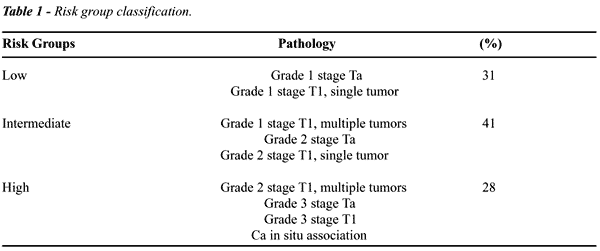
The distribution of patients classified
by risk groups, according to criteria established by Millan-Rodrigues
et al. (12), may be observed in Table-1.
Adjuvant
Therapy
Patients were treated after TURBT with lyophilized
BCG of Moreau-Rio de Janeiro strain, with 40mg (2x10⁸ colonies/units of
Mycobacterium bovis) in intravesical applications, beginning two weeks
after the surgery.
Treatment with BCG was made with induction
and maintenance cycle, defined in 1988 standard protocol (Figure-1). Some
cases of superficial tumors recurrence more than two times received Mitomycin
C, in an attempt to control the disease.
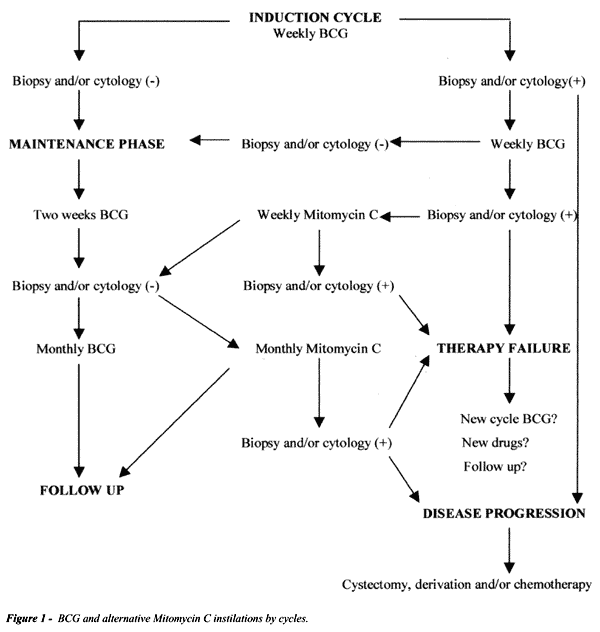
All therapeutic cycles were performed with
6 applications of immune- or chemotherapy. Lyophilized BCG was applied
in 20 cL of saline solution, and applied through an urethral catheter.
Patients were oriented to retain it in bladder during 2 hours. No intradermal
vaccine was administered.
Maintenance cycle was administered in the
absence of recurrence or positive cytology after a weekly cycle. Similarly,
6 applications were performed each 15 days. If after the 15-days cycle
the patient did not have evidence of tumor, the monthly cycle was initiated.
At the end of each cycle the patient was submitted to urinary cystoscopy
and cytology. After this period, the patient was followed with urinary
cytology and cystoscopy every 6 months.
Patients with recurrence at any time during
BCG cycle was once again submitted to endoscopic surgery and a new induction
cycle. BCG treatment failure was defined as persistence of superficial
tumor recurrence or progression to invasive cancer.
Statistical
Method
Fisher exact test and Chi-square test, with
significance levels of 95%, were used to evaluate the association among
variables. Disease-free interval (in months) was defined as time between
surgery date and disease recurrence. The method of Kaplan-Meier was used
to evaluate patient’s disease-free interval and survival, while log-rank
test was used to compare curves among the groups (17,19).
RESULTS
Mean
follow-up of 100 patients evaluated was of 69.3 months, and ranged from
10 to 153 months. Recurrence and disease progression occurred in 55% and
13% of the patients, respectively. Mean time to recurrence was 9,4 months,
and ranged from 2.1 to 59.6 months. Mean time for disease progression
was 24.4 months, and ranged from 4.7 to 109.4 months.
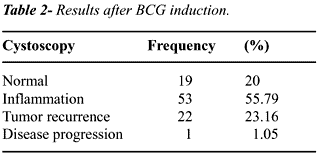
After induction cycle, 72 (75.79%) patients
did not present recurrence, 23 (23.21%) had superficial tumor recurrence,
and 1 case (1.05%) had disease progression. Five patients did not perform
weekly BCG for varied reasons, initiating immunotherapy in 15 days BCG
cycle. Weekly BCG induced 55.8 of cystitis, defined as focal hyperemia
at control cystoscopy. This data is shown at Table-2. Urinary cytology
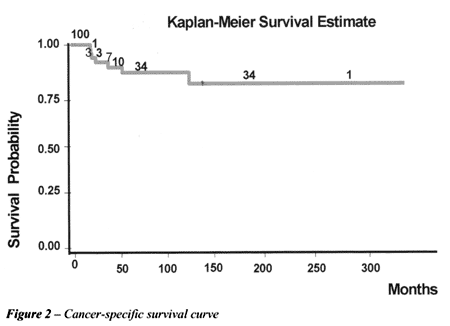
was class 1, 3, and 5, in 74%, 11.58%, and 9.47%, respectively. Cancer-specific
survival curve and survival, according to therapeutic results after weekly
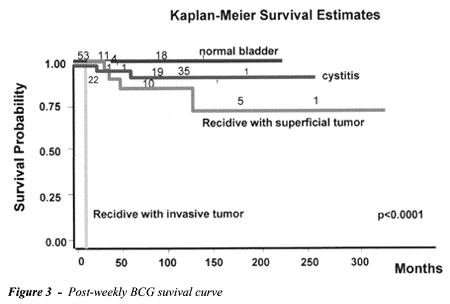
BCG cycle may be seen in Figures-2 and 3, respectively. Recurrence rate
dropped about 5% in 15-days and monthly cycles (Table-3).
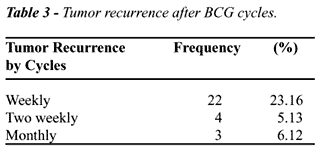
After weekly cycle, 22 out of 23 patients
presenting recurrence underwent TUR and a new induction cycle with BCG,
and 1 patient, due to the progression of the disease, was submitted to
radical cystectomy. From 78 patients completing 15-days cycle, there were
4 (5.13%) recurrences, and 2 (2.56%) progressions. Fifty three (67.9)
patients presented endoscopic signs of cystitis. Urinary cytology was
suspected (class 3) in 6 (7.69%), and positive (class 5) in 5 (6.41%)
patients.
Forty-nine patients underwent monthly cycles
and there were 3 (6.12%) recurrences and no progression, and among these,
29 (59.1%) patients presented endoscopic signs of cystitis. Urinary cytology
was suspicious in 1 (2.0%) and positive in 1 (2.0%) patient.
During a mean follow-up of 69.3 months,
45 patients did not present recurrence. Thirty patients presented one
recurrence, 10 presented 2 recurrences, 11 presented 3 to 5 recurrences,
and 4 patients presented 6 to 14 recurrences. Many of theses recurrences
were identified at control cystoscopy, and treated during this procedure
by excising the small papillary polyp with a cold biopsy forceps. There
were no upper urinary tract lesions.
Sixteen patients received Mitomycin C 20mg,
6 weekly applications, due to recurrence after the second BCG induction
cycle. Among these patients, 6 (37.5%) had disease progression (p<0.001).
Univariate analysis for recurrence was significant
to weekly or induction BCG failure (p=0.011), multifocality (p=0.001),
number of recurrences (p=0.001), and Mitomycin C use due to BCG failure
(p=0.001). However, multivariate analysis for recurrence was inconsistent
to the analyzed values.
Univariate analysis for progression was
significant for tumor grade, weekly and 15-days BCG failure, presence
of recurrence, and Mitomycin C cycle. Prognostic factors significant for
disease progression by multivariate analysis were just tumor grade and
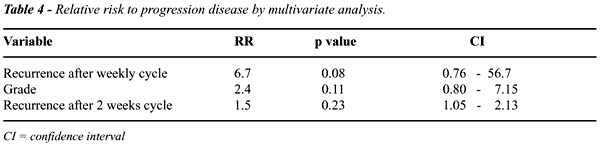
weekly and 15-days BCG failure, with relative risk of 6.7 (p=0.08; CI=0.79-56.7);
2.4 (p=0.11; CI=0.80-7.15); and 1.5 (p=0.23; CI=1.05-2.13), respectively.
When patients were evaluated according to
Millan-Rodrigues et al. group risk, there was no significant difference
for recurrence (p=0.311), but actually there was for progression (p=0.045).
Disease progression occurred in 1 of 31
(3.2%), 5 of 41 (12.2%) and 7 of 28 (25%) of patients in low, intermediate,
and high risk groups, respectively. Relative risk of progression among
groups was 2.58 (p=0.013; CI=1.21-5.50), Table-4.
BCG administration was well tolerated, and
21 (21%) patients did not have any side effects. BCG complication was
considered mild (24hrs disuria and/or haematuria) for 53 (53%) patients;
moderated (48hrs, fever and/or disuria and haematuria, and worsened LUTS)
for 21 (21%) patients; and severe (BCG discontinuation and treatment with
isoniazide) for 3 (3%) patients.
Regarding clinical conditions at final follow-up:
60 (60%) patients were alive and free from disease; 2 (2%) were alive
with cancer; 10 (10%) were dead from causes not related to cancer; 7 (7%)
were dead due to disease progression; and 21 (21%) were lost from follow-up.
During mean follow-up time of 70 months, overall cancer-specific survival
was 90%.
DISCUSSION
Differences
of BCG strains related to bacillus viability, dose, number of colonies,
and immunological differences, makes difficult to compare clinically imunotherapic
outcomes in patients with superficial carcinoma of the bladder (5,7,8).
Sher et al. tested the virulence of six strains of M. bovis in mice, and
Moreau-Rio de Janeiro strain was considered the most virulent and effective
for stimulating the reticule-endothelial system. The less virulent strain
was the Japanese, and those of intermediate virulence were the strains
Tice and Pasteur. One question suggested in this study was the severity
of local cystitis and higher risk of sepsis of the Brazilian strain in
its clinical application (14).
An important feature of superficial cell
cancer of the bladder is its unpredictable frequency of recurrence after
the treatment of the primary tumor. It is usually said that the disease
is not limited to papillary lesions, solitary or multifocal in bladder,
but affects the whole urothelium, because recurrence is consequence of
the transformed urothelium. After initial treatment there are at least
50% less recurrence in the follow-up of patients with stages Ta and T1.
It is estimated that more than 15% of theses patients present progression
(7,8).
Recurrence and disease progression reported
in patients with superficial cell carcinoma of the bladder in stage pT1
treated by TURBT, without adjuvant treatment with BCG, range from 59%
to 79%, and 12.5% to 48%, respectively, during a follow-up from 33.8 to
81.5 months (4,20-22). Recurrence and disease progression reported in
patients with superficial cell carcinoma of the bladder in stage pT1 treated
by TURBT and adjuvant treatment with BCG, ranges from 23.5% to 34%, and
from 7% to 17%, respectively, in a follow-up from 30.2 to 59 months (23-26).
In the present study, in a mean of 70 months of follow-up, recurrence
and progression rates of patients in stage pT1 was 57.6% and 12,1%, respectively.
In our study, recurrence rates for patients in stage pT1 was higher than
in the group reported in literature, perhaps influenced by the number
of patients with multifocal lesions (48.5%) of patients with pT1.
Millan-Rodrigues et al. divided patients
in 3 risk groups, based on multifocality, grade, and stage of lesions
(12). The importance of this classification lies in its clinical functionality.
Multifocality was the best factor to predict recurrence, with relative
risk of 2, followed by tumoral size over 3cm and presence of CIS, with
relative risk of 1.65 each. Grade 3 of disease was the best predictive
factor for progression and mortality, with a relative risk of 19.9.
In this paper, univariate analysis of recurrence
was significant for weekly BCG failure (p=0.011), multifocality (p=0.001),
number of recurrences (p=0.001), and application of Mitomycin C for BCG
failure (p=0.001). However, multivariate analysis of recurrence was not
consistent for any of the prognostic factors analyzed.
Univariate analysis for progression was
significant for tumor grade, weekly and 15-days BCG failure, tumoral recurrence
and cycle of Mitomycin C. Multivariate analysis for disease progression
was significant and with relative risk of 6.7 (p=0.08; CI=0.79-56.7);
2.4 (p=0.11; CI=0.80-7.15); and 1.5 (p=0.23; CI=1.05-2.13) only for tumoral
recurrence after weekly cystoscopy, tumor grade and for tumoral recurrence
after 15-days cystoscopy, respectively. Millan-Rodrigues et al. observed
15% of disease progression in the high risk group, and in our study we
observed 25% and, thus, these patients need a careful follow-up, including
late follow-up, for progression may be detected in up to 20% in 5 years
follow-up. The follow-up should preferentially be done by endoscopy in
the first 3 years, and interspersed with imaging studies after this period.
Recurrence after induction cycle seems to
be a strong indicator to predict which patients present a great potential
for disease progression (27-29). In this paper, early recurrence after
BCG application was the most important factor to disease progression,
with a 6.7 risk. Our results are supported by other reports in the literature
(5,8,29,30).
When patients were evaluated according to
Millan-Rodrigues et al classification, there was no significant difference
for recurrence (p=0.311), but there was actually a significant difference
for progression (p=0.045). Thus, to our patients, the proposed classification
was significant solely to discriminate patients presenting high risk for
progression. Tumor grade and weekly and 15-days BCG failure were predictive
factors of bad prognosis in patients with superficial cell cancer of the
bladder.
Nowadays, BCG administration in maintenance
phase up to 3 years is accepted. BCG maintenance, as defined by Lamm,
is applied in series of 3 weekly instillations, applied at 3rd and 6th
months and, after that phase, each 6 months during 3 years. Improvement
of free-disease survival went from 36% in the group receiving only induction
cycle to 77% in maintenance group (p<0.001). This study also demonstrated
that BCG maintenance increased time to disease progression or death (p=0.04),
and suggested being beneficial for patients survival (p=0.08) (31). At
the present study, BCG maintenance may influence the 13% rate of progression
in mean 69 months follow-up.
BCG irritative reactions in the bladder
occur in 90% of patients. It is observed mainly in the day of the application,
but it can persist for days. Low grade fever, haematuria and malaise may
occur in 10-25% of patients (32). In this study, theses symptoms occurred
in 21 patients (21%). Severe reactions occurred in 3 (3%) patients.
CONCLUSIONS
Moreau-Rio
de Janeiro BCG strain may be considered efficient to patients with superficial
bladder cancer, as it reduces disease progression compared to the results
in the literature for patients without adjuvant treatment. BCG did not
reduce significantly recurrence rates, as 16% of patients underwent alternative
regimen with Mitomycin C to prevent new recurrences. Classification by
risk group was important only to discriminate patients with high risk
for progression. BCG failure after weekly cycle, tumor grade and 15-days
BCG cycle failure were predictive factors of bad prognosis. Moreau-Rio
de Janeiro BCG strain was well tolerated and showed therapeutic results
similar to other strains used in the literature.
REFERENCES
- Brasil. Ministério da Saúde. Instituto Nacional de Câncer. Estimativa da Incidência e Mortalidade por Câncer no Brasil - 1999. Rio de Janeiro. Gráfica do INCA, 1999. Monografia.
- Landis SH, Murray T, Bolden S, Wingo PA: Cancer statistics, CA Cancer J Clin. 1999; 49: 8-31.
- Lutzeyer W, Rübben H, Dahm H: Prognostic parameters in superficial bladder cancer: an analysis of 315 cases. J Urol. 1982; 127: 250-2.
- Heney NM, Ahmed S, Flanagan MJ, Frable W, Corder MP, Hafermann MD, Hawkins IR for National Bladder Collaborative Group A: Superficial bladder cancer: progression and recurrence. J Urol. 1983.; 130: 1083-6.
- Smith JA: Surgical management of superficial bladder cancer (stage Ta/T1/CIS): Semin Surg Oncol. 1997; 13: 328-34.
- Mostofi FK, Sobin HL, Torloni H: Histological typing of urinary bladder tumours. International histological classification of tumours, no. 10. Geneva, Switzerland: World Health Organization, 1973; 17-23.
- Kock MO, Smith JA: Management of superficial bladder cancer Ta/T1/TIS. In: Comprehensive textbook of genitourinary oncology. Edited by Volgelzang N.J., Scardino PS, Shipley WU, Coffey DS. Baltimore: Williams & Wilkins. 1996; p. 405-15.
- Nseyo UO, Lamm DL: Immunotherapy of bladder cancer. Semin Surg Oncol. 1997; 13: 342-9.
- Parmar MKB, Freedman LS, Hargreave TB, Tolley DA: Prognostic factors for recurrence and followup policies in the treatment of superficial bladder cancer: report from the British Medical Research Council Subgroup on superficial bladder Cancer (Urological Cancer Working Party). J Urol. 1989; 142: 284-8.
- Kurt KH, Denis L, Bouffioux C: Factors affecting recurrence and progression in superficial bladder tumours. Eur J Cancer. 1995; 31A: 1840-84.
- Fradet Y: Prognostic factors: back to the future. In: Superficial Bladder Cancer. Edited by F. Pagano and WR Fair. Oxford: ISIS Medical Media. 1997; pp. 57-70.
- Millán-Rodrigues F, Chéchile-Toniolo G, Salvador-Bayarri J, Palou J, Algaba F, Vicente-Rodrigues J: Primary superficial bladder cancer risk groups according to progression, mortalidade and recurrence. J Urol. 2000; 164: 680-684.
- Morales A, Eidinger D, Bruce AW: Intracavitary bacillus Calmette-Guerin in the treatment of superficial bladder tumors. J Urol. 1976; 116: 180-3.
- Sher NA, Chaparas SD, Pearson J, Chirigos M: Virulence of six strains of Mycobacterium bovis (BCG) in mice. Infect Immunity. 1973; 8: 736-42.
- Fonseca FP, Lopes A, Hidalgo GS: Imunoterapia profilática com bacilo Calmette-Guérin no tratamento do câncer superficial da bexiga. J Bras Urol. 1993; 19: 225-31.
- American Joint Committee on Cancer: Staging of cancer at genitourinary sites. In: Manual for Staging of Cancer, 3rd ed. Edited by Bears. JB Lippincott. 1988; pp. 194-5.
- Kaplan E, Meier P: Nonparametric estimation from incomplete observations. J Am Stat Assoc. 1958; 8: 423-46.
- Peto R, Pike MC, Armitage P, Breslow NE, Cox DR, Howard SV, et al.: Design and analysis of randomized clinical trials requiring prolonged observation of each patient, part 2. Br J Cancer. 1977; 35: 1-39.
- Cox DR: Regression models and life tables. J R Stat Soc Br, 34: 187-220, 1972.
- RUTT (Registry for urinary tumours: harnwegstumorregister): Jahresbericht Verh Dtsch Ges Urol. 1985; 37: 665-9.
- Jakse G, Loidl W, Seeber G, Hofstädter F: Stage T1, grade 3 transitional cell carcinoma of the bladder: an unfavorable tumor? J Urol. 1987. 137: 39-43.
- Melekos MD, Chionis H, Pantazakos A, Fokaefs E, Paranychianakis G, Dauaher H: Intravesical bacillus Calmette-Guerin immunoprophylaxis of superficial bladder cancer: results of a controlled prospective trial with modified treatment schedule. J Urol. 1993. 149: 744-48.
- Cookson MS, Sarosdy MF: Management of stage T1 superficial bladder cancer with intravesical bacillus Calmette-Guerin therapy. J Urol. 1992; 148: 797-801.
- Eure GR, Cundiff MR, Schellammer PF: Bacillus Calmette-Guerin therapy for high risk stage T1 superficial bladder cancer. J Urol. 1992; 147: 376-9.
- Pansadoro V, Emiliozzi P, Defidio L, Donadio D, Florio A, Maurelli S, et al.: Bacillus Calmette-Guerin in the treatment of stage T1 grade 3 transitional cell carcinoma of the bladder: Long-term results. J Urol. 1995; 154: 2054-8.
- Hurle R, Losa A, Ranieri A, Graziotti P, Lembo A: Low dose Pasteur bacillus Calmette-Guerin regimen in stage T1, grade 3 bladder cancer therapy. J Urol. 1996; 156: 1602-5.
- Herr HW, Badalament RA, Amato DA, Laudone DA, Fair WR, Whitmore WF Jr: Superficial bladder cancer treated with bacillus Calmette-Guerin: a multivariate analysis of factors affecting tumor progression. J Urol. 1989; 141: 22-9.
- Solsona E, Iborra I, Dumont R, Rubio-Briones J, Casanova J, Almenar S: The 3-month clinical response to intravesical therapy as a predictive factor for progression in patients with high risk superficial bladder cancer. J Urol. 2000; 164: 685-9.
- Witjes JA, Fransen MPH, van der Meijden APM, Doesburg WH, Debruyne FMJ: Use maintenance intravesical bacillus Calmette-Guérin (BCG), with or without intradermal BCG, in patients with recurrent superficial bladder cancer. Long-term follow-up of a randomized phase 2 study. Urol Int. 1993; 51: 67-72.
- Herr HW, Schwab DM, Zhang ZF, Sogani PC, Fair WR, Whitmore WJ Jr, et al.: Intravesical BCG therapy prevent tumor progression and death from superficial bladder cancer: 10-year follow-up of a prospective randomized trial. J Clin Oncol. 1995; 13: 1404-9.
- Lamm, DL, Blumenstein BA, Crissman JD, Montie JE, Gottesman JE, Lowe BA, et al.: Maintenance bacillus Calmette-Guérin immunotherapy for recurrence Ta, T1 and carcinoma in situ transitional cell carcinoma of the bladder: a randomized group study. J Urol. 2000; 163: 1124-9.
- Lamm, DL, van der Meijden APM, Morales A, Brosman AS, Catalona WJ, Herr HW, et al.: Incidence and treatment of complications of bacillus Calmette-Guerin intravesical therapy in superficial bladder cancer. J Urol. 1992; 147: 596-600.
_________________________
Received:
December 12, 2001
Accepted after revision: August 6, 2002
_______________________
Correspondence address:
Dr. Francisco Paulo da Fonseca
Avenida Angélica, 1996 / 507
São Paulo, SP, 01228-200, Brasil
E-mail: fpfonseca@uol.com.br
EDITORIAL COMMENT
The
authors describe a good series with follow-up of 100 patients with superficial
urothelial carcinoma of the bladder treated with 40mg intravesical BCG
(Moreau-Rio de Janeiro strain).
Tumors presented in initial stage in approximately
70% of cases, of which 30% were multiple and 43% were over 3cm. Recurrence
and disease progression occurred in 55% and 13% of the patients, respectively,
and time to recurrence varied from 2.1 to 59.6 months. The authors also
describe that early recurrence after BCG instillation was the most important
factor for disease progression.
In my opinion, this recurrence rate is too
high, and could represent residual tumor since, according to the authors,
43% were over 3cm, and over 28% were T1 or high grade. Herr studied 150
patients submitted to endoscopic resection of bladder tumor (TUR), and
all patients were operated by the author. After 2-6 weeks these patients
were re-submitted to TUR and, in 114 (76%) patients he found residual
tumor, and for 96 patients this was superficial urothelial carcinoma.
After re-TUR, it was verified that 29% (28 patients) were understaged
and tumor was actually invasive. The results of re-TUR modified therapeutic
management in 33% of the cases.
Thus, as the authors didn’t perform
at least one early cystoscopy (until 6 weeks after TUR), this high recurrence
rate may be due to residual tumor and not recurrence, since in this series
43% were over 3cm, and time to recurrence was short (from 2.1 months).
When we started to make routine re-TUR in patients with over 3cm, T1 or
high grade tumors, we have verified a high recurrence rate and a residual
tumor rate similar to Herr’s study.
Reference
1. Herr HWH: The value of a second transurethral resection in evaluating patients with bladder tumors. J Urol. 1999; 162:74-6.
Dr. Flávio Hering
Urologist, Sírio Libanês Hospital
São Paulo, SP, Brazil