URODYNAMIC
ALTERATIONS IN PATIENTS WITH HTLV-1 INFECTION
(
Download pdf )
CLÁUDIO L. M. LIMA, GIORGIO RABOLINI, MÁRCIO MENNA-BARRETO, EMANUEL B. DOS SANTOS, WALTER J. KOFF
Section of Urology, Porto Alegre General Hospital, Federal University of Rio Grande do Sul, and Section of Neurology, São Lucas Hospital, Catholic University of Rio Grande do Sul, RS, Brazil
ABSTRACT
Objectives:
The HTLV-1 is a retrovirus that causes several diseases, including tropical
spastic paraparesis or HTLV-1 associated myelopathy (or TSP/HAM, as designated
by the World Health Organization - WHO) described in 1985. In Brazil,
the first cases were reported in 1989. In order to evaluate the urodynamic
alterations of infected patients, 48 cases were studied: 26 TSP/HAM and
22 non-TSP/HAM.
Material and Method: Evaluation was performed
by testing, cystometry, abdominal pressure, differential pressure, detrusor
leak point pressure, maximum flow pressure, and electromyography.
Results: 80.76% TSP/HAM patients showed
hyperreflexic bladder, and 34.16% had detrusor-sphincter dyssinergia;
82.6% of this group had abnormal uroflow tests. Non-TSP/HAM patients had
hyperreflexic bladders in 22.72% of the cases, and detrusor-sphincter
dyssinergia was not assessed. For these patients, uroflow rate was normal
in 70% of the cases.
Conclusions: Patients infected by the HTLV-1,
with or without myelopathy, present significant urodynamic abnormalities
and must have a complete urologic and urodynamic evaluation.
Key words: human T-lymphotrofic virus 1; paraparesis, tropical
spastic; spinal cord diseases; urodynamics
Int Braz J Urol. 2002; 28: 452-7
INTRODUCTION
Human
T-lymphotrophic virus 1 (HTLV-1) is a retrovirus belonging to the subfamily
of oncornavirus, related remotely to acquired immunodeficiency syndrome
virus (HIV) (1). HTLV-1 is responsible for several diseases, including
tropical spastic paraparesis and HTLV-1 associated myelopathy, reported
almost simultaneously in 1985 (2,3). Later it was concluded that it was
the same disease (4), and the presence of demyelinating myelopathy in
individuals infected by HTLV-1 was designated of TSP/HAM by the World
Heath Organization (WHO) (5). The major endemic region is Japan (6). In
Brazil, the first cases were reported in patients from Ceará and
São Paulo, in 1989 (7). In Rio Grande do Sul (RS), a prevalence
of 0.39% was observed among blood donators repeatedly positive (8). Among
Japanese individuals living in RS, prevalence is 2.39%, i.e., higher than
among non-Japanese individuals and Europeans, the latter with a prevalence
of 0.003% (9). In Brazil, since 1944 HTLV-1 testing is mandatory before
blood donation (10). Transmission occurs through contact with the blood
of individuals infected by HTLV-1, blood transfusions, sharing of contaminated
needles, sexual intercourse, and even through breastfeeding (11-15).
TSP/HAM is a chronic condition, progressive
and demyelinating, affecting preferentially the medulla spinalis, where
it may involve lower thoracic and upper lumbar segments. The disease is
mainly of upper neuron, with mild sensitive disturbs and consequent urinary
dysfunction (16). Laboratory diagnosis is made through screening tests,
as ELISA, and confirmatory studies, as Western blot. From the urological
point of view, and, primarily, considering urodynamic findings, few authors
described the alterations observed in infected patients. Generally, TSP/HAM
patients are evaluated, but those who do not present myelopathy are not
described. In this paper, patients with HTLV-1 infection, TSP/HAM or not,
are assessed.
MATERIALS AND METHODS
Forty-eight
patients infected by HTLV-1, without treatment, were evaluated; 17 were
male and 31 female, and age ranged from 13 to 69 years (mean=44.66 years;
SD=9.91; median=45 years). All patients were positive by AP (Serodia,
Fujerebio, Japan) or ELISA screening tests, and by confirmatory serum
and CSF Western blot 2.4. Twenty-six patients developed TSP/HAM and 22
presented varied neurological conditions, without corresponding, however,
to WHO inclusion criteria (15) for TSP/HAM, and they were urologically
asymptomatic or oligosymptomatic. TSP/HAM patients presented urologic
symptoms as urgency, frequency, urge-incontinence, alterations of urinary
stream and, some cases, urinary retention, as well as gait disturbs. All
patients were evaluated by a multidisciplinary team including a neurologist,
an urologist and a physical therapist. Laboratory and imaging exams were
demanded to all patients, as well as urodynamic assessment. Patients with
distinct urological conditions or with HIV co-infection were excluded.
Patients were educated about the objectives of the evaluation, and a signed
an informed consent was obtained.
Urodynamic evaluation consisted in uroflow
testing, cystometry, abdominal pressure, differential pressure, electromyography
and measure of leak point pressure. In uroflow analysis, normograms of
Liverpool (17) were used. For pressure measurements, we used 2 plastic
catheters 4F and 6F (pressure and infusion, respectively). At electromyography
electrodes in plates were positioned at perineal muscles or in the anal
sphincter. The evaluation criteria followed the rules of the International
Society of Urinary Continence (18). All patients received prophylactic
antibiotics two hours before the evaluation. Urodynamic exams were made
in a DS-5600, Polimed, Viotti and associates, device.
For statistical analysis we used Pearson’s
Chi-square test or the exact Fisher test. An analysis of logistic regression
was also performed to establish associations among the variables. Level
of minimum significance adopted was a=0.05.
RESULTS
TSP/HAM was observed in 26 (54.2%) patients.
Twenty-two (45.8%) patients were infected by HTLV-1, without presenting
all the criteria necessary to be declared TSP/HAM. 68.18% were asymptomatic
or oligosymptomatic, and 31.82% presented void urgency or urgency with
incontinence. Among TSP/HAM patients, 100% presented urinary symptoms;
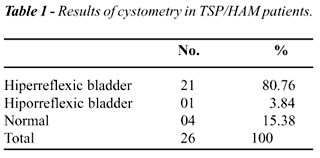
4 (15.38%) presented normal cystometry, 21 (80.76%) had hyperreflexy,
and 1 (3.84%) patient had hyporreflexy (Table-1). We observed that 34.61%
of TSP/HAM patients presented hyperreflexy associated with detrusor-sphincter
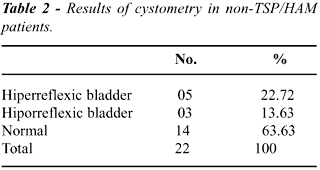
dyssinergia. Among non-TSP/HAM patients, 14 (63.63%) had normal cystometry,
5 (22.72%) hyperreflexy and 3 (13.63%) hyporreflexy. Detrusor-sphincter
dyssinergia was not assessed in these patients (Table-2). Presence of
hyperreflexy in TSP/HAM patients was significantly greater than in patients
without myelopathy (p=0.0001). Detrusor-sphincter dyssinergia observed
in TSP/HAM patients was not detected in non-TSP/HAM patients, and this
difference was significative (p=0.0022).
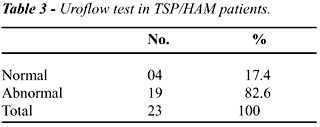
Uroflow testing in TSP/HAM patients was
considered normal by Liverpool normograms in 4 (17.4%) patients, and abnormal
in 19 (82.6%) patients. We excluded 3 (12%) patients for which assessment
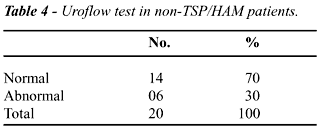
was not possible (Table-3). In cases non-TSP/HAM, 14 (70%) patients had
normal uroflow rates and for 2 cases the assessment was not possible (Table-4).
There was a statistically significant difference among these patients
(p=0.0005).
Reduction in proprioceptive sensitivity
was observed in 4 (8.39%) patients with vesical hyporreflexy. An analysis
of logistic regression was made regarding TSP/HAM presence as for age,
gender, cystometry findings, electromyography, and uroflow testing. Uroflow
testing related to gender and age showed an exposition of 8.04 (p=0.0498),
constituting the major variable, followed by cystometry with exposition
of 2.85 (p=0.3182). Although uroflow testing and cystometry are highly
correlated (r=0.76; p<0.00001), analysis of logistical regression suggests
uroflow testing is significant in relation to myopathy. Power of the present
study for the tests used was greater than 0.85.
DISCUSSION
HTLV-1
infection in this sample affected patients at adult age, with a predominance
of women. Other series of patients confirm those findings. Bruschini et
al. report on their series of 4 patients and mean of 49 years, all females
(19). Imamura et al report the condition in 25 patients (9 men and 16
women), with mean age of 58.2 years (20).
Patients infected with HTLV-1, primarily
TSP/HAM patients, present neurological lesions affecting medullary centers
and its corresponding pathways, mainly lower thoracic and upper lumbar
segments (16), i.e., between pontine-mesencephalic formation and sacral
medulla. Alterations as vesical hyperreflexia and detrusor-sphincter dyssinergia
are, thus, expected. The presence of vesical hyperreflexia was significant
in TSP/HAM patients, compared to those without myelopathy (p=0.0001).
Presence of detrusor-sphincter dyssinergia occurred only in TSP/HAM patients.
All presented abnormal flow rates and significant urinary residue. Whalton
& Kaplan (21) reported presence of dyssinergia in 4 patients of a
series of 5 patients (80%). A more significative number of patients is
evaluated by Yamashita & Kumazawa. Among 26 cases, all with TSP/HAM,
they found 96% of hyperreflexy and 68% of detrusor-sphincter dyssinergia
(21).
Micturition and urodynamic alterations precede
neurological alterations in 26% of the cases (20), and hyperreflexic bladder
is the most frequent finding in reviewed series, varying from 50% to100%
of all cases. Saito et al. (23) observed hyperreflexy in 3 patients out
of 4 evaluated. Bruschini et al. reported the presence of hyperreflexy
in 50% of studied patients (19).
A variable penetrance of the disease is
demonstrated by 15.38% of normal cystometry in TSP/HAM patients, i.e.,
patients with great neurological impairment due to the disease, and gait
disturbances, may present a normal pattern of vesical behavior.
In 3.84% of TSP/HAM patients and 13.63%
of non-TSP/HAM patients, vesical hyporreflexy was observed. This kind
of finding is generally associated with lesions to the peripheral innervation
of the bladder (24). In TSP/HAM, there are pathological evidences of ventral
and dorsal roots involvement by inflammatory exudates. In addition, it
is clinically known that a small proportion of patients have evidences
of lower limb denervation (24).
Uroflow testing results are in accordance
to the neurological conditions, and to cystometry and electromyographic
findings: 82.6% of TSP/HAM patients presented abnormal uroflow testing,
while 70% of non-TSP/HAM patients had normal uroflow testing. Four patients
were observed with TSP/HAM and normal flow rates (17.4%): 2 presented
hyperreflexic bladder and were women. The other two had normorreflexy.
Patients with hyperreflexy may have normal flow, including “superflows”
(25), especially if they are female, in which case obstructive uropathy
is not frequent. Non-TSP/HAM patients with abnormal uroflow rates were
found associated with hyporreflexy (2 cases) and hyperreflexy (4 cases).
Both patients with hyporreflexy were female and presented detrusor-sphincter
dyssinergia. Eardley et al reported 50% of normorreflexy and 50% of hyperreflexy
in TSP/HAM patients infected by HTLV-1 (24).
Patients with completely normal urodynamic
evaluation totalized 14 individuals without myelopathy and 1 with myelopathy,
i.e., 31.25% of the sample.
The present work shows that individuals
infected by HTLV-1, both TSP/HAM and non-TSP/HAM, present hyperreflexic
bladder as the major urodynamic finding. However, other types of vesical
behavior were observed, indicating that this is a complex disease, deserving
attention of neurologists and urologists regarding possible consequences
for the upper urinary tract.
REFERENCES
- Höllsberg P, Hafler DA: Pathogenesis of diseases induced by human lymphotropic virus type I infection. N Engl J Med. 1993; 328:1173-82.
- Gessain A, Barin F, Vernat JC, Gout O, Maurs L, Calender, A et al.: Antibodies to human lymphotropic virus type-I in patients with tropical spastic paraparesis. Lancet. 1985; 2:407-9.
- Osame M, Usuku K, Izumo S: HTLV-I associated myelopathy: a new clinical entity. Lancet. 1986; 1:1031-2.
- Roman GC, Osame M: Identity of HTLV-I associated tropical spastic paraparesis and HTLV-I associated myelopathy. Lancet. 1988; 1:651.
- Gessain A, Gout D: Chronic myelopathy associated with human T-lymphotropic virus type I (HTLV-I). Ann Int Med. 1992; 117:933-46.
- Hinuma Y, Komoda H, Chosa T, Kondo T, Kohakura M, Takenaka T: Antibodies to adult T-cell leukemia-virus-associated antigen (ATLA) in sera from patients with ATL and controls in Japan: a nation-wide sero-epidemiologic study. Int J Cancer 1982; 29:631-5.
- Castro Costa CM, Salgueiro MR, Carton H, Vale OC, Arruda AM: Tropical spastic parapaesis in north eastern Brazil. Arq Neuropsiquiatr. 1989; 47:134-8.
- Garcia CA, Schaffer C, Oliveira FR, Abassis ACR, Pereira JPM, Balsan AM: Prevalência de anti-HTLV-I/II repetidamente reagente e infecções associadas em doadores de sangue. Boletim da Sociedade Brasileira de Hematologia e Hemoterapia 1996; 18 (supl.): abs. 454-P.
- Schaffer C, Garcia CA, Oliveira FR, Soares IP, Omomo F, Fernandes LNM et al.: Prevalência de anticorpos contra o vírus HTLV-I/II em comunidade nipo-brasileira. Boletim da Sociedade Brasileira de Hematologia e Hemoterapia 1996; 18 (supl.): abs. 455-P.
- HTLV-I – Portaria nº 1376 de 09/11/1993- Ministério da Saúde, Brasil.
- Okochi K, Sato H, Hinuma Y: A retrospective study on transmition of adult T cell leukemia virus by blood transfusions: seroconversions in recipients. Vox Sang. 1984; 46:245-53.
- Hino S, Yamaguchi K, Kataminen S, Sugiyama H, Amagasaki T, Kinoshita K: Mother to child transmission of human T-cell leukemia virus type I. JpN J Cancer Res. 1985; 76:474:80.
- Tajima K, Tominaga S, Suchi T, Kamagoe T, Komoda H, Hinuma Y: Epidemiological analysis of the distribution of antibody to adult T-cell leukemia virus associated antigen: possible horizontal transmission of adult T-cell leukemia virus. JpN J Cancer Res. 1982; 73:893-901.
- Menna Barreto M, Anagnostopoulos F, Steinstrasser LE: Acidente punctório seguido de seroconversão para HTLV-II em profissional da saúde. Boletim da Sociedade Brasileira de Hematologia e Hemoterapia 1996; 18 (supl.): abs. 463-C.
- Center for Disease Control and Prevention and the USPHS Working Group: Guidelines for counseling persons infected with T-lymphotropic virus type I (HTLV-I) and type II (HTLV II). Ann Int Med. 1993; 118:448-54.
- Montgomery RD, Cruickshank EK, Robertson WB, McMenemey WH: Clinical and pathological observation on Jamaican neuropathy: a report on 206 cases. Brain. 1964; 87: 425-62.
- Haylen BT, Ashby D, Sutherst JR, Frazer MI, West CR: Maximum and average urine flow rates in normal male and female population- The Liverpool Nomogram. Br J Urol. 1989; 64:30-8.
- International Continence Society Standardisation Comitee: The Standardisation of Terminology of lower urinary tract function. Scand J Urol Nephrol Suppl. 1988; 114:5.
- Bruschini H, Gomes CM, Figueiredo JA, Parra JAN, Arap S: Paraparesia espástica tropical e disfunção vésico-esfincteriana. J Bras Urol. 1996; 22:78-80.
- Immamura A, Kitagawa T, Ohi Y, Osame M: Clinical manifestation of human T-cell lymphotropic virus type I-associated mielophaty and vesicopathy. Urol Int. 1991; 46:149-53.
- Walton GW, Kaplan SA: Urinary dysfunction in tropical spastic paraparesis: preliminary urodynamic survey. J Urol. 1993; 150:930-2.
- Yamashita H, Kumazawa J: Voiding dysfunction: patients with human T- lymphotropic-virus-type-1 associated myelopathy. Urol Int. 47 (Suppl 1):69-71.
- Saito M, Kondo A, Kato K, Gotoh M: Bladder dysfunction due to human T-lymphotropic virus type I-associated myelopathy. Br J Urol. 1991; 68:365-8.
- Eardley I, Fowler CJ, Nagendran K, Kirby RS, Rudge P.: Neurourology of tropical Spastic paraparesis Br J Urol. 1991; 68:598-603.
- Abrams PH, Feneley RCL, Torrens M: Urodynamics. Berlin, Springer-Verlag. 1983.
______________________
Received: October 3, 2001
Accepted after revision: October 9, 2002
_______________________
Correspondence address:
Dr. Cláudio L. M. Lima
Rua Luiz de Camões, 119 / 306
Porto Alegre, RS, 90640-030, Brazil
The authors of this study deserve congratulations for the excellent investigation on this population of patients, and for the relevance of the information offered. A non-negligible population of patients sent to urodynamic exam present urinary symptoms of dubious or unknown origin. In many cases, urodynamic alterations are important, and require urological treatment to protect upper urinary tract, to the treatment of urinary incontinence, and to reduce the episodes of urinary infection. In this context, every urologist must raise hypothesis of an etiologic diagnosis, to give the patient a prognostic orientation and treatment for his/her disease, in addition to urological treatment. Nevertheless, several urodynamic alterations remain unexplained, or are incorrectly classified. Knowledge of different medullary diseases of inflammatory origin producing urinary alterations many times help and protect the patient, as it happen to the transversal myelitis of LES and that of multiple sclerosis. Infection by HTLV-1 virus, promoting chronic and progressive demyelization lesion, is a diagnosis barely known by urologist. As the authors state, its urinary symptoms, as in other demyelinizing diseases may precede neurological alterations. In this case, the urologist should talk to the patient about the possibility of a neurological disease. The authors showed clearly that patients with established diagnosis of HTLV-1 infection, even without spastic paraparesis, may present major urodynamic alterations, probably requiring treatment. Nevertheless, new studies are necessary to answer some questions. Which are the urinary symptoms presented by individuals with this infection? How many patients with detrusor-sphincter dyssinergia have high post-void residual and impairment of upper urinary tract? With this high rate of hiperreflexy, which is the bladder functional capacity, and how many patients will need bladder augmentation? These and other questions will probably be answered through careful clinical observations and increasing the knowledge about this neurological pathology.
Dr. Carlos Alberto Bezerra
Associate Professor of Urology
ABC Medical School
Santo André, SP, Brazil