LACK
OF ASSOCIATION BETWEEN MATRIX METALLOPROTEINASE-1 (MMP-1) PROMOTER POLYMORPHISM
AND RISK OF RENAL CELL CARCINOMA
(
Download pdf )
MICHELLY F. PICCOLI, MARCIA FIGUEIRA, CASSIO ANDREONI, JULIO T. MARUMO, NESTOR SCHOR, MARIA H. BELLINI
Section of Nephrology (MFP, MF, NS, MHB) and Section of Urology (CA), Federal University of Sao Paulo, UNIFESP, and Institute of Energetic and Nuclear Research (JTM, MHB), Sao Paulo, SP, Brazil
ABSTRACT
Objective:
Investigate the possible association of insertion/deletion (2G/G) polymorphism
at nucleotide -1607 of the MMP-1 promoter with the development and progression
of renal cancer.
Materials and Methods: In this study, we
genotyped 217 individuals, 99 patients with renal cell carcinoma (RCC)
and 118 controls without cancer. DNA specimens were extracted from epithelial
buccal cells and paraffin-embedded tissue of RCC patients and from epithelial
buccal cells and blood cells of healthy controls.
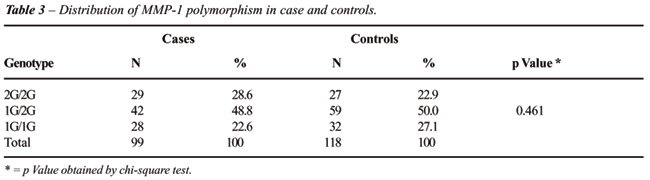
Results: The difference in frequency of
2G/2G genotype between controls (22.9%) and RCC patients (28.6%) was not
statistically significant (p = 0.461). We also did not find correlation
between 2G/2G and histological type of RCC. The comparison of genotype
distribution and frequency of 2G allele in different populations showed
a strong variability of 2G allele frequency among the different ethnic
groups. This fact may influence on the collaboration of this 2G allele
in RCC or others diseases.
Conclusion: Our data suggest that the matrix
metalloproteinase-1 (MMP-1) promoter polymorphism may not play a significant
role in renal cell carcinoma patients in Brazil.
Key
words: MMP-1; polymorphism; renal cell carcinoma
Int Braz J Urol. 2007; 33: 622-29
INTRODUCTION
The
development of cancer is a complex, multistage process during which a
normal cell undergoes genetic changes that result in phenotypic alterations
and the acquisition of the ability to invade and colonize distant sites
(1,2). Although many factors are involved in tumor development, interactions
between neoplastic cells and the surrounding microenvironment are crucial
to each step of tumorigenesis. The MMP family comprises over 20 enzymes
that are associated with degradation of the ECM, including the basement
membrane, as their name implies (3). Among the MMPs, matrix metalloproteinase-1
(MMP-1, collagenase-1), is the most highly expressed interstitial collagenase
degrading fibrillar collagen, the most abundant protein in the human body
(4). MMP-1 expression level is increased in several diseases such as arthritis
(5), periodontitis (6) arteriosclerosis (7) and cancer (8,9).
Recently, an insertion/deletion (2G/G) polymorphism
was reported at nucleotide -1607 relative to the transcription site of
the MMP-1 gene (9). The 2G polymorphism creates a binding site (5'-GGA-’3)
for the ETS transcription factor, influencing its transcriptional activity
(10,11) Promoter containing 2G allele displays a significantly higher
transcriptional activity than 1G promoters (8).
The 2G allele of the MMP-1 promoter polymorphism
is relatively common and has a frequency of a little less than 50% of
the general population (12). Association studies have been done to determine
whether the MMP-1 genotype affects the risk of different types of cancers
(5,8,9,11-16).
Renal cell carcinoma accounts for 2 percent
of all cancers. Renal cell carcinoma originates in the cortex and accounts
for 80 to 85 percent of malignant kidney tumors (17). This carcinoma occurs
nearly twice as often in men than in women. Patients are generally over
40 years old at diagnosis, and the disease occurs predominantly in the
seventh and eighth decades of life (18). However, small, localized tumors
rarely produce symptoms, and for this reason, the diagnosis is often delayed
until after the disease is advanced. To improve the prognosis of this
disease it is important to clarify the molecular mechanism of invasion
and metastasis of renal cell carcinoma.
The aim of this study was to investigate
possible correlations between MMP-1 promoter and renal cell carcinoma
(RCC) in a Brazilian group.
MATERIALS AND METHODS
Subject
selection - This case-control study consisted of 99 patients with renal
cell carcinoma (56 men, 43 women mean age 59.97 years) and 118 population-derived,
age-matched controls (62 men, 56 women; mean age 60.5 years), all being
ethnic Brazilian. This study protocol was approved by the institutional
review board. At recruitment, written informed consent was obtained from
each subject.
All of the RCC patients were diagnosed histologically
and tumors were staged according to the 1997 TNM classification system
(19) and graded according to the Fuhrman classification system (20).
Sample acquisition - DNA samples of the
patients were obtained from formalin-fixed paraffin-embedded tissue (23
patients), epithelial buccal cells (60 patients) and blood cells (16 patients).
Patients were recruited between 2004 and 2006, at the São Paulo
Hospital and Public Servant Hospital of São Paulo, Brazil (São
Paulo, Brazil), and histopathologically confirmed as a renal cell carcinoma.
All DNA samples of the control group were extracted from epithelial buccal
cells.
Paraffin-embedded tissue - 10-µm sections
were obtained from paraffin-embedded tissue. The sections were deparaffinized
by immersing twice in xylene for 2 min, followed by twice 99.5% ethanol
for 2 min, and further two times 70% ethanol. Thereafter the samples were
digested with 1,000µL 0.1M Tris-HCl (pH 8.0), 0.5 M NaCl, 0.05 M EDTA,
1% sodium dodecyl sulfate (SDS), and 1 unit of proteinase K at 55oC
overnight. Then the samples were mixed well, and centrifuged at 10,000
X g for 15 min. The DNA was extracted with phenol/chloroform (1:1). DNA
was precipitated by adding cold ethanol, centrifuged and resuspended in
50µL water (21,22).
Epithelial buccal cells - The ephitelial
buccal cells were extracted with 100 ng/mL proteinase K (Sigma Chemical
Co.) at 37oC for 1 hour. DNA was then purified by sequential
phenol/chloroform extraction and salt/ethanol precipitation. DNA was dissolved
in 70µL TE buffer (10 mm Tris (pH 7.8), 1mm EDTA), and its concentration
was determined by measurements of OD 260 (6).
Statistical analysis - Differences in the
genotypes distribution from those expected by the Hardy-Weinberg equilibrium
and the significance of differences in the observed frequencies of SNP
in both groups were assessed by χ2 test. We also used
the χ2 test to compare the distribution of genotype and
frequency of G2 allele in different populations. T Student test and Fisher
test were employed to evaluate the homogeneity of control and case populations.
For all tests, the p-values of 0.05 were regarded significant.
RESULTS
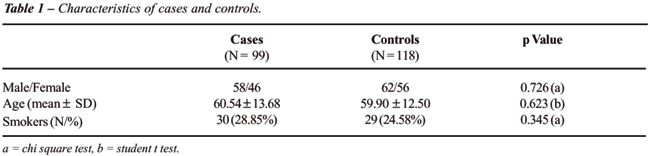
We
studied a total of 217 individuals: 99 renal cancer patients and 118 non-cancer
controls. The baseline characteristics of the patients and controls are
summarized in Table-1.
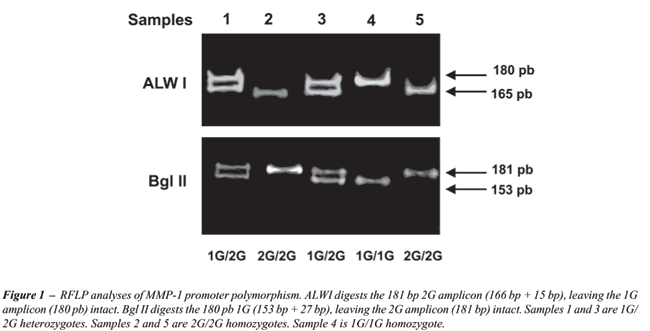
The genotypes of all subjects were clearly
determined by PCR-RFLP. Figure-1 shows the RFLP pattern after digestion
with BGL II and after digestion with Alw I.
Polymorphism distribution in the control
and case population was according to the Hardy-Weinberg principle (χ2
= 0.00, p = 1.000 and χ2 = 0.04, p = 0.981 respectively).
We analyzed the correlation between tobacco
smoking and RCC and no association was found (p = 0.345) (Table-1).
In the renal cancer group, allele frequency
of 2G was 51%, in comparison with 49.0% in control group, did not show
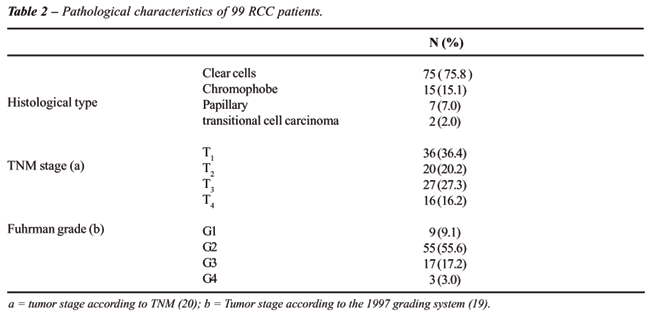
any significant statistic difference (p = 0.48). The genotype distribution
in RCC patients and controls are shown in Table-2. The frequency of the
2G/2G genotype showed in Table-3 in patients (29.3%) did not significantly
differ from the values for normal controls (22.9%) (p = 0.461). Further,
we analyzed the a possible correlation between pathological data and genotype
frequency of MMP-1 polymorphism in RCC patients and we also found no correlation
(Table-4).

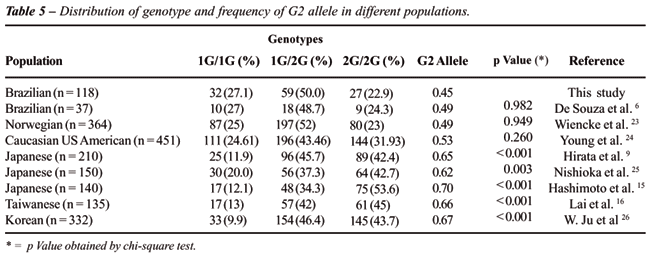
In Table-5 we compared the distribution
of the MMP-1 genotype in our controls with the data previously reported
for other study populations (9,15,16,23-26). Chi-square analysis indicated
significant differences in genotype distributions of MMP-1 -1607 promoter
between Brazilians and reported data on Japanese (p = 0.003 and p <
0.001), Taiwanese (p < 0.001) and Koreans (p < 0.001) (9,15,25).
However, there was no difference between Brazilians, Norwegians and Caucasian
US Americans (23,24).
COMMENTS
Renal
cell carcinoma (RCC) accounts for 3% of adult human cancers and it is
becoming more common (27). Major risk factors include cigarette smoking,
obesity and hypertension (28). RCC represents just about 85% of newly
diagnosed kidney malignancies, occurring at an estimated rate of 4.4 to
11.1 cases per 100,000 person-years with a steady rise in the rates of
RCC of 2.3% to 4.3% annually (29). There is a lack of an effective systemic
therapy for RCC, which is necessary for approximately 30% of initially
localized disease and 30% of patients presenting RCC with metastases identified
at the time of diagnosis, with a 1-year survival rate of 26% (30). Renal
tumors are classified as different histopathological subtypes with diverse
clinical behavior and genetic mutations that are not completely understood.
A better understanding of the tumor gene
activity and its relationships may help on prognosis prediction and on
molecular therapies development.
Proteolytic enzymes play a fundamental role
in cancer progression providing an access for tumor cells to the vascular
and lymphatic systems. Among all proteolytic enzymes, the MMP family has
reached an outstanding importance due to their ability to cleave virtually
any component of the extracellular matrix (31). Matrix metalloproteinase-1
is a member of this family that is expressed by most normal cell types
and there is evidence suggesting that in pathological conditions like
cancers the expression is up regulated (5,8,9,11-16).
Rutter et al. (10) reported that a common
single nucleotide polymorphism (SNP) in the promoter of MMP-1 is associated
with enhanced transcription of this gene. A correlation between the transcription-enhancing
insertion of a single G nucleotide in the MMP-1 promoter has been associated
with different types of tumors (8,9,11,12). In a recent study Hirata and
collaborators reported that distribution of 2G/2G in RCC patients was
statistically different from the control group in the Japanese population
(9).
The present population-based, control-case
in São Paulo, Brazil, did not confirm the relationship between
MMP-1 promoter polymorphism and risk of renal cell carcinoma. Using a
total of 217 individuals, 99 RCC patients and 118 control individuals
we found a lack of association between MMP-1 polymorphism and renal cell
carcinoma. The discrepancy among our results and the others (8,9,11,12)
may be caused by the relatively small numbers of patients and multi-ethnic
composition of the Brazilian group.
Comparing the distribution MMP-1 promoter
-1607 genotype in our controls with the data reported previously for other
study populations (Table-5), It is clear that the 2G variant genotype
is associated to ethnicity. Chi-square analysis showed a significant difference
in the genotype distribution between our Brazilian group and data reported
for Japanese (p ≤ 0.001 and p = 0.003), Taiwanese (p ≤ 0.001)
and Korean (p ≤ 0.001) populations (9,25,26). This fact suggests
that this polymorphism may be associated with ethnicity and shows the
importance of the molecular epidemiological studies in different populations.
ACKNOWLEDGEMENT
Supported by a grant from Sao Paulo Foundation for Research Support, FAPESP, #03/11779-7.
CONFLICT OF INTEREST
None declared.
REFERENCES
- Farber E: The multistep nature of cancer development. Cancer Res. 1984; 44: 4217-23.
- Weinberg RA: Oncogenes, antioncogenes, and the molecular bases of multistep carcinogenesis. Cancer Res. 1989; 49: 3713-21.
- Forget MA, Desrosiers RR, Beliveau R: Physiological roles of matrix metalloproteinases: implications for tumor growth and metastasis. Can J Physiol Pharmacol. 1999; 77: 465-80.
- Ninomiya S, Niimi T, Shimizu S, Sato S, Achiwa H, Ito H, et al.: Matrix metalloproteinase-1 polymorphism of promoter region in sarcoidosis and tuberculosis patients. Sarcoidosis Vasc Diffuse Lung Dis. 2004; 21: 19-24.
- Massarotti M, Marchesoni A, Biondi ML, Marasini B: Polymorphism in the matrix metalloproteinase-1 promoter gene and severity of rheumatoid arthritis. J Rheumatol. 2002; 29: 2241; author reply 2242.
- de Souza AP, Trevilatto PC, Scarel-Caminaga RM, Brito RB, Line SR: MMP-1 promoter polymorphism: association with chronic periodontitis severity in a Brazilian population. J Clin Periodontol. 2003; 30: 154-8.
- Orbe J, Fernandez L, Rodriguez JA, Rabago G, Belzunce M, Monasterio A, et al.: Different expression of MMPs/TIMP-1 in human atherosclerotic lesions. Relation to plaque features and vascular bed. Atherosclerosis. 2003; 170: 269-76.
- Zhu Y, Spitz MR, Lei L, Mills GB, Wu X: A single nucleotide polymorphism in the matrix metalloproteinase-1 promoter enhances lung cancer susceptibility. Cancer Res. 2001; 61: 7825-9.
- Hirata H, Naito K, Yoshihiro S, Matsuyama H, Suehiro Y, Hinoda Y: A single nucleotide polymorphism in the matrix metalloproteinase-1 promoter is associated with conventional renal cell carcinoma. Int J Cancer. 2003; 106: 372-4.
- Rutter JL, Mitchell TI, Buttice G, Meyers J, Gusella JF, Ozelius LJ, et al.: A single nucleotide polymorphism in the matrix metalloproteinase-1 promoter creates an Ets binding site and augments transcription. Cancer Res. 1998; 58: 5321-5.
- Matsumura S, Oue N, Kitadai Y, Chayama K, Yoshida K, Yamaguchi Y, et al.: A single nucleotide polymorphism in the MMP-1 promoter is correlated with histological differentiation of gastric cancer. J Cancer Res Clin Oncol. 2004; 130: 259-65.
- Wenham RM, Calingaert B, Ali S, McClean K, Whitaker R, Bentley R, et al.: Matrix metalloproteinase-1 gene promoter polymorphism and risk of ovarian cancer. J Soc Gynecol Investig. 2003; 10: 381-7.
- Murray GI, Duncan ME, O’Neil P, Melvin WT, Fothergill JE: Matrix metalloproteinase-1 is associated with poor prognosis in colorectal cancer. Nat Med. 1996; 2: 461-2.
- Ghilardi G, Biondi ML, Mangoni J, Leviti S, DeMonti M, Guagnellini E, et al.: Matrix metalloproteinase-1 promoter polymorphism 1G/2G is correlated with colorectal cancer invasiveness. Clin Cancer Res. 2001; 7: 2344-6.
- Hashimoto T, Uchida K, Okayama N, Imate Y, Suehiro Y, Hamanaka Y, et al.: Association of matrix metalloproteinase (MMP)-1 promoter polymorphism with head and neck squamous cell carcinoma. Cancer Lett. 2004; 211: 19-24.
- Lai HC, Chu CM, Lin YW, Chang CC, Nieh S, Yu MH, et al.: Matrix metalloproteinase 1 gene polymorphism as a prognostic predictor of invasive cervical cancer. Gynecol Oncol. 2005; 96: 314-9.
- Tower GB, Coon CI, Brinckerhoff CE: The 2G single nucleotide polymorphism (SNP) in the MMP-1 promoter contributes to high levels of MMP-1 transcription in MCF-7/ADR breast cancer cells. Breast Cancer Res Treat. 2003; 82: 75-82.
- Figlin RA: Renal cell carcinoma: management of advanced disease. J Urol. 1999; 161: 381-6; discussion 386-7.
- Storkel S, Eble JN, Adlakha K, Amin M, Blute ML, Bostwick DG, et al.: Classification of renal cell carcinoma: Workgroup No. 1. Union Internationale Contre le Cancer (UICC) and the American Joint Committee on Cancer (AJCC). Cancer. 1997; 80: 987-9.
- Fuhrman SA, Lasky LC, Limas C: Prognostic significance of morphologic parameters in renal cell carcinoma. Am J Surg Pathol. 1982; 6: 655-63.
- Uneyama C, Shibutani M, Masutomi N, Takagi H, Hirose M: Methacarn fixation for genomic DNA analysis in microdissected, paraffin-embedded tissue specimens. J Histochem Cytochem. 2002; 50: 1237-45.
- Nascimento EM, Spinelli MO, Rodrigues CJ, Bozzini N: DNA extraction from paraffin material protocol in order to analyse microssatellites in uterine leiomyoma. J Bras Patol Med Lab. 2003; 39: 253-5.
- Wiencke K, Louka AS, Spurkland A, Vatn M, Schrumpf E, Boberg KM, et al.: Association of matrix metalloproteinase-1 and -3 promoter polymorphisms with clinical subsets of Norwegian primary sclerosing cholangitis patients. J Hepatol. 2004; 41: 209-14.
- Zhu Y, Spitz MR, Lei L, Mills GB, Wu X: A single nucleotide polymorphism in the matrix metalloproteinase-1 promoter enhances lung cancer susceptibility. Cancer Res. 2001; 61: 7825-9.
- Nishioka Y, Kobayashi K, Sagae S, Ishioka S, Nishikawa A, Matsushima M, et al.: A single nucleotide polymorphism in the matrix metalloproteinase-1 promoter in endometrial carcinomas. Jpn J Cancer Res. 2000; 91: 612-5.
- Ju W, Kang S, Kim JW, Park NH, Song YS, Kang SB, et al.: Promoter polymorphism in the matrix metalloproteinase-1 and risk of cervical cancer in Korean women. Cancer Lett. 2005; 217: 191-6.
- Jemal A, Tiwari RC, Murray T, Ghafoor A, Samuels A, Ward E, et al.: Cancer statistics, 2004. CA Cancer J Clin. 2004; 54: 8-29.
- Chow WH, Gridley G, Fraumeni JF Jr, Jarvholm B: Obesity, hypertension, and the risk of kidney cancer in men. N Engl J Med. 2000; 343: 1305-11.
- Chow WH, Devesa SS, Warren JL, Fraumeni JF Jr: Rising incidence of renal cell cancer in the United States. JAMA. 1999; 281: 1628-31.
- Mulders P, Bleumer I, Oosterwijk E: Tumor antigens and markers in renal cell carcinoma. Urol Clin North Am. 2003; 30: 455-65.
- Folgueras AR, Pendas AM, Sanchez LM, Lopez-Otin C: Matrix metalloproteinases in cancer: from new functions to improved inhibition strategies. Int J Dev Biol. 2004; 48: 411-24.
____________________
Accepted after revision:
April 6, 2007
_______________________
Correspondence address:
Dr. Maria Helena Bellini
Instituto de Pesquisas Energéticas e Nucleares
Cidade Universitária IPEN-CNEN/SP
Av. Lineu Prestes, 2242, 05542
São Paulo, SP, 05508-900, Brazil
E-mail: mhmarumo@ipen.br