PELVIC
FLOOR EXERCISES WITH BIOFEEDBACK FOR STRESS URINARY INCONTINENCE
(
Download pdf )
MARIA V. CAPELINI, CASSIO L. RICCETTO, MIRIAM DAMBROS, JOSE T. TAMANINI, VIVIANE HERRMANN, VIRGINIA MULLER
Division of Urology and Gynecology, State University of Campinas, UNICAMP, Sao Paulo, Brazil
ABSTRACT
Objective:
Prospective study to objectively evaluate the benefits of pelvic floor
strengthening exercises associated to biofeedback for the treatment of
stress urinary incontinence.
Materials and Methods: Fourteen patients
diagnosed with stress urinary incontinence (SUI) were selected for this
study. All patients underwent a pelvic floor training associated to biofeedback
for 12 consecutive weeks. Urodynamic tests, pad test and bladder diary
were analyzed at the beginning of the study, at the end and after 3 months.
The King’s Health Questionnaire (KHQ) was applied before and after
treatment to assess the impact in the quality of life.
Results: There was a significant reduction
in the pad weight (from 14.21 g to 1 g), number of urinary leakage episodes
(from 8.14 per day to 2.57 per day) and daytime frequency (from 7.93 per
day to 5.85 per day). At urodynamics the authors observed a significant
increase in Valsalva leak-point pressure (from 103.93 cm H2O to 139.14
cm H2O), cistometric capacity (from 249.29 mL to 336.43 mL, p = 0.0015)
and bladder volume at first desire to void (from 145 mL to 215.71 mL).
Those differences were kept during the first 3 months of follow up. The
KHQ revealed significant differences except in the case of “general
health perception”, which covers health in general and not exclusively
urinary incontinence.
Conclusion: Treatment of SUI with pelvic
floor exercises associated to biofeedback caused significant changes in
the parameters analyzed, with maintenance of good results 3 months after
treatment.
Key
words: urinary incontinence, stress; pelvic floor; biofeedback;
physical therapy modalities
Int Braz J Urol. 2006; 32: 462-9
INTRODUCTION
Urinary
incontinence is a common clinical complaint, particularly in post-menopausal
women (1). Stress urinary incontinence (SUI) is the most common type of
urinary incontinence and is defined as any involuntary leakage of urine
related to any abdominal effort such as coughing or sneezing (2). It is
estimated that 49% of the women with symptoms of incontinence present
SUI (3). Increased life expectancy, particularly in women, has led to
a higher incidence of urinary incontinence that keeps growing. Urinary
incontinence interferes in social, physical, psychological and sexual
aspects, adversely affecting self-esteem and quality of life.
Conservative treatment based on pelvic floor
muscle exercises to restore the support of the pelvic organs and the urethral
closing mechanism is becoming an important therapeutic option for the
treatment of SUI. An additional resource is the biofeedback, which utilizes
surface electromyography (EMG) for simultaneous monitoring, helping patients
to identify the correct muscles for contraction. This method is able to
detect pelvic floor muscle contractions, even when they are very weak,
and simultaneously demonstrates their execution. Moreover, undesired contractions
of other synergic muscle groups such as the glutei, adductors or abdominal
muscles are also monitored, allowing isolation and selection of muscles
of the pelvic floor.
The purpose of this study is to evaluate
the effects of the treatment of SUI with pelvic floor muscle exercises
using surface EMG-biofeedback through bladder diary, pad test, urodynamic
studies and in the domains of the King’s Health Questionnaire (KHQ).
MATERIALS AND METHODS
This
was a prospective study conducted from August 2002 to December 2003. The
treatment was offered to all patients with clinical history of stress
urinary incontinence during medical consultation. The diagnosis of stress
urinary incontinence was based on clinical history, physical examination,
urodynamic study, bladder diary, pad test with standardized volume and
the King’s Health Questionnaire (KHQ) (4,5). These measures were
repeated at the end of the treatment and again three months later. The
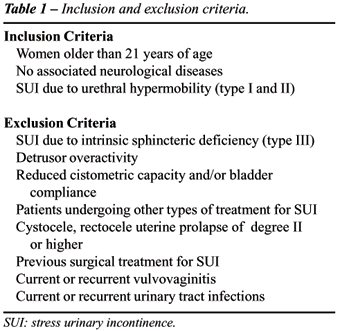
selection of patients followed the inclusion and exclusion criteria described
in Table-1. For a total of 28 patients that underwent consultation during
this period, 16 did not meet the inclusion criteria and 2 refused the
treatment modality due to difficulties to go to the sessions at the hospital
twice weekly. All patients signed a term of informed consent. No one patient
lost the follow-up.
The average age of the patients was 49.6
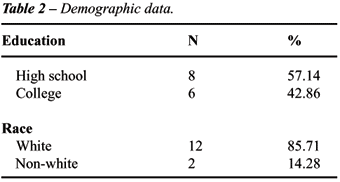
years (range from 34 to 64 years). The majority was white (85.7%) and
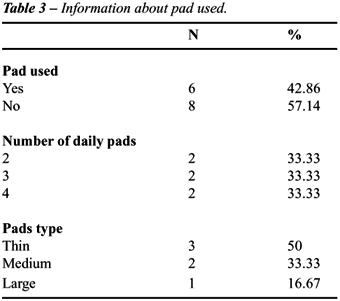
57.1% had completed high school (Table-2). Daily pads were used by 42.9%
of the patients (mean of 3 pads per day) (Table-3). In 76.9% of the patients
there has been a previous vaginal delivery and mean parity was 2.15 ±
1.77).
The patients were assisted by a multidisciplinary
team consisting of physicians, nurses and physiotherapists during the
treatment. They have undertaken 12 weeks of pelvic floor muscles exercises,
monitored with surface EMG biofeedback using a protocol of standardized
exercises with alternating periods of contraction and relaxation. The
equipment used was the Myotrac-3 GMT (Thought Technology Ltd.
Montreal, Canada). Adhesive surface electrodes were fixed at the abdomen
to detect undesired contractions of abdominal muscles and an intravaginal
electrode was placed without fixation to detect contractions of pelvic
floor muscles. Sensors were connected to the abdomen and vagina with the
patient in the lithotomy position. Each patient could observe the graph
of the electrical activity of these muscles on a computer screen simultaneously
with the exercises.
The treatment was conducted with 2 physiotherapeutic
sessions of 30 to 40 minutes per week. Each session was performed at lithotomy
position and consisted of 3 series of 10 sustained contractions followed
by a period of relaxation. The sessions during the first 4 weeks consisted
of 5 seconds of contractions followed by 10 seconds of relaxation. This
series was followed by another 4 weeks of 10 seconds contractions and
10 seconds relaxations. Finally, the sessions included 20 seconds contractions
followed by 20 seconds of relaxation during the last 4 weeks. The subjective
parameter was the KHQ that deals with aspects of urinary incontinence,
quality of life and to which extent urinary incontinence affects the life
of the patients. Each KHQ domain obtains a score and therefore there is
no general score. The scores range from 0 to 100 and the higher the score,
the poorer the quality of life.
An increase of up to 2 g in the pad test
was considered normal. Increases of 2 to 10 g were considered to be mild
to moderate, 10 to 50 g severe and above 50 g very severe (6). The bladder
diary included time of micturition, urinary volume, volume of fluid intake,
changes of clothes, urinary leakage and activities that provoked it. The
patients filled in this diary for three consecutive days. The urodynamic
study was conducted according to the International Continence Society
standardization and values of Valsalva leak point pressure bellow 60 cm
H2O were considered as diagnostic for intrinsic sphincteric deficiency.
For statistical evaluation, we utilized
the Friedmann test for objective variables, the Wilconxon test for descriptive
analysis, the Spearman rank correlation to verify an association between
2 variables and the generalized estimation equations to evaluate the influence
of the objective variables in each KHQ domain. In all tests, p < 0.005
was considered significant.
RESULTS
Urinary
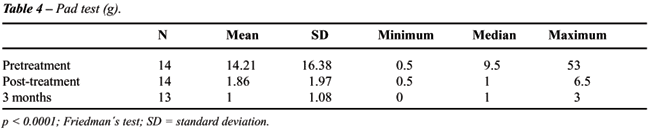
leakage at the pad test before treatment was 14.21 g (± 16.4),
ranging from 0.5g to 53 g. After 12 weeks of treatment, the mean urinary
leakage reduced to 1.86 g (± 4.7) and 1 g (± 5.4) after
3 months. There were no significant differences between leakage either
immediately or 3 months after treatment (p < 0.0001) (Table-4).
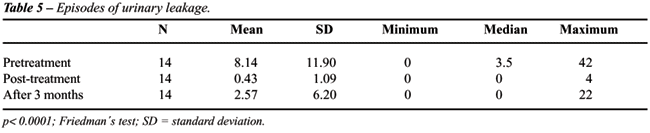
The bladder diary revealed a significant
decrease in voiding frequency from 7.9 times per day to 5.8 after treatment,
remaining unaltered 3 months after treatment (p = 0.0021). Mean of urinary
leakage daily episodes also decreased from 8.1 to 0.4 post-treatment and
2.6 after 3 months (Table-5). This increase at 3 months was not significant
(p < 0.001).
There was no significant change in daily
fluid intake from pre-treatment (1,780 mL), at the end of treatment (1,776
mL) and at 3 months (1,609 mL) (p = 0.6122).
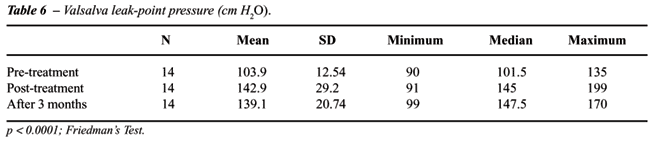
Mean Valsalva leak-point pressure (VLPP)
was 103.9 cm H2O (± 12.5). After the treatment, the VLPP evolved
to 142.9 cm H2O (± 29.2) and to 139.1 cm H2O (± 20.7) at
3 months (p < 0.0001) (Table-6).
Cystometric capacity was 249.3 mL (±
81.9) in the pre-treatment, with a significant increase to 367.9 mL (±
128.9) at the end of treatment and to 336.4 mL (± 63.2) 3 months
after treatment (p = 0.0015). Similarly, first desire to void increased
from 145 mL (± 52.1) in the pre-treatment to 223.9 mL (±
73.1) and 215.7 mL (± 81.3) respectively after the treatment and
at 3 months (p = 0.0056).
The Spearman linear correlation coefficient
was applied to verify the correlation between objective variables (VLPP
and pad test) at different phases of the study. Only the immediate post-treatment
phase demonstrated a linear association (r = - 0.06; p = 0.0233), which
indicates that these data were inversely correlated - when the VLPP increased,
the leakage decreased. However, at 3 months, no correlation could be observed
(p = 0.3514).
Analysis of 9 domains in the KHQ was performed
using the Wilcoxon’s paired samples test. All the domains demonstrated
significant differences except for the one related to “General Health
Perception”. All the domains presented low average scores after
treatment.
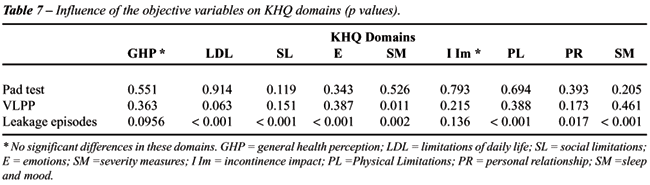
The Generalized Estimation Equations were
used to evaluate the statistic influence of the objective variables (pad
test, VLPP, number of leakage episodes) on quality of life, in each KHQ
domain, obtained during pre and post-treatment. Significant influence
was observed in the following domains: physical limitations, personal
relationships, emotions, sleep and moods, and degree of severity. The
number of leakage episodes exclusively influenced all the domains. Valsalva
leak point pressure influenced only the severity domain (Table-7).
DISCUSSION
Since
Kegel attributed that slack pelvic floor muscles were a relevant factor
in urinary incontinence, numerous studies proposed SUI treatment by exercises
that strengthen pelvic floor muscles (7). Several studies have proved
the effectiveness of strengthening the pelvic floor muscles and others
have shown that these exercises in association with biofeedback are safe
and effective (8).
The complementary effect of biofeedback
on pelvic floor rehabilitation program is still a controversial subject.
In 1998, Berghmans et al. (9) reviewed all studies published between 1980
and 1998 that had extensive evidence of the use of biofeedback. Based
on five methodologically adequate studies they concluded that there was
strong evidence that biofeedback associated with pelvic floor exercises
did not increase the efficacy of the treatment. On the other hand, the
metaanalysis performed by Weatheral (10) led to the conclusion that biofeedback
was an effective aid in strengthening pelvic floor muscles for it presented
increasing cure rates. Nevertheless, these studies differ greatly regarding
interventions conducted, research population, assessment measures and
equipment used, making them difficult to be compared.
In the present study, we analyzed the influence
of pelvic floor exercises and biofeedback on objective parameters in a
prospective design. Although, we allocated a small group of patients for
a non-randomized observational study with a short follow-up, the other
studies used retrospective analysis or lacked instruments to evaluate
quality of life.
Up to date, the pad test is an important
instrument in clinical assessment, quantifying urinary leakage despite
great variations in behavior, appearance, poor reproducibility and accuracy,
which makes it hard to compare in different studies (11). The 20 minutes
pad test with a standardized infusion of 250 mL (6) was chosen to avoid
bladder volume interference in patient’s assessment. When pre and
post-treatment assessments were compared, there was an improvement of
87.6%. In the three-month assessment, five patients did not present any
leakage during the pad test and the maximum leakage observed during this
period was 3 grams, which was considered a minimum leakage related to
vaginal secretion.
In another multicentric prospective study
(12), 109 SUI patients were assessed to analyze the accuracy of noninvasive
parameters on urinary incontinence. The 24-hour bladder diary and the
pad test proved to be reliable quantification instruments of urinary leakage
and number of incontinence episodes, respectively. They also concluded
that increasing the tests to 48 and 72 hours increased their reliability
but reduced the number of patients who were able to complete them.
We observed a reduction on urinary frequency
and the number of leakage episodes in the bladder diary. Similarly, Pages
(8) conducted a randomized study of 40 women with SUI treated both with
and without biofeedback. A significant improvement was observed in both
groups after three months of treatment. The biofeedback group demonstrated
a 10% reduction in daily urinary frequency and 36% in the nocturnal frequency
after four weeks of treatment. In this same group, after three months,
the reduction in day and night frequencies was 5% and 66%, respectively.
The subjective assessment in the three-month follow up showed that 28%
of patients in the incontinent group treated with exercises were cured,
as opposed to 62% of the biofeedback group. Similarly, in our study, there
was a reduction in both urinary frequency and the number of leakage episodes
in 12 of the 14 patients who underwent treatment. At the end of the study,
10 patients had no leakage episodes, which were also maintained after
three months follow up.
In a recent study, Bo (13) found a positive
correlation between increase in the maximum force of the pelvic floor
muscles and decrease in the episodes of SUI. Although in our study there
was a progressive increase in the surface electromyographic activity (microvolts)
representing the intensity of pelvic floor muscle contraction, the authors
decided not to include this parameter based on the fact that surface electromyography
may suffer interferences and therefore would not be a reliable quantitative
parameter. Thickness of the subcutaneous tissue, cutaneous resistance,
vaginal impedance and electrodes position are some variables that undermine
the value of an eventual comparison. It is also known that vaginal impedance
can vary in a woman due to the menstrual cycle.
In this study, an increase was observed
in the VLPP, maximum cistometric capacity and volume at first desire to
void. Pajoncini et al. studied 166 women and demonstrated that maximum
urethral closure pressure and VLPP measured different components of urethral
function, low VLPP significantly correlating to severity of incontinence,
prior urogynecological surgery and reduced urethral mobility (14). Standardized
techniques regarding thickness of the catheter, bladder volume to check
pressure and coexistence of genital anomalies as well as other intervenient
factors should be observed (15). All measurements in our study were standardized
in order to reduce variability.
The subjective parameter chosen for analysis
in this study was the KHQ (4). This instrument was chosen to verify the
impact of therapies on quality of life, which has been increasingly relevant
and common in clinical research. International literature reveals a consensus
regarding the fact that urinary incontinence can adversely affect quality
of life (16) in many aspects such as psychological, physical, social,
personal and sexual relationship. Robinson et al. (17) demonstrated that
the impact on the quality of life of patients with complaints of urinary
incontinence could be assessed using a questionnaire.
The use of this questionnaire (KHQ) (4)
in patients with SUI is original, as international literature has applied
this instrument to conservative management urge-incontinence. The International
Continence Society (ICS) has recommended that an assessment of quality
of life should be included in all clinical studies as a complement of
objective data (18). This questionnaire was chosen for our study, particularly
because of its extensive approach, easy comprehension, specificity and
applicability. To our knowledge, this study represents the first application
of KHQ in the assessment of an urinary incontinence conservative treatment.
In this study, the treatment applied demonstrated
a significant improvement in quality of life as shown by the reduced scores
obtained in eight out of nine domains in KHQ. Only the “General
Health Perception” domain did not demonstrate a significant difference.
This expected result might undergo spontaneous changes as general health
covers a wide range of aspects and it is not specifically related to urinary
incontinence.
The number of leakage episodes recorded
in the bladder diary was the only objective variable that significantly
influenced the KHQ domains. Nevertheless, this variable was removed from
the statistical analysis so that the importance of the rest of the variables
could be verified. Following this trend, it was found that the VLPP significantly
influenced the domain “Severity”. This domain assesses the
presence and intensity of the various aspects related to complaints of
urinary incontinence, deals with subjects highly relevant to the incontinent
patient such as daily use of pads, number of changes and the possibility
of a bad smell. Therefore, a high correlation was observed between the
data related to the objective and subjective variables, indicating that
the assessment instruments were efficient.
In conclusion, pelvic floor exercises associated
with biofeedback applied according to the described protocol promoted
significant changes in the bladder diary, pad test and urodynamic parameters.
Moreover, it caused significant changes in the quality of life index assessed
by a validated instrument that was culturally adapted to the patient’s
language. The learning process offered by the biofeedback and training,
followed by the maintenance of the exercises, even without supervision,
may have maintained the good results observed 3 months after the supervised
program of exercises was interrupted.
These positive results must be confirmed
throughout further studies randomized, with a larger number of patients
and a longer follow-up.
CONFLICT OF INTEREST
None declared.
REFERENCES
- Thom D: Variation in estimates of urinary incontinence prevalence in the community: effects of differences in definition, population characteristics, and study type. J Am Geriatr Soc. 1998; 46: 473-80.
- Abrams P, Cardozo L, Fall M, Griffiths D, Rosier P, Ulmsten U, et al.: The standardisation of terminology of lower urinary tract function: report from the Standardisation Sub-committee of the International Continence Society. Neurourol Urodyn. 2002; 21: 167-78
- Hampel C, Wienhold D, Benken N, Eggersmann C, Thuroff JW: Prevalence and natural history of female incontinence. Eur Urol. 1997; 32: 3-12.
- Kelleher CJ, Cardozo LD, Khullar V, Salvatore S: A new questionnaire to assess the quality of life of urinary incontinent women. Br J Obstet Gynaecol. 1997; 104: 1374-9.
- Weber AM, Abrams P, Brubaker L, Cundiff G, Davis G, Dmochowski RR, et al.: The standardization of terminology for researchers in female pelvic floor disorders. Int Urogynecol J Pelvic Floor Dysfunct. 2001; 12: 178-86.
- Sand PK, Ostergard DR: Urodynamics and the evaluation of female incontinence: a practical guide. London, Springer. 1995; pp. 20-3.
- Kegel AH: Progressive resistance exercise in the functional restoration of the perineal muscles. Am J Obstet Gyn. 1948; 56: 238-49.
- Pages IH, Jahr S, Schaufele MK, Conradi E: Comparative analysis of biofeedback and physical therapy for treatment of urinary stress incontinence in women. Am J Phys Med Rehabil. 2001; 80: 494-502.
- Berghmans LC, Hendriks HJ, Bo K, Hay-Smith EJ, de Bie RA, van Waalwijk van Doorn ES: Conservative treatment of stress urinary incontinence in women: a systematic review of randomized clinical trials. Br J Urol. 1998; 82: 181-91.
- Weatherall M: Biofeedback or pelvic floor muscle exercises for female genuine stress incontinence: a meta-analysis of trials identified in a systematic review. BJU Int. 1999; 83: 1015-6.
- Soroka D, Drutz HP, Glazener CM, Hay-Smith EJ, Ross S: Perineal pad test in evaluating outcome of treatments for female incontinence: a systematic review. Int Urogynecol J Pelvic Floor Dysfunct. 2002; 13: 165-75.
- Groutz A, Blaivas JG, Rosenthal JE: A simplified urinary incontinence score for the evaluation of treatment outcomes. Neurourol Urodyn. 2000; 19: 127-35.
- Bo K: Pelvic floor muscle strength and response to pelvic floor muscle training for stress urinary incontinence. Neurourol Urodyn. 2003; 22: 654-8.
- Pajoncini C, Costantini E, Guercini F, Porena M: Intrinsic sphincter deficiency: do the maximum urethral closure pressure and the Valsalva leak-point pressure identify different pathogenic mechanisms? Int Urogynecol J Pelvic Floor Dysfunct. 2002; 13: 30-5.
- Payne CK, Raz S, Barbiaz JW: The Valsalva leak point pressure in the evaluation of stress urinary incontinence: technical aspects of measurement: J Urol. 1994; 151: 478.
- Chiverton PA, Wells TJ, Brink CA, Mayer R: Psychological factors associated with urinary incontinence. Clin Nurse Spec. 1996; 10: 229-33.
- Robinson D, Pearce KF, Preisser JS, Dugan E, Suggs PK, Cohen SJ: Relationship between patient reports of urinary incontinence symptoms and quality of life measures. Obstet Gynecol. 1998; 91: 224-8.
- Blaivas JG, Appell RA, Fantl JA, Leach G, McGuire EJ, Resnick NM: Definition and classification of urinary incontinence: recommendations of the Urodynamic Society. Neurourol Urodyn. 1997; 16: 149-51.
_____________________
Accepted after revision:
May 10, 2006
_______________________
Correspondence address:
Dr. Cássio L. Z. Riccetto
Rua Herman Muller, 429
13465-630, Americana, SP, Brazil
Fax: + 55 19 3788-7481
E-mail: cassio.riccetto@uol.com.br
This prospective and observational study was designed to evaluate the effect of pelvic floor muscle training with biofeedback on SUI in women. It is not clear, from the report, if women were submitted to therapeutic sessions only on the visits to the hospital, with the multidisciplinary team, or also followed home exercises, alone. The major contribution of this article was the description of results on several outcome measures, including quality of life (King’s College Health Questionnaire - KHQ). Authors made considerable effort to analyze patients with a complete protocol, as suggested by the ICS, and deserve congratulations. Despite these considerations, clinical data on this trial add little to our comprehension of the role of biofeedback and muscle exercises on the treatment of women with SUI. One important question - Does biofeedback improve the results of pelvic floor muscle exercises on SUI? - cannot be clarified because study was not designed to answer it. They observed that this conservative treatment affect all outcome measures analyzed in a very favorable group of 14 women, on immediate and short term follow up. Pad tests had reduced leaks up to 0.5 g, which is considered no leak at all. In addition, they observed reduction of incontinence episodes, as measured by voiding diaries, which affected most of all KHQ. We could wonder if this was really devoid to the treatment. We know the women who leaks little, sometimes go better even with no treatment after short or medium follow up. If we observe data on number of pads used, we see that it did not change much, suggesting that women of this population were not sure of their clinical state. Several treatment protocol including biofeedback alone, pelvic floor muscle training with or without biofeedback, electrical stimulation, magnetic stimulation and vaginal cones showed improvement in different groups of women with stress incontinence. Unfortunately, results are not consistent and did not last very long. This is in part devoid to the lack of standardization of treatment protocols. We know that pelvic floor muscle exercises, applied with a strength and intensive protocol, in women with soft leaks, have good results on the short-term follow up even without the help of biofeedback resources. We do not know how the adherence to treatment on the long term is, if the good results will remain, what is the ideal schedule for sessions and what are the role of biofeedback and electrical stimulation on these sessions and protocols. Finally, we do not know the results between different groups of women in terms of degree of severity and hormonal status. What we need in future trials addressing these questions is randomized trials, to give power and consistency to the results; analysis of different treatment protocols, to find out the ideal schedule for sessions; stratification of the results by subgroups of patients, to define people who can benefit of conservative treatment and long term follow up, to see the maintenance of the results as to, the adherence of patients. We hope that authors continue to follow their patients and augment the group treated since this will help us to answer some of these questions.
Dr. Carlos
Alberto Bezerra
Section of Urology, ABC Medical School
Santo Andre, Sao Paulo, Brazil
E-mail: carlos-a-bezerra@uol.com.br