EVALUATION
OF EMERGENCY EXTRACORPOREAL SHOCK WAVE LITHOTRIPSY FOR OBSTRUCTING URETERAL
STONES
(
Download pdf )
IBRAHIM F. GHALAYINI, MOHAMMED A. AL-GHAZO, YOUSEF S. KHADER
Faculty of Medicine, Jordan University of Science & Technology, King Abdullah University Hospital, Irbid, Jordan
ABSTRACT
Purpose:
To assess the efficacy of extracorporeal shockwave lithotripsy (ESWL)
for ureteral calculi during acute renal colic.
Materials and Methods: From January 2002
to March 2007, 108 patients were treated by ESWL for obstructing ureteral
stones causing acute renal colic. ESWL was performed within 24 hours of
the onset of renal colic.
Results: The mean age of the patients was
39.5 years (11-72 years). Male/female ratio was 85/23. Mean stone size
was 8.45 mm (4-20 mm). They were located in the pelvic (n = 53), iliac
(n = 28) or lumbar (n = 27) region. Fragmentation after a single session
was complete in 56 patients (52%), incomplete in 28 (26%), and absent
in 24 (22%). Patients presenting incomplete fragmentation underwent a
second (n = 28) or even a third session (n = 11). Of the 24 patients in
whom ESWL had no impact on the stone, 21 underwent ureteroscopy, and in
one case open ureterolithotomy for a patient with a hard 17 mm stone,
while spontaneous passage occurred in two patients with small stones.
Conclusion: Emergency ESWL for obstructing
ureteral stones has a satisfactory success rate and very low morbidity.
The stone-free rate of retreating ureteral calculi with ESWL decreases
significantly after failed initial treatment. Stone size may be the main
predictive factor for retreatment. We suggest that no more than 3 treatments
should be given for a particular stone due to minimal improvement in the
subsequent cumulative treatment success rate.
Key
words: extracorporeal shockwave lithotripsy; ureteral calculi;
emergency; treatment outcome
Int Braz J Urol. 2008; 34: 433-42
INTRODUCTION
Urinary
lithiasis can cause a greater or lesser degree of obstruction of the ureter,
depending on the size of the calculus, urothelial edema and the degree
of impaction, requiring instrumental treatment, sometimes as an urgent
procedure. Optimal treatment for ureteral calculi remains controversial.
Treatment options vary and include expectant management, passage of ureteral
stent, extracorporeal shockwave lithotripsy (ESWL), ureteroscopy with
basket extraction or intracorporeal lithotripsy and open ureterolithotomy.
Open surgery is rarely used (1). However, a conservative approach is often
complicated by recurrent flank pain, multiple visits to the emergency
room (ER), absence from work and an increased risk of serious complications,
such as obstruction, infection and silent loss of renal function (2).
There is a significant risk of long-term renal impairment if patients
have unrelieved obstruction for more than 4 weeks regardless of symptoms
and stone size (2). ESWL is the treatment of choice for moderately sized,
uncomplicated ureteral stones (3,4). It is a simple, robust and safe procedure
and is usually recommended for stones resistant to medical treatment in
absence of absolute indication of ureteral drainage (5). Interestingly,
the role of ESWL as a first line therapy, applied rapidly after the onset
of renal colic, has deserved very limited attention. Few studies have
suggested that emergency ESWL is an appealing treatment strategy for symptomatic
ureteral stones (6-9).
The success rate of ESWL in the treatment
of ureteral stones is about 80% (2). It can be successfully used, without
anesthesia, in patients with early recurrence of renal colic (6). Others
have used ESWL within 14 days of the onset of acute renal colic but under
anesthesia (10) or even during acute renal colic (7) or acute renal failure
(11). Moreover, a comparative retrospective analysis has shown that, in
emergency situations, ESWL is more effective than nephrostomy or a double
J stent and has very low morbidity (12).
We have investigated the efficacy of the
lithotripter in the treatment of patients with obstructing ureteral stones
during acute renal colic resistant to medical treatment. Also, we compared
the success rate of initial shock wave lithotripsy for ureteral calculi
with that of subsequent treatments to determine whether more than 1 treatment
is justified for any single ureteral stone. Other parameters of treatment
outcome were also studied.
MATERIALS AND METHODS
This
study enrolled 108 patients admitted to our department between January
2002 and January 2007 for acute renal colic that proved to be resistant
to anti-inflammatory agents or that recurred within 24 hours of such treatment.
Admission work-up included: monitoring of vital parameters; temperature;
physical examination; blood test for leucocytes, urea, creatinine; urine
analysis and culture. All patients should undergo an abdominal X-ray and
ultrasound examination. Primary imaging of the patient was performed by
helical unenhanced computed tomography of the abdomen, according to current
recommendations (13). An intravenous urography (IVU) was only indicated
when there was doubt as to the diagnosis. Initial characterization of
the stone was based on imaging and included stone size (largest transversal
diameter measured by X-ray) and stone location (lumbar, iliac or pelvic
ureter).
Patients underwent emergency ESWL using
the Dornier lithotripter S (MedTech Europe GmbH, Germany) within 24 h
of admission and the calculi were localized with fluoroscopic guidance.
All patients were given sedatives and analgesics and the level of shockwave
energy was progressively stepped up until satisfactory stone fragmentation
within the limits of patient comfort. Patients for whom the therapeutic
modality is contraindicated because of pregnancy, urinary tract infection,
coagulation disorders or previous ureteral reimplantation, presence of
a perirenal urinoma, temperature > 38 C, blood leukocytes >
20,000/dL, solitary kidney, radiolucent stones, or prior history of ureteral
stricture or tumor were excluded from the study. Patients with serum creatinine
> 1.8 mg/dL, stone located in the renal pelvis or the pyelo-ureteral
junction, or if there was any contraindication to ESWL were also excluded.
After defining the indications of treatment,
the patients were informed of all the treatment modalities and their probable
complications. The need for anesthesia, stent, urethral manipulation,
possible complications, need for repeated follow-up especially after ESWL,
and the cost factor involved, were explained to the patients.
Baseline medical treatment was started at
admission in ER and included IV administration of antispasmodic drug,
butylhyoscine 20 mg, and intramuscular non-steroid anti-inflammatory drug
(NSAID), diclofenac 75 mg. Thereafter, diclofenac 75 mg was administered
routinely every 12 h.
Lumbar ureteral stones were fragmented with
the patient in the supine position, while iliac and pelvic stones in the
prone position. At the end of the session, patients completed a visual
analog pain scale (0-10). Follow-up over three months comprised evaluation
of pain, temperature and fragment elimination, and radiological check-ups
(abdominal X-ray and/or ultrasound). Patients in whom ESWL fail to completely
disintegrate the stone during a first session underwent repeat sessions.
Patients in whom ESWL had no impact on the stone during the first session,
as evidenced by abdominal X-ray, were subject to repeated treatment, stent
insertion or ureteroscopy. Interventional procedures (double J stent ±
ureteroscopy) were performed within 48-72 hours only in cases of worsening
symptoms and impossibility to manage patients medically, appearance of
fever or modification in laboratory findings.
Results were compared by the Chi-square
test. A 0.05 significance level was used. A mean efficiency quotient (EQ)
was calculated according to the formula of Denstedt and co-workers (14):
Stone free (%) X 100/ (100 + retreatment rate (%) + rate of auxiliary
procedures (%)).
RESULTS
The
mean age of the patients was 39.5 years (11-72 years). Male/female ratio
was 85/23. Overall, 21 patients were treated as outpatients and 87 were
kept in hospital overnight. All the stones were radiopaque. Their mean
size was 8.45 mm (4-20 mm). They were located in the pelvic (n = 53),
iliac (n = 28) or lumbar (n = 27) region. A total of 108 patients required
163 sessions of lithotripsy with average number of 3710 shock waves at
10-20 kV. The mean number of sessions per patient was 1.5 (1-3). The procedure
was completed successfully in 106 patients and aborted in 2 patients due
to pain. After ESWL treatment, pain resolved in 58% of patients, persisted
in 28%, and required administration of supplementary anti-inflammatory
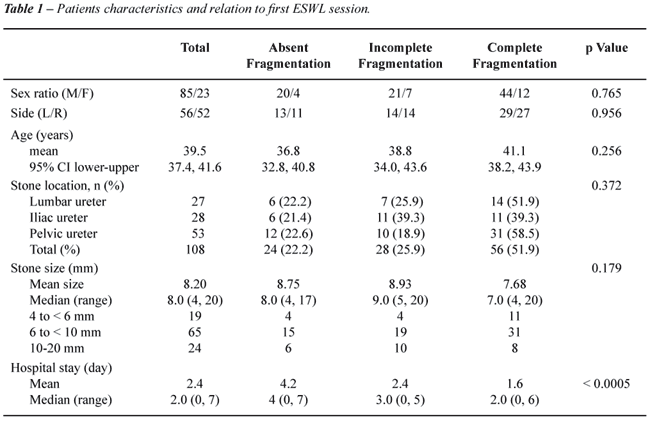
agents or opioids in 14%. Fragmentation after a single session was complete
in 56 patients (52%), incomplete in 28 (26%), and absent in 24 (22%).
Patient’s characteristics at inclusion and in relation to the first
session are reported in Table-1.
Patients presenting incomplete fragmentation
underwent a second (n = 28) or even third session (n = 11). Two patients
with remnants after two or three sessions underwent ureteroscopy. One
patient developed acute obstructive pyelonephritis proximal to a pelvic
stone fragments which was successfully treated by a double J stent, antibiotics
and the fragments passed spontaneously before stent removal. The 24 patients
in whom ESWL had no impact on the stone, underwent a second (n = 15) or
even third session (n = 6) without success. Of these, ureteroscopy was
performed for 21 cases and open ureterolithotomy for one patient with
a hard 17 mm stone while spontaneous passage occurred in two patients
with small stones.
The stone-free success rate for ESWL (fragmentation
+ elimination) was 31 % (n = 33) on day 2, 41% (n = 44) on day 15, 68%
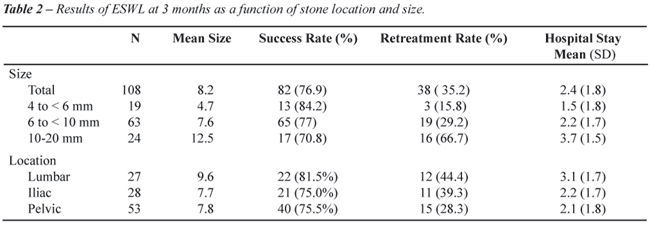
(n = 73) on day 30, and 77% (n = 83) on day 90. The retreatment rate ranged
from 28% to 44% according to the location of the stone, and from 15.8%
to 66.7% according to the size of the stone. EQ at 3 months was 49. Results
as a function of stone location and size are given in Table-2; both location
and size were considered prognostic factors. The mean size of stones that
were completely fragmented at a single session (n = 56) was 7.68 mm (4-20
mm), of those requiring a second session (n = 28) was 8.93 mm (5-20 mm),
and of those resistant to ESWL (n = 24) was 8.75 mm (4-17 mm). There were
no major complications, although eleven patients mentioned macroscopic
hematuria afterwards, none requiring specific treatment which is an expected
side-effect to treatment.
Group analysis were performed by combining
stone location (lumbar vs. iliac or pelvic) and size (largest diameter
< 6, 6 to < 10 mm or 10-20 mm). The amplitude of the benefit, however,
was more stringent for stones located proximally and with a size >5
mm.
Median and average hospital stay were 2.0
and 2.4 days (95% lower and upper confidence interval: 2.1-2.8 days).
This effect largely depended on the rate of fragmentation after the first
session as well as the size and location of the stone.
We were able to analyze stones from 32 patients in the study. The majority
of the patients had calcium oxalate stones (n = 20) while the remainder
had mixed calcium oxalate and phosphate (n = 6), struvite (n = 5), and
cystine stones (n = 1).
COMMENTS
In
the last 20 years, the development and constant improvement of minimally
invasive techniques such as ureteroscopy with in situ lithotripsy or laser
fragmentation and ESWL has prompted urologists toward a more aggressive
attitude. Although observation is still recommended for stones measuring
less than 4 mm in diameter, most international guidelines today recommend
active removal of all stones exceeding 5-7 mm, when proven that they have
resisted medical therapy (9). The spontaneous rate of elimination of the
stones depends on the stone size and position in the ureter (2). In a
recent prospective study using unenhanced helical CT, Coll et al. have
demonstrated that the spontaneous passage rate for stones ranged from
87% to 25% according to the size of stones (1 mm in diameter to more than
9 mm) (15). In the same series, spontaneous passage rate was also dependent
on stone location (48% for stones in the proximal ureter, 60% for mid
ureteral stones, 75% for distal stones, and 79% for ureterovesical junction
stones). In addition to size and location, there are also other interfering
factors such as obesity, level of renal obstruction and type of medical
therapy (16). In our study, most of the stones and fragments that passed
spontaneously were 7 mm or less and located in the lower ureter. Active
removal is also strongly indicated in patient with persistent pain despite
adequate medical treatment, acute obstruction with impaired renal function
or solitary functional kidney, urinary tract infection, risk or suspicion
of urosepsis (2,17). In cases where removal of ureteral stone is warranted,
the main debate centers currently around the choice of ESWL or endoscopic
management combined with laser or mechanic fragmentation (4,18,19).
Traditionally, the imaging study used for
evaluating patients presenting with ureteral colic believed secondary
to an acute episode was IVU. Although the examination was often diagnostic,
limitations included inability to obtain proper bowel preparation to aid
in imaging because of the acute nature of the study, risk of allergy to
contrast agents, potential nephrotoxicity, need to assess renal function
before contrast injection, inability of conventional radiography to visualize
some stones (e.g., uric acid), and the time-consuming nature of the study.
Though renal ultrasonography is sometimes useful in detecting the presence
of hydronephrosis secondary to an obstructing ureteral stone, the evaluation
is very operator dependent. Furthermore, the study is unable to accurately
measure the size of the stone and locate ureteral stones in many instances.
Computer tomography (CT) scan is able to address many of these issues
and, with the introduction of spiral CT, nonenhanced studies are rapidly
becoming the standard means of evaluating patients presenting to emergency
departments with acute flank pain (13).
In institutions equipped with ESWL the question
arises whether applying ESWL shortly after the onset of renal colic could
help resolving this issue. Interestingly enough, although ESWL is widely
considered as one of the treatments of choice of ureteral stones, its
use as an immediate therapeutic tool in an ER setting has not yet deserved
much attention. To our knowledge, only reports by Gonzalez Enguita et
al. (8), Doublet et al. (6), Tligui et al. (7), and Tombal et al. (9)
have addressed its potential interest. Tligui et al. reported in 2003
their experience of 200 patients suffering from acute renal colic and
treated with emergency ESWL (EDAP LT-02) within 24 h. Stone-free rate
ranged from 79% to 83% according to the location of the stone, and from
75% to 86% according to the size of the stone. Two or three ESWL sessions
were required in 79 patients. The 36 patients, in whom ESWL failed, underwent
ureteroscopy (n = 23) or lithotripsy with a Dornier® machine (n =
13). Based on this observation, they advocated a more widespread use of
the technique based on a high stone free rates after three months and
a low morbidity. These are consistent with our findings. The study however
was not randomized. We could not do a randomization of our patients in
order to collect a representative number of patients to undergo statistical
workup.
Tombal et al. in 2005 reported the results
of the first randomized trial addressing the role of emergency ESWL in
100 patients requiring hospitalization for the management of renal colic
(9). These authors have prospectively compared standard medical treatment
with NSAID and antispasmodic to medical treatment plus emergency ESWL,
performed without analgesia on a Siemens Lithostar lithotripter (Siemens
Medical Systems, AG, Munich, Germany) within 6 h. following admission
to the ER. On average, this study showed that ESWL increased the proportion
of patients stone-free (SF) after 48 hours (SF-48) by 13% while it increased
the median duration of hospitalization by one day. Emergency ESWL increased
both SF-48 and proportion of patients discharged from the hospital at
72 hours by respectively 40% and 25% when the stone was located proximally
and > 5 mm, and they advocated that it should be strongly recommended
in these cases. In contrast, when the stone is located distally from the
crossing of the iliac artery, ESWL only slightly increased stone free
rate by 5% while decreasing the proportion of patients released from hospitalization
at 48 h and 72 h. Their study demonstrated that emergency ESWL is a valuable
therapeutic option to improve elimination of ureteral stones and shorten
duration of hospital stay, when proven that the stone is located proximally
to the iliac vessels.
A better outcome of ESWL has been reported
for kidney stones compared to ureter stones, while others could not demonstrate
such differences (20,21). Pace et al. investigated a large number of ESWL
cases and demonstrated a superior success rate for upper and mid ureter
stones compared to distal calculi (22). The AUA meta-analysis revealed
best stone clearance for small stones < 10 mm, with 74% compared to
46% for stones between 11-20 mm (2). For complete stone disintegration,
many patients have to undergo 2 or more shockwave sessions (2). There
is reported no consensus on the number of shock wave lithotripsy treatments
for ureteral calculi that should be administered for a single stone before
alternate modalities are used. Pace et al. (22) have reported a low success
rate of repeat shock wave lithotripsy for ureteral stones after failed
initial treatment. Kim et al. suggested that no more than 3 treatments
should be given for a particular stone due to minimal improvement in the
subsequent cumulative treatment success rate (23). We compared the success
rate of initial shock wave lithotripsy for ureteral calculi with that
of subsequent treatments to determine whether more than 1 treatment is
justified for any single ureteral stone. In this respect our results are
in agreement with the other reported series as none of our patients responded
to repeat sessions after failure of the initial treatment. In a series
of 1588 patients they had treated 1593 ureteral calculi with the Dornier
MFL 5000 lithotripter (Dornier Medical Systems Inc., Kennesaw, GA) over
a period from January 1994 to September 1999 (22). The stone free rate
after initial treatment was 68% (1086 of 1593 stones), which decreased
to 46% for first re-treatment and 31% for second re-treatment. Overall
the success rate increased to 77% after 3 treatments compared with 76%
after two treatments. Upper and mid ureter stone free rates were significantly
higher than those in the lower ureter after initial treatment. Success
rate was also greater for smaller stones (10 mm or less versus 11 to 20
mm was 74% versus 43% (p < 0:001). In our series, those patients with
incomplete fragmentation after the initial treatment were not offered
more than 3 sessions of ESWL and all of them were stone free by 3 months.
We found that the stone free rate was higher for smaller stones (9 mm
or less versus 10 to 20 mm was 78.6% versus 70.8%, p = 0.428). Although
the difference was not significant, hospital stay was significantly higher
for the large stones (mean; 3.7 vs. 2.1, p < 0.0005). It was also significantly
higher for the lumber ureter (p = 0.016) as the stone size increased in
the proximal ureter. Upper stone free rate (81.5%) was higher than those
in the mid and lower ureter (75% and 75.5%, respectively (p = 0.804))
after initial treatment with higher retreatment rate. The rate of retreatment
depends on the stone size and position in the ureter. It increased for
upper ureteric stones (37%) compared to the mid and lower ureteric stones
(28.6% and 24.5%, respectively). This may be explained by the higher mean
stone size (9.6 mm) for upper ureter compared to the mid and lower ureter
(7.7 and 7.8 mm, respectively). Also, we found difficulty in localization
for some cases with mid ureteric stones as overlapped by the iliac bone.
Retreatment for a ureteric stone appeared to increase the stone free rate
of initial treatment from 58% to 77%. It may be that stone size is the
main predictor factor for the retreatment rate.
With the widespread use of ESWL, fewer stones
are being analyzed because of difficulties in collecting stone samples.
We were able to analyze stones from 32 patients and calcium oxalate stones
were the most common type.
More commonly, hospitalization is required
to manage intractable pain resistant to oral or intra-rectal therapy.
While the main goal of therapy should then still be oriented toward fast
pain relief and safe stone removal, it is also critical to achieve rapid
discharge from the hospital. In our series the majority of the patients
had treatments as an inpatient procedure (81%) mainly for ‘social’
reasons, i.e. ,difficulty in transport, lack of follow-up, health care
facility and less commonly for complications. Overall although, there
is still considerable scope for improving the process of supplying emergency
interventional care and reducing inpatient stay.
Ureteral pre-stenting is only necessary
for patients with persistent pain, fever or renal insufficiency due to
obstruction. Some authors reported a decreased stone free rate after introduction
of an indwelling stent, most probably due to problems in stone detection
and interference with the shock waves (4,22). Especially with older lithotripters,
focusing on ureter stones was difficult. For this reason pre-stenting
was not part of our treatment. If practical, in situ shockwave lithotripsy
in acute obstructive ureteric lithiasis seems to be advantageous compared
to later shockwave application in the non-obstructive phase 28.
Arrabal-Martin et al. recently demonstrated, that in situ ESWL for both
obstructive and non-obstructive lumbar ureter stones reached 95.5% and
93.15% stone free rate respectively (4).
As kidney stones were thought to show a
better response to ESWL, push-back manipulation into the kidney was recommended
for proximal ureter stones. We do not recommend this as with improved
lithotripsy and stone detection technology, this procedure is now considered
being out-dated. Some investigators (21) have reported a better outcome
of ESWL after stone manipulation, while others (20) have not found a statistical
difference. However it can prove difficult to manipulate an impacted stone,
and the possibility of post-treatment obstruction by a large fragment
in an edematous ureter remains. This risk can be minimized by stent placement
at the time of stone manipulation. Advances in ureteroscopic technology
with the introduction of small caliber semi-rigid and flexible ureteroscopes
combined with the introduction of the holmium YAG laser have improved
stone free rates following ureteroscopy while decreasing the risk of complications
(24,25).
Success rates for shock wave lithotripsy
may differ according to the lithotripter used. Average stone-free rate
for cumulative shock wave lithotripsy series reported in the literature
using an HM3 lithotripter is slightly but consistently higher than that
achieved with many second and third generation lithotripters and may influence
the choice of treatment (26). It is important to stress that the results
with shock wave lithotripsy are truly machine specific and cannot be translated
to use with other lithotripters (19). The Dornier Lithotripter S that
we use proved in different series to be very effective in the treatment
of renal and ureteral calculi (18).
In conclusion, rapidly performed ESWL is
a valuable therapeutic option to improve elimination of ureteral stones.
We agree with the other authors that it could be more widespread in acute
renal colic. It presents medical advantages, i.e. no need for prolonged
anti-inflammatory treatment, and also possible economic advantages, i.e.
no need for anesthesia and routine hospitalization with fewer absences
from work. It requires appropriate lithotripter facilities for emergency
use and a follow-up period of up to three months. Ultimately, the chosen
treatment option (medical treatment, ESWL, or ureteroscopy) is a matter
of a joint decision between the physician and the informed patient.
CONFLICT OF INTEREST
None declared.
REFERENCES
- Assimos DG, Boyce WH, Harrison LH, McCullough DL, Kroovand RL, Sweat KR: The role of open stone surgery since extracorporeal shock wave lithotripsy. J Urol. 1989; 142: 263-7.
- Segura JW, Preminger GM, Assimos DG, Dretler SP, Kahn RI, Lingeman JE, et al.: Ureteral Stones Clinical Guidelines Panel summary report on the management of ureteral calculi. The American Urological Association. J Urol. 1997; 158: 1915-21.
- Tiselius HG, Ackermann D, Alken P, Buck C, Conort P, Gallucci M, et al.: Guidelines on urolithiasis. Eur Urol. 2001; 40: 362-71.
- Arrabal-Martín M, Pareja-Vilches M, Gutiérrez-Tejero F, Miján-Ortiz JL, Palao-Yago F, Zuluaga-Gómez A: Therapeutic options in lithiasis of the lumbar ureter. Eur Urol. 2003; 43: 556-63.
- Tombolini P, Ruoppolo M, Bellorofonte C, Zaatar C, Follini M: Lithotripsy in the treatment of urinary lithiasis. J Nephrol. 2000; 13 (Suppl 3) : S71-82.
- Doublet JD, Tchala K, Tligui M, Ciofu C, Gattegno B, Thibault P: In situ extracorporeal shock wave lithotripsy for acute renal colic due to obstructing ureteral stones. Scand J Urol Nephrol. 1997; 31: 137-9.
- Tligui M, El Khadime MR, Tchala K, Haab F, Traxer O, Gattegno B, et al.: Emergency extracorporeal shock wave lithotripsy (ESWL) for obstructing ureteral stones. Eur Urol. 2003; 43: 552-5.
- González Enguita C, Cabrera Pérez J, Calahorra Fernández FJ, García Cardoso J, Vela Navarrete R. Efficient, immediate or emergency ESWL: an attractive strategic alternative to be considered in the treatment of renal colic! Actas Urol Esp. 2000; 24: 721-7.
- Tombal B, Mawlawi H, Feyaerts A, Wese FX, Opsomer R, Van Cangh PJ: Prospective randomized evaluation of emergency extracorporeal shock wave lithotripsy (ESWL) on the short-time outcome of symptomatic ureteral stones. Eur Urol. 2005; 47: 855-9. Erratum in: Eur Urol. 2005; 48: 876.
- Cass AS: In situ extracorporeal shock wave lithotripsy for obstructing ureteral stones with acute renal colic. J Urol. 1992; 148: 1786-7.
- Numa H, Yoshida K, Kageyama Y, Hoshino Y. In situ extracorporeal shock wave lithotripsy for ureteral stones causing acute renal failure. Hinyokika Kiyo. 1994; 40: 291-4.
- Joshi HB, Obadeyi OO, Rao PN: A comparative analysis of nephrostomy, JJ stent and urgent in situ extracorporeal shock wave lithotripsy for obstructing ureteric stones. BJU Int. 1999; 84: 264-9.
- Wang LJ, Ng CJ, Chen JC, Chiu TF, Wong YC: Diagnosis of acute flank pain caused by ureteral stones: value of combined direct and indirect signs on IVU and unenhanced helical CT. Eur Radiol. 2004; 14: 1634-40.
- McDougall EM, Denstedt JD, Brown RD, Clayman RV, Preminger GM, McClennan BL: Comparison of extracorporeal shock wave lithotripsy and percutaneous nephrolithotomy for the treatment of renal calculi in lower pole calices. J Endourol. 1989; 3: 265-71.
- Coll DM, Varanelli MJ, Smith RC: Relationship of spontaneous passage of ureteral calculi to stone size and location as revealed by unenhanced helical CT. AJR Am J Roentgenol. 2002; 178: 101-3.
- Deliveliotis C, Chrisofos M, Albanis S, Serafetinides E, Varkarakis J, Protogerou V: Management and follow-up of impacted ureteral stones. Urol Int. 2003; 70: 269-72.
- Anagnostou T, Tolley D: Management of ureteric stones. Eur Urol. 2004; 45: 714-21.
- Ghalayini IF, Al-Ghazo MA, Khader YS: Extracorporeal shockwave lithotripsy versus ureteroscopy for distal ureteric calculi: efficacy and patient satisfaction. Int Braz J Urol. 2006; 32: 656-64; discussion 664-7.
- Hochreiter WW, Danuser H, Perrig M, Studer UE: Extracorporeal shock wave lithotripsy for distal ureteral calculi: what a powerful machine can achieve. J Urol. 2003; 169: 878-80.
- Rassweiler J, Lutz K, Gumpinger R, Eisenberger F: Efficacy of in situ extracorporeal shock wave lithotripsy for upper ureteral calculi. Eur Urol. 1986; 12: 377-86.
- Graff J, Pastor J, Funke PJ, Mach P, Senge T: Extracorporeal shock wave lithotripsy for ureteral stones: a retrospective analysis of 417 cases. J Urol. 1988; 139: 513-6.
- Pace KT, Weir MJ, Tariq N, Honey RJ: Low success rate of repeat shock wave lithotripsy for ureteral stones after failed initial treatment. J Urol. 2000; 164: 1905-7.
- Kim HH, Lee JH, Park MS, Lee SE, Kim SW: In situ extracorporeal shockwave lithotripsy for ureteral calculi: investigation of factors influencing stone fragmentation and appropriate number of sessions for changing treatment modality. J Endourol. 1996; 10: 501-5.
- Devarajan R, Ashraf M, Beck RO, Lemberger RJ, Taylor MC: Holmium: YAG lasertripsy for ureteric calculi: an experience of 300 procedures. Br J Urol. 1998; 82: 342-7.
- Scarpa RM, De Lisa A, Porru D, Usai E: Holmium:YAG laser ureterolithotripsy. Eur Urol. 1999; 35: 233-8.
- Gettman MT, Segura JW: Management of ureteric stones: issues and controversies. BJU Int. 2005; 95 (Suppl 2): 85-93.
____________________
Accepted after revision:
May 23, 2008
_____________________
Correspondence address:
Dr. Ibrahim Fathi Ghalayini
Associate Professor of Urology
P.O. Box 940165
Amman, 11194, Jordan
Fax: + 00962 6 5687422
E-mail: ibrahimg@just.edu.jo
EDITORIAL COMMENT
We
read with interest this original article about the role of shock wave
lithotripsy (ESWL) as an emergency treatment of ureteral lithiasis. Unfortunately,
while the debate between ESWL and ureteroscopy for such stones is still
going on, the importance of ESWL as an emergency approach to face this
problem has been merely evaluated (1-3). Wherever lithotripters are available,
ESWL may represent the non invasive way to perform an active stone removal,
attempting to resolve this common and potentially severe emergency. Its
safety leads to an ease of use in most of the cases, excluding those with
absolute contraindications (pregnancy, uncorrected bleeding disorders)
or complicated features (i.e. ureteral stones associated with urosepsis
and /or severe renal function impairment).
One of the crucial points of emergency ESWL
trials is the choice of a proper end point: fragmentation and expulsion
are achieved gradually after ESWL, and those phases, above all the expulsive
one, can last a considerable and variable period of time, depending on
stone size, location and ureteral edema. Due to this last consideration,
ESWL of ureteral stone is highly recommended within a short period from
the onset of acute renal colic. In fact, in uncomplicated cases, like
the ones reported in this series, a satisfying stone free rate is rapidly
achieved after the treatment. Moreover, one of the main outcomes of this
study is that pain was rapidly and definitively controlled after ESWL
in 58% of the cases, thus allowing a watchful waiting approach of spontaneous
passage of the fragments. Pain relief may enable a faster discharge, and
even if only 21 were treated as outpatients, Authors invoked an improve
in the delivery process that can be easily achieved. Furthermore, hospitalization,
its length and relationship with stone characteristics were properly analyzed
in this manuscript.
Since renal colic due to stone disease is
a widespread problem, we have previously assessed the role of ESWL as
an emergency treatment of ureteral stones associated with mild renal function
impairment. Our outcomes focused on the ability of a single session ESWL
to decrease rapidly creatinine serum levels, and a normalization of such
parameter was evident in 85% of the patients 24 hours after the treatment.
A complete stone free condition was then reached gradually (67.5% at 72
hours), and 7 out of 40 patients underwent a successful second session
ESWL. Characteristics were properly analyzed in this manuscript.
Since renal colic due to stone disease is
a widespread problem, we have previously assessed the role of ESWL as
an emergency treatment of ureteral stones associated with mild renal function
impairment (4). Our outcomes focused on the ability of a single session
ESWL to decrease rapidly creatinine serum levels, and a normalization
of such parameter was evident in 85% of the patients 24 hours after the
treatment. A complete stone free condition was then reached gradually
(67.5% at 72 hours), and 7 out of 40 patients underwent a successful second
session ESWL (4).
Except for this last consideration, our
findings are consistent with those reported by the Authors, as ESWL turns
out to be effective even as an emergency procedure, potentially reducing
the need for an endoscopic management.
Few minor concerns remain, i.e. the tricky
focusing of ureteral stones overlapping iliac bone and the role of ureteral
stenting, that still represents a matter of debate. Furthermore, we believe
that the definite role of repeated sessions have yet to be defined, and
greater series in a prospective setting have to assess the value of ESWL
multiple treatments.
REFERENCES
- Kravchick S, Bunkin I, Stepnov E, Peled R, Agulansky L, Cytron S: Emergency extracorporeal shockwave lithotripsy for acute renal colic caused by upper urinary-tract stones. J Endourol. 2005; 19: 1-4.
- Doublet JD, Tchala K, Tligui M, Ciofu C, Gattegno B, Thibault P: In situ extracorporeal shock wave lithotripsy for acute renal colic due to obstructing ureteral stones. Scand J Urol Nephrol. 1997; 31: 137-9.
- Tligui M, El Khadime MR, Tchala K, Haab F, Traxer O, Gattegno B, et al.: Emergency extracorporeal shock wave lithotripsy (ESWL) for obstructing ureteral stones. Eur Urol. 2003; 43: 552-5.
- Sighinolfi MC, Micali S, DE Stefani S, Grande M, Saredi G, Mofferdin A, et al.: Noninvasive management of obstructing ureteral stones using electromagnetic extracorporeal shock wave lithotripsy. Surg Endosc. 2008 (In press).
Dr.
M. C. Sighinolfi, Dr. S. Micali
Dr. S. De Stefani & Dr. G. Bianchi
Department of Urology
University of Modena and Reggio
Modena, Emilia, Italy
E-mail: sighinolfic@yahoo.com