UNI-
VS. MULTILOCULATED PELVIC LYMPHOCELES: DIFFERENCES IN THE TREATMENT OF
SYMPTOMATIC PELVIC LYMPHOCELES AFTER OPEN RADICAL RETROPUBIC PROSTATECTOMY
(
Download pdf )
ADRIAN TREIYER, BJORN HABEN, EBERHARD STARK, PETER BREITLING, JOACHIM STEFFENS
Department of Urology and Pediatric Urology, St. Antonius Hospital, Eschweiler, Germany
ABSTRACT
Purpose:
To evaluate the treatment of symptomatic pelvic lymphoceles (SPL) after
performing radical retropubic prostatectomy (RRP) and pelvic lymphadenectomy
(PLA) simultaneously.
Material and Methods: We analyzed, in a
retrospective study, 250 patients who underwent RRP with PLA simultaneously.
Only patients with SPL were treated using different non- and invasive
procedures such as percutaneous aspiration, percutaneous catheter drainage
(PCD) with or without sclerotherapy, laparoscopic lymphocelectomy (LL)
and open marsupialization (OM).
Results: Fifty-two patients (21%) had postoperative
subclinical pelvic lymphoceles. Thirty patients (12%) developed SPL. Fifteen
patients with noninfected uniloculated lymphocele (NUL) healed spontaneously
after performing PCD. The remaining seven patients required sclerotherapy
with additional doxycycline. After performing PCD, NUL healed better and
faster than noninfected multiloculated lymphocele (NML) (success rate:
80% vs. 16%, respectively). Twenty-seven percent of patients treated initially
with PCD, with or without sclerotherapy had persistent lymphocele. All
patients were successfully treated with LL. Only one patient had an abscess
as a major complication of a persistent SPL after PCD and sclerotherapy
and was treated via an open laparotomy.
Conclusions: Symptomatic NUL can be treated
using PCD with or without sclerotherapy. If this therapy fails as first-line
treatment, laparoscopic lymphocelectomy should be considered within a
short period of time in order to achieve successful treatment. NML should
be treated using a laparoscopic approach in centers where this type of
expertise is available. Infected lymphoceles are drained externally. In
these cases, percutaneous or open external drainage with adequate antibiotic
coverage is preferable.
Key
words: prostatic neoplasms; prostatectomy; pelvis; lymph nodes;
lymphoceles; laparoscopy
Int Braz J Urol. 2009; 35: 164-70
INTRODUCTION
A
lymphocele, also known as a lymphocyst, is a collection of lymphatic fluid
occurring as a consequence of surgical dissection and inadequate closure
of afferent lymphatic vessels. In the literature, an incidence of 0.5-10%
of patients treated by radical prostatectomy having symptomatic pelvic
lymphoceles (SPL) postoperatively has been reported (1-3).
Pelvic lymphadenectomy (PLA) is frequently
performed simultaneously with radical retropubic prostatectomy (RRP) to
determine lymph node status (4). A surgical approach is indispensable
since to date no imaging study can compare with PLA to detect the presence
of metastasis (5,6). However, this potential benefit must be weighed against
the additional morbidity and costs associated with PLA.
To our knowledge there are only few up-to-date
studies focusing on the complications associated with PLA after RRP. Therefore,
we were prompted to retrospectively analyze our data of postoperative
SPL and the corresponding treatments to determine which procedure could
be the most effective.
MATERIALS AND METHODS
Data
on 250 patients who underwent RRP between January 2005 and December 2007
were collected. Patients were followed-up for a minimum of 6 months.
A limited or standard PLA was routinely
performed after an open RRP. Our standard pelvic lymphadenectomy involved
the dissection and removal of lymphatic tissue from the level of the external
iliac vein to the obturator nerve, extending proximal to the common iliac
artery bifurcation and distal to the proximal femoral canal to include
the node of Cloquet. We did not perform an extended pelvic lymphadenectomy,
which removes the lymphatic tissue surrounding the internal iliac vein
and presacral region. After completing the surgery 2 closed suction drains
were placed, each one laterally to the bladder, in relationship with the
area of pelvic lymph node dissection. All patients received perioperative
antibiotics and low molecular weight heparin after RRP.
In order to diagnose pelvic lymphoceles
we routinely performed pelvic ultrasound after RRP and PLA. Pelvic ultrasound
studies were performed as standard procedure during the first 10 days
after RRP at least three times in each patient. In patients in whom pelvic
lymphoceles were found, we performed daily ultrasound controls to check
the progression or resolution of the fluid collections. Pelvic lymphoceles
were defined as a pelvic fluid collection of more than 50 mL after drainage
removal. Persistent lymphorrhea (PL) was diagnosed when catheter outputs
exceeded 50 mL per day after 3 days of surgery. In these cases, we performed
microbiological analyses of the pelvic fluid collections. Fluid collections
with creatinine levels similar to serum were treated as lymphoceles. Cystograms
were performed to distinguish between an anastomotic leak and a lymphocele.
Doppler lower extremity studies were performed in all patients with signs
and/or symptoms of complicated lymphoceles compressing the iliac veins.
In major complicated pelvic lymphoceles with or without infections, we
performed a CT scan or MRI.
The symptoms of this collection depended
on the size and presence of infection. Patients with SPL may present a
visible or palpable pelvic mass. Symptoms or signs may be a result of
venous compression resulting in unilateral leg edema, leg pain and deep
vein thrombosis. Fever and chills should suggest secondary infected pelvic
lymphoceles.
PL and SPL were evaluated by controlling
the fluid drainage per day (≤ 50 mL/day or ≥ 50 mL/day) or
the size after drainage removal (≤ 50 mL. or ≥ 50 mL), respectively.
Treatment options also depended on other
factors such as position, loculations and the recurrence of the collections.
Noninfected uniloculated lymphoceles (NUL) were primarily treated using
percutaneous catheter drainage (PCD) with or without additionally sclerotherapy.
Noninfected multiloculated lymphoceles (NML) and persistent lymphoceles
after PCD with or without sclerotherapy were treated using laparoscopic
lymphocelectomy (LL).
SPL were treated initially with PCD. Percutaneous
drainage was performed after insertion of an 8 to 14F pigtail catheter
using ultrasound guidance. The catheter was sutured in place and daily
output was recorded. Resolution of fluid collection was determined by
follow-up ultrasound and clinical symptoms.
PL was treated initially with additional
sclerotherapy for a maximum of 10 consecutive days. Sclerotherapy was
performed with doxycycline (40 mg/day) instillated through the drainage
(drain after RRP or drain after percutaneous drainage) using an aseptic
technique. Lymphocele recurrence after one course of sclerotherapy was
not managed with a second attempt using these sclerosant agents. If this
therapy failed, we occluded the drainage for 24 hours to control, with
ultrasound, the size of the lymphatic collection. We removed the catheter
when the collection remained equal and did not increase. In these cases
with the growing size of the lymphatic cavity, as well as recurrence of
lymphocele or with PL after PCD and sclerotherapy we performed a LL.
Laparoscopic lymphocelectomy was performed
as described by McCullough et al. using a 3 or 4-port technique depending
on whether the approach was uni or bilateral (7).
Open laparotomy was only performed in rare
cases with persistent lymphocele after percutaneous and/or laparoscopic
approaches failed, and also in major complications of the pelvic lymphoceles
such as infections, abscess or acute bleeding after using other techniques.
RESULTS
Three
experienced surgeons performed 250 RRPs with limited PLA. The median number
of lymph nodes removed was 12.5 (r: 1-42).
Fifty-two patients (overall rate: 21%) had
subclinical pelvic lymphoceles after RRP (Ultrasound volume range: 50-300
mL). Forty patients developed unilateral lymphoceles and only 12 bilateral.
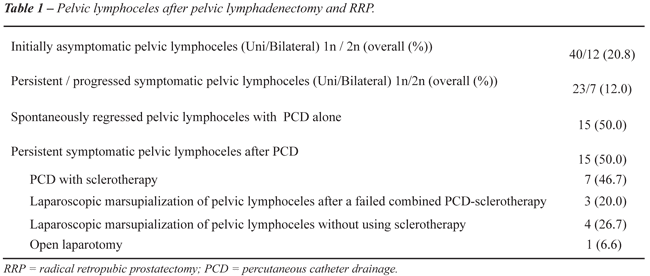
Thirty patients (23 unilateral/7 bilateral) (overall rate: 12%) developed
SPL. In 15 cases after PCD, there was spontaneous resolution of the symptoms
and they were treated using routine ultrasound surveillance. The remaining
fifteen patients had PL and were treated with PCD and sclerotherapy in
7 cases. Another 3 patients were treated successfully using LL after a
combined PCD-sclerotherapy failed. In other 4 cases LL was performed after
PCD without sclerotherapy failed. In only one patient we performed an
open laparatomy because of an infected complicated lymphocele (Table-1).
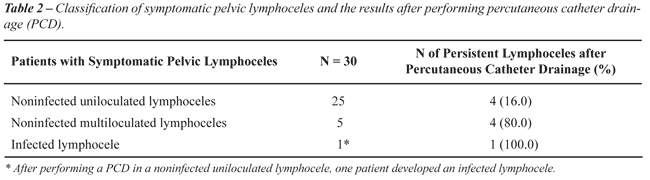
Patients with NUL who underwent PCD and
sclerotherapy as first-line-treatment had a higher success rate compared
to those with a NML (80% vs. 16%, respectively) (Table-2).
Twenty-seven percent of patients who were
initially treated with PCD with or without sclerotherapy had a PL. All
of them (100%) were successfully treated with laparoscopic marsupialization
and intraoperative drainage removal.
We also observed that those patients treated
successfully with PCD and adjuvant sclerotherapy required additional days
of treatment to eliminate the persistent lymphorrhea compared to those
initially treated with LL (average of 9.5 days of treatment vs. 1 day,
respectively).
In a small group of patients (n: 4) after
performing PCD we did not instill sclerosing agents in the lymphatic cavity.
In these cases we decided to directly perform LL due to a persistent lymphorrhea.
In all these patients we achieved good results with no recurrences of
lymphoceles after this approach.
Open laparotomy was performed because of
an abscess as a major complication of a symptomatic secondary infected
lymphocele. After removal of the infection the patient had no further
complications.
As major complication there were 2 patients
(overall rate: 0.8%) who developed a deep venous thrombosis and leg edema.
The presence of pulmonary emboli was not observed either radiographically
or scintigraphically.
COMMENTS
In
our data a high incidence (21%) of subclinical lymphoceles after PLA and
RRP was observed. However, our rate was lower than that originally obtained
when any sonographically or radiographically detected lymphocele was considered
(range: 27-61%) (8,9). Despite an incidence of 21%, in the current study
the overall rate of clinically significant SPL after PLA and RRP was 12%.
This observation is in agreement with the results described by other series
(3,10-12). Pepper (3), Solberg (8) and Campbell (10) reported symptomatic
or clinically significant lymphoceles in 3.5%, 2.3% and 1.6% of patients,
respectively.
Another relevant consequence of lymphoceles
is the significantly higher incidence of re-intervention. In our study
approximately 50% of all re-interventions performed in patients with prostatectomy
were related to lymphocele management. In a recent study by Musch et al.
these authors described similar results (4).
Symptomatic lymphoceles can be managed initially
by PCD with or without instillation of sclerosing agents, such as tetracycline,
ampicillin, ethanol, doxycycline or povidone-iodine (1,3). If the lymphocele
is nonloculated, sclerosant therapy may be attempted (13). A multiloculated
lymphocyst as shown in our study has more chances to recur under sclerotherapy
because of the multiple cysts in the lymphocele cavity.
However, lymphocele recurrence rates are
high: 50 to 100% (14) after simple aspiration and 10 to 15% (15) following
sclerosant therapy. In our data we found lymphocele recurrence in 27%
of patients treated initially with PCD with or without sclerotherapy.
In our experience percutaneous sclerotherapy is associated with a low
success rate and possible contamination of the lymphocele cavity. In the
best case scenario Teruel et al. (15) described successful sclerotherapy
using long-term percutaneous catheter drainage and at least two daily
instillations of the sclerosant agent for an average of 25 days (up to
a maximum of 45 days). Contrary to this concept we performed a short-term
sclerotherapy for no more than 10 consecutive days. It may be possible
that this once daily short-term therapy was the cause of a higher lymphocele
recurrence in our data compared to other studies.
However, the long-term treatment of PCD
to achieve higher success rates, prompted us to use more frequently the
laparoscopic marsupialization of lymphocele, which was successful in all
patients. In the literature more than 90% success was reported after peritoneal
marsupialization (3,16). Pelvic lymphoceles appear to be suited ideally
for drainage by laparoscopic techniques. The bulging wall of the lymphocele
cavity is usually readily apparent laparoscopically. We did not routinely
perform omentoplasty during laparoscopic lymphocelectomy. Disadvantages
of this technique include the requirement for a general anesthetic, and
surgical trauma compared to a percutaneous approach. However, we consider
that a decreased analgesic requirement, shorter hospitalization and a
more rapid recovery are advantages to more frequently perform laparoscopy
and therefore this approach should be considered as the standard therapy
for a noninfected symptomatic lymphocele when the percutaneous sclerotherapy
fails as first line-treatment. We suggest that when SPL persists, having
previously attempted a noninvasive procedure, then after a short period
of time a laparoscopic intraperitoneal drainage approach should be performed
to avoid a secondary infection of the lymphocele cavity or an unsuccessfully
extended time of noninvasive therapy.
Post-laparoscopy recurrence warrants open
surgical marsupialization with or without omentoplasty (13).
Symptomatic infected lymphoceles require
meticulous imaging surveillance (Ultrasound or CT scan control) and more
invasive therapy is needed if major complications such as septicemia,
fever ≥ 39.5°C, progression of an infected lymphocele or abscess
occur. In some cases PCD can be attempted. As regards these complications
some studies remain controversial. There are studies reporting a high
recurrence rate after performing percutaneous drainage, whereas other
authors report good results. We believe that a percutaneous approach should
be performed in patients who are stable and have a localized controlled
infected lymphocele. If this approach fails an open technique should be
performed.
Although we performed a limited PLA instead
of an extensive technique on all patients in our study, we obtained a
significantly high median number of pelvic lymph nodes (median No. 12.5
lymph nodes per PLA). According to other studies the risk of lymphocele
is significantly higher as the number of removed lymph nodes increases
(1). This could possibly explain our higher incidence of pelvic lymphoceles
compared with other data.
We suspect that in some patients the use
of 2 closed suction drains instead of drainage without suction may have
increased the incidence of pelvic lymphoceles reported in our study. However,
further studies should be performed in order to confirm this suspicion.
Another promoter of lymphoceles in our study
population might have been the standardized perioperative administration
of low dose heparin for thromboembolism prophylaxis, in accordance with
German Association of the Scientific Medical Societies Guidelines. Bigg
and Catalona (17), and Tomic et al. (18) identified low dose heparin as
a factor causing increased lymph secretion and a higher rate of lymphocele
formation. In our patients heparin was administered exclusively subcutaneously
into the upper arm to avoid increased lymph secretion in the pelvis (19).
CONCLUSIONS
Simple
percutaneous aspiration should be used only for diagnostic purposes when
indicated.
In our experience percutaneous catheter
drainage with sclerotherapy is associated with a low success rate, need
for a long period of treatment to achieve success and possible contamination
of the lymphocele cavity. However, PCD with sclerotherapy could be attempted
in patients with nonloculated symptomatic lymphoceles as first line treatment.
Our data suggest that laparoscopic lymphocelectomy
appears to be safe and effective, with minimal postoperative morbidity
and a low recurrence rate. Therefore, if percutaneous catheter drainage
with or without sclerotherapy fails as first-line treatment, laparoscopy
marsupialization of pelvic lymphocele should be considered within a short
period of time. In some specific cases, as in multiloculated lymphoceles,
laparoscopic lymphocelectomy should be considered as first-line treatment
at centers where this type of expertise is available.
When infected lymphoceles are drained externally,
percutaneous or open external drainage with adequate antibiotic coverage
should be performed.
REFERENCES
- Hsu TH, Gill IS, Grune MT, Andersen R, Eckhoff D, Goldfarb DA, et al.: Laparoscopic lymphocelectomy: a multi-institutional analysis. J Urol. 2000; 163: 1096-8; discussion 1098-9.
- Augustin H, Hammerer P, Graefen M, Palisaar J, Noldus J, Fernandez S, et al.: Intraoperative and perioperative morbidity of contemporary radical retropubic prostatectomy in a consecutive series of 1243 patients: results of a single center between 1999 and 2002. Eur Urol. 2003; 43: 113-8.
- Pepper RJ, Pati J, Kaisary AV: The incidence and treatment of lymphoceles after radical retropubic prostatectomy. BJU Int. 2005; 95: 772-5.
- Musch M, Klevecka V, Roggenbuck U, Kroepfl D: Complications of pelvic lymphadenectomy in 1,380 patients undergoing radical retropubic prostatectomy between 1993 and 2006. J Urol. 2008; 179: 923-8; discussion 928-9.
- Joseph JV, Greene T: Re: Standard versus limited pelvic lymph node dissection for prostate cancer in patients with a predicted probability of nodal metastasis greater than 1% K. Touijer, F. Rabbani, J. R. Otero, F. P. Secin, J. A. Eastham, P. T. Scardino And B. Guillonneau J Urol 2007; 178: 120-124. J Urol. 2008; 179: 789-90.
- Borley N, Fabrin K, Sriprasad S, Mondaini N, Thompson P, Muir G, et al.: Laparoscopic pelvic lymph node dissection allows significantly more accurate staging in “high-risk” prostate cancer compared to MRI or CT. Scand J Urol Nephrol. 2003; 37: 382-6.
- McCullough CS, Soper NJ, Clayman RV, So SS, Jendrisak MD, Hanto DW: Laparoscopic drainage of a posttransplant lymphocele. Transplantation. 1991; 51: 725-7.
- Solberg A, Angelsen A, Bergan U, Haugen OA, Viset T, Klepp O: Frequency of lymphoceles after open and laparoscopic pelvic lymph node dissection in patients with prostate cancer. Scand J Urol Nephrol. 2003; 37: 218-21.
- Spring DB, Schroeder D, Babu S, Agee R, Gooding GA: Ultrasonic evaluation of lymphocele formation after staging lymphadenectomy for prostatic carcinoma. Radiology. 1981; 141: 479-83.
- Campbell SC, Klein EA, Levin HS, Piedmonte MR: Open pelvic lymph node dissection for prostate cancer: a reassessment. Urology. 1995; 46: 352-5.
- Briganti A, Chun FK, Salonia A, Suardi N, Gallina A, Da Pozzo LF, et al.: Complications and other surgical outcomes associated with extended pelvic lymphadenectomy in men with localized prostate cancer. Eur Urol. 2006; 50: 1006-13.
- Heidenreich A, Varga Z, Von Knobloch R: Extended pelvic lymphadenectomy in patients undergoing radical prostatectomy: high incidence of lymph node metastasis. J Urol. 2002; 167: 1681-6.
- Gill IS, Hodge EE, Munch LC, Goldfarb DA, Novick AC, Lucas BA: Transperitoneal marsupialization of lymphoceles: a comparison of laparoscopic and open techniques. J Urol. 1995; 153: 706-11.
- Kay R, Fuchs E, Barry JM: Management of postoperative pelvic lymphoceles. Urology. 1980; 15: 345-7.
- Teruel JL, Escobar EM, Quereda C, Mayayo T, Ortuño J: A simple and safe method for management of lymphocele after renal transplantation. J Urol. 1983; 130: 1058-9.
- Meyers AM, Levine E, Myburgh JA, Goudie E: Diagnosis and management of lymphoceles after renal transplantation. Urology. 1977; 10: 497-502.
- Bigg SW, Catalona WJ: Prophylactic mini-dose heparin in patients undergoing radical retropubic prostatectomy. A prospective trial. Urology. 1992; 39: 309-13.
- Tomic R, Granfors T, Sjödin JG, Ohberg L: Lymph leakage after staging pelvic lymphadenectomy for prostatic carcinoma with and without heparin prophylaxis. Scand J Urol Nephrol. 1994; 28: 273-5.
- Kröpfl D, Krause R, Hartung R, Pfeiffer R, Behrendt H: Subcutaneous heparin injection in the upper arm as a method of avoiding lymphoceles after lymphadenectomies in the lower part of the body. Urol Int. 1987; 42: 416-23.
_____________________
Accepted
after revision:
December 20, 2008
________________________
Correspondence address:
Dr. Adrián Treiyer
St. Antonius Hospital
Department of Urology
Dechant-Deckers Str. 8
Eschweiler, 52249, Germany
E-mail: aetreiyer@yahoo.com.ar
EDITORIAL COMMENT
The article is an excellent clinical paper and should be read by all clinicians who perform pelvic lymphadenectomies because it demonstrates the good clinical practice considering the handling of pelvic lymphoceles. We share similar experience with laparoscopic treatment of lymphoceles and prefer this treatment because of his almost universal and immediate efficiency.
Dr.
Darko Kröpfl
Department of Urology
Kliniken Essen Mitte
Essen, Germany
E-mail: d.kroepfl@kliniken-essen-mitte.de
EDITORIAL COMMENT
The
authors deserve praise for this very interesting retrospective study about
the occurrence of lymphoceles after radical prostatectomy with associated
pelvic lymphadenectomy. The occurrence of 21% (52 patients) of lymphoceles
detected by abdominal ultrasound, of which 12% (30 patients) with symptomatic
lymphoceles, is superior to the average reported in the literature in
recent years (1), which is probably a reflection of a stricter definition
adopted by the authors instead of a greater occurrence in comparison to
what was obtained by other authors.
The
use of laparoscopic drainage was relatively low - 7 cases -, all with
good evolution, which is coherent with the previously published experience
concerning the laparoscopic treatment of lymphoceles resulting from renal
transplant (2).
The
authors suggest that drainage without suction (with Penrose drain) could
be better than tubular drains. This is the subjective impression of some
surgeons, but this has to be proved.
Some
authors have published good results without drainage after open or robotic
radical prostatectomy (3,4). They argue that the routine placement of
a pelvic drain may not be required. This is an interesting issue to be
investigated.
REFERENCES
- Pepper RJ, Pati J, Kaisary AV: The incidence and treatment of lymphoceles after radical retropubic prostatectomy. BJU Int. 2005; 95: 772-5.
- Castilho LN, Ferreira U, Liang LS, Fregonesi A, Netto Jr NR. Lymphocele post renal transplantation: videolaparoscopic treatment: report of five cases and review of the literature. Braz J Urol. 1997; 23: 17-22.
- Araki M, Manoharan M, Vyas S, Nieder AM, Soloway MS: A pelvic drain can often be avoided after radical retropubic prostatectomy--an update in 552 cases. Eur Urol. 2006; 50: 1241-7; discussion 1246-7.
- Sharma S, Kim HL, Mohler JL: Routine pelvic drainage not required after open or robotic radical prostatectomy. Urology. 2007; 69: 330-3.
Dr. Lisias N. Castilho
Catholic University of Campinas
Campinas, SP, Brazil
E-mail: lisias@dglnet.com.br