THE
USE OF ENOXAPARIN TO PREVENT VENOUS THROMBOEMBOLISM IN PATIENTS UNDERGOING
RADICAL RETROPUBIC PROSTATECTOMY: FEASIBILITY AND UTILITY
(
Download pdf )
KOGENTA NAKAMURA, ALI KASRAEIAN, SAIF YACOUB, JOHN PENDLETON, SATOSHI ANAI, CHARLES J. ROSSER
Division of Urology (KN, SY, JP, SA, CJR), University of Florida, Jacksonville, and Department of Urology (AK), University of Florida, Gainesville, Florida, USA
ABSTRACT
Objective:
To assess the utility of enoxaparin in prevention of venous thromboembolism
(VTE) in men poorly compliant with pneumatic compression stockings (PCS)
in the immediate postoperative period after a radical retropubic prostatectomy
(RP).
Materials and Methods: This retrospective
study included 47 men who underwent RP at an inner-city tertiary care
hospital. All patients were started on enoxaparin 40 mg subcutaneously
6-8 hours postoperatively and daily while hospitalized. Preoperative,
operative, and postoperative data were collected and analyzed. Median
follow-up was 18 months.
Results: Median patient age was 64 ±
7 years, median prostate-specific antigen level was 4.9 ng/mL and median
prostate biopsy-determined Gleason score was 6. Forty-one men (87%) underwent
a pelvic lymph node dissection. Median operative time was 181 minutes
(range 164-450 minutes). Median estimated blood loss was 700 mL. Approximately
36% of the men wore PCS the recommended > 19 hours/day. On average
PCS were worn 10.3 ± 7.5 hours/day. Postoperative complications
were not increased in this cohort. Two patients developed pulmonary embolism
requiring long-term anticoagulation. There were no mortalities.
Conclusions: In men non-compliant with PCS,
initiation of enoxaparin in the immediate postoperative setting was well-tolerated
and maintained a low (4%) rate of VTE. Thus, enoxaparin may be useful
in adjunct with PCS in these patients.
Key
words: enoxaparin; prostatectomy; prostate cancer; venous thrombosis;
pneumatic compression stockings
Int Braz J Urol. 2007; 33: 347-54
INTRODUCTION
In
the US, radical prostatectomy (RP) is the most common treatment for localized
prostate cancer (1) and results in durable, disease-free survival with
few complications (2,3). The way we currently perform anatomic RP is due
in part to the extensive research and operative experience of a select
group of practiced urologists who have refined this procedure. For example,
following adoption of the meticulous dissection technique reported by
Walsh et al. (4), physicians reported a decrease in blood loss, lower
rates of positive surgical margins, and a decrease in postoperative morbidity
(e.g., incontinence and erectile dysfunction). The most common cause for
death in the immediate postoperative setting is from a venous thromboembolism
(VTE): deep venous thromboembolism or pulmonary embolism. The incidence
of VTE after RP is 1-3% (5,6).
Lower rates of VTE events after RP in men
who wear pneumatic compression stockings (PCS) has been demonstrated clearly
by previous research (7,8). The efficiency of PCS is directly related
to the time they are worn. Westrich & Sculco reported that patients
must wear PCS ≥ 19 hours/day after major surgery as an inpatient
in order for them to be efficacious (9). But what of the men who are not
compliant with wearing PCS? Could we alleviate their potential risk of
developing a VTE without causing an increase in complications if we initiated
enoxaparin in the immediate postoperative period? Herein, we present the
results of 47 men who underwent RP for localized prostate cancer and were
at high risk of developing VTE who were treated prophylactically with
subcutaneous enoxaparin.
MATERIALS AND METHODS
Study
Population
The study included the first 51 consecutive
patients with localized prostate cancer who underwent anatomic RP performed
at the University of Florida & Shands Jacksonville from October 2003
to December 2005. All data needed for this study was collected and recorded
as part of a standard-of-care for these patients. In 2006, Institutional
IRB approval was obtained to examine the medical records and gather the
pertinent information.
Pretreatment evaluation included medical
history, physical examination with digital rectal examination, measurement
of initial prostate-specific antigen (PSA) level, and measurement and
determination of Gleason score by prostate needle biopsy. Different laboratories
were used to measure PSA of different patients. Further evaluations with
bone scan or computed tomography were done according to the preference
of the treating urologist.
Patients underwent an anatomic RP utilizing
a 10 cm infraumbicical midline incision for optimal exposure. Furthermore,
the kidney rest on the table was elevated and the table flexed. Median
surgical time was 181 minutes (range 164 - 450 minutes).
Tumor
Grading and Staging
The 2002 Tumor-Node-Metastasis (TNM) staging
system was used for clinical staging (10).
RP specimens were processed as reported
previously (11). Although pelvic lymph node dissection can be omitted
in patients with a low likelihood of lymph node involvement (< 2% according
to Kattan nomograms) (12), the majority of patients (87%) underwent pelvic
lymph node dissection for a concomitant protocol assessing the presence
of infectious agents in primary prostatic tumors and regional lymph nodes.
Lymph nodes removed during bilateral pelvic lymph node dissection were
examined either immediately by frozen section and subsequently by permanent
sections, or by permanent section only. RP specimens were graded histologically
according to the Gleason grading system (13) and categorized pathologically
as organ-confined with negative margins (pT2-), positive margins without
evidence of extraprostatic extension (pT2+), extraprostatic extension
with negative or positive margins of resection (pT3a- and pT3a+, respectively),
or seminal vesicle invasion (pT3b) (14,15).
Outcome
Assessment
PCS were placed bilaterally on all patients
immediately before surgery and continued until their discharge. Approximately
6-8 hours postoperatively, patients were started on enoxaparin 40 mg administered
subcutaneously, which was continued daily during hospitalization. Only
four (8%) patients required intraoperative blood transfusion. Because
of their propensity to bleed in the operating room, these four patients
were not given enoxaparin postoperatively and thus are not included in
the final analysis. Hospital records of the 47 patients were reviewed
for several key outcomes, estimated blood loss, intraoperative complications,
length of hospital stay, and postoperative complications.
Follow-up
Patients returned for evaluation 6 to 8
weeks after surgery and at 4 to 6 month intervals thereafter. Follow-up
evaluations included PSA monitoring and digital rectal examinations. Biochemical
failure was defined as detectable serum PSA (≥ 0.1 ng/mL). No patient
developed a clinical recurrence without a biochemical recurrence. Follow-up
information was obtained from each patient’s hospital record or
by contacting outside physicians or other hospitals. Median follow-up
of the cohort was 18 months.
RESULTS
Characteristics
of the study population are presented in Table-1. The patients ranged
in age from 45 to 74 years; the median age was 64 ± 7 years. Twenty-eight
participants (60%) identified themselves as Caucasian, 17 (36%) identified
themselves as African Americans, and 2 (4%) identified themselves as being
of another race or ethnicity.

Of the 47 men in the study, 13 (28%) underwent
a bilateral nerve-sparing RP, 22 (47%) underwent a unilateral nerve-sparing
RP, and 12 (26%) underwent a non-nerve-sparing procedure. Forty-one men
(87%) underwent a pelvic lymph node dissection. The median estimated blood
loss was 700 mL (range = 300-1500 mL).
As assessed from nursing staff records,
compliance with PCS was approximately 36% (i.e., 36% of men wore the pneumatic
compression stockings ≥ 19 hours per day during their hospitalization).
The mean length of time PCS were worn was 10.3 ± 7.5 hours/day.
No intraoperative complications were noted.
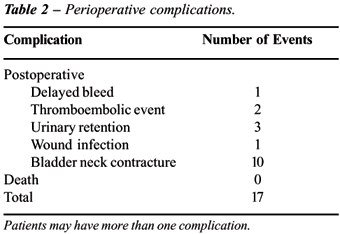
Seventeen postoperative complications were noted. (Table-2). One patient
developed a significant drop in his hemoglobin on postoperative day 1
(from 9.6 grams to 7.2 grams). Enoxaparin was discontinued and hemoglobin
stabilized by postoperative day 2 with conservative measures. No patients
developed clinical signs or symptoms of a lymphocele. The most severe
complication was pulmonary embolism, which occurred in 2 (4%) men. Evaluation
of PE included arterial blood gas, EKG, chest radiograph, chest computed
tomography with contrast, and lower extremity Doppler. The lower extremity
Doppler also assessed the pelvic vasculature. No evidence of thrombosis
or lymphoceles was evident in the pelvis. One of these two men had a history
of cerebrovascular accident and congestive heart failure. More importantly,
the two men with pulmonary embolism had reported persistent, excessive
sedentary life style upon discharge from the hospital. There were no deep
venous thromboses, cardiac events, cerebrovascular accidents, or deaths
in the study cohort.
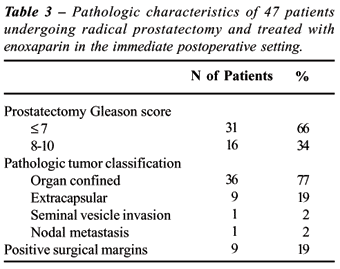
Pathologic outcomes are summarized in Table-3.
Seventy-seven percent of the patients had organ-confined disease (pT2).
Thirty-four percent of the patients had poorly differentiated tumors (Gleason
score 8-10). One patient had positive lymph nodes (non-microscopic disease).
Surgical margins were positive in 19%. To date, 4 patients (1 with pN+
disease and 3 with pT3a+ disease with extensive margins) have developed
biochemical recurrence.
COMMENTS
Enoxaparin
is a low molecular weight heparin that has antithrombotic properties.
Enoxaparin is indicated for the prophylaxis of deep venous thrombosis,
which may lead to pulmonary embolism: in patients undergoing hip replacement,
in patients undergoing knee replacement, in medical patients who are at
risk of VTE due to severely restricted mobility, and in patients undergoing
abdominal surgery who are at risk of VTE (16). Increased age, cancer,
pelvic surgery, and extended sedentary periods are associated with a perioperative
hypercoaguable state and patients with these characteristics are classified
as a medium risk by the Thromboembolic Risk Factor Consensus Panel (16).
Thromboembolic events are considered the most important nonsurgical complication
following a major urologic procedure (17). One to 3% of contemporary patients
undergoing prostatectomy experience a symptomatic VTE (5,6). The most
common form of VTE prophylaxis in patients undergoing prostatectomy is
PCS (7,8). PCS may only be effective if worn ≥ 19 hours/day (9).
For unknown reasons, compliance with wearing PCS was extremely low in
our cohort (mean time PCS were worn was 10.3 ± 7.5 hours/day),
which is dramatically less than the time needed for greatest effect. Although
our patients were non-compliant with PCS, we did not notice an appreciable
increase in VTE. This led us to believe subcutaneous enoxaparin may be
protective in the postoperative period for patients noncompliant with
standard VTE prophylaxis.
The timing of the initiation of VTE prophylaxis
may be important as well. Some would argue that in order to prevent VTE,
prophylaxis should be started prior to the patient even entering the operating
room. However, half of the clinically recognized pulmonary embolisms occur
after hospital discharge and more than seven days after surgery (18).
In addition, a study by Kearon and others evaluating the timing of VTE
prophylaxis show little difference in efficacy if started preoperatively
versus postoperatively (19). We chose to start the PCS therapy prior to
surgical incision and continue their use throughout hospitalization.
Overall, morbidity and mortality in our
study are similar to outcomes reported in other larger, recent studies
(5,20). The most common postoperative complication in the present series
was bladder neck contracture (19%). These patients were treated successfully
with transurethral incision of bladder neck contracture without an adverse
effect on continence. The most common major complication was VTE (4%).
Although our cohort was noncompliant with standard VTE prophylaxis, we
demonstrated VTE rates that would have been expected in PCS compliant
patients by postoperative treatment with enoxaparin. The two patients
who developed pulmonary embolisms were treated successfully with six months
of anticoagulation therapy without any subsequent sequela.
With the use of anticoagulation in the immediate
postoperative period, there is the potential for increased lymphatic drainage
after a pelvic lymph node dissection. Catalona and others reported an
increased rate of lymphoceles and/or lymphatic drainage (38%) in patients
who received heparin prophylaxis before a RP and lymph node dissection
(21). This finding was not evident in the present study. In fact, there
were no symptomatic lymphoceles or prolonged lymphatic drainage in our
cohort. We believe this is due to our meticulous surgical technique while
performing the pelvic lymph node dissection, which ensured complete ligation
of the proximal and distal lymphatic channels.
We recognize that our study has several
limitations. First, this is a small retrospective study conducted by a
single surgeon in an inner-city, tertiary care facility. These results
may not be extrapolated easily to other surgeons or centers. In addition,
this study did not assess a control group of men treated with PCS alone.
Furthermore, the sample size was not large and the follow-up was short.
Because of these limitations, we urge other large facilities to assess
VTE rates following RP or other surgeries. If their VTE rates are above
those reported here and in the literature, they should consider the initiation
of a clinical trial in which enoxaparin is utilized in the immediate postoperative
period.
Deep venous thrombosis and pulmonary embolism
are serious complications after RP that are largely preventable. Limited
prospective data are available describing the optimal form of prophylaxis
in these patients. PCS are the most common form of prophylaxis currently
used in this group; however, PCS are reported to be effective only if
worn for extended periods throughout the day (i.e., ≥ 19 hours/day).
In men non-compliant with PCS, the initiation of enoxaparin in the immediate
postoperative setting was well tolerated and maintained a low (4%) rate
of VTE. Thus, in the postoperative setting in men non-compliant with conventional
prophylactic techniques for thromboembolic events, enoxaparin may be helpful.
ACKNOWLEDGEMENT
Doctors Kogenta Nakamura and Ali Kasraeian contributed equally to the manuscript.
CONFLICT OF INTEREST
None declared.
REFERENCES
- Lu-Yao GL, McLerran D, Wasson J, Wennberg JE: An assessment of radical prostatectomy. Time trends, geographic variation, and outcomes. The Prostate Patient Outcomes Research Team. JAMA. 1993; 269: 2633-6.
- Walsh PC: Radical prostatectomy for localized prostate cancer provides durable cancer control with excellent quality of life: a structured debate. J Urol. 2000; 163: 1802-7.
- Walsh PC, Partin AW, Epstein JI: Cancer control and quality of life following anatomical radical retropubic prostatectomy: results at 10 years. J Urol. 1994; 152: 1831-6.
- Walsh PC, Donker PJ: Impotence following radical prostatectomy: insight into etiology and prevention. J Urol. 1982; 128: 492-7.
- Augustin H, Hammerer P, Graefen M, Palisaar J, Noldus J, Fernandez S, et al.: Intraoperative and perioperative morbidity of contemporary radical retropubic prostatectomy in a consecutive series of 1243 patients: results of a single center between 1999 and 2002. Eur Urol. 2003; 43: 113-8.
- Koch MO, Jr JS: Low molecular weight heparin and radical prostatectomy: a prospective analysis of safety and side effects. Prostate Cancer Prostatic Dis. 1997; 1: 101-4.
- Cisek LJ, Walsh PC: Thromboembolic complications following radical retropubic prostatectomy. Influence of external sequential pneumatic compression devices. Urology. 1993; 42: 406-8.
- Soderdahl DW, Henderson SR, Hansberry KL: A comparison of intermittent pneumatic compression of the calf and whole leg in preventing deep venous thrombosis in urological surgery. J Urol. 1997; 157: 1774-6.
- Westrich GH, Sculco TP: Prophylaxis against deep venous thrombosis after total knee arthroplasty. Pneumatic plantar compression and aspirin compared with aspirin alone. J Bone Joint Surg Am. 1996; 78: 826-34.
- Greene FL, Page DL, Fleming ID, Fritz AG, Balch CM, Haller, et al.: AJCC cancer staging manual. 6th ed., New York, Springer-Verlag. 2002.
- Babaian RJ, Troncoso P, Bhadkamkar VA, Johnston DA: Analysis of clinicopathologic factors predicting outcome after radical prostatectomy. Cancer. 2001; 91: 1414-22.
- Kattan MW, Stapleton AM, Wheeler TM, Scardino PT: Evaluation of a nomogram used to predict the pathologic stage of clinically localized prostate carcinoma. Cancer. 1997; 79: 528-37.
- Gleason DF: Histologic grading and clinical staging of prostatic adenocarcinoma. In: Tannenbaum M (ed.), Urologic Pathology. The Prostate. Philadelphia, Lea & Febiger. 1977; pp. 171-97.
- Grignon DJ, Sakr WA: Pathologic staging of prostate carcinoma. What are the issues? Cancer. 1996; 78: 337-40.
- Fleming ID, Cooper JS, Henson DE, et al.: AJCC cancer staging manual. 5th ed., New York, Lippincott-Raven; 1997.
- Bell CR, Murdock PJ, Pasi KJ, Morgan RJ: Thrombotic risk factors associated with transurethral prostatectomy. BJU Int. 1999; 83: 984-9.
- Brenner DW, Fogle MA, Schellhammer PF: Venous thromboembolism. J Urol. 1989; 142: 1403-11.
- Arcelus JI, Caprini JA, Traverso CI: Venous thromboembolism after hospital discharge. Semin Thromb Hemost. 1993; 19 Suppl 1: 142-6.
- Kearon C, Hirsh J: Starting prophylaxis for venous thromboembolism postoperatively. Arch Intern Med. 1995; 155: 366-72.
- Shekarriz B, Upadhyay J, Wood DP: Intraoperative, perioperative, and long-term complications of radical prostatectomy. Urol Clin North Am. 2001; 28: 639-53.
- Catalona WJ, Kadmon D, Crane DB: Effect of mini-dose heparin on lymphocele formation following extraperitoneal pelvic lymphadenectomy. J Urol. 1980; 123: 890-2.
____________________
Accepted after revision:
February 28, 2007
_______________________
Correspondence address:
Dr. Charles J. Rosser
Department of Urology
University of Florida, College of Medicine
Suite N2-3, PO Box 100247, USA
Fax: + 1 352 392-4504
E-mail: charles.rosser@urology.ufl.edu
EDITORIAL COMMENT
Venous thromboembolism (VTE) is one of the most serious postoperative complications of radical prostatectomy (RP). Although the rate of VTE events has been decreased in men who use pneumatic compression stockings (PCS) after RP, we still face the patients fail to VTE after RP. The authors showed here that the use of enoxaparin to prevent VTE in patients undergoing RP was well tolerated without any major complications. This is an important study for men non-compliant with conventional prophylactic techniques for thromboembolic events in the postoperative setting. Continued validation to elucidate if the use of enoxaparin in the postoperative period is meaningful for the patients will be critical in the future.
Dr. Hirotsugu
Uemura
Department of Urology
School of Medicine, Kinki University
Osaka, Japan
E-mail: huemura@med.kindai.ac.jp
EDITORIAL COMMENT
Venous
thromboembolism (VTE) is a common complication in patients undergoing
surgery and pulmonary embolism (PE) is the most preventable death in patients
hospitalized for surgical procedures (1). In particular, VTE is considered
the most important nonsurgical complication following major urologic procedures
(2). Among patients undergoing major urologic surgery, 1 to 5% experienced
symptomatic VTE. However, postoperative deep vein thrombosis (DVT) is
often asymptomatic and fatal PE (estimated to occur in 1:500 patients)
(3) may be the first clinical manifestation. Therefore, it is inappropriate
to rely on early diagnosis of asymptomatic DVT to prevent serious PE.
Actually, it is well known that routine ultrasonographic screening for
asymptomatic DVT of lower limbs have a low sensitivity and is quite impractical
(4).
Most
of the information about VTE prevention in this field is derived from
patients undergoing open prostatectomy. Other urologic procedures, including
major renal surgery and transplantation, radical cystectomy, and urethral
reconstruction, are also associated with an increased risk for thrombosis.
Instead, transurethral prostatectomy is associated with a low risk of
VTE. Studies published in the last decade have shown that changes in surgical
care, more rapid mobilization, and possibly greater use of prophylaxis
may have reduced the rate of VTE after major urologic procedures, particularly
radical prostatectomy, over time. On the other hand, it should be noted
that patients undergoing urologic surgery often carry multiple risk factors
for VTE, such as malignancy, advanced age, pelvic surgery with lymph node
dissection. A recent prospective study, aimed to evaluate incidence and
risk factors for clinically overt VTE occurrence in urologic cancer patients
(5), reported an incidence < 1%, but the half of the cases were fatal.
In this survey, patients received thromboprophylaxis in about 71% of the
cases. The most important risk factors for thromboembolic complications
were history of previous VTE (OR 6.0), anesthesia > 2h (OR 4.5), postoperative
bed-rest > 4 days (OR 4.4) and age ≥ 60 years (OR 2.6).
Data
on thromboprophylaxis in urologic surgery are scarce (6); therefore, the
optimal approach to thromboprophylaxis in these patients is not known
(1). The use of mechanical methods, both graduated compression stockings
and intermittent pneumatic compression (IPC), are likely to be efficacious
(7). Heparins, both unfractioned and low-molecular weight, have been demonstrated
to be efficacious in patients undergoing urologic surgery (8). However,
bleeding complication has been a matter of concern in urologic patients
receiving pharmacological thromboprophylaxis (9).
In
this issue of the Journal, Nakamura et al. reported a retrospective single
Centre experience of combination strategy for thromboprophylaxis with
both IPC and enoxaparin 4000 U o.d. Although the study presented several
limitations due to the retrospective design, to the low number of patients
recruited, and to the absence of a control group, it is interesting to
note that bleeding complications was limited to one case, so confirming
that pharmacological prophylaxis is safe. Another aspect outlined in the
study is the difficulty related to the use of IPC. These devices are poorly
tolerated by patients, requires an intense nursing care, and their diffusion
is limited to few hospitals. Instead, the subcutaneous administration
of heparin is easy to manage and well tolerated by patients. Unfractioned
heparin (UH) should be administered 2 to 3 times daily and low-molecular-weigh
heparins (LMWH) once daily. The once daily administration profile and
the lower risk of heparin induced thrombocytopenia with respect to UH,
have contributed to the diffusion of the use of LMWH.
Radical
cancer operations are being performed more frequently than in the past,
consequently, the number of patients at high risk of VTE is growing in
urologic departments and specific guidelines for thromboprophylaxis should
be used in every hospital (1). It is recommended that (1) in patients
undergoing major, open urologic surgery prophylaxis with UH 5000 U 2-3
times daily or LMWH > 3400 U once daily should be used. For patients
at high risk of VTE such as cancer patients or patients with history of
previous VTE, prophylaxis should be continued for 3-4 weeks after hospital
discharge (10). For patients with active bleeding or at high risk for
bleeding, mechanical prophylaxis should be used until the bleeding risk
decreases. The combination of mechanical and pharmacological prophylaxis
may be more effective than either alone, and should be limited to patients
with multiple risk factors of VTE (1). Instead, there is no specific needing
for thromboprophylaxis other than early mobilization in patients undergoing
transurethral prostatectomy (1,4).
There
is good evidence that appropriately used thromboprophylaxis has a desirable
risk/benefit ratio and is cost-effective (1), providing an opportunity
both to improve patients outcome and to reduce hospital costs.
REFERENCES
- Geerts HV, Pineo GF, Heit JA, Bergqvist D, Lassen MR, Colwell CW, et al.: Prevention of venous thromboembolism: the Seventh ACCP Conference on Antithrombotic and Thrombolytic Therapy. Chest. 2004; 126: 338S-400S.
- Shekarriz B, Upadhyay J, Wood DP: Intraoperative, perioperative, and long-term complications of radical prostatectomy. Urol Clin North Am. 2001; 28: 639-53.
- White RH, Zhou H, Romano PS: Incidence of symptomatic venous thromboembolism after different elective or urgent surgical procedures. Thromb Haemost. 2003; 90: 446-55.
- Agnelli G: Prevention of venous thromboembolism in surgical patients. Circulation. 2004; 110 (24 suppl 1): IV4-12.
- Scarpa RM, Carrieri G, Gussoni G, Tubaro A, Conti G, Pagliarulo V, et al.: Clinically overt venous thromboembolism after urologic cancer surgery: results from the RISTOS Study. Eur Urol. 2007; 51: 130-6.
- Soderdhal DW, Henderson SR, Hansberry KL: A comparison of intermittent pneumatic compression of the calf and the whole leg in preventing deep venous thrombosis in urologic surgery. J Urol. 1997; 77: 1774-6.
- Cisek LJ, Walsh PC: Thromboembolic complications following radical retropubic prostatectomy. Influence of external sequential pneumatic compression devices. Urology. 1993; 42: 406-8.
- Collins R, Scrimgeour A, Yusuf S: Reduction in fatal pulmonary embolism and venous thrombosis by perioperative administration of subcutaneous heparin: overview of results so randomized trials in general, othopedic, and urologic surgery. N Engl J Med. 1988; 318: 1162-73.
- Sieber PR, Rommel FM, Agusta VE: Is heparin contraindicated in pelvic lymphadenectomy and radical prostatectomy? J Urol. 1997; 158: 869-71.
- Bergqvist D, Agnelli G, Cohen AT: Duration of prophylaxis against venous thromboembolism with enoxaparin after surgery for cancer. N Engl J Med. 2002; 346: 975-80.
Dr. Daniela Poli
Department of Critical Care Medicine
Thrombosis Center
Azienda Ospedaliera Universitaria Careggi
Florence, Italy
E-mail: polida@ao-careggi.toscana.it