LITHOGENIC METABOLIC PROFILE RELATED TO GENDER IN PATIENTS WITH CALCIUM-CONTAINING URINARY STONES
JUAN A. LANCINA, SERAFÍN NOVAS, JAVIER RODRÍGUEZ-RIVERA, GERMÁN SUÁREZ, ANTONIO BLANCO, MARCELINO GONZÁLEZ
Department of Urology, Lithiasis and Renal Lithotripsy Unit, Juan Canalejo Hospital, La Coruña, Spain
ABSTRACT
Purpose:
Little information is available on the metabolic changes found in relation
to gender in patients with urolithiasis. In this study a comparison has
been made of the metabolic profiles in men and women with calcium-containing
urinary stones in order to identify possibly significant differences.
Materials and Methods: In the past five
years, a total of 500 patients with calcium-containing urinary stones,
226 male (45.2%) and 274 female (54.8%), have undergone comprehensive
metabolic evaluation. The mean age of the males was 46.3 years and of
the females 46.9 years, with a range of 20 to 75 years for both sexes.
A comparison has been made of the frequency of metabolic changes, the
urinary biochemical parameters and the supersaturation index [AP (Ca0x)]
between a group of men and a group of women with calcium-containing urinary
stones. The patients collected a 24-hour urine specimen after following
a low calcium diet and the following measurements were made: total volume,
creatinine, calcium, phosphate, uric acid, oxalate, magnesium and citrate.
Specific gravity, pH and ammonia were determined in an isolated sample
of urine. A calcium overload test was then performed in order to determine
the calcium and creatinine in a 4-hour urine sample.
Results: Hyperoxaluria, hyperuricosuria
and hypocitraturia were more common in men than in women, whilst in women,
hypercalciuria and a low urinary volume were more frequent with respect
to men, though the differences in hypercalciuria were not statistically
significant. Men excrete higher levels of calcium, phosphate, oxalate,
uric acid and magnesium than women do, though the differences in the calcium
values were not statistically significant. On the other hand, women excrete
higher levels of citrate than men. The AP (CaOx) index is significantly
higher in men than in women do.
Conclusions: Differences were observed between
the metabolic profiles of men and women with calcium-containing urinary
stones. In women, the lower urinary excretion of calcium, phosphate, oxalate
and uric acid together with the higher excretion of citrate compared to
men, affords them a metabolic profile of lower lithogenic risk; this is
consistent with the lower reported prevalence of lithiasis and the lower
tendency to recurrence in women compared to men.
Key words:
urolithiasis; metabolism; calcium; risk factors; gender
Braz J Urol, 27: 423-431, 2001
INTRODUCTION
There is a clinical predominance of urolithiasis in men, with a ratio of 2-3: 1 compared to women (1). It has also been shown that a larger percentage of women than men suffer their first episode of urinary stone disease at over 50 years of age. Furthermore, the probability of recurrence of urinary stones is higher in men than in women, with a ratio of 1.5: 1 (2). All these observations appear to suggest the existence of different lithogenic metabolic profiles in men and in women that could explain the different clinical presentations. The pathogenic mechanism leading to this higher morbidity from urinary stone disease in men is still not fully understood. Although there could be a relationship with lifestyle and dietary habits, it is thought that the sex hormones, testosterone and the estrogens, are the true causative factors. Up to now, very few studies that report on the metabolic alterations observed in urinary stone disease have taken gender into account. This paper presents a study of the relationship between the lithogenic metabolic risk factors and gender in a group of patients with calcium-containing urinary stones.
MATERIALS AND METHODS
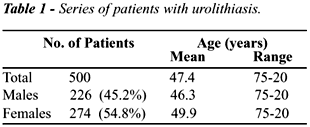
Over
the past 5 years, a metabolic evaluation has been carried out on a total
of 500 patients, 226 male (45.2%) and 274 female (54.8%), with calcium-containing
urinary stones (calcium oxalate and/or phosphate). The mean age of the
males was 46.3 years and of the females 46.9 years, with a range of 20
to 75 years for both sexes (Table-1). The patients were included in the
study consecutively. The women were more inclined to agree to a metabolic
evaluation. Any patient in whom a methodological error occurred in any
phase of the study was excluded from the statistical analysis, as were
patients with renal insufficiency (serum creatinine > 1.5 mg %), patients
who had received treatment to reduce the urinary stone formation in the
previous 6 months, the presence of urinary infection at the time of metabolic
evaluation, patients with calculi of > 30 mm largest diameter, the
finding of morphological or functional changes of the urinary tract (congenital
or acquired) which predispose to urinary stone formation, the presence
of foreign bodies in the urinary tract, or patients with a history of
reconstructive surgery of the urinary tract, surgical urinary derivation
(internal or external) or renal transplant.
The metabolic evaluation is designed in
stages, following a protocol established for outpatients that we have
described in a previous publication (3). The patient is asked to follow
a low calcium (400-mg calcium), purine-free diet for 3 days. A 24-hour
urine sample is collected during the second and third days after starting
the diet. One of the containers for the collection contains 20 ml of fuming
hydrochloric acid at 37%. The patient is asked to drink similar volumes
of water during the two days of the collection. On the fourth day after
starting the low calcium diet, a fasting blood test is taken and a freshly
voided urine sample is collected. After centrifugation of the blood sample,
automatic analysis is carried out on an aliquot using a Technicon RA-1000
autoanalyser, measuring the creatinine, uric acid, calcium, phosphate
and magnesium. In a second aliquot, using an apparatus with selective
electrodes, the sodium, potassium, chloride and total carbonate are measured.
A sample of the freshly voided urine specimen was used for determination
of the pH, specific gravity, titratable acid, ammonium and study of the
sediment; a second sample was cultured for microbiological examination.
The
total volume of the 24-hour urine specimen was measured. The calcium,
phosphate, oxalate, magnesium and citrate were measured in a sample of
urine from the acid containing collection bottle and the creatinine, sodium,
potassium, chloride and uric acid were measured in the urine from the
container with no added acid. The analytical methods used for these determinations
were the same as those for the blood sample except for the determination
of citrate that was carried out manually using the citrate lyase enzyme
method (Boehringer Mannheim reagent). The magnesium was determined by
non-deproteinised calmagite colorimetry (BioMérieux Mg-Kit reagent)
and the oxalate by the oxalate oxidase-peroxidase enzyme method (Sigma
Diagnostics Oxalate reagent). The same day on which the patient attended
for the laboratory tests, and after extraction of the blood test and collection
of the freshly voided urine sample, the patient underwent an oral calcium
overload (1 g) test, with collection of the urine produced during the
following 4 hours; the patient was advised that he should drink 500-1000
ml of water during this period. The volume of urine passed is noted and
the calcium and creatinine determined.
After recording the analyses carried out
in the blood sample, the freshly passed urine and the 24-hour urine after
the low calcium diet and the 4-hour urine after calcium overload, a series
of indices and quotients are calculated automatically by the Emusys computer
program, facilitating the laboratory work enormously. The following calculations
are made in the 24-hour urine: excretion of creatinine, calcium, calcium/kg
weight, phosphate, oxalate, uric acid, magnesium, citrate, sodium, potassium
and chloride; creatinine and uric acid clearances; tubular reabsorption
of calcium and phosphate; the calcium / creatinine, phosphate / creatinine,
oxalate / creatinine, uric acid / creatinine, magnesium / creatinine,
citrate / creatinine, sodium / creatinine, potassium / creatinine and
chloride / creatinine ratios. In the 4-hour urine specimen, the excretion
of creatinine and calcium, the calcium / creatinine quotient and the creatinine
clearance are calculated. Finally, the super-saturation index for calcium
oxalate [AP (CaOx)] proposed by Tiselius (4) is calculated.
The metabolic alterations evaluated are:
hypercalciuria (males: > 300 mg/d, females >250 mg/d); hyperoxaluria
(> 45 mg/d); hyperuricosuria (> 800 mg/d); hypocitraturia (<
320 mg/d), hypomagnesuria (< 35 mg/d), low urinary volume (< 1.200
ml/d), changes in the urinary pH and distal renal tubular acidosis. The
hypercalciuria could be absorptive, renal or resorptive. The absorptive
hypercalciuria is divided into Pak types I, II or III. The resorptive
hypercalciuria could be secondary to primary hyperparathyroidism or of
other origin. Hyperoxaluria is divided into absorptive and endogenous.
Absorptive hyperoxaluria could be dietary or enteric. Hyperuricosuria
is divided into entero-renal and endogenous. The changes in urinary pH
could be of acid (pH < 5.3) or alkaline (pH > 6.0) tendency. The
criteria used for the diagnosis of these metabolic changes have been described
in previous publications (3). In dietary absorptive hyperoxaluria the
oxalate decreases (< 45 mg/d) after dietary oxalate restriction. In
enteric absorptive hyperoxaluria the oxalate keeps over 45 mg/d after
dietary oxalate restriction with malabsorption syndrome. In endogenous
hyperoxaluria the oxalate keeps over 45 mg/d after dietary oxalate restriction
but without malabsorption syndrome. In entero-renal hyperuricosuria the
serum uric acid is normal, but in endogenous hyperuricosuria is increased.
In distal RTA the ammonium chloride loading test doesn’t decrease
urinary pH under 5.3.
The SPSS statistical package was used for
the statistical analysis of the data. The Chi-squared (X2) test was used
to compare the frequencies of the categorical variables between the study
groups, calculating the Pearson p-value and the p-valu11e of the likelihood
ratio. The Yates correction and the Fisher test were applied when necessary.
A one-way analysis of variance (one-way ANOVA) was used to compare the
values of the different continuous variables between the study groups.
When a significant difference was detected between any of the numerical
variables using this test, the Scheffé test was used to demonstrate
in which study groups these differences had occurred. When comparison
of the variables between the study groups gave rise to statistically significant
differences, these are expressed by a p-value of p < 0.05, p < 0.01
or p < 0.001. If no statistically significant difference was found,
this is expressed as NS.
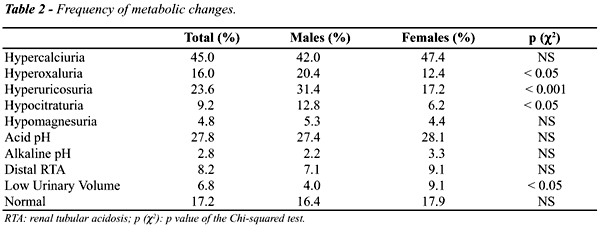
The
most frequent metabolic alterations observed were, in decreasing order
of frequency: hypercalciuria, acid pH, hyperuricosuria, hyperoxaluria,
and hypocitraturia (Table-2). In the males, the changes were hypercalciuria,
hyperuricosuria, acid pH, hyperoxaluria and hypocitraturia. In the females,
the changes were hypercalciuria, acid pH, hyperuricosuria, hyperoxaluria
and low urinary volume. Hyperoxaluria, hyperuricosuria and hypocitraturia
were more frequent in the males than in the females, whilst hypercalciuria
and low urinary volume were more frequent in the females, however, the
difference in the frequency of hypercalciuria was not statistically significant.
The frequency of hypomagnesuria, acid pH, alkaline pH and distal renal
tubular acidosis was similar in males and females.
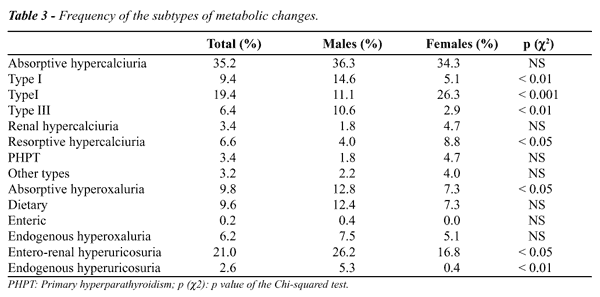
With respect to hypercalciuria, the absorptive
form was the most frequent presentation for both sexes (Table-3). In the
males, there was a predominance of Pak types III and I whilst, in the
females, type II was more frequent. Renal and resorptive hypercalciuria
were more frequent in the females, though a statistically significant
difference compared to the males was only found for the resorptive form.
All forms of hyperoxaluria were more frequent in the males though only
the absorptive form showed statistical significance. Both the entero-renal
and the endogenous forms of hyperuricosuria were more frequent in the
males.
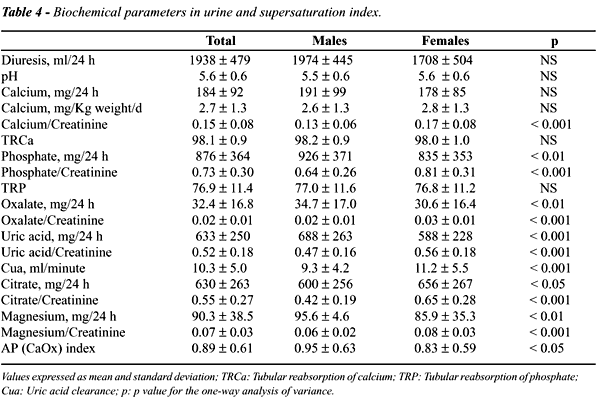
Of the urinary biochemical parameters analyzed,
it was shown in the 24-hour urine sample that the males excreted higher
levels of calcium, phosphate, oxalate, uric acid and magnesium than females,
though the difference in the calcium values were not statistically significant
(Table-4). However, the calcium / creatinine ratio is significantly higher
in the females. On the other hand, the females excreted higher levels
of citrate than males in the 24-hour urine sample. Though the females
show a tendency towards a more alkaline urinary pH, no significant difference
was found compared to the males. The urinary volume was higher in the
males than in the females but without showing statistically significant
differences. The AP (CaOx) index is significantly higher in males.
In
most series published, it has been found that urolithiasis is more common
in males than females though, to date, it has not been possible to give
a satisfactory explanation of why this difference exists. This information
may not be valid as almost all of the available publications are case
control studies; this could lead to a selection bias by including a smaller
number of women. In epidemiological studies carried out on large population
samples, Yoshida (5), in Japan, found that lithiasis is more frequent
in males than in females with a ratio of 2.4: 1. Ljunghall (6), in Sweden,
found a prevalence of the urinary lithiasis of 8.9% in males and of only
3.2% in females. However, Rousaud & Pedrajas (7), in Spain, found
a prevalence of 4.5% in males, only slightly higher than the 3.8% observed
in females. In an epidemiological study on a population in the North of
Italy, Trinchieri et al. (8) found an increase in frequency of lithiasis
between the years 1986 and 1998, both in males and females, though this
increase was only statistically significant in males (a rise from 6.8%
to 11.9%, p < 0.01), not in females (a rise from 4.9% to 6.7%). Thus,
from this study, it may be deduced that urinary lithiasis is not only
more frequent in males but also that this higher frequency is now more
significant than in previous years.
A higher incidence of the disease has also
been seen in males. Curhan et al. (9) found an annual incidence of 0.31%
in cohort of 45,289 adult males with no previous history of lithiasis,
followed up for a period of 6 years. In another study by the same authors
(10), an annual incidence of 0.10% was found in 91,731 adult females,
also with no previous history of lithiasis, followed up for a period of
12 years. It has also been reported that the risk of recurrence is higher
in males. In a prospective study of 54 patients presenting a first episode
of lithiasis, Ljunghall & Danielson (2) found that 53% of the patients
had repeat episodes during the follow-up period of 8 years. However, whilst
repeat episodes occurred in 63% of the males, they were only seen in 18%
of the females (p < 0.01). In another prospective study of patients
with lithiasis, Marshall et al. (11) also found a higher recurrence rate
in males. On the other hand, Lonsdale (12), in an autopsy study, found
similar frequencies of lithiasis in both sexes, without being able to
explain adequately the reason for the lower clinical expression of the
urinary stone disease in the females.
There is still insufficient knowledge on
the pathogenic mechanisms that determine the higher morbidity from urinary
stones seen in males. Without excluding completely the possible contribution
of dietary and lifestyle factors, it is suspected that the sex hormones
may be the truly determining factor. There is very little information
on the influence of these hormones on the pathogenesis of the urinary
stones. The higher frequency of urinary stone disease found in males,
when considering the adult population, is not seen in children (13). Research
in rats found that an increase in the serum levels of testosterone led
to an increase in the endogenous production of oxalate due to an increase
in the activity of the enzyme glycolate oxidase in the liver (14). Castrated
male rats formed fewer calculi when hyperoxaluria was induced by the administration
of ethylene glycol (15) but formation increased when testosterone was
given subcutaneously (16). These observations suggest that low levels
of serum testosterone may contribute to protecting females and male children
against the formation of calcium oxalate stones.
Similarly, it has been observed that estrogens
reduce the production of oxalate (17) and also appear to affect calcium
metabolism, favoring the tubular reabsorption of calcium and inhibiting
bone resorption. On the other hand, it has been shown that the estrogens
cause an increase in the urinary excretion of citrate (18). Lee et al.
(16) showed that the excretion of citrate falls significantly after oophorectomy
in rats. These investigators also observed that the formation of calculi
is higher when these castrated rats are administered testosterone subcutaneously.
All these actions of the estrogens, therefore, should have a marked reducing
effect on urinary stone formation. However, doubt was cast on the protective
role of the estrogens by previous studies by these same investigators
(15) as they did not observe a higher frequency of stone formation induced
by ethylene glycol in female rats after oophorectomy.
There is very little research on the different
metabolic changes observed in males and females separately. Tiselius (4),
in a series of patients with calcium-containing stones, found a higher
frequency of hyperoxaluria and hypomagnesuria in females with similar
frequencies of hypercalciuria, hypocitraturia, low urinary volume and
AP (CaOx) index in males and females. Teodosio et al. (19), in a series
of 65 patients with urinary stones, found no significant differences in
the frequencies of hypercalciuria, hyperuricosuria or hypocitraturia.
However, of the different types of hypercalciuria, these authors found
differences in the renal form (p < 0.05), more frequent in females,
but not in the absorptive or unclassified forms. Yagisawa et al. (20),
in a series of 181 patients with recurrent calcium-containing urinary
lithiasis, showed that the males had a significantly higher number of
metabolic disturbances than females (2.12 versus 1.65, p < 0.05). In
males, hypercalciuria, hyperoxaluria, hyperuricosuria and hypocitraturia
were more frequent and in the females, low urinary volume; however, only
the hypocitraturia showed statistical significance for the group of patients
below 45 years of age. In the present study, hyperoxaluria, hyperuricosuria
and hypocitraturia were significantly more frequent in the males. On the
other hand, low urinary volume was more frequent in the females. There
is a particularly high frequency of Pak type II absorptive hypercalciuria
in females; this could be related to a degree of incompetence in females
of the entero-renal mechanisms, which regulate urinary calcium after exogenous
calcium overload. Further research is needed into this disturbance as,
if it is confirmed, a more strict control to avoid excessive dietary calcium
in females may be advisable due to the higher risk of stone formation
compared to males. The predominance of resorptive hypercalciuria in females
is explained by the higher frequency of bone pathology affecting females,
particularly from the fifth decade of life onwards, and which also occurs
in primary hyperparathyroidism (21).
Nor is there sufficient information on the
levels of the urinary excretion of calcium, phosphate, oxalate, uric acid,
citrate and magnesium observed separately in males and females. Hesse
et al. (22) report that the urinary levels of calcium, oxalate and uric
acid are higher in males than in females, whilst the levels of citrate
are lower, both in patients with urinary stones and in normal subjects.
Parks & Coe (23), in a series of 330 patients with calcium oxalate
stones, found that the males had a higher 24-hour urinary volume (1,626
ml in males versus 1,370 ml in females, p < 0.05) and higher levels
of oxalate per litter of urine (25 mg/l in males versus 23 mg/l in females,
p < 0.05), whilst the females had higher levels of citrate per litter
of urine (349 mg/l in males versus 463 mg/l in females, p < 0.001).
The urinary levels of calcium, phosphate, uric acid and magnesium are
higher in males than in females but without these differences reaching
statistical significance. Trinchieri et al. (24), in a series of 104 patients
with recurrent idiopathic calcium urinary stones, found that up to 20
years of age there was no significant difference in the urinary excretion
of citrate and magnesium between males and females. In older patients,
the differences were still not significant but the citrate/creatinine
ratio was higher in females. Yagisawa et al. (20) found that males had
a higher AP (CaOx) index and higher levels of calcium, phosphate, oxalate,
uric acid, magnesium and urinary volume in a 24-hour urine sample and
that the females had higher levels of citrate; the significance levels
of these data were not calculated. The observations in the present study
are in total agreement with those reported by the above authors, finding
statistical significance for the higher levels of phosphate, oxalate,
uric acid, magnesium and the AP (CaOx) index in the males and for the
higher levels of citrate in females. These data are supported by data
from experimental studies in which it has been shown that testosterone
favors and increase in urinary oxalate and that the estrogens favor an
increase in urinary citrate whilst also having a reducing effect on the
urinary excretion of oxalate and calcium.
- Johnson CM, Wilson DM, O´Fallon WM, Malek RS, Kurland LT: Renal stone epidemiology: a 25-year study in Rochester, Minnesota. Kidney Int, 16: 624-631, 1979.
- Ljunghall S, Danielson BG: A prospective study of renal stone recurrences. Br J Urol, 56: 122-124, 1984.
- Lancina JA: Metabolic evaluation in stone disease. Urol Integr Invest, 4: 438-455, 1997.
- Tiselius HG: Investigation of single and recurrent stone formers. Miner Electrolyte Metab, 20: 321-327, 1994.
- Yoshida O: Epidemiology of stones in Japan. Jap J Urol, 70: 975-983, 1979.
- Ljunghall S: Incidence and natural history of renal stone disease and its relationship to calcium metabolism. Eur Urol, 4: 424-428, 1978.
- Rousaud A, Pedrajas A: Survey on urolithiasis in Spain. Spanish Urological Association. Urolithiasis Group. Barcelona, Wellcome Studies Center / Spain, 1986.
- Trinchieri A, Coppi F, Montanari E, Del Nero A, Zanetti G, Pisan E: Increase in the prevalence of symptomatic upper urinary tract stones during the last ten years. Eur Urol, 37: 23-25, 2000.
- Curhan GC, Rimm EB, Willett WC, Stampfer MJ: Regional variation in nephrolithiasis incidence and prevalence among United States men. J Urol, 151: 838-841, 1994.
- Curhan GC, Willett WC, Speizer FE, Spiegelman D, Stampfer MJ: Comparasion of dietary calcium with supplemental calcium and other nutrients as factors affecting risk for kidney in women. Ann Intern Med, 7: 497-504, 1997.
- Marshall V, White RH, Chaput de Saintonge M, Tresidder GC, Blandy JP: The natural history of renal and ureteric calculi. Br J Urol, 47: 117-124, 1975.
- Lonsdale K: Human stones. Science, 159: 1199-1207, 1968.
- Malek RS, Kelalis PP: Pediatric nephrolithiasis. J Urol, 113: 545-551, 1975.
- Richardson KE: Effect of testosterone on the glycolic acid oxidase levels in male and female rat liver. Endocrinology, 74: 128-132, 1964.
- Lee YH, Huang WC, Chiang H, Chen MT, Huang JK, Chang LS: Determinat role of testosterone in the pathogenesis of urolithiasis in rats. J Urol, 147: 1134-1138, 1992.
- Lee YH. Juang WC, Huang JK, Chang LS: Testosterone enhances whereas estrogen inhibits calcium oxalate stone formation in ethylene glycol treated rats. J Urol, 156: 502-505, 1996.
- Sharma V, Murphy MS, Thind S, Nath R: Effect of sex hormone on oxalate synthesizing enzymes in weanling rats. Biochem Int, 3: 507-515, 1981.
- Shorr E, Bernheim A, Taussky H: The relation of urinary citric acid excretion to menstrual cycle and the steroidal reproductive hormones. Science, 95: 606-607, 1942.
- Teodosio MR, Brandt FT, Cavalcante F, Oliveira EC, De Freitas CL, Antunes MT: Epidemic and metabolic analysis of renal lithiasis: Regional characteristics. J Bras Urol, 24: 161-166, 1998.
- Yagisawa T, Hayashi T, Yoshida A, Kobayashi C, Okuda H, Ishikawa N, Toma H: Comparison of metabolic risk factors in patients with recurrent urolithiasis stratified according to age and gender. Eur Urol, 38: 297-301, 2000.
- Fuss M, Pepersack T, Corvilain J, Vandewalle JC, Van Geertruyden J, Simon J, Kinnaert P: Infrequency of primary hyperparathyroidism in renal stone formers. Br J Urol, 62: 4-6, 1988.
- Hesse A, Classen A, Klocke N, Vahlensieck W: The Significance of Sexual Dependency of Lithogenic and Inhibitory Substances in Urine. In: Schwille PO, Smith LH, Robertson WG, Vahlensieck W (eds.). Urolithiasis and Related Clinical Research. New York, Plenum Press, pp 25-27, 1985.
- Parks JH, Coe L: A urinary calcium-citrate index for the evaluation of nephrolitihiasis. Kidney Int, 30: 85-90, 1986.
- Trinchieri A, Mandressi A, Luongo P, Longo G, Pisani E: The influence of diet on urinary risk factors for stones in healthy subjects and idiophatic renal calcium stone formers. Br J Urol, 67: 230-236, 1991.
________________________
Received: February 19, 2001
Accepted after revision: July 13, 2001
_______________________
Correspondence address:
Dr. Juan Alberto Lancina Martín
Avenida General Sanjurjo, 24, 5
15006 La Coruña, Spain
Fax: + + (34) (981) 178-052
E-mail: lancina@teleline.es
EDITORIAL COMMENT
Although
differences between the sexes with regards to the incidence of nephrolithiasis
may be decreasing, why women form less stones than men remains an interesting
clinical observation. The main focus of studies related to this issue
has been to identify a biophysical parameter(s) in urine that is (are)
less lithogenic in women. Various processes in the stone formation cascade:
urine supersaturation, crystal nucleation and aggregation, crystal-tissue
interaction, and/or crystal retention may be altered between the sexes.
In addition to the concentrations of crystal components (calcium, oxalate,
phosphate), micromolecular inhibitors (magnesium, citrate) and several
macromolecular inhibitors have been looked at previously.
This study evaluates the 24-hour urine excretions
of various chemicals in the urine from a Stone Clinic in calcium stone
formers. The present study confirms that women excrete more citrate, and
perhaps at a higher urine concentration, than men. Although the concentrations
of the various chemicals are not given, women were found to have a higher
calcium/creatinine, oxalate/creatinine, and uric acid/creatinine rations
than men. As women also had a lower AP (CaOx) index than men did, this
implies that the reduced urine concentration of magnesium and/or the higher
urine concentration of citrate in women overrode the effects of higher
calcium, and oxalate urine concentrations in women.
As concentrations of chemicals determine
the crystallization process, it is hoped that future reports would focus
on concentration rather than the amount of the chemical excreted over
a 24 period even though this parameter may be normalized with the patient’s
weight or creatinine excretion.
Dr. Paramjit S. Chandhoke
Chairman, Division of Urology
University of Colorado Health Science Center
Denver, Colorado, USA